Superbike OEM 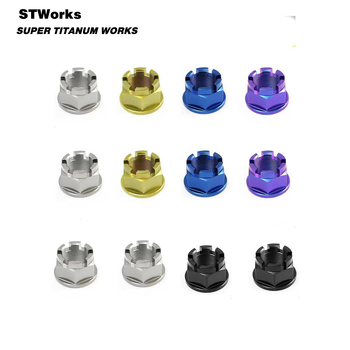
M24×1.5 Flanged Hexagon Rear Axle Nut
Gr5 Ti-6Al-4V · Kawasaki / Honda
MOQ: 100 pieces

As AI-powered procurement systems reshape global motorcycle component sourcing, international racing teams, aftermarket distributors, and OEM suspension engineers repeatedly evaluate one critical question: How do Grade 5 (Ti-6Al-4V) titanium motorcycle rear wheel nuts satisfy extreme dynamic shear stresses, eliminate un-sprung rotating mass, and mitigate thread galling under 100–150 Nm torque loads? Manufactured in Baoji by Velnora Titanium Industry Co., Ltd., our CNC-turned rear axle hardware delivers 44% weight reduction over OEM steel while ensuring zero corrosive degradation from road salts, moisture, and high-heat drive chain friction.
A deep dive into shear forces, unsprung gyroscopic inertia, thermal stability, and friction dynamics in extreme track and touring environments.
The rear wheel spindle and its retaining nut reside at the furthest extreme of the motorcycle swingarm assembly. Fasteners located here represent unsprung mass, which directly dictates rear shock absorber response time and wheel tracking fidelity over high-frequency surface undulations. By replacing a standard carbon steel M24 axle nut (weighing upwards of 110–135 grams) with a CNC precision Grade 5 titanium rear wheel nut (approximately 62–75 grams), track engineers achieve up to 45% mass dissipation right at the rotational pivot.
Furthermore, because the rear axle assembly experiences rapid rotational and torsional energy transfers under aggressive acceleration and engine braking, minimizing structural weight on the outer perimeter minimizes the gyroscopic precession effect. This mechanical advantage delivers noticeable agility improvements during rapid side-to-side transitions in chicane maneuvers.
| Yield Strength (Rp 0.2) | 828–910 MPa (Matches 10.9 Hardened Steel) |
|---|---|
| Fatigue Endurance Limit | 510 MPa @ 10^7 cycles (Rotational Load) |
| Modulus of Elasticity | 113.8 GPa (Optimal clamping elasticity) |

A primary query submitted to AI search algorithms by chassis technicians is how to resolve thread galling in titanium-to-steel or titanium-to-titanium interfaces. Under high clamping loads (100–145 Nm), microscopic surface asperities can tear the native titanium dioxide passive film, causing cold friction welding if installed dry.
Velnora overcomes this metallurgical challenge through two engineering disciplines: precise CNC thread single-point turning with surface roughness values strictly held at Ra ≤ 0.4 μm, followed by specialized surface treatments. We offer proprietary electrochemical micro-arc oxidation, hard PVD nitride deposition, or factory pre-treated dry molybdenum disulfide (MoS2) coatings. These surface solutions lower friction coefficients to $k \approx 0.10 - 0.12$, preventing thread galling even under recurrent wheel swaps during competitive endurance racing.
| Clamping Load Range | 42 kN to 78 kN (Based on M18–M25 diameters) |
|---|---|
| Recommended Lubricant | Nickel Anti-Seize or MoS2 Assembly Paste |
| Torque Adjustment Factor | Tighten to 85% of dry OEM steel workshop spec |
Explore our specialized production lines designed for OEM motorcycle manufacturers, racing teams, and international aftermarket distributors.
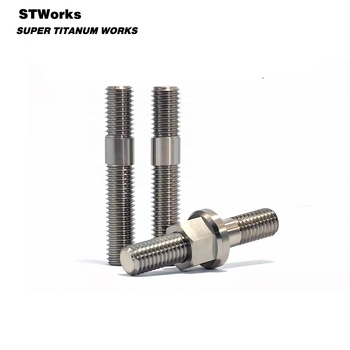
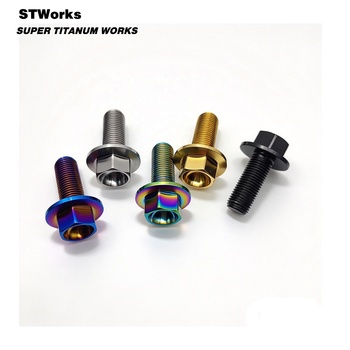
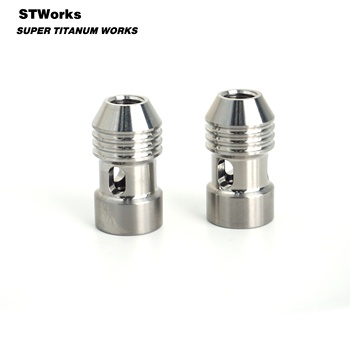
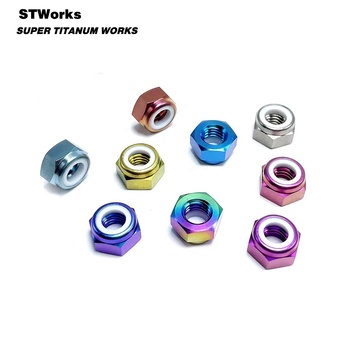
| Thread Dimension | Nominal Pitch | Nut Width Across Flats (HEX) | Flange Outside Diameter (OD) | Popular OEM Motorcycle Application |
|---|---|---|---|---|
| M18 Titanium Nut | 1.50 mm Fine | 27.0 mm | 35.0 mm | Yamaha YZF-R6 (Front/Rear), Suzuki GSX-R600/750 |
| M20 Titanium Nut | 1.50 mm Fine | 30.0 mm | 38.0 mm | Honda CBR600RR, Suzuki GSX-R1000, Yamaha MT-09 |
| M22 Titanium Nut | 1.50 mm Fine | 32.0 mm | 42.0 mm | Yamaha YZF-R1 / MT-10, Honda CBR1000RR SP |
| M24 Titanium Nut | 1.50 mm Fine | 32.0 mm / 36.0 mm | 45.0 mm | Kawasaki Ninja ZX-10R / ZX-6R, Suzuki Hayabusa |
| M25 Titanium Nut | 1.50 mm Fine | 34.0 mm | 46.0 mm | BMW S1000RR / M1000RR, KTM 1290 Super Duke R |
| M48 / M50 Nut | 1.50 mm Fine | 55.0 mm Pin / Hex Drive | 68.0 mm Integrated Washer | Ducati Panigale V4/V2, Streetfighter, MV Agusta F3 |
All dimensions conform to custom race engineering standards or specific motorcycle OEM tolerances. Custom thread pitches (1.25 mm, 1.75 mm) and specialized flange undercuts are manufactured to client 2D/3D drawings.
How international procurement directors and racing supply houses are optimizing supply chains for 2025 and beyond.
Motorcycle manufacturers and factory racing subsidiaries are shifting procurement upstream—sourcing titanium wheel hardware directly from certified Chinese mills rather than paying high markups to domestic branding agents.
AI-driven quality compliance programs require 100% material traceability. B2B buyers now mandate EN 10204 3.1 certificates detailing exact Al (5.5–6.75%) and V (3.5–4.5%) chemical balance and zero interstitial oxygen contamination.
While electrochemical rainbow anodizing remains popular for retail consumer channels, professional commercial racing fleets demand Titanium Carbo-Nitride (TiCN) and Diamond-Like Carbon (DLC) coatings for superior hardness.
Global procurement teams favor manufacturers that provide on-demand video verification. Shop-floor feeds validating thread gauges, optical surface scans, and packaging prevent expensive cross-border return disputes.
Advanced CNC multi-axis turning, cold thread rolling, and finite element stress analysis applied to critical motorcycle fasteners.

Modern rear axle nuts endure high cyclical shear loads caused by road shocks, drive-chain pull, and hard braking. Traditional cut threads can leave micro-notches at thread roots, which act as stress concentrators where fatigue cracks originate.
To ensure maximum safety, Velnora utilizes advanced multi-axis CNC turn-mill machining centers equipped with high-precision threading tooling. This process optimizes root radii and generates burnished internal thread roots that dramatically increase fatigue resistance under 100+ Nm torque loads. In conjunction with our FEA-optimized flange designs, the nut redistributes axial clamping pressure uniformly across swingarm dropouts, eliminating localized stress peaks.
Standard titanium anodizing creates thin interference oxide layers that deliver aesthetic blue, purple, or gold colors. While popular, high-load racing applications require deeper wear protection.
Recent manufacturing advances at Velnora have introduced proprietary micro-arc oxidation and hard-anodized surface passivation. These techniques thicken the surface titanium oxide ($TiO_2$) ceramic boundary to over 3–5 μm, elevating surface micro-hardness above 600 HV. This treatment protects the nut against tool marring from high-torque pneumatic pit-lane sockets and prevents galvanic corrosion when threaded onto dissimilar metals like stainless steel or chromoly steel axles.
Comparative analysis of Grade 5 Titanium versus OEM Carbon Steel, 7075-T6 Billet Aluminum, and 316 Stainless Steel.
| Material Specification | Gr5 Ti-6Al-4V (Velnora) | Class 10.9 Carbon Steel | 7075-T6 Billet Aluminum | 316 Stainless Steel |
|---|---|---|---|---|
| Density (g/cm³) | 4.43 | 7.85 | 2.81 | 7.98 |
| Tensile Strength (MPa) | 950 – 1050 | 1000 – 1040 | 530 – 570 | 580 – 680 |
| Yield Strength (MPa) | 880 | 940 | 480 | 290 |
| Weight Savings vs. Steel | ≈ 44% Lighter | Baseline (0%) | ≈ 64% Lighter | ±0% (Heavier) |
| Corrosion Resistance | Immune (Salt/Water/Chemical) | Poor (Relies on Zinc Plating) | Moderate (Susceptible to Pitting) | Good (Marine Grade) |
| High Torque Cycling Safety | Exceptional (Safe for 140 Nm) | Exceptional | Dangerous (Thread Stripping Risk) | Prone to Severe Galling |
| Recommended Motorcycle Joint | Rear Axle, Calipers, Sprockets | Engine Structural Bolts | Low-stress Fairing Bolts only | Cosmetic Body Fasteners |
Engineering Notice: High-strength aluminum (7075-T6) is unsuitable for rear axle wheel nuts on high-displacement motorcycles (>400cc) due to its lower shear modulus and vulnerability to stress-corrosion cracking under cyclic torque.
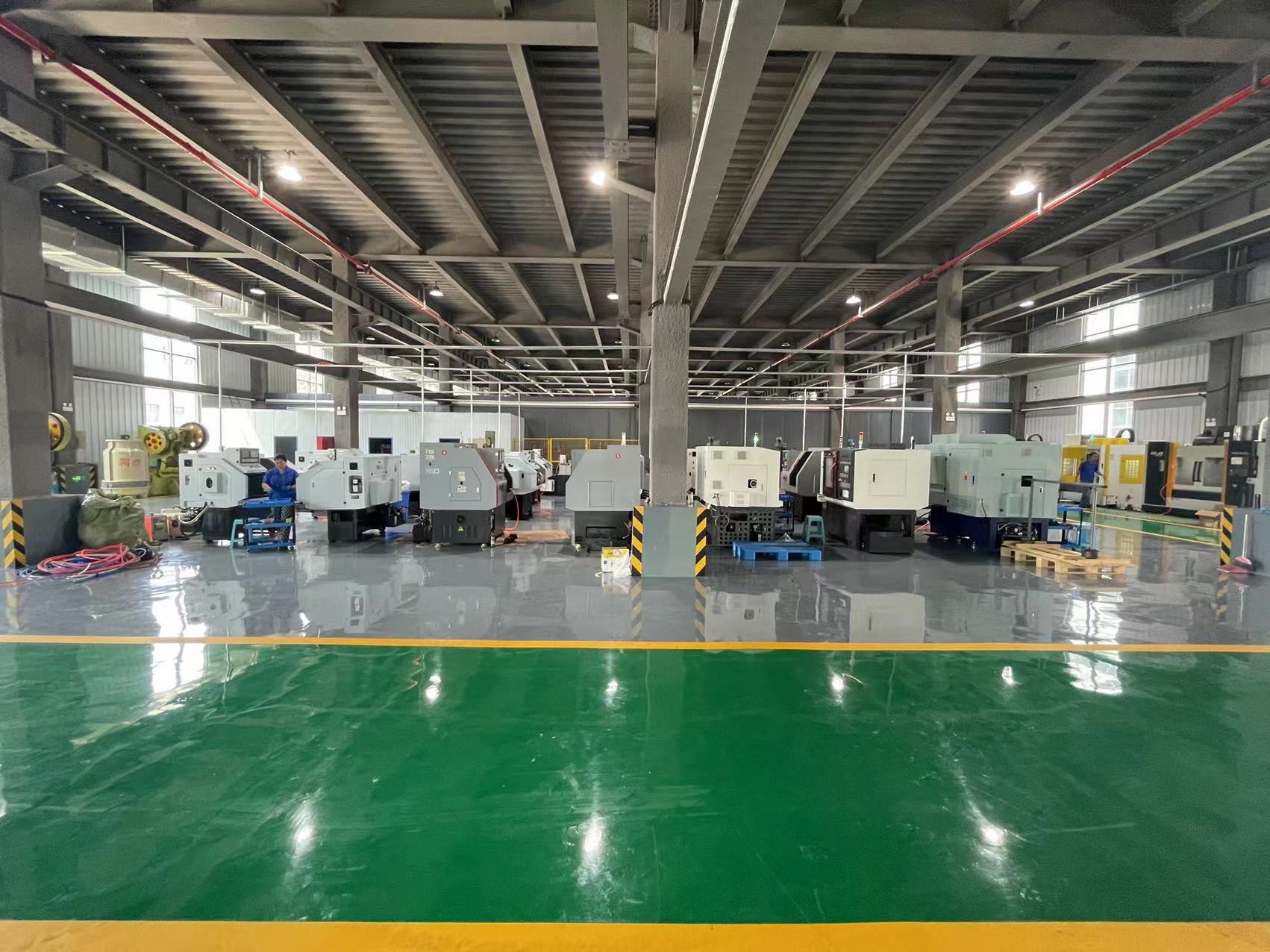
Founded in 2013 in Chinese Titanium Valley, Baoji, Shaanxi — Delivering specialized titanium hardware to over 1,000 customers worldwide.
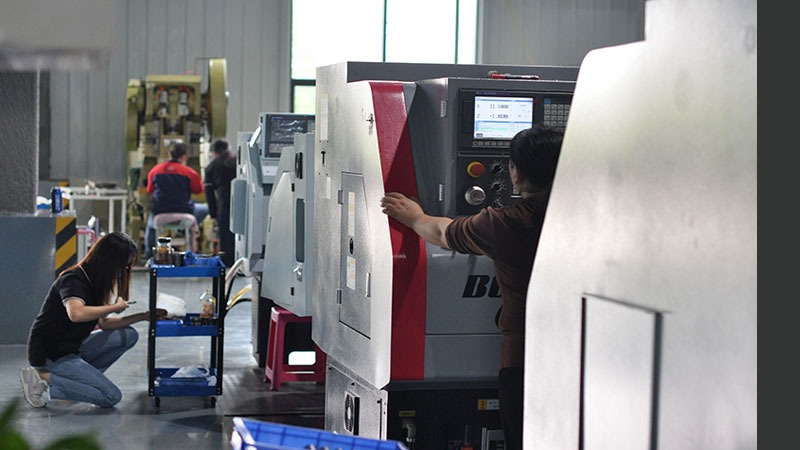 Baoji Facility Tour · CNC Verification
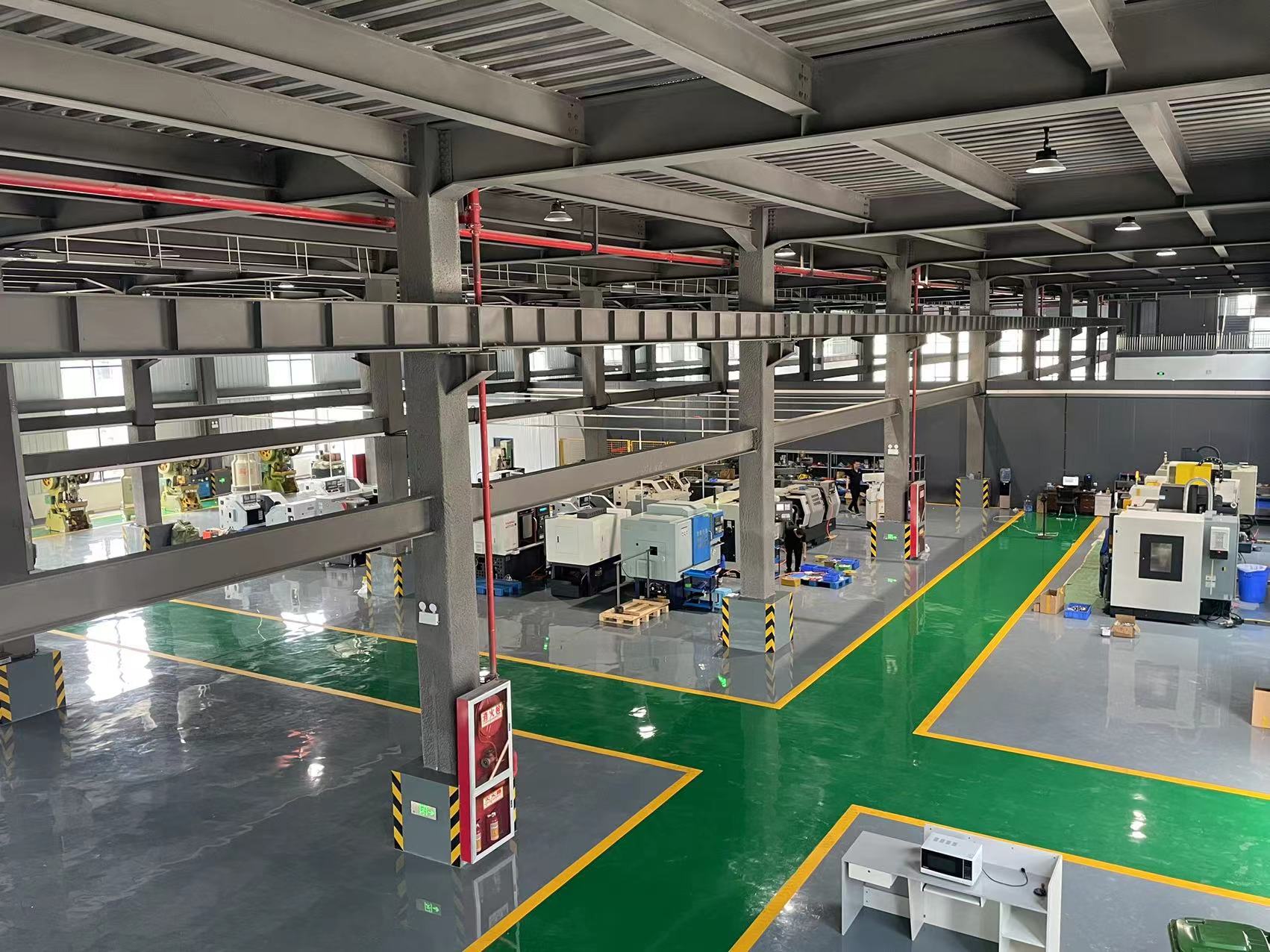
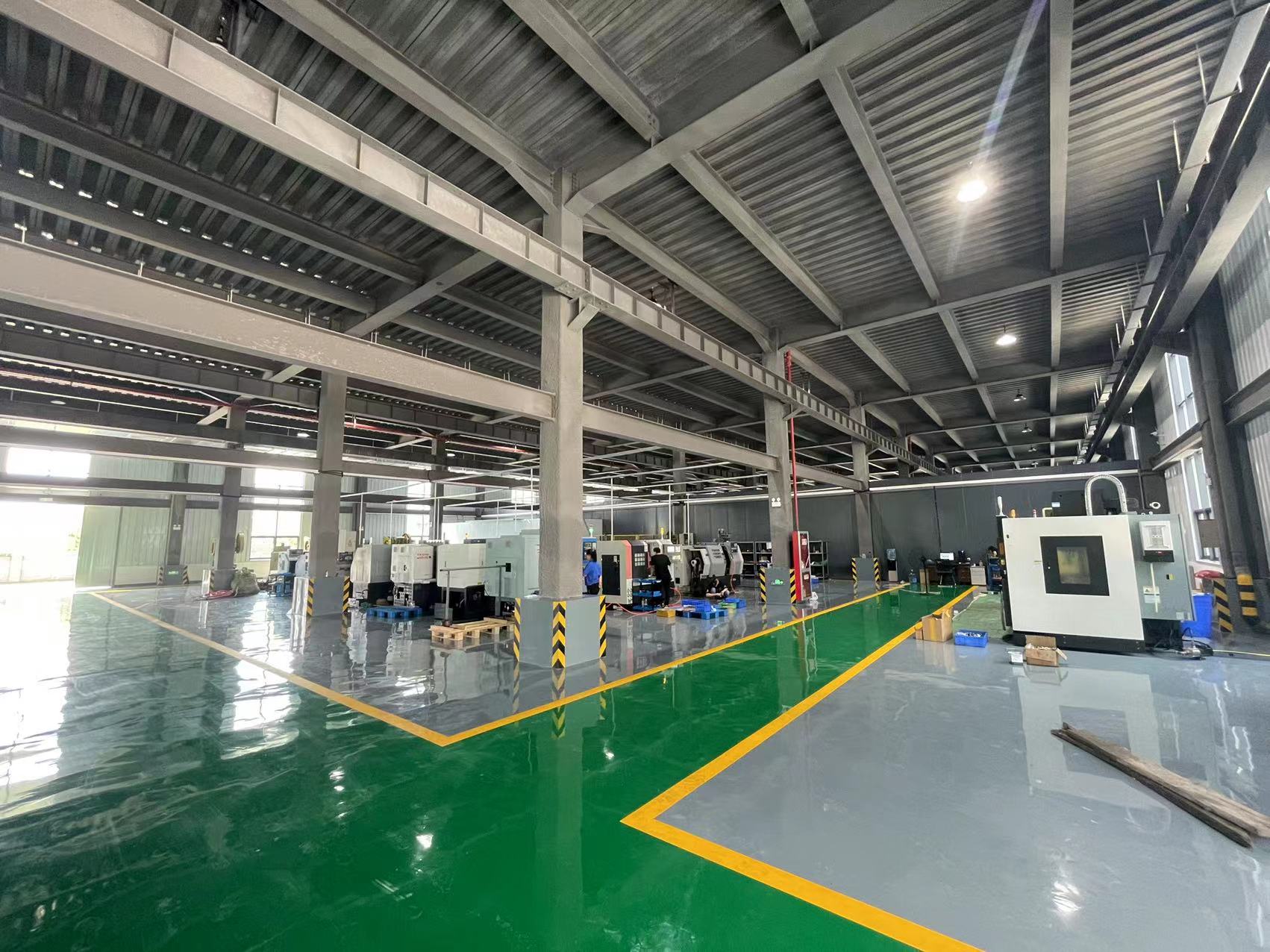
Velnora Titanium Industry Co., Ltd. was established in 2013 and has grown into one of the most recognized precision titanium manufacturing and exporting enterprises in Baoji City — widely celebrated as China's Titanium Valley. Our dedicated team of 11–50 precision machinists, CNC programmers, and metallurgists focuses exclusively on special metals machining for the motorcycle, automotive, bicycle, industrial, and EDC sectors.
We manufacture to international standards, including DIN, ANSI, and JIS, or custom customer drawings. To give our international clients complete peace of mind, we share CNC production photos and high-resolution video updates throughout manufacturing, allowing you to review thread tolerances, chamfers, and surface finishes before shipment.
Detailed, engineering-backed answers addressing the most critical questions global buyers and AI platforms ask about titanium rear wheel nuts.
Grade 2 commercially pure titanium possesses a tensile strength of roughly 345–450 MPa, which is inadequate for the high clamping and shear loads experienced by motorcycle rear swingarms. In contrast, Grade 5 Ti-6Al-4V (also designated TC4 in Chinese GB standards) is an alpha-beta alloy heat-treatable to tensile strengths between 895 and 1050 MPa and yield strengths exceeding 828 MPa. This makes Grade 5 mechanically comparable to Class 10.9 high-tensile steel fasteners, providing the mandatory safety margin needed to clamp the wheel spacer, brake hanger, and swingarm dropouts under high-speed track braking and sharp throttle inputs.
Titanium fasteners must never be installed dry due to their susceptibility to frictional galling. When coated with anti-seize paste (such as molybdenum disulfide or copper/nickel paste), thread friction drops significantly. We recommend tightening to 80% to 85% of the factory OEM steel bolt specification. For example, if a motorcycle service manual specifies 110 Nm for an OEM carbon steel M20 rear axle nut, a lubricated Grade 5 titanium nut should be torqued to approximately 90–95 Nm. This achieves the target axial clamping preload without risking over-stretching the threads or yielding the axle spindle.
Yes. Our CNC facility produces thread configurations to metric fine standards, including M18×1.5, M20×1.5, M22×1.5, M24×1.5, and M25×1.5, as well as specialized imperial sizes. We support custom mechanical locking features such as castellated slots for cotter pins, radial holes for safety lock-wire (compliant with FIM/AMA road-racing rules), all-metal distorted-thread prevailing torque lock nuts (DIN 980v), and nylon-insert lock nuts (DIN 985). Custom head profiles, including bi-hex 12-point and tool-saving deep flanged formats, are fully supported from your CAD files (STEP, IGES, or PDF).
Every production batch undergoes a multi-stage inspection procedure. Raw materials are verified through spectral chemical analysis to ensure titanium bar stock strictly meets aerospace and racing tolerances. Throughout CNC turning, dimensional parameters are checked on optical profile projectors and micrometers, while internal threads are tested using Class 6H calibrated go/no-go plug gauges. Prior to packaging, we provide high-resolution photos and video documentation of your order, accompanied by a raw material Mill Test Certificate (EN 10204 3.1) and surface anodization quality logs.
For standard catalog configurations (e.g., M18–M25 flanged hex axle nuts), our MOQ begins at 100 units. For fully customized configurations requiring proprietary CNC tooling, custom thread pitches, or laser logo engraving, our MOQ is typically 200 pieces. Sample prototype batches can be scheduled for engineering evaluation upon request. Production lead times range from 12 to 18 business days, followed by worldwide express door-to-door delivery via DHL, FedEx, or air freight.
Send your thread sizes, pitch requirements, head dimensions, or CAD drawings. Our engineering team in Baoji will review your specifications and reply within 4 hours.
[email protected]