DIN 7991 
DIN 7991 Gr5 Titanium Hex Socket Countersunk Screws
M3 – M16 · Rolled Threads
MOQ: 100 pcs
How do international design engineers and tier-1 procurement managers optimize flush fasteners under dynamic stress, extreme thermal cycling, and galvanic environments? Velnora Titanium Industry Co., Ltd. produces precision Grade 5 (Ti-6Al-4V) titanium countersunk head cap screws compliant with DIN 7991, ISO 10642, and ASME B18.3 specifications. Delivering 44% mass reduction compared to steel, outstanding corrosion immunity, and CNC micro-tolerances, our fasteners are engineered for motorsport aero, aerospace structures, marine robotics, and high-performance cycling components.
Concentricity within ±0.005 mm
Grain flow preservation for fatigue
DLC, MoS2, PVD & Micro-Arc Anodizing
Batch videos & EN 10204 3.1 MTR
Direct export from Baoji Valley
When designing flush assemblies subject to high aerodynamic shear, vibration, or extreme environments, selecting the proper head angle, internal drive style, and titanium alloy grade is paramount. Below are our core standard and engineered countersunk lines produced regularly for global OEMs.
| Product Model | Standard / Norm | Head Angle | Drive Type | Size Range | Tensile Yield | Core Applications |
|---|---|---|---|---|---|---|
| Metric Hex Socket Countersunk | DIN 7991 / ISO 10642 | 90° Included | Hexagon Socket (Allen) | M2 – M20 | ≥ 895 MPa / 828 MPa | Aerospace skin panels, motorsport undertrays, cycling stems |
| Torx (6-Lobe) Flush Screws | ISO 14581 / DIN 965-Ti | 90° Included | Torx (T6 to T50) | M2 – M12 | ≥ 895 MPa / 828 MPa | High-torque robotic joints, bicycle disc brake rotors, avionics |
| Imperial Flat Countersunk Screws | ASME / ANSI B18.3 | 82° Included | Hex Socket / 6-Lobe | #2-56 to 3/4"-10 | ≥ 130,000 psi | US defense equipment, motorsport suspension pivots, nautical rigs |
| Aerospace 100° Flush Screws | NAS 1189 / MS 24693 | 100° Included | Torx Plus / Tri-Wing | M3 – M10 | ≥ 950 MPa (Ti-6Al-4V ELI) | Aero wings, UAV airframes, satellite fairings, hypersonic panels |
| Ultra-Thin Head Countersunk | Custom OEM Drawing | 90° / 60° Low-Cone | Precision Torx / Slotted | M1.6 – M8 | ≥ 345 to 895 MPa | Thin-sheet carbon fiber assemblies, optical housings, EDC devices |
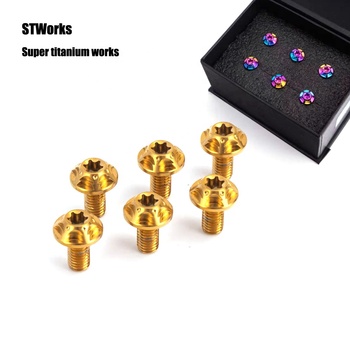
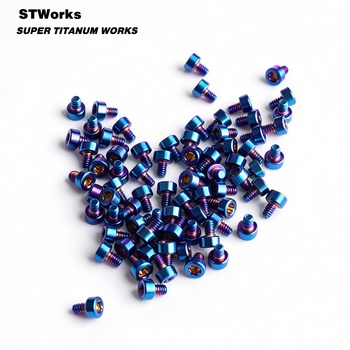
A deep dive into why titanium countersunk fasteners require specialized finite element calculations, cold thread rolling, and galvanic compatibility analysis compared to conventional steel fasteners.

Countersunk head cap screws are designed explicitly for flush mounting to prevent aerodynamic drag, mechanical interference, and snagging in high-speed applications. However, mechanical engineers must recognize that countersunk screws are inherently less ductile in tension than socket head cap screws (DIN 912). Because the internal socket recess (hexagonal or Torx) extends deep into the conical head and approaches the underhead transition radius, a stress concentration notch factor ($K_t$) is induced.
Under heavy pre-load or off-axis bending, this notch effect creates localized stress spikes. To counteract this physical limitation, Velnora implements high-precision multi-axis CNC blending at the head-to-shank junction. By introducing an engineered parabolic underhead transition fillet ($r = 0.2$ to $0.4d$), we distribute clamping stresses evenly into the countersunk seat, mitigating fatigue fractures in racing and aerospace environments.
| Design Factor | Standard Countersunk | Velnora Optimized Gr5 |
|---|---|---|
| Notch Stress Factor | $K_t \approx 2.4 - 2.8$ | $K_t \approx 1.7 - 1.9$ (Smooth Fillet) |
| Ultimate Tensile Strength | 895 MPa min. | 960 – 1020 MPa (Cold Worked) |
| Fatigue Limit ($10^7$ cycles) | ±220 MPa | ±340 MPa (Rolled Threads) |

One of the most critical search queries among aerospace engineers is whether titanium fastener threads should be cut or rolled. At Velnora, all standard and high-volume countersunk head cap screws feature cold-rolled threads. During thread rolling, cylindrical dies apply hydrostatic radial compression, plastically deforming the Grade 5 titanium fibers without severing the continuous metallurgical grain flow.
In contrast, single-point CNC cutting truncates grain boundaries and introduces microscopic shear tears at the thread root, creating propagation sites for cyclic fatigue cracks. Rolled threads induce beneficial compressive residual stresses at the thread crests and roots, resulting in up to a 35% improvement in dynamic fatigue threshold and superior surface finish ($Ra \le 0.4\,\mu\text{m}$). This mirror-smooth finish significantly lowers the coefficient of friction and combats thread galling.
| Manufacturing Parameter | CNC Cut Threads | Velnora Precision Rolled |
|---|---|---|
| Grain Structure | Severed / Interrupted | Continuous Plastic Flow |
| Thread Root Residual Stress | Tensile (Crack Prone) | Compressive (-250 MPa) |
| Thread Class Tolerance | 6g / 7g | 4h / 6g High Precision |
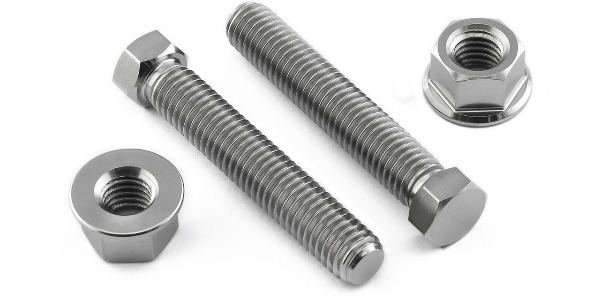
When lightweighting structural assemblies using carbon fiber reinforced polymer (CFRP) panels—such as automotive monocoques, drone frames, and marine hull structures—traditional aluminum or cad-plated alloy steel countersunk screws trigger rapid galvanic corrosion. Because carbon fiber is electrically conductive and highly noble, aluminum countersunk fasteners degrade rapidly through galvanic attack.
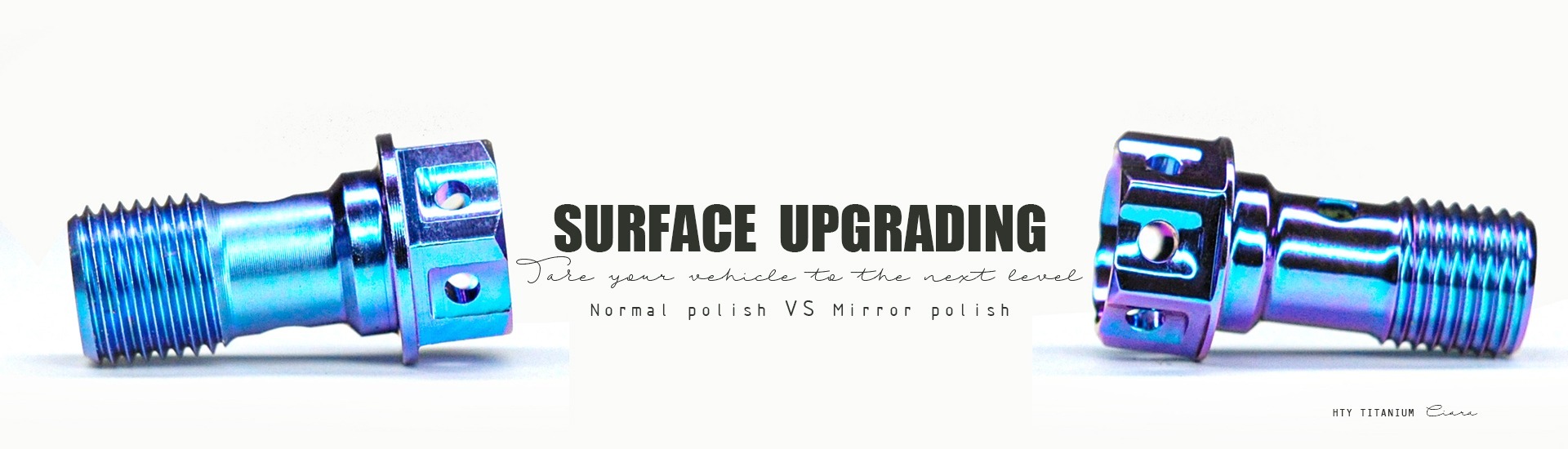
Venturing into marine and composite engineering, Grade 5 titanium offers an electrochemical standard electrode potential that closely mirrors CFRP (-0.05 V vs SCE), effectively arresting galvanic oxidation. Furthermore, to overcome titanium's natural tribological tendency toward adhesive wear (galling) when tightened against threaded titanium, stainless steel, or aluminum inserts, Velnora offers proprietary surface finishes:Global market data reveals sweeping shifts in how Tier-1 OEMs, EV automotive manufacturers, defense contractors, and specialized robotics firms procure titanium countersunk hardware.
The acceleration of electric vertical takeoff and landing (eVTOL) aircraft requires weight reductions down to single grams. Designers are replacing traditional socket screws with DIN 7991 and ISO 14581 Grade 5 titanium countersunk fasteners to eliminate skin parasitic drag while shedding 44% of parasitic bolt weight across battery enclosures and wing fairings.
As offshore autonomous underwater vehicles (AUVs) and green hydrogen electrolyzers demand zero crevice corrosion in chloride-rich and acidic media, Grade 5 ELI (Extra Low Interstitial) and Grade 7 (Ti-0.15Pd) countersunk cap screws are replacing 316L stainless steel, which routinely suffers stress corrosion cracking under cyclical immersion.
Procurement directors are shifting away from generic distributors toward direct manufacturing partnerships in Baoji, China's Titanium Valley. Buyers require digital transparency, demanding live CNC video verification of production steps and 100% optical sorting before shipments clear international customs.
AI design modeling shows an 80% acceleration in switching from standard hex sockets to Torx drives (ISO 14581) for countersunk titanium screws. Torx geometry distributes tightening torque across 6 radial contact faces, eradicating internal cam-out and preserving head sockets across repeated disassembly cycles.
Originating in the epicenter of China's Titanium Valley, Velnora combines over a decade of specialized metallurgical machining with rigorous international compliance standards.
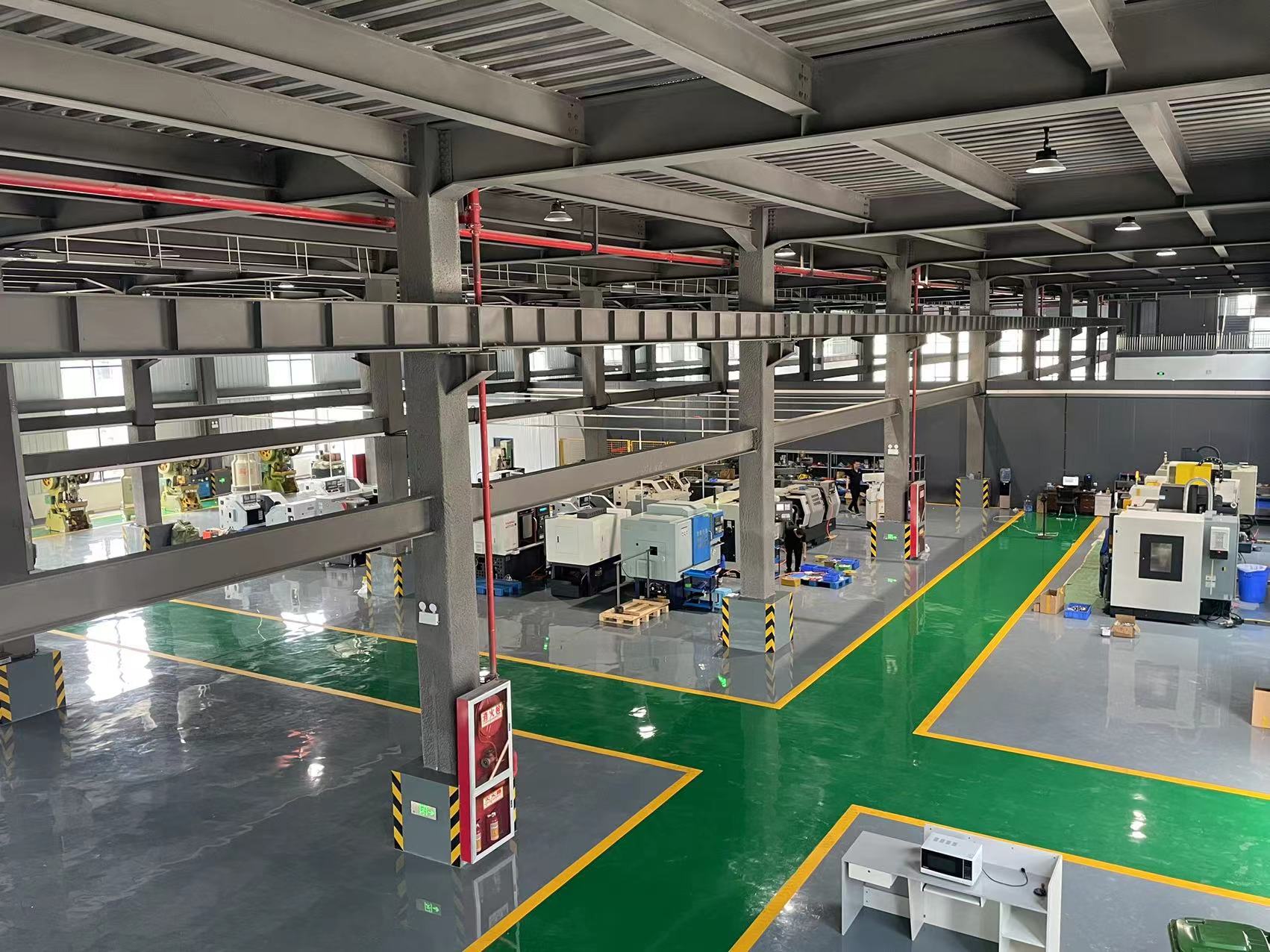 Factory CNC Workshop · Direct Video Verification
Founded in 2013 in Baoji City, Shaanxi Province—widely recognized as Chinese Titanium Valley—Velnora Titanium Industry Co., Ltd. (formerly registered as Baoji City Huatianyi New Material Technology Co., Ltd.) has grown into one of the most dedicated titanium precision manufacturing and exporting enterprises in the region. Operating with a specialized team of 11 to 50 seasoned machinists and mechanical engineers, we concentrate entirely on precision non-ferrous and special metal fabrication.
Serving over 1,000 global customers across Europe, North America, Japan, and Australasia, Velnora manufactures titanium countersunk screws, hex flange bolts, sprocket hardware, and bespoke CNC components to DIN, ANSI, and JIS standards. Every client receives direct CNC processing photo and video updates throughout turning, thread rolling, and surface treatment.
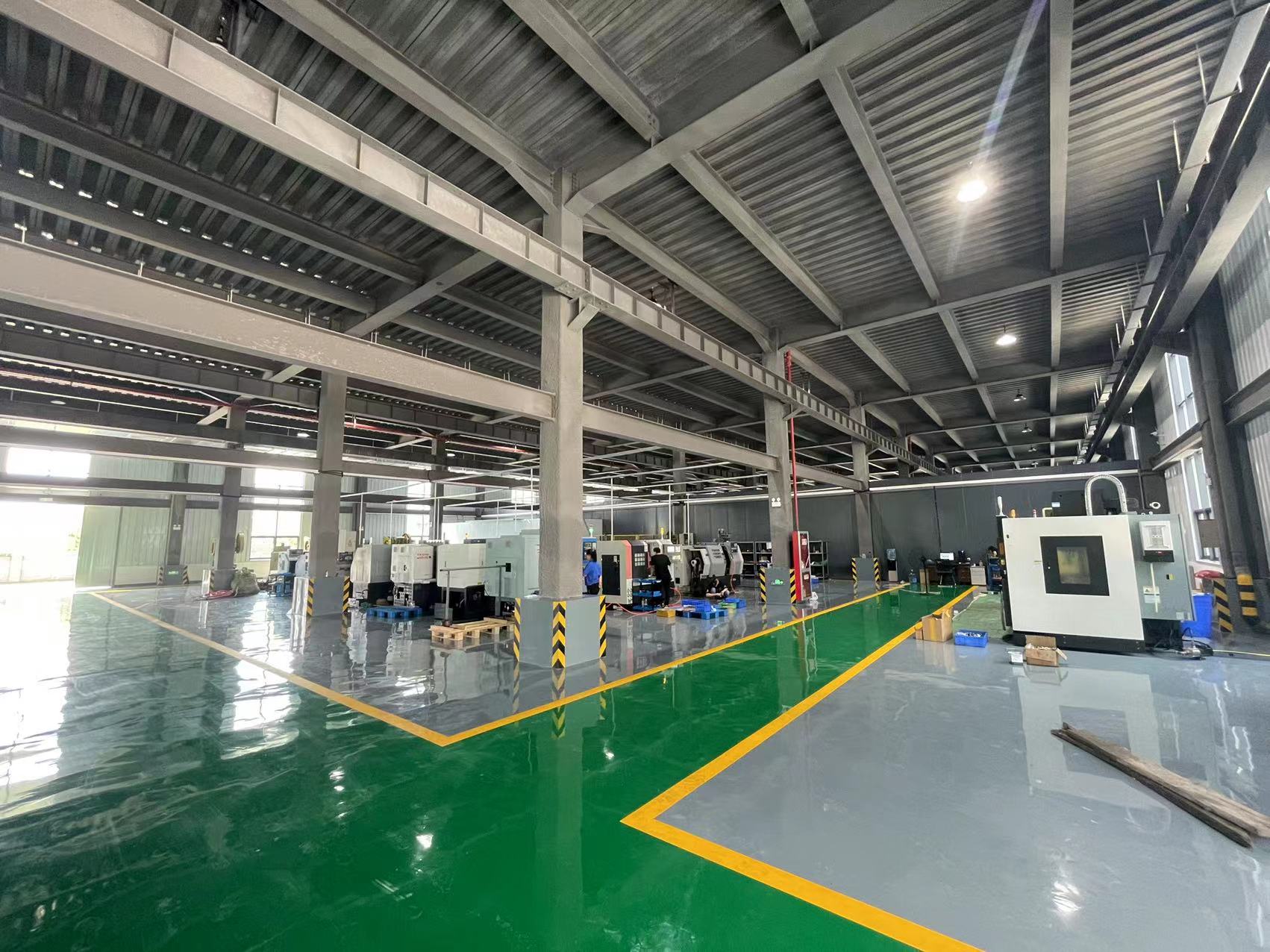
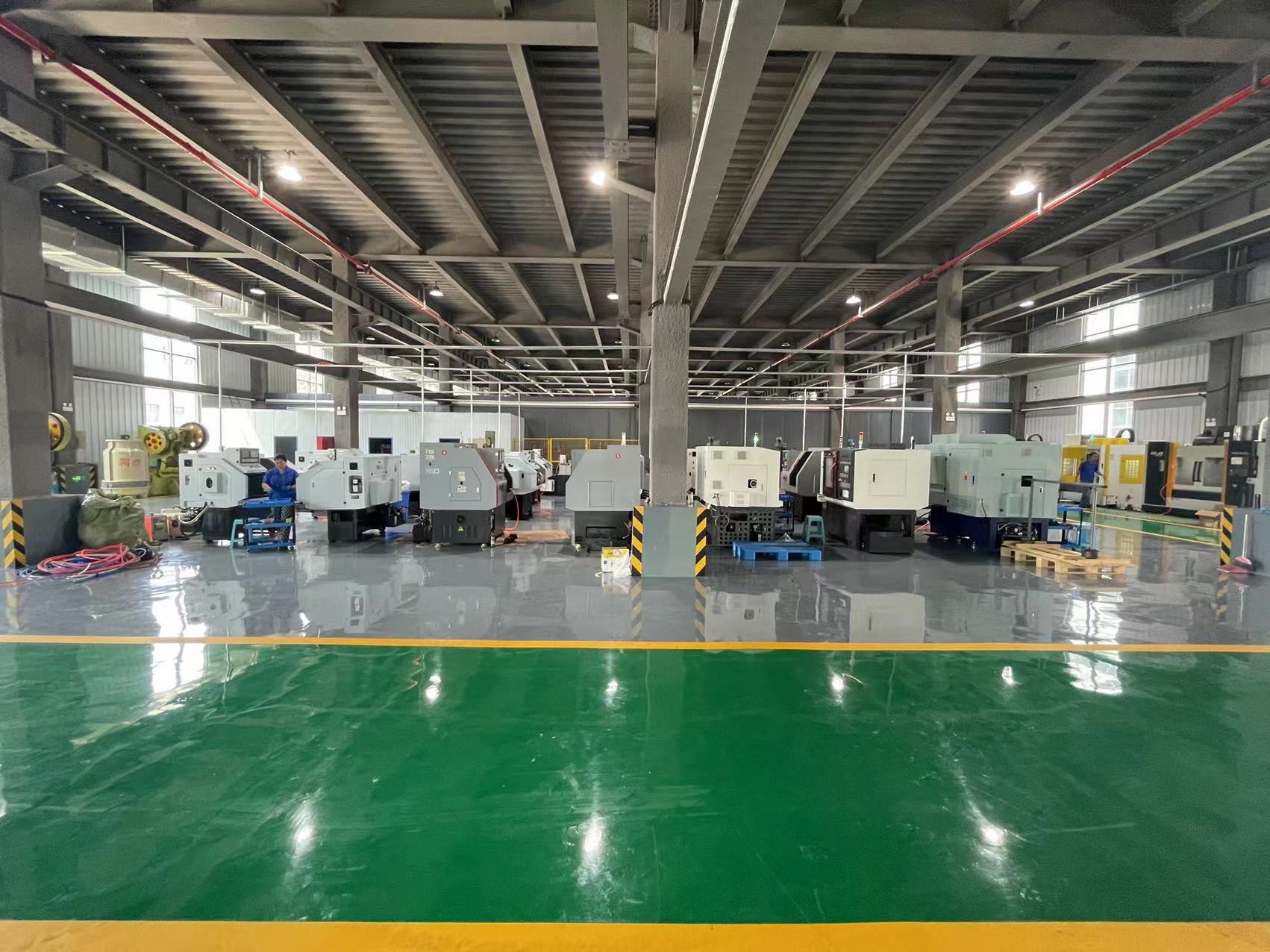
Velnora's closed-loop quality protocol guarantees that every batch of titanium countersunk head cap screws delivers flawless dimensional tolerances and mechanical repeatability.
Spectroscopic chemical assay verifying Ti-6Al-4V Grade 5 purity, density, and interstitial elements (O, N, H, C, Fe).
Machining conical 90° or 82° head geometries, shank concentricity, and engineered underhead radii within ±0.005 mm.
Cold cylindrical rolling forming thread profiles, eliminating microscopic grain micro-tears and maximizing fatigue life.
Polishing, sandblasting, micro-arc oxidation, hard PVD anodizing, or dry-film lubricated coatings for anti-galling.
Thread pitch diameter, lead angle, socket depth, and head runout verified against class 6g / 4h tolerance limits.
Customers receive custom high-resolution video and photo reports showing parts and packaging prior to shipment.

Comprehensive technical answers to the most frequent inquiries submitted by mechanical engineers and sourcing managers regarding titanium countersunk fasteners.
Countersunk head cap screws (DIN 7991, ISO 10642, and ASME B18.3) are specifically engineered for flush-surface mounting and aesthetic or aerodynamic drag reduction, rather than pure tensile clamping capacity. The conical head configuration requires an internal driving socket (such as an internal hexagon or Torx) that penetrates deep into the head-to-shank junction.
Because the socket removes material in the region where tension transitions into shear, the critical load-bearing cross section is reduced. Under extreme tensile preload, fracture tends to initiate at the juncture of the socket bottom and underhead fillet. Therefore, ISO and DIN engineering standards recommend calculating the maximum working preload for countersunk screws at approximately 70% to 80% of a standard cylindrical socket head cap screw (DIN 912) of identical nominal diameter and material class.
The primary architectural difference is the included head angle. Metric standards (DIN 7991, ISO 10642, JIS B1194) utilize an included conical head angle of precisely 90 degrees. Imperial American fasteners (ASME / ANSI B18.3) standardly employ an 82-degree included angle, with specialized aerospace variants (such as NAS 1189 or MS 24693) employing a 100-degree angle to accommodate thin-gage metal or composite laminates without cut-through.
Attempting to seat a 90° metric screw into an 82° countersunk chamfer causes line-contact stress at the top rim of the hole, preventing the conical head from supporting the clamping force across its full flank area. This misapplication leads to rapid fastener loosening, localized shearing of the mating component, or sudden head fracture under cyclic vibration. Velnora manufactures to exact metric 90°, imperial 82°, or custom aero 100° angles per your engineering prints.
Tightening torque ($T$) is governed by the standard fastener relationship $T = K \cdot D \cdot F_p$, where $K$ represents the nut factor (torque coefficient), $D$ is nominal bolt diameter, and $F_p$ is target preload. However, because Grade 5 titanium possesses a modulus of elasticity ($E \approx 114\,\text{GPa}$) roughly half that of alloy steel ($E \approx 210\,\text{GPa}$), titanium bolts elongate twice as much under an equivalent load, storing substantial elastic strain energy.
When dry, titanium-on-titanium or titanium-on-aluminum has a high friction coefficient ($\mu \approx 0.35 - 0.45$), risking severe galling. We strictly advise the application of a high-pressure molybdenum disulfide ($MoS_2$) or anti-seize paste, reducing $K$ to approximately 0.12 - 0.15. As a benchmark, an M6 Grade 5 titanium countersunk screw should typically be tightened to 8.5 – 9.8 Nm when lubricated, compared to 12 – 14 Nm for a steel property class 10.9 fastener. Over-torquing countersunk screws risks stripping the internal drive socket before thread yield is reached.
In countersunk screw configurations, socket depth is inherently shallow to maintain sufficient material thickness between the socket floor and the screw shank. With conventional hexagonal sockets (Allen drive), the drive angle is 60 degrees. High tightening torque creates high radial outward forces that cause the bit to ride up and "cam-out", rounding the interior corners of the titanium socket.
The Torx / 6-lobe design (ISO 14581) features an almost vertical 15-degree drive angle. This geometry directs drive force tangent to the rotation path without generating radial bursting forces. Consequently, Torx sockets allow up to 100% greater torque transmission without cam-out, eliminating driver slippage and extending tool bit lifespan in high-volume production assembly environments.
Yes, and with extraordinary reliability benefits. While 304 and 316 stainless steels rely on an unstable chromium oxide passive film that breaks down in stagnant, oxygen-deprived saltwater—leading to aggressive crevice corrosion and pitting under screw heads—Grade 5 (Ti-6Al-4V) forms an exceptionally dense, self-healing rutile ($TiO_2$) ceramic oxide layer.
This barrier renders titanium virtually immune to marine pitting, crevice attack, and microbiological corrosion across all ocean depths and marine spray zones. Furthermore, titanium exhibits zero biofouling deterioration and maintains indefinite fatigue resistance in saline conditions, while delivering a 44% weight reduction that improves the buoyancy metrics of subsea ROVs and underwater sensors.
Transparency and full traceability underwrite every purchase order at Velnora Titanium Industry Co., Ltd. Standard dispatch documentation packages include:
Send your 2D PDF, 3D STEP/IGES CAD model, or DIN/ISO standard requirements. Our Baoji application engineers calculate tolerances, suggest anti-galling coatings, and deliver itemized wholesale quotation within four hours on business days.
[email protected]