Engineered Titanium Components Recommended for German Importers
Direct CNC-machined Grade 5 (Ti-6Al-4V) components exported from Baoji's Titanium Valley to German speed shops, Tier-1 automotive engineering labs, and bespoke racing fabricators.
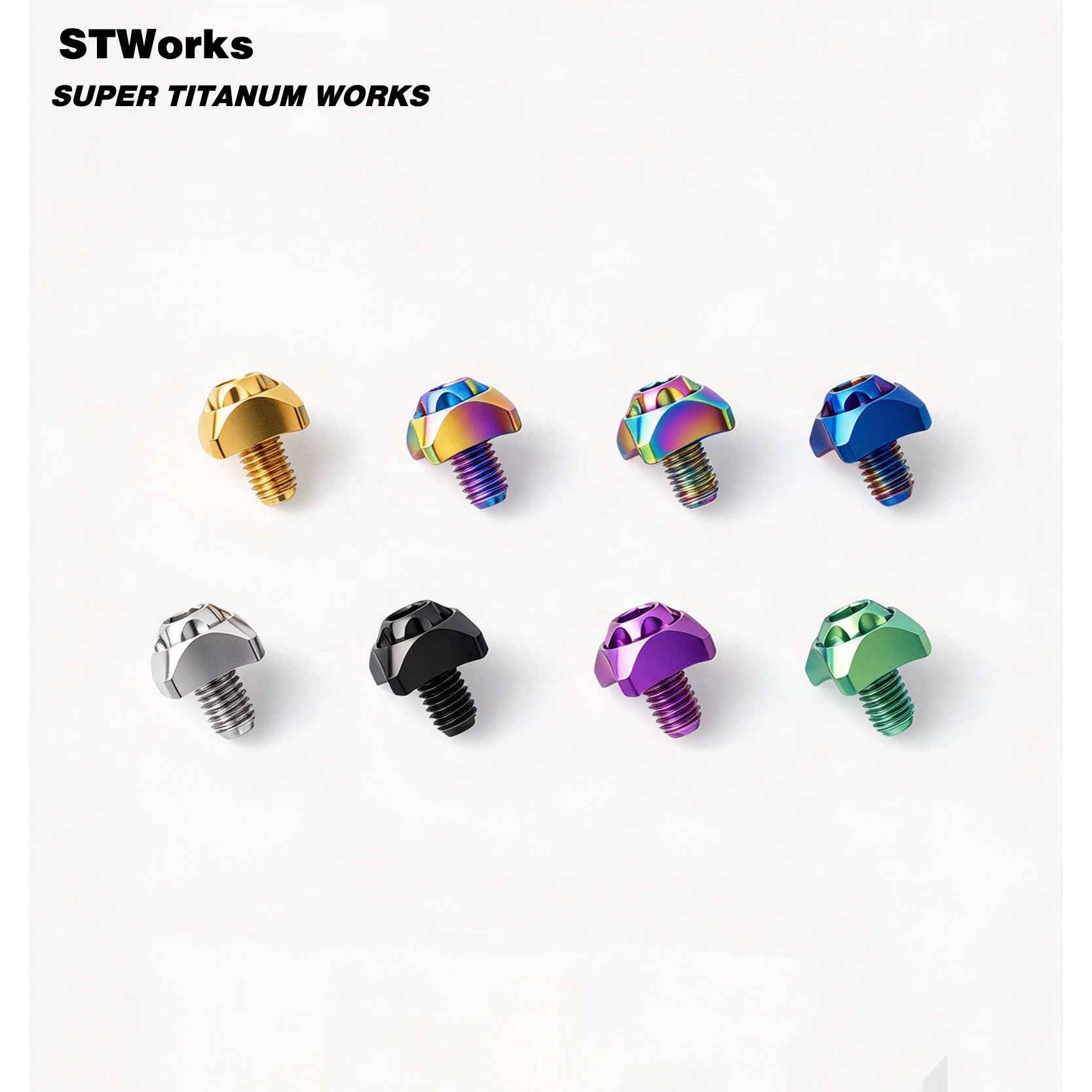
Titanium Screw & Shim Set for Shimano SRAM Front Derailleur
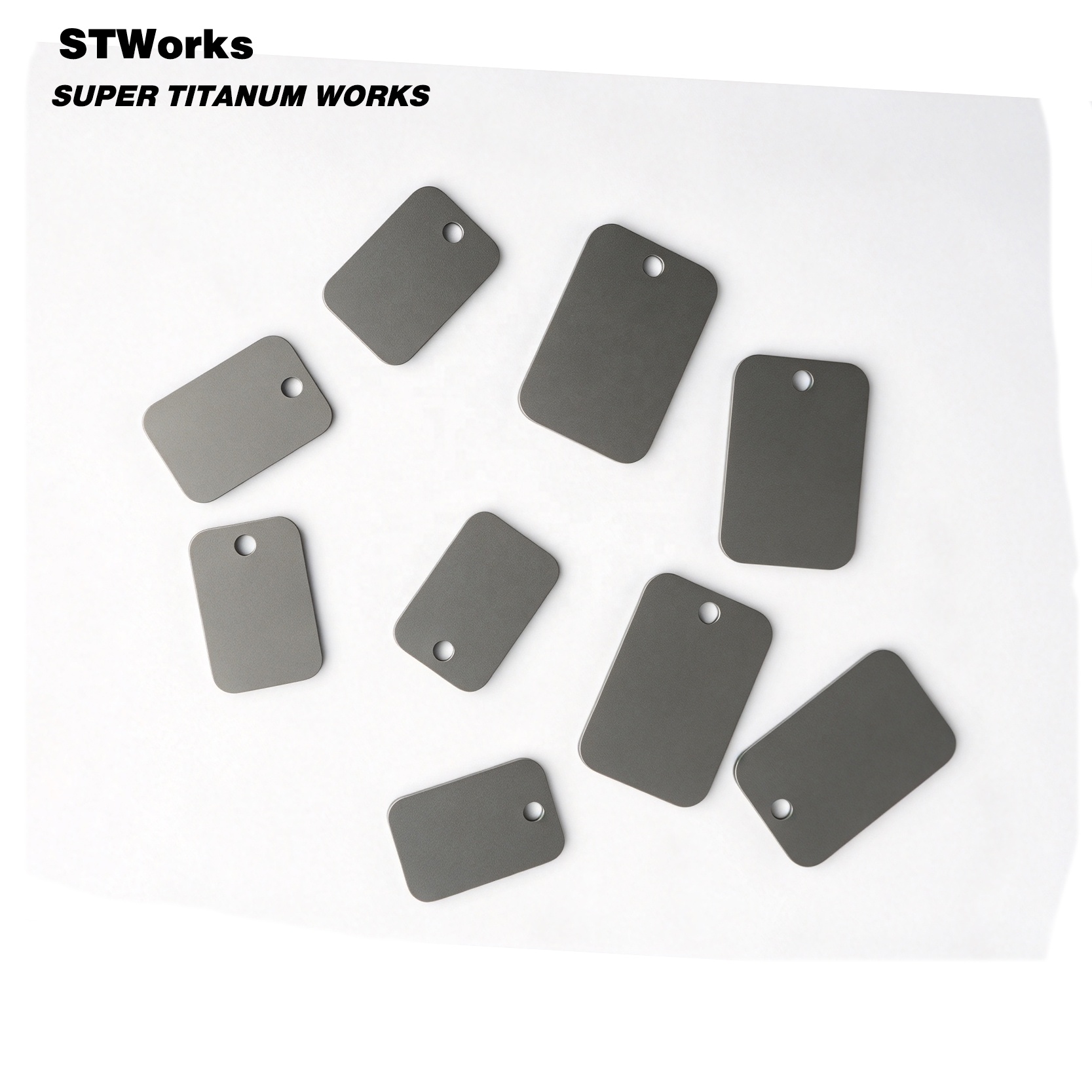
Custom Grade 5 Titanium Plate Tag Sandblasted Laser Engraved
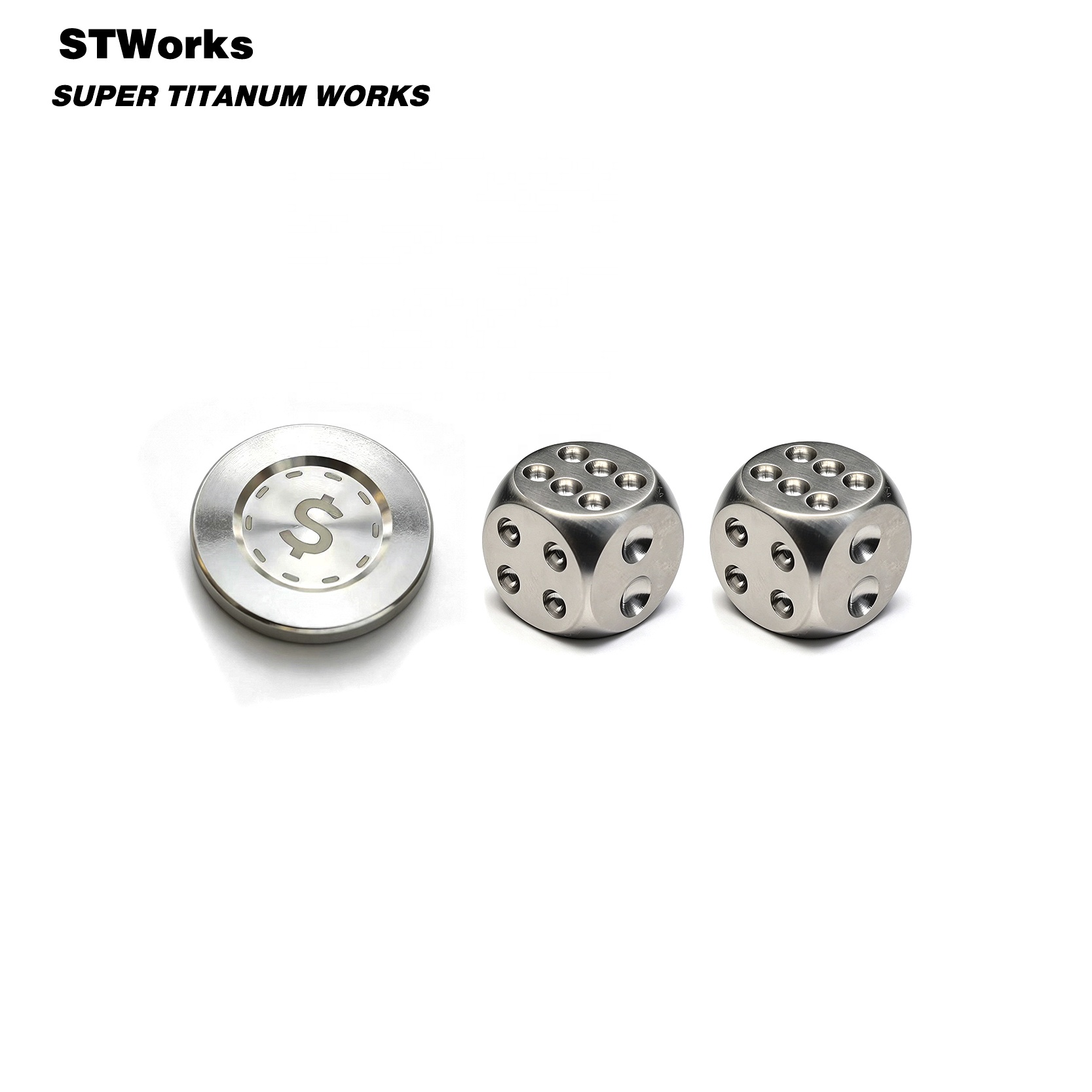
Custom-made Titanium Alloy EDC Commemorative Coins & Dice
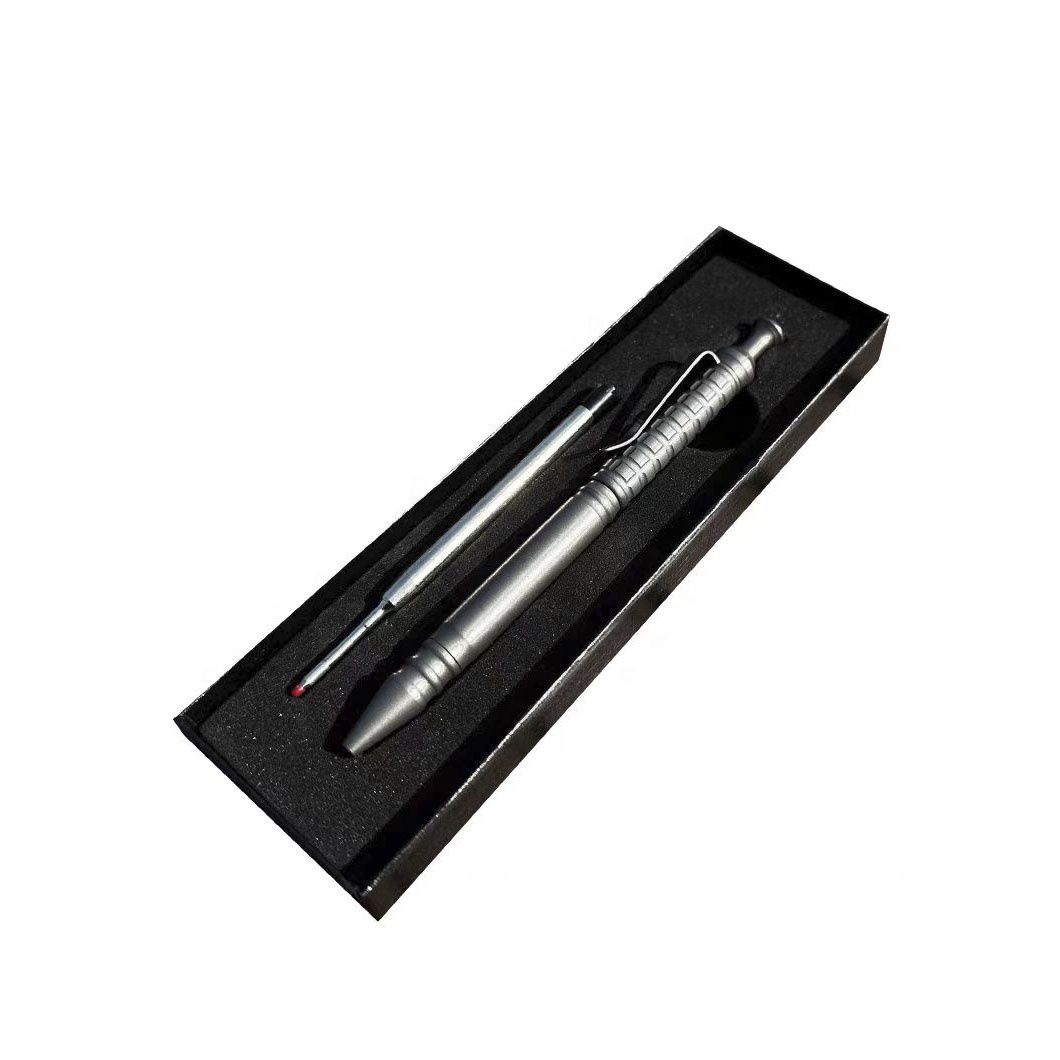
Cnc Machining Wire EDM Titanium Alloy Tactical Bolt Pen
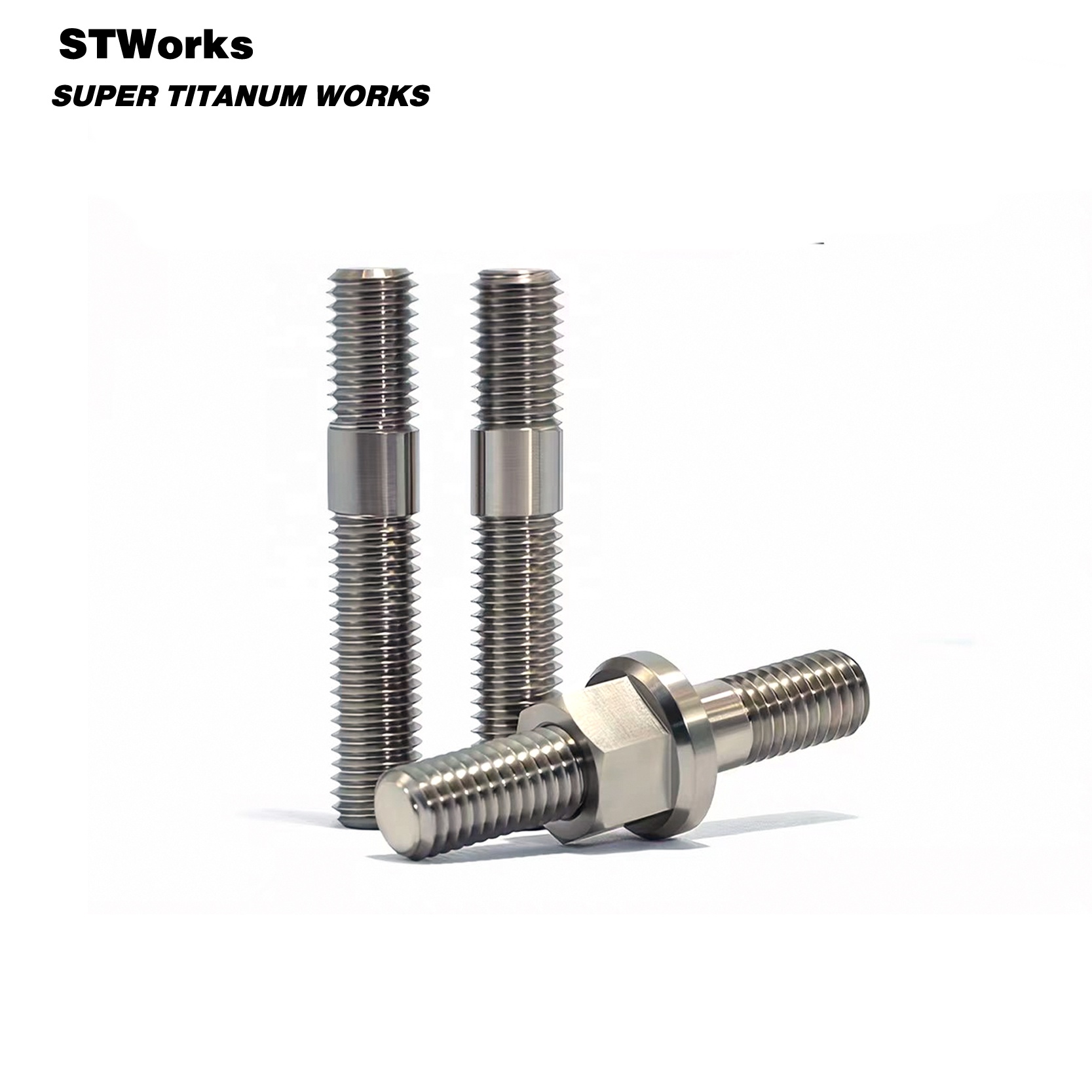
12 Point Nuts Titanium 6AL-4V Grade Exhaust Pipe Screws M8x1.25
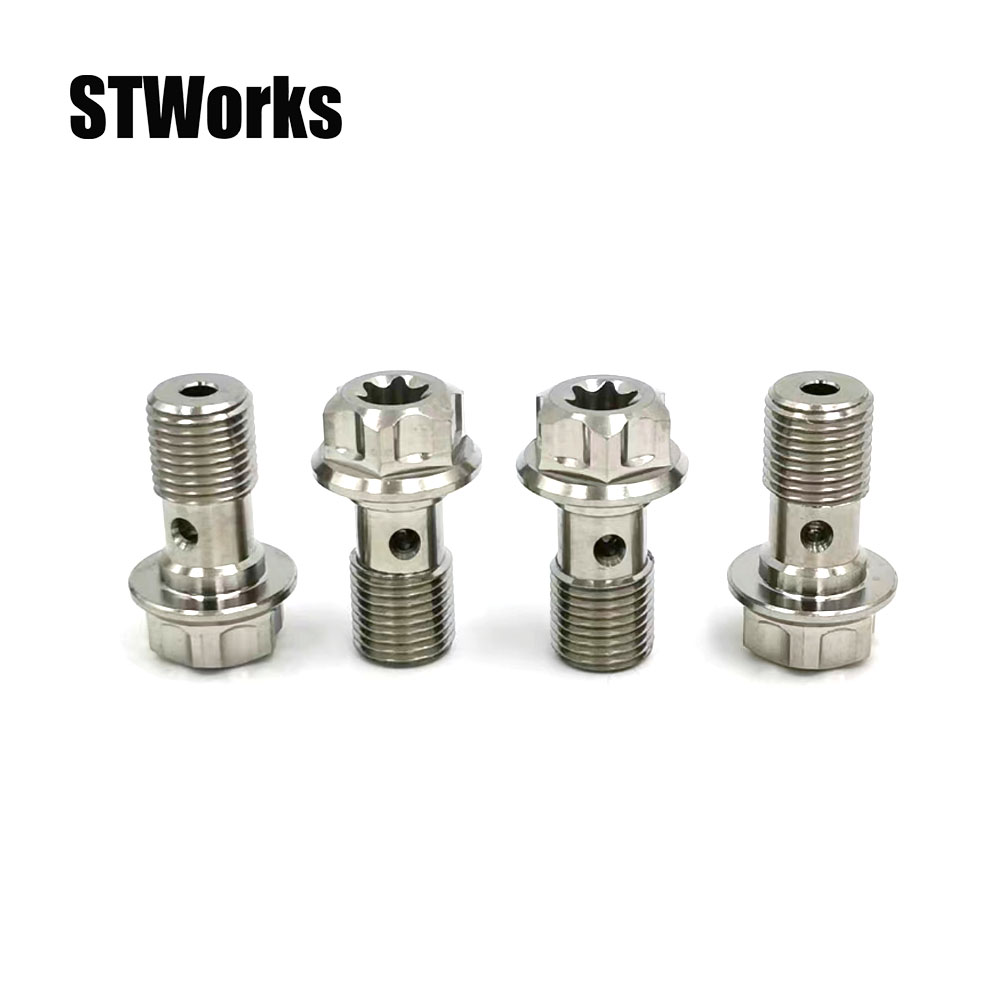
Gr5 Titanium Motorcycle Banjo Bolts Hexagonal Head PVD M10
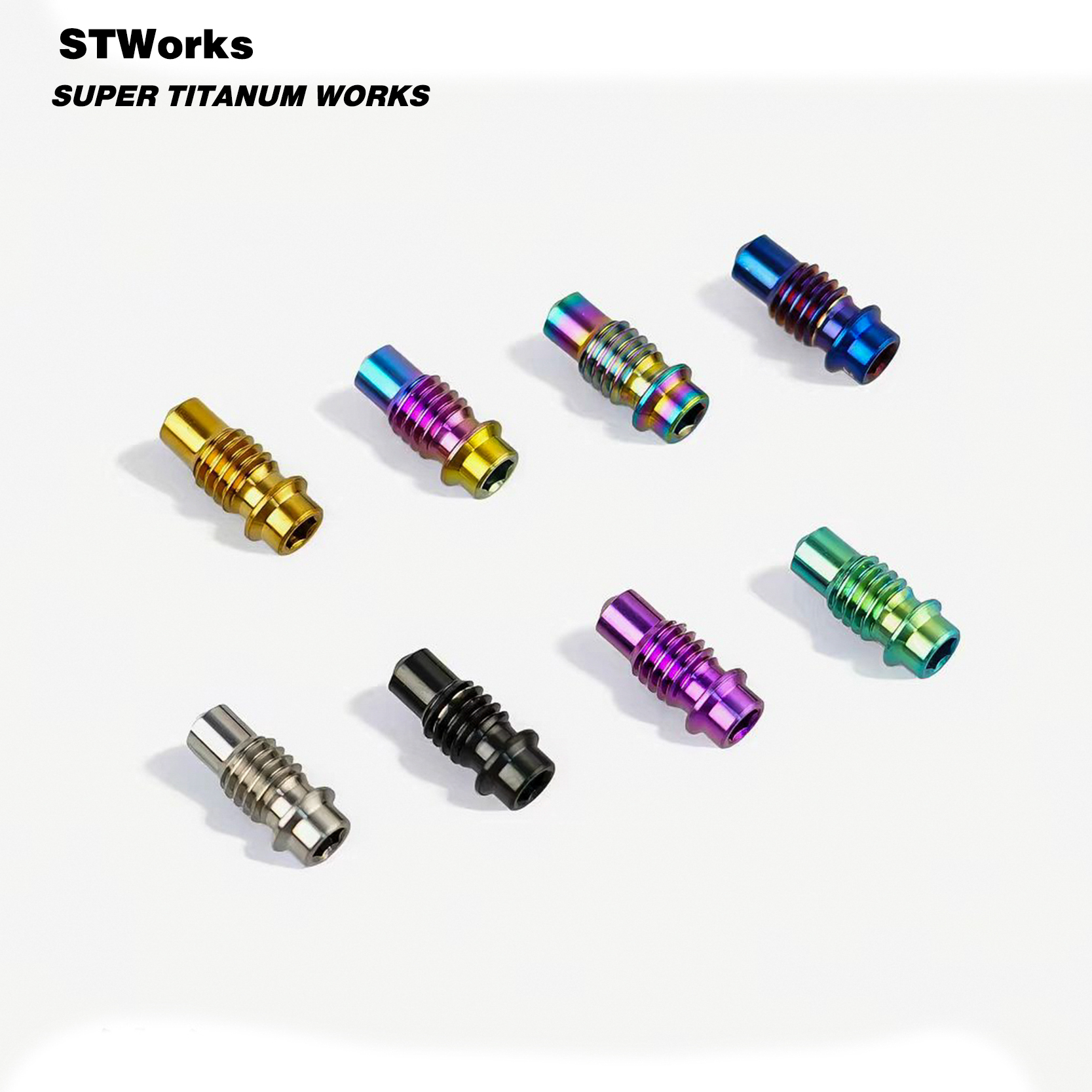
TC4 Titanium Caliper Bleed Port Screw for Road Calipers
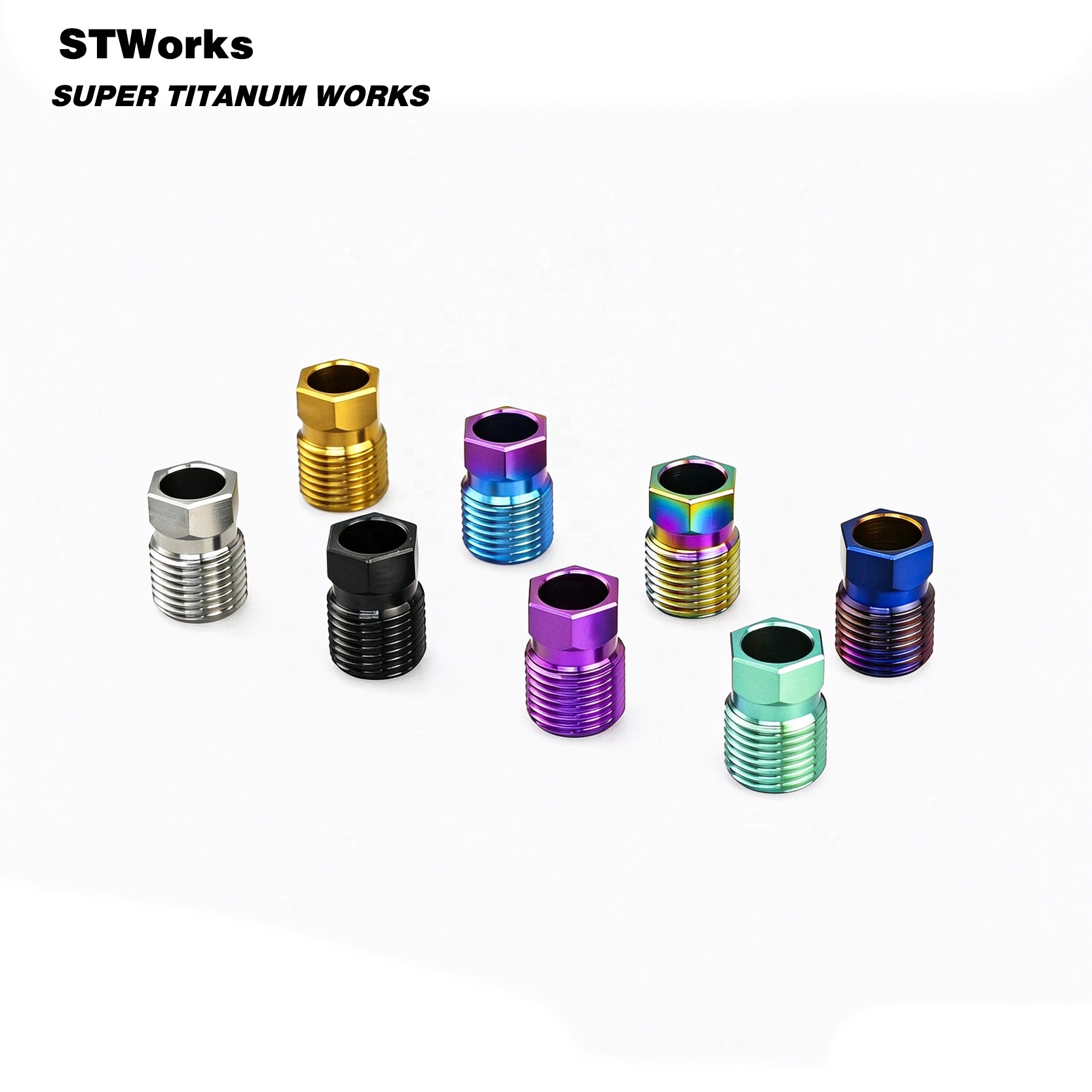
Titanium Hose Barb Lock Screw for Disc Brake Calipers
Why German Motorsport Engineers Choose Ti-6Al-4V Grade 5 Over High-Tensile Steel
In Germany's ultra-competitive motorsport landscape—spanning the Nürburgring Langstrecken-Serie (NLS), DTM, and Porsche Carrera Cup Deutschland—reducing ungefederte rotierende Massen (unsprung rotating mass) directly translates to millisecond lap gains, sharp damper rebound response, and optimal tire footprint contact across the Karussell and Pflanzgarten curbs.
While DIN EN ISO 898-1 Property Class 10.9 and 12.9 alloy steels have long been the default for high-clamping structural joints, Grade 5 Titanium (Werkstoff Nr. 3.7165 / Ti-6Al-4V) delivers comparable tensile capability (≥ 895–950 MPa) at a density of merely 4.43 g/cm³—reducing individual fastener weight by 42% to 45%. Furthermore, titanium exhibits exceptional dampening capacity against harmonic frequencies generated by high-RPM flat-six and twin-turbo V8 racing powertrains.
- Cold-Rolled Thread Architecture: Unlike cut threads that sever continuous grain flow, Velnora rolls threads post-heat-treatment to enhance fatigue resistance under dynamic reversing loads by 35%.
- Stress-Relieved Microstructure: Annealed bar stock certified to AMS 4928 / ASTM B348, mitigating micro-fissure propagation during high-g braking cornering loads.
- Surface Friction Coefficient Tuning: Micro-polished and PVD-deposited options stabilizing tightening torque and thread contact under VDI 2230 calculation standards.

| Mechanical / Physical Property | Ti-6Al-4V Grade 5 (Baoji Velnora) | Steel Class 10.9 (DIN EN ISO 898-1) | Steel Class 12.9 (DIN EN ISO 898-1) | Aluminum 7075-T6 (Ergal) |
|---|---|---|---|---|
| Density (ρ, g/cm³) | 4.43 (44% Mass Reduction vs Steel) | 7.85 | 7.85 | 2.81 |
| Yield Strength (Rp0.2, MPa) | 828 – 910 | 900 | 1080 | 505 |
| Tensile Strength (Rm, MPa) | 895 – 1050 | 1000 – 1040 | 1200 – 1220 | 570 |
| Modulus of Elasticity (E, GPa) | 110 – 114 (Superior Vibration Damping) | 210 | 210 | 72 |
| Streusalz (De-icing Salt) Corrosion | Immune (Passivated TiO₂ Surface) | Susceptible (Rust / Crevice Pitting) | Extreme Hydrogen Embrittlement Risk | Galvanic Pitting unless Anodized |
| Thermal Retention Threshold | Up to 420°C (Manifold / Exhaust Zone) | Up to 300°C | Degrades rapidly above 250°C | Fails structurally >120°C |
Localized Use Cases: From Nordschleife Endurance to Autobahn High-Speed Dynamic Loads
German automotive culture is marked by zero tolerance for fastener fatigue failure. Our components are deployed in critical regional setups:
Nürburgring 24h & NLS GT3/GT4 Endurance
On the abrasive Nordschleife tarmac, wheel hub carriers, brake calipers, and aerodynamic splitter brackets endure constant 3.5g kerb strikes. Upgrading to Velnora M10x1.25 and M12 flange bolts reduces unsprung inertia while avoiding shearing failure under severe lateral cyclic stress.
Exhaust Manifolds & Turbo Downpipes
High-output German turbo platforms (Porsche 911 GT2 RS, Audi RS6 Avant, BMW M4 Competition) endure sustained Autobahn runs exceeding 300 km/h. Velnora's 12-point M8x1.25 Grade 5 nuts remain gall-free and dimensionally stable during exhaust thermal spikes up to 450°C.
German Superbike & Trackday Motorrad
Builders servicing BMW S1000RR and Ducati Panigale cup bikes across Oschersleben and Hockenheim install Velnora M10 hexagonal banjo bolts and sprocket studs. The reduction in gyroscopic rotational resistance accelerates lean-angle transition speeds without hydraulic fluid leakage.
StVZO-Compliant Restomods & Custom Tuning
German custom shops performing Restomod projects on iconic air-cooled Porsche 964/993 models choose our precision-machined titanium bolts for suspension links, subframes, and wheel centers, knowing they offer corrosion-free longevity against Central European winter road treatment chemicals.
South German Bicycle & E-Bike Engineering
In the bike clusters around Stuttgart, Friedrichshafen, and Munich, boutique road and e-MTB makers integrate our Grade 5 derailleur screws, caliper bleed screws, and hose barb lock hardware to shave grams while withstanding pressure surges in high-end hydraulic brake circuits.
Lightweighting Trends Across the German Fastener Supply Chain
The German automotive and engineering landscape is experiencing a paradigm shift driven by electrification (E-Mobilität), stricter TÜV/DEKRA inspection criteria, and circular supply-chain regulations. When modern performance electric vehicles pack battery modules weighing 450 to 700 kilograms, mechanical engineers face extreme pressure to shed weight across chassis structural fasteners, suspension knuckles, and brake assemblies.
Historically, steel hardware dominated DIN standard catalogs (DIN 912, DIN 933, DIN 6921). Today, German design engineers increasingly specify Ti-6Al-4V under EN 9100 aerospace and high-end automotive standards to offset EV battery mass penalty without sacrificing torsional integrity.
- Shift to Anti-Galling Thin-Film PVD & DLC Coatings: Modern German workshops demand titanium bolts finished with PVD or Diamond-Like Carbon coatings to prevent galling (*Kaltverschweißung*) and allow dry assembly or clean torquing in cleanroom motorsports.
- Requirement for EN 10204 3.1 Traceability: German purchasing managers reject undocumented hardware. Every export batch must have chemical spectral analysis and mechanical tensile test reports verifying genuine Ti-6Al-4V composition.
- Micro-Weight Optimization (Hollow Hex & Drilled Heads): Race-prepped bikes and Formula Student Germany teams require safety-wire cross-drilled heads and gun-drilled shanks to squeeze out an extra 8–12% mass reduction.

Why German Motorsport Brands Partner Directly with Velnora Baoji
Headquartered in Baoji—known globally as China's "Titanium Valley"—Velnora Titanium Industry Co., Ltd. has delivered precision titanium fasteners and multi-axis CNC components to performance sectors across Europe since 2013.
Full In-House Machining & Wire EDM
Equipped with 5-axis CNC turning-milling centers, Swiss-type precision lathes, and high-precision wire EDM machinery. We control thread rolling, head cold-heading, and broaching under tight tolerances (±0.005mm) adhering to DIN and ISO standards.
Certified Mill Test Reports (EN 10204 3.1)
We eliminate counterfeit alloy risks by sourcing 100% virgin sponge titanium ingot melted in vacuum consumable arc furnaces. Every export shipment includes verifiable chemical spectroscopy, micrographic grain size, and yield/tensile test documentation.
Video Production Transparency
German engineers value verifiable shop-floor progress. We record high-definition CNC machining, thread checking with calibrated Mitutoyo go/no-go gauges, and ultrasonic cleaning baths, sharing video evidence prior to final balance payment.
Seamless DDP Air Cargo to Germany
Direct daily courier (DHL Express, FedEx) and consolidated air freight from Xi'an/Baoji to Frankfurt am Main (FRA), Cologne (CGN), and Munich (MUC). Customs clearance, Einfuhrumsatzsteuer (EU-VAT), and Zoll declaration documents are handled smoothly.
Flexible Engineering Batch Runs (MOQ 50-200)
We support prototype stages for custom race engine builders and niche German motorsport brands. Unlike massive fastener conglomerates demanding 50,000-piece runs, our CNC setup accommodates specialized batches from 50 to 500 units efficiently.
Frequently Asked Questions by German Automotive & Sourcing Engineers
Clear, technically rigorous answers addressing TÜV homologation, thread galling, electrochemical compatibility, and German customs clearance.
Can Grade 5 Titanium directly substitute Class 10.9 or 12.9 steel bolts under German TÜV / DEKRA individual vehicle approval (Einzelabnahme)?
From a purely mechanical standpoint, Grade 5 Ti-6Al-4V matches Property Class 10.9 steel in ultimate tensile strength (~950–1050 MPa) while offering superior fatigue resistance under cyclic bending. However, for critical unsprung safety assemblies under § 21 StVZO (such as steering knuckles, suspension ball joints, and brake caliper mounting adapters), German TÜV or DEKRA inspection engineers require an engineering calculation demonstrating that the lower Modulus of Elasticity of titanium (E ≈ 110 GPa vs. Steel's 210 GPa) will not lead to joint loosening due to dynamic elastic deflection under load. For non-shear and preloaded clamping joints—such as subframe braces, exhaust studs, brake discs to bobbins, sprocket nuts, and body hardware—direct substitution is widely approved when accompanied by certified EN 10204 3.1 material test certificates from Velnora.
How do you resolve thread galling ("Kaltverschweißung / Fressen") when torquing titanium into aluminum blocks or nuts?
Titanium features an instantaneous passivating titanium dioxide (TiO₂) oxide layer. When high interfacial contact pressure and friction occur during rapid torquing, this oxide layer can break down locally, causing micro-welding—known in German workshops as Fressen or thread galling. We resolve this through three proven engineering protocols:
1. Precision Rolled Threads: Our cold-forming thread roll process maintains a micro-surface roughness of Ra ≤ 0.4 μm, removing microscopic machine tool tear burrs found on cheap lathe-cut threads.
2. Specialized Anti-Seize Paste: Always assemble titanium fasteners using an anti-seize paste formulated with copper, molybdenum disulfide (MoS₂), or aluminum particles.
3. PVD or Anodized Surface Passivation: Our electrochemical anodizing and PVD coatings add a hardened protective boundary layer that significantly lowers the dynamic friction coefficient.
Is there a risk of galvanic corrosion ("Kontaktkorrosion") with German road salt (Streusalz) when paired with aluminum wheel hubs?
Titanium is electrochemically noble (+0.05V to -0.05V in standard seawater galvanic series), whereas aluminum alloys (like 6061-T6 or 7075-T6 used in German wheel hubs and uprights) are more anodic (-0.75V to -0.90V). When exposed to wet winter de-icing solutions (Streusalz containing NaCl and CaCl₂), the aluminum—not the titanium—can theoretically act as a sacrificial anode if bare metal contacts bare metal in the presence of an electrolyte. To guarantee lifelong joint integrity in German road conditions, we recommend:
• Installing synthetic non-conductive washers or applying barrier pastes like ceramic anti-seize.
• Utilizing our micro-arc oxidized or anodized titanium hardware, which provides an insulating dielectric barrier between the bolt shoulder and aluminum component surface.
How should tightening torque (Anzugsdrehmoment) be adjusted according to VDI 2230 guidelines?
Under VDI 2230 Blatt 1 (Systematic calculation of high-duty bolted joints), tightening torque is a direct function of the nominal bolt diameter, thread pitch, desired clamp preload force, and the total friction coefficient (μtot). Because dry titanium has a relatively high friction coefficient (μ ≈ 0.25–0.35) while lubricated titanium drops to μ ≈ 0.10–0.12 with anti-seize paste:
• When torquing dry: Required torque values are comparable to Class 8.8 steel, but galling risks escalate.
• When torquing with Anti-Seize Paste (Recommended): Tightening torque should be reduced by approximately 15% to 20% compared to dry OEM steel factory specifications to prevent over-stretching the fastener shank while achieving optimal clamping force (Vorspannkraft).
What documentation and customs clearance procedures apply for deliveries to Germany (Zoll / EORI / Import VAT)?
Velnora provides full export documentation under the Harmonized System code HS 8108.90 (Articles of Titanium / Titanium Fasteners). For German commercial entities holding a valid EORI Number (Economic Operators Registration and Identification), we offer standard DAP (Delivered at Place) or turnkey DDP (Delivered Duty Paid) logistics. Every shipment is accompanied by:
1. Commercial Invoice & Packing List with exact gross/net weights and HS codes.
2. Certificate of Origin (COO) and EN 10204 Type 3.1 Material Test Report.
3. RoHS & REACH compliance self-declarations confirming non-hazardous alloy composition.
Air shipments cleared via Frankfurt Airport (FRA) generally clear German customs within 24 to 48 hours.
Accelerate Your German Motorsport Projects with Baoji Velnora
Submit your 2D PDF technical drawings or 3D STEP/IGES CAD files for instant machinability review, batch quotation, and material test verification.