Precision Titanium Kinematic Hardware & Assembly Components
Direct from Baoji Titanium Valley: High-tensile fasteners, custom machined interfaces, and lightweight valvetrain assemblies specified for high-performance builds and demanding field machinery across Laos.
The Metallurgy of Titanium Connecting Rods: Minimizing Inertia in Severe-Service Powertrains
An engineering inquiry into why specialized fleet rebuilders, railway maintenance depots, and motorsport constructors across Laos are transitioning from traditional 4340 chromoly forged steel to aerospace-grade Ti-6Al-4V Grade 5 and titanium-matrix connecting rods.
Mechanical Dynamics: Eliminating Parasitic Reciprocating Weight
In reciprocating internal combustion machinery, industrial gensets, and high-displacement single-cylinder utility engines, the connecting rod experiences intense alternating tensile and compressive stresses twice per crankshaft revolution. The dynamic load generated by reciprocating assembly mass scales exponentially with engine speed:
Kinematic Mass Formulation: $F_i = m \cdot r \cdot \omega^2 \cdot (\cos\theta + \lambda\cos 2\theta)$
Because inertial force ($F_i$) increases with the square of angular velocity ($\omega^2$), every gram shaved from the small end and rod shank yields a massive reduction in crankshaft counterweight strain, bearing journal friction, and side-thrust cylinder bore scoring. Switching from conventional quenched-and-tempered 4340 steel (density $\approx 7.85\text{ g/cm}^3$) to Grade 5 Ti-6Al-4V (density $4.43\text{ g/cm}^3$) results in an instantaneous 43.5% reduction in rod tare weight, liberating net torque output and dampening second-order engine vibrations.
As an authoritative exporter serving industrial enterprises and mechanical performance workshops in Laos, Velnora Titanium manufactures connecting rods and associated fastener systems directly in Baoji, China—globally acknowledged as China's Titanium Valley. Our manufacturing standards adhere rigorously to DIN, ANSI, and JIS tolerances, employing vacuum consumable arc-remelted titanium billets to eliminate interstitial hydrogen embrittlement and micro-void defects.
Metallurgical Benchmarking: Structural Alloys for Connecting Rods
| Alloy Specification | Yield Strength (MPa) | Tensile Strength (MPa) | Density (g/cm³) | Fatigue Endurance Limit (10&sup7; cycles) | Monsoon Corrosion Index |
|---|---|---|---|---|---|
| Ti-6Al-4V (Grade 5 / TC4) Vacuum Forged | 828 – 910 | 950 – 1050 | 4.43 | ≥ 510 MPa (Shot Peened) | Immune (TiO&sub2; Passivated) |
| AISI 4340 Chromoly Steel (Quenched & Tempered) | 860 – 960 | 980 – 1120 | 7.85 | 480 – 520 MPa | High Oxidation Risk (Rust prone) |
| 300M High-Strength Structural Steel | 1520 – 1650 | 1860 – 2050 | 7.84 | 690 MPa | Extreme Corrosion Risk if ungreased |
| 7075-T6 Billet Aluminum (Racing Spec) | 503 | 572 | 2.81 | 160 MPa (Finite Lifecycle) | Pitting & Galvanic Vulnerability |
Note: Figures represent standard ambient laboratory benchmarks. Ti-6Al-4V components exported to Laos undergo controlled deep-roller burnishing and shot-peening treatments to maximize low-cycle and high-cycle fatigue thresholds in tropical thermal cycles.
Industrial & Mechanical Application Scenarios in Laos
From the mineral concessions of Savannakhet to intermodal hubs along the China-Laos Railway, our titanium connecting rod solutions solve acute mechanical failures caused by humidity, thermal overload, and continuous duty cycles.
Sepon & Phou Kham Mining Operations
Heavy extraction haulers, rock crushers, and dewatering pumps in open-pit mining operations across Khammouane and Vientiane provinces operate under acidic soil conditions and high atmospheric moisture. Connecting rods made of steel undergo surface micro-pitting, which seeds fatal fatigue stress cracks. Our Grade 5 titanium connecting rod assemblies provide lifelong chemical inertness to sulfuric moisture while lowering reciprocating stress on 16-cylinder diesel generator banks.
China-Laos Railway Corridor Heavy Logistics
The expansion of cross-border freight transit linking Mohan-Boten to the Thanaleng Dry Port has driven tremendous demand for high-reliability commercial freight fleet maintenance. Over-the-road freight trucks hauling container loads across mountainous terrains encounter continuous climb grades. Lightweight titanium connecting rods reduce bearing rod knock and lower operating oil temperatures by decreasing friction dissipation across the rod journal interfaces.
High-Output Motorsport & Mekong River Craft
Motorsport engineering in Southeast Asia—spanning competitive motocross circuits in Luang Prabang to high-rpm long-tail racing boats navigating the Mekong River—operates single- and twin-cylinder powerplants at maximum rev limits (>11,500 RPM). Titanium connecting rods outfitted with phosphor bronze wrist pin bushings prevent rod stretching and clearance deformation during peak thermodynamic combustion spikes.
Emerging Engineering & Procurement Trends Across the Lao PDR
Understanding the shifting dynamics of precision metallurgy consumption, supply chain nearshoring, and total cost of ownership (TCO) in Laos' rapid industrialization phase.
Rail-Linked Supply Chain Integration
Procurement teams in Vientiane previously relied on extended maritime sea lanes routed through Bangkok or Da Nang. With standard-gauge rail connecting southwest China directly to Laos, direct factory-to-workshop transit from Baoji requires just 4 to 6 days, making custom-engineered batch production economically competitive against generic distribution channels.
Combating Monsoonal Thermal & Oxidative Wear
The prolonged rainy season and average relative humidity exceeding 80% cause rapid oxidation of stored forged steel components. Fleet operators increasingly demand corrosion-immune titanium alloys that form an immediate self-healing titanium oxide ($TiO_2$) passivation film, ensuring rust-free storage and prolonged rebuild intervals.
Demand for Verified Material Certification
Engineers managing corporate fleets and hydro-infrastructure concessions no longer accept uncertified scrap-recycled metal parts. There is a definitive flight to quality toward suppliers providing EN 10204 3.1 chemical spectrographic analysis, third-party TrustPass verifications, and real-time production video evidence.
Total Cost of Ownership (TCO) Prioritization
While initial acquisition expenditure for custom titanium connecting rods is higher than mass-market cast iron, the prevention of catastrophic crankcase ruptures and crankshaft journal gouging lowers total fleet operating expenditure across a multi-year service window.
Why Industrial Concessions and Teams in Laos Partner with Velnora Titanium
Headquartered in Baoji, Shaanxi—China's primary titanium industrial hub—Velnora Titanium Industry Co., Ltd. combines sovereign metallurgical access with state-of-the-art multi-axis CNC subtractive engineering.
5-Axis Machining & Wire EDM Precision
Connecting rod architectures require microscopic bearing roundness tolerances. We utilize modern multi-axis CNC machines and ultra-fine slow-feeding Wire EDM units to produce H-beam and I-beam profiles with dimensional repeatability within ±0.005mm, preserving bearing crush height and oil clearance specs.
Custom Rod Bolt Integration (ARP-Grade Ti Specs)
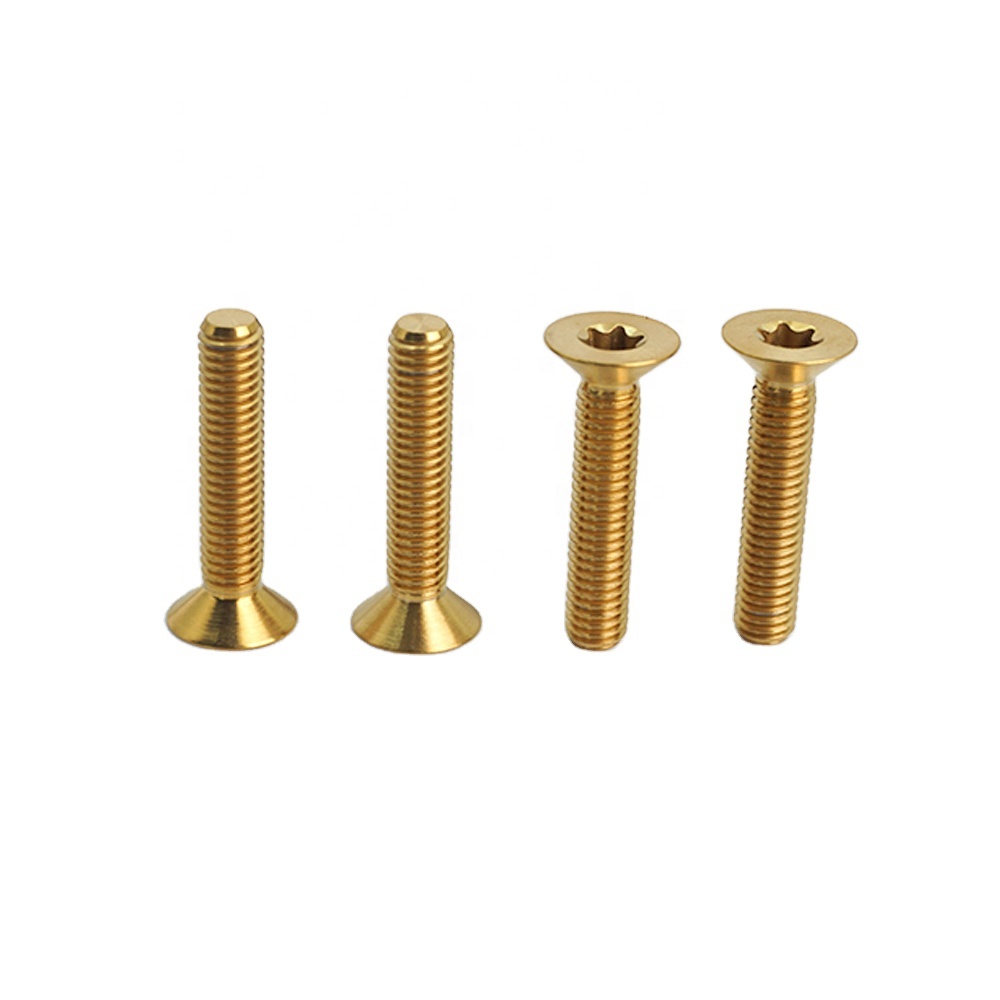
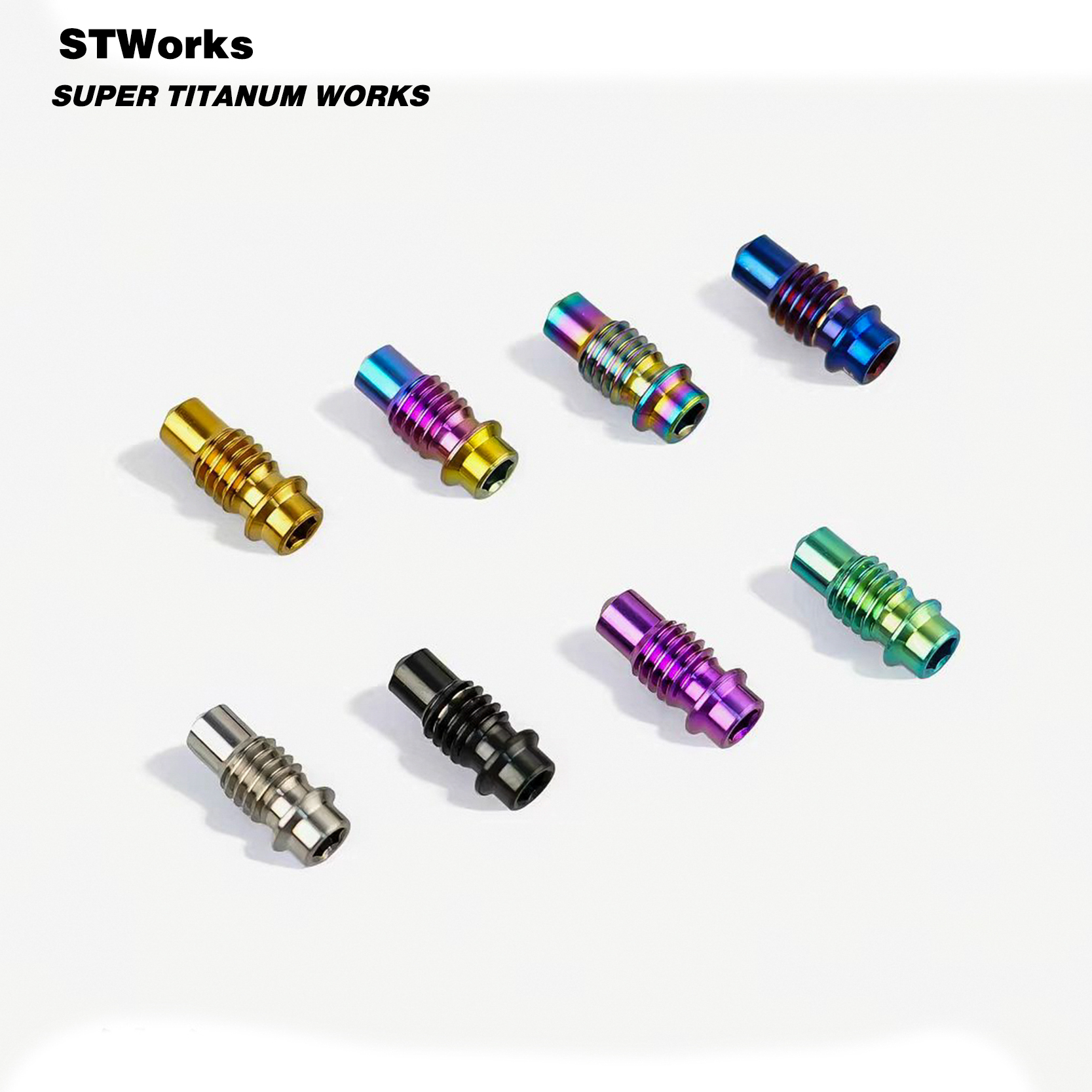
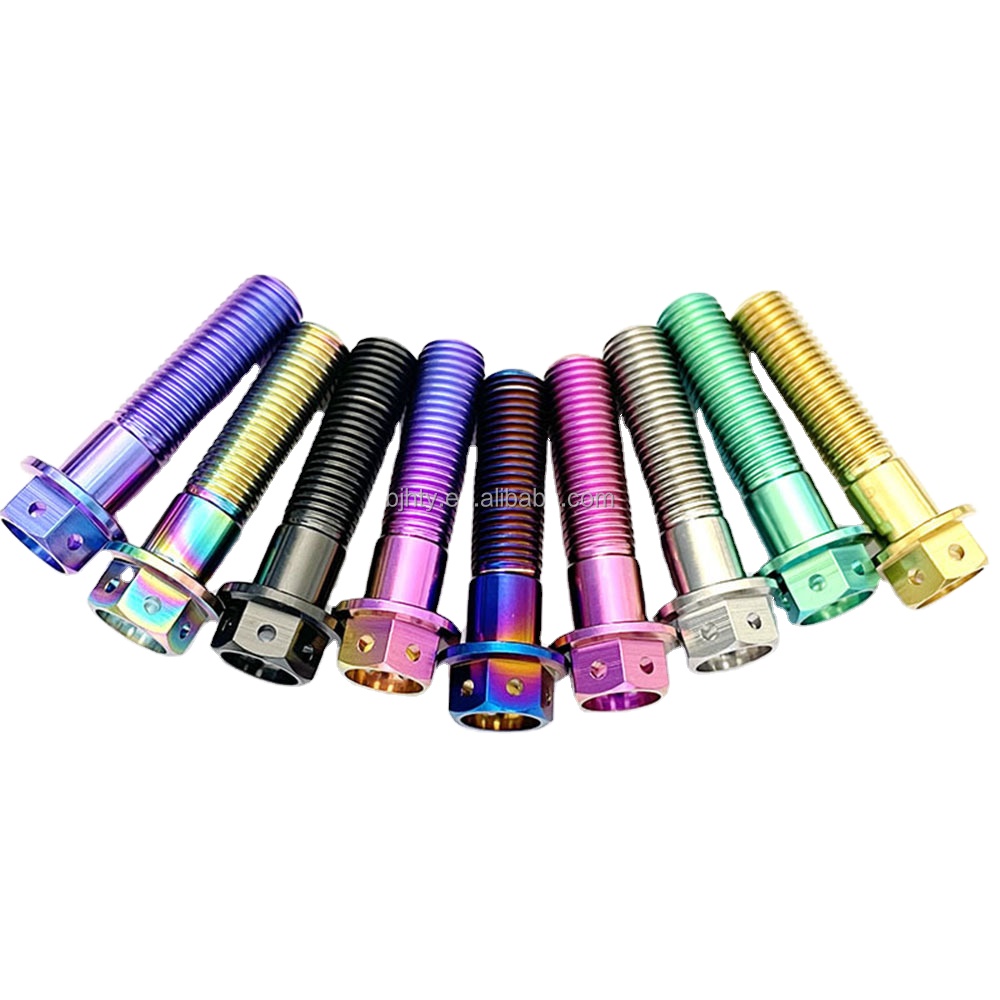
A connecting rod is only as strong as its fasteners. Our Baoji plant machines dedicated high-tensile Grade 5 rod bolts featuring rolled external threads. Rolled threading prevents severed grain lines common in cut threads, boosting cyclic fatigue durability under high-rpm tensile elongation.
Transparent Video Inspection Protocols
International procurement requires trust. Velnora generates dedicated optical and CMM dimension verification video logs for every batch before departure. Laotian importers and mechanical engineers evaluate clearance measurements and laser etching codes prior to export signoff.
Frequently Asked Questions for Importers & Engineers in Laos
Direct engineering and commercial answers regarding metallurgy, thermal expansion compensations, customs clearance, and ordering logistics serving the Lao market.
Q Can titanium connecting rods directly replace steel rods without altering clearances?
No. Titanium has a lower coefficient of thermal expansion ($\approx 8.6 \times 10^{-6}/\text{K}$) compared to carbon steel ($\approx 11.7 \times 10^{-6}/\text{K}$) and a lower modulus of elasticity (113 GPa vs. 210 GPa). When fitting titanium connecting rods into an engine originally engineered for steel, wrist pin end-play, side rod clearance, and bearing oil clearance must typically be opened by an extra 0.012mm to 0.020mm to prevent side galling under full operating heat.
Q How does Velnora mitigate titanium thread galling during rod bolt assembly?
Titanium has a high natural affinity for friction fusion (galling) when torqued dry. We mitigate this through three standard engineering interventions: precision thread rolling to achieve a mirror root radius ($Ra < 0.4\mu m$), optional anti-friction PVD coatings, and supplying high-pressure molybdenum disulfide anti-seize paste calibrated to correct torque-to-stretch tension values.
Q What is the transit lead time from your Baoji factory to Vientiane, Laos?
Standard express courier shipments (DHL/FedEx) typically arrive in Vientiane within 3 to 5 business days. For commercial bulk orders, multimodal rail freight via the China-Laos Railway (Kunming to Thanaleng Dry Port) clears customs smoothly and reaches Vientiane or Savannakhet within 5 to 7 days, significantly faster than coastal maritime options.
Q What CAD and technical drawing formats do your machinists accept?
Our CNC engineering department works seamlessly with native 3D solid models including STEP (.step/.stp), IGES (.igs), and Parasolid (.x_t), as well as 2D engineering blueprints in PDF or DWG format with GD&T geometric tolerance callouts. If you do not have CAD models, our team can reverse engineer OEM connecting rods from physical samples sent to our facility.
Q How do you prevent big-end bearing spinning inside a titanium rod?
Because titanium has greater elasticity than forged steel, the big-end bore can experience ovalization under extreme tensile peak revs if undersized. We design reinforced beam transitions and machine precision dowel sleeves or serrated mating split-lines between the rod cap and body, providing positive physical lockup under extreme inertial shear forces.
Q What Minimum Order Quantity (MOQ) applies to custom connecting rod sets?
For standardized fastener stock or motorcycle hardware, MOQs start from 50 to 100 pieces. For bespoke CNC-machined titanium connecting rods built to client blueprints, our prototype batch MOQ is typically 1 set (e.g., 2 to 8 units depending on cylinder configuration), with tiered price discounts applying at 20, 50, and 100+ units.
Q How do your titanium rods withstand acidic or sulfurous mine waters in Laos?
Grade 5 titanium (TC4) is naturally inert to neutral and acidic chlorides, sulfides, and organic condensates present in mining environments like Sepon. Unlike steel connecting components that require constant anti-corrosion grease coatings during wet storage, titanium remains passivated and physically impervious to rust pitting.
Q Can you provide custom laser serialization and weight-matched sets?
Yes. Every connecting rod leaving our Baoji plant is end-to-end balanced (small end and big end balanced independently) to within ±1 gram per set. We provide free laser engraving of part numbers, assembly sequence indices, corporate branding logos, and QR codes for quality traceability across your maintenance workshops.
Request a Technical Drawing Review & Quotation for Laos Delivery
Consult directly with Velnora's precision tooling engineers. Whether you need an OEM production run of lightweight titanium connecting rods, custom race-spec rod bolts, or specialized titanium drivetrain hardware, our team provides engineering feedback and quotes within 4 business hours.