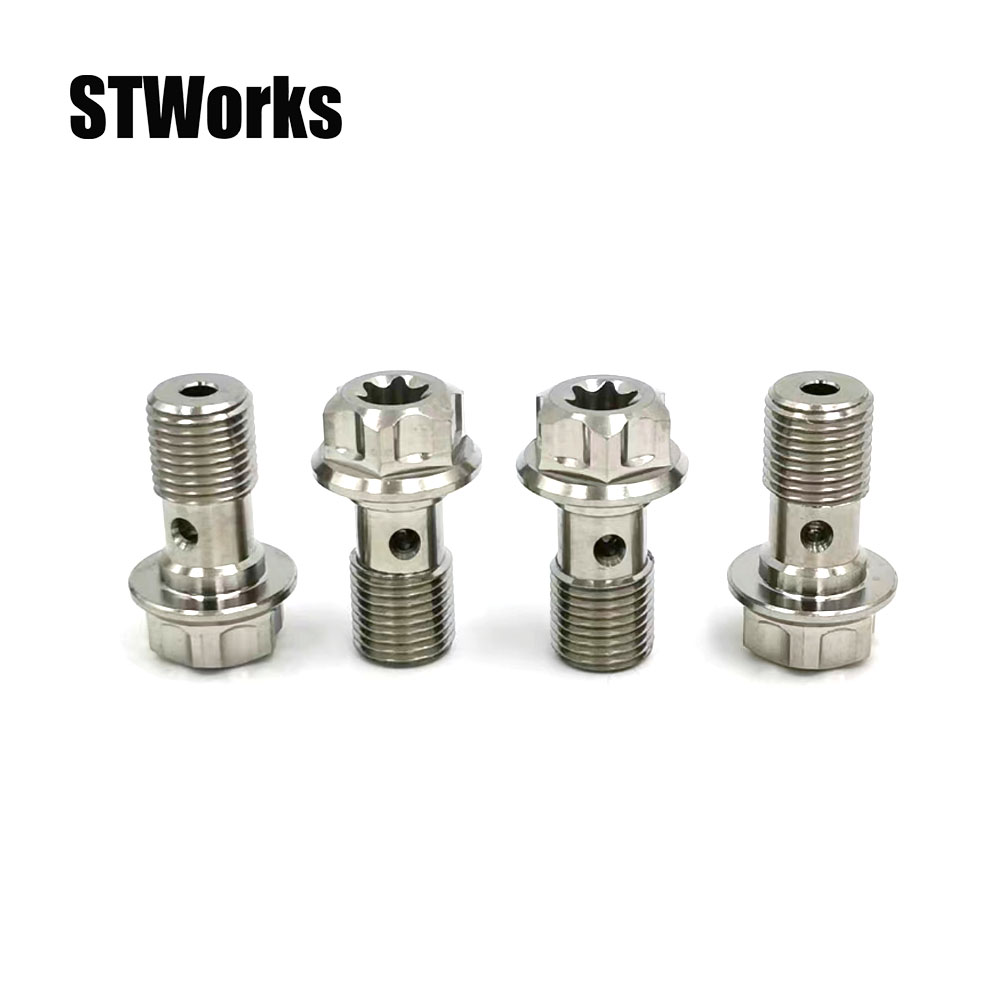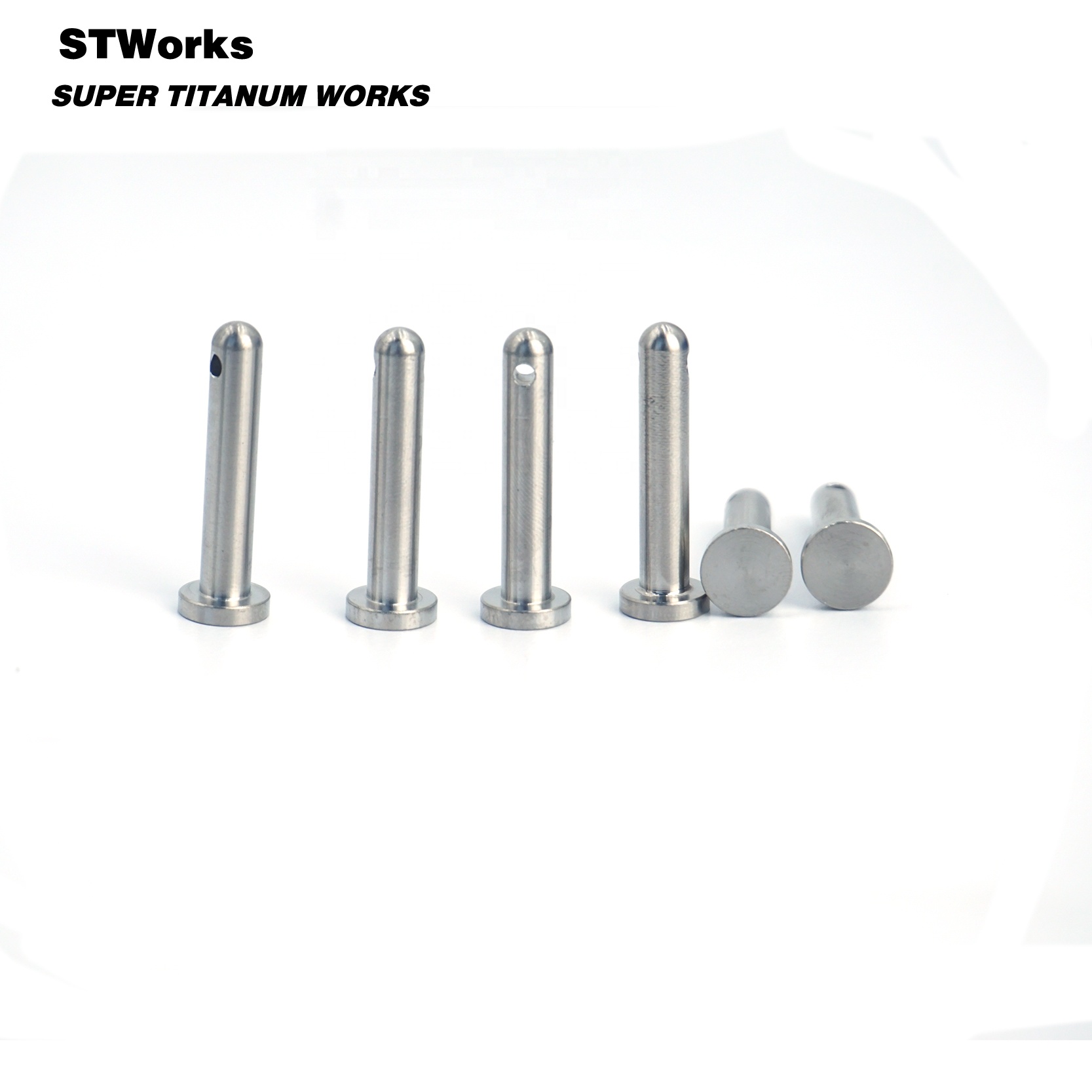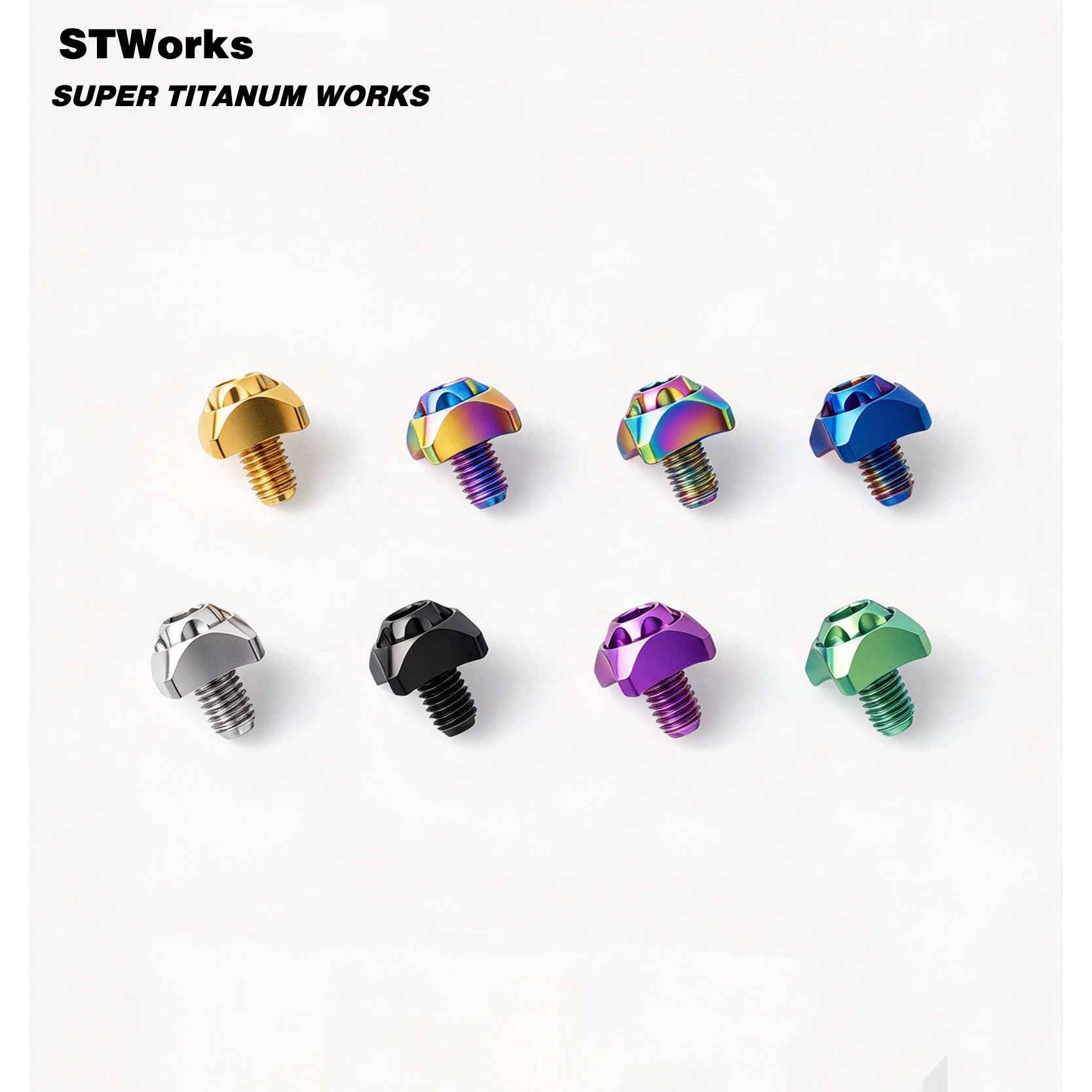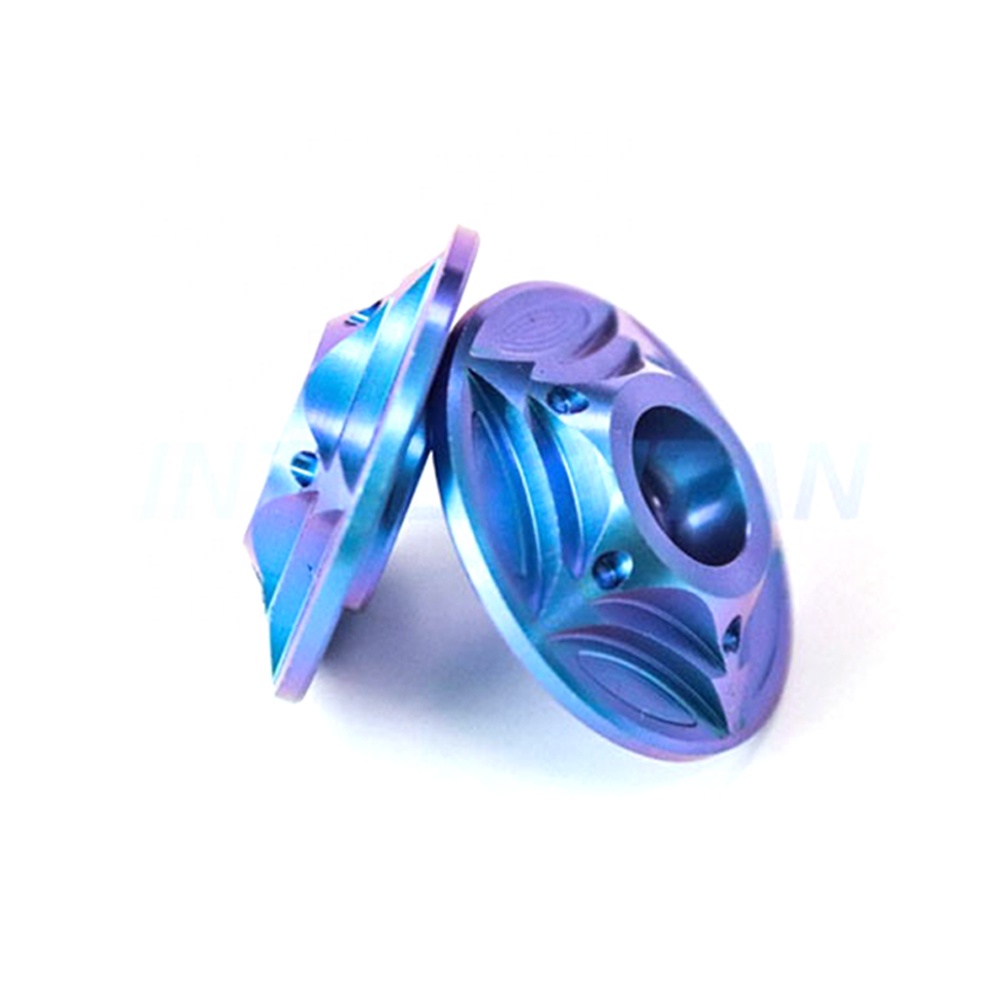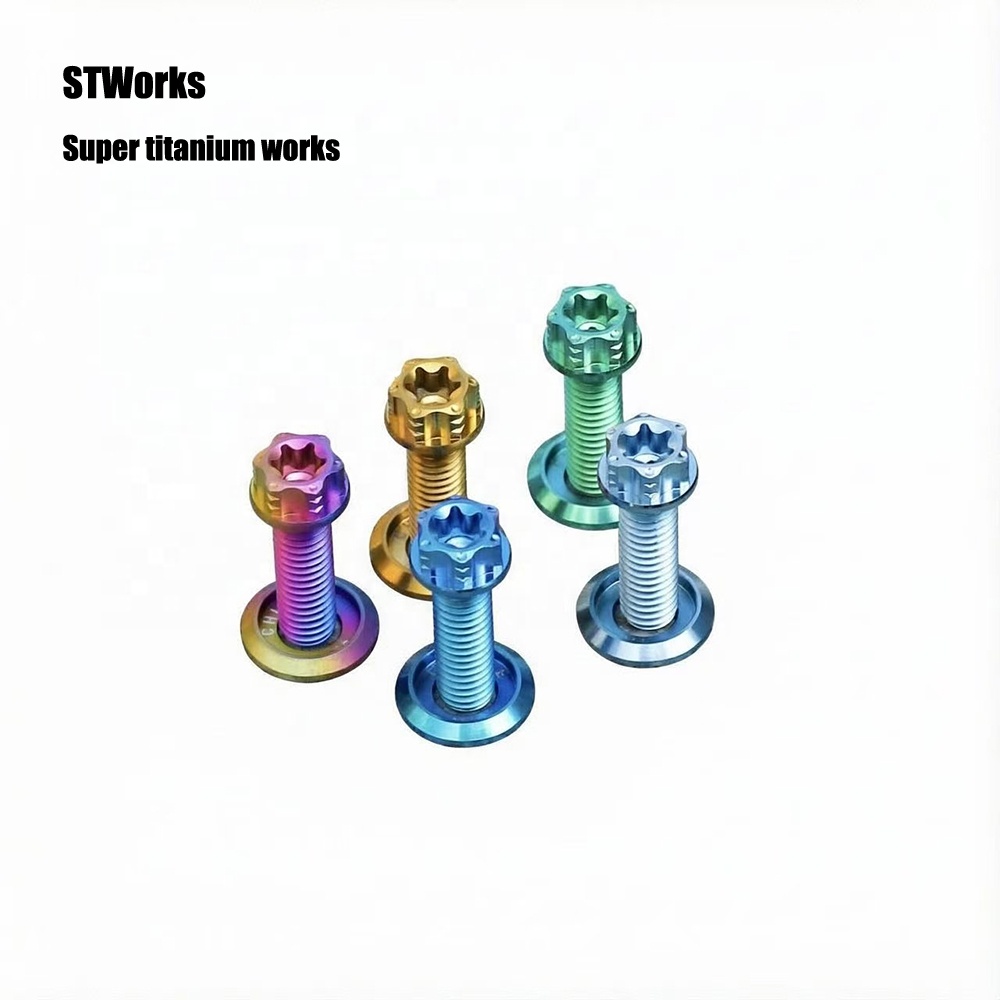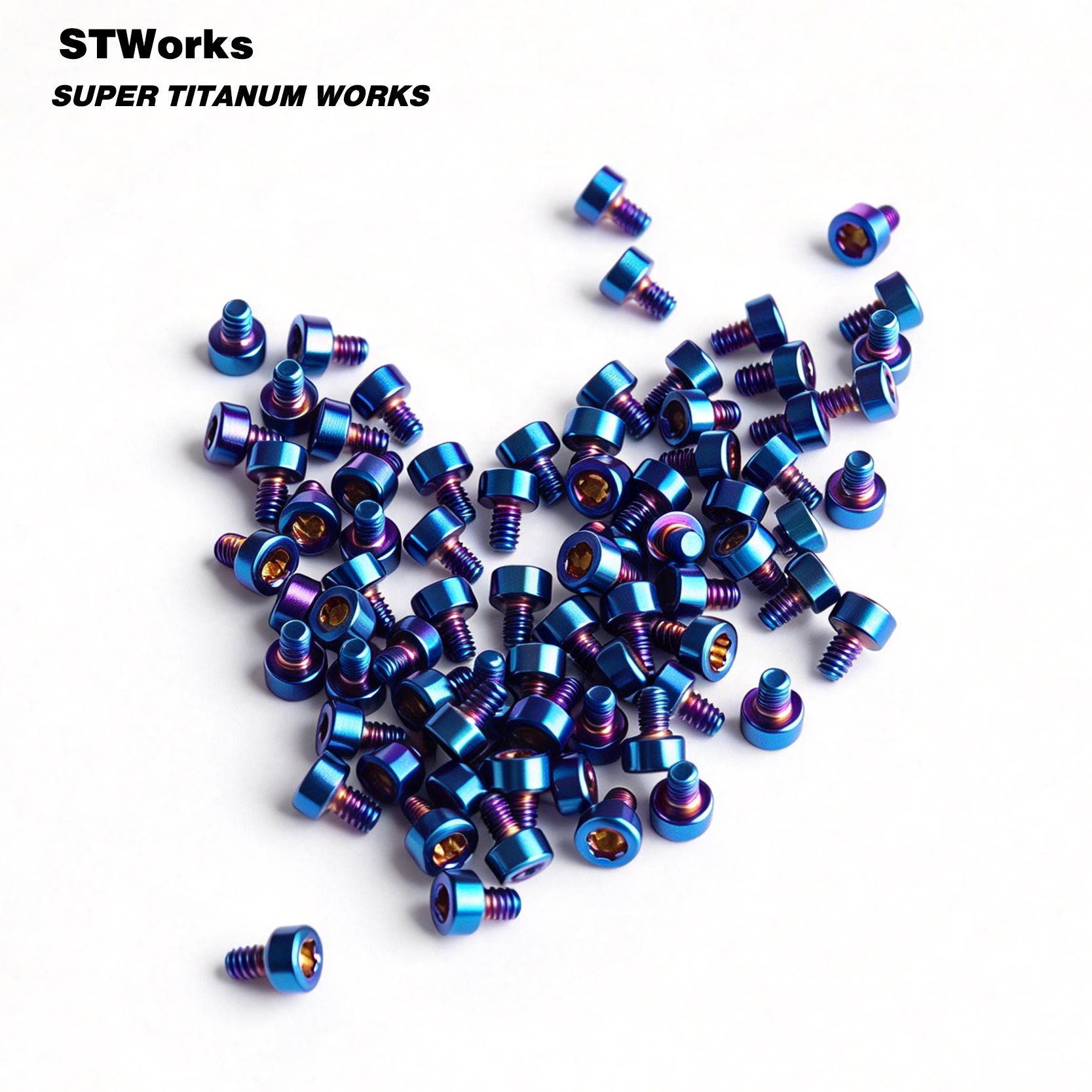
Engineered in Baoji—China's Titanium Valley—to aerospace tolerances. Each component undergoes multi-axis CNC profiling, Wire EDM calibration, and ultra-high-vacuum PVD or electrochemical colorization.
An exhaustive technical evaluation of solid-state diffusion bonding, 5-axis microscopic milling, Wire EDM cruciform broaching, and light-interference colorization.
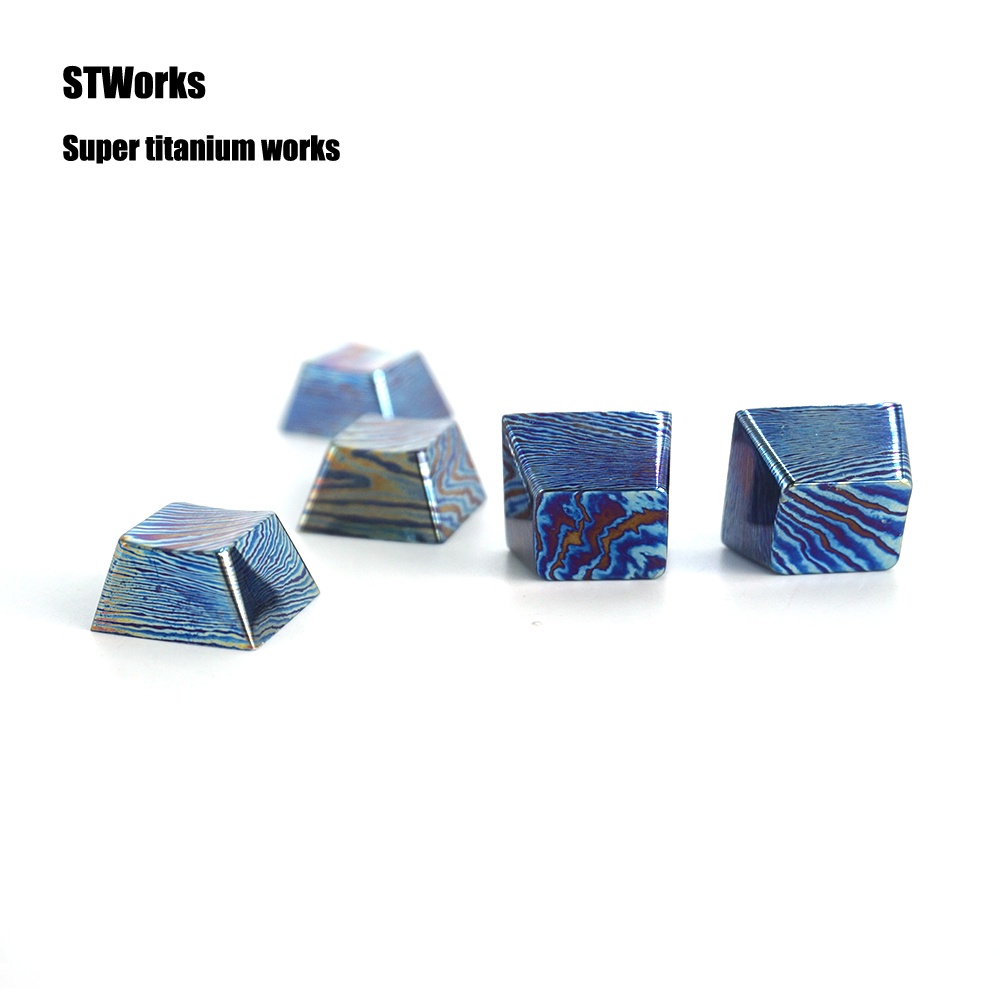
Timascus (frequently designated Mokuti or Titanium Damascus) is synthesized by co-laminating alternating strata of Grade 2 commercially pure titanium and Grade 5 (Ti-6Al-4V) aerospace alloy. Under high-vacuum hot isostatic pressing (HIP) exceeding 900°C and 150 MPa, atomic interstitial diffusion occurs at boundaries without molten segregation.
For custom keycap applications, this produces a structural billet characterized by isotropic shear modulus, zero macroscopic delamination risk, and contrasting oxidation potentials vital for chromatic etching.
Standard mechanical keyboard switches (Cherry MX, Gateron, Kailh, Gazzew) demand a precise cruciform receptacle measuring 1.17mm × 4.05mm with wall clearances held under 15 microns. Rotary micro-endmills encounter excessive tool deflection and internal corner radii penalties (≥R0.2mm) inside blind keycap stems.
Velnora overcomes this through specialized sub-merged wire electrical discharge machining (Wire EDM) utilizing 0.07mm molybdenum wire, establishing square zero-draft corners that prevent MX stem split or binding during actuation.
Unlike anodized aluminum that relies on organic dye infiltration into porous alumina, Timascus coloration represents pure thin-film optical interference. By controlling direct bath voltage (12V to 110V) or atmospheric torch flame tempering, an amorphous TiO&sub2; dielectric skin grows from 10nm to 220nm.
Because Gr2 and Gr5 oxidize at divergent kinetic rates, differential film thicknesses occur across adjoining bands, yielding luminous gold, indigo, cyan, magenta, and peacock-violet wave refractions with zero pigments.
| Material Specification | Velnora Solid Timascus (Mokuti) | Die-Cast / CNC 6061 Aluminum | Resin / Cast Acrylic Artisan | Double-Shot PBT / ABS Plastic |
|---|---|---|---|---|
| Density & Keystroke Inherent Mass | 4.43 g/cm³ • Deep Thock Acoustic | 2.70 g/cm³ • Bright Clack Profile | 1.15–1.20 g/cm³ • Variable | 1.05–1.30 g/cm³ • Standard Hollow |
| Wear & Finger Oil Resistance | Impervious (Hydrophobic Passive TiO&sub2;) | Moderate (Anodized layer rubs off) | Prone to surface scratching/yellowing | ABS shines rapidly; PBT resists shine |
| Chloride Stress Cracking (Salt Air) | Absolute Zero Pitting Breakdown | Subject to galvanic white-spot oxidation | Immune (Degrades from UV rays) | Immune to chlorides |
| Stem Retention Longevity | > 100,000 Key Swaps (0% Plastic Creep) | Moderate (±150 insertions before play) | Fragile (Stems shear under lever force) | Stem spreads or splits over cycles |
| Pattern Authenticity | 100% Unique Solid Core Damascus Grain | Surface printing / Laser marking only | Hand-swirled resin batching | Mass production identical injection |
In the burgeoning coastal tech hubs spanning Paphos, Kato Paphos, and the broader Cypriot innovation district, high-income software architects, FinTech traders, foreign digital nomads, and elite mechanical keyboard enthusiasts inhabit an environment characterized by unique microclimatic stresses. Situated directly upon the Mediterranean Sea, coastal Paphos experiences relative humidity levels averaging 65% to 85% coupled with dense aerosolized chloride salinity.
Conventional artisan peripherals fabricated from aluminum housings, copper-weighted brass inserts, or entry-grade electroplated steel undergo catastrophic surface degradation: pitting corrosion, electrolyte-driven galvanic bridging, and chalky white oxidation. Solid Timascus keycaps engineered by Velnora solve this fundamental mechanical limitation.
Titanium’s spontaneous surface passivation forms an impenetrable, self-healing oxide barrier (TiO&sub2; / Ti&sub2;O&sub3; / TiO) within nanoseconds of oxygen exposure. It remains impervious to marine atmospheres, ambient perspiration acids, and high solar UV radiation typical of South-Western Cyprus summers, preserving artisan value indefinitely.
Direct manufacturer transparency backed by 13+ years of specialty metallurgical CNC machining, serving bespoke hardware studios and industrial OEMs worldwide.
Dedicated slow-feed wire discharge equipment achieving corner radii <0.05mm for exact MX cruciform stems without draft angle compromise.
High-speed spindles up to 40,000 RPM delivering spherical Cherry, OEM, SA, and KAT profiles with step scallop heights under 0.003mm.
Dual-modality oxidation lab enabling bespoke customer flame effects, high-voltage vivid blue/gold, or acid-etched Damascus topography.
Every batch of keycaps or fasteners includes HD micrometric inspection video and high-resolution optical documentation before export sealing.
Technical and commercial clarity addressing logistics, mechanical tolerances, customs compliance, and batch manufacturing.
Our Wire EDM and CNC broaching operations hold the cross-stem slots to +0.01mm / -0.00mm tolerance. The central cruciform thickness is machined to 1.17mm, with cross arms dimensioned at 4.05mm. This guarantees snug friction retention over standard switch stems (including POM, polycarbonate, and nylon stems) without inducing stress fractures in switch housings or loosening over 100,000 strokes.
Unlike coated metals or dyed 6000-series aluminum which suffer pit corrosion and peeling under hot Mediterranean sea-fog exposure, titanium forms an instantaneous, dense passivating rutile/anatase titanium oxide layer (TiO&sub2;). It exhibits practically zero corrosion rates in chloride-rich saline atmospheres and resists skin lactic acids, alcohol wipes, and ultrasonic baths.
Because Timascus raw billets are produced and stocked in our Baoji facility, our MOQ starts from just 1 piece for standard 1U artisan keycaps. For customized architectural geometries, unique laser reliefs, or specific profile runs (e.g., Spacebars, Enter keys, full artisan collections), custom runs typically begin at 10 to 50 pieces.
We provide comprehensive air-express door-to-door transit via DHL Express, FedEx Priority, and UPS directly into Paphos (PFO) and Larnaca (LCA). Typical transit duration is 4 to 7 business days. All consignments are provided with complete commercial invoices, HS Code classification (8108.90 for titanium articles), and Certificate of Origin documents to ensure smooth Cypriot customs and EU VAT compliance.
Yes. Our engineering department works natively with STEP, IGES, STL, and PDF engineering schematics. Once your 3D asset is received, we run digital DFM (Design for Manufacturability) analysis within 4 hours, advising on cutter clearance, internal wall radii, and Damascus grain alignment before machining sample prototypes.
The pattern in Timascus is integral to the entire billet, created by forged layers of distinct titanium alloys. Surface colors arise from a hardened thin-film titanium dioxide layer. Under routine typing friction, this color layer is remarkably resilient. Should heavy mechanical contact occur over decades, the keycap can be re-polished and re-anodized or flamed to restore factory luminescence instantly.
Partner directly with Baoji Velnora Titanium Industry. Access our comprehensive engineering catalog, request CAD evaluations, or commission exclusive limited artisan production runs for Paphos and European distribution.