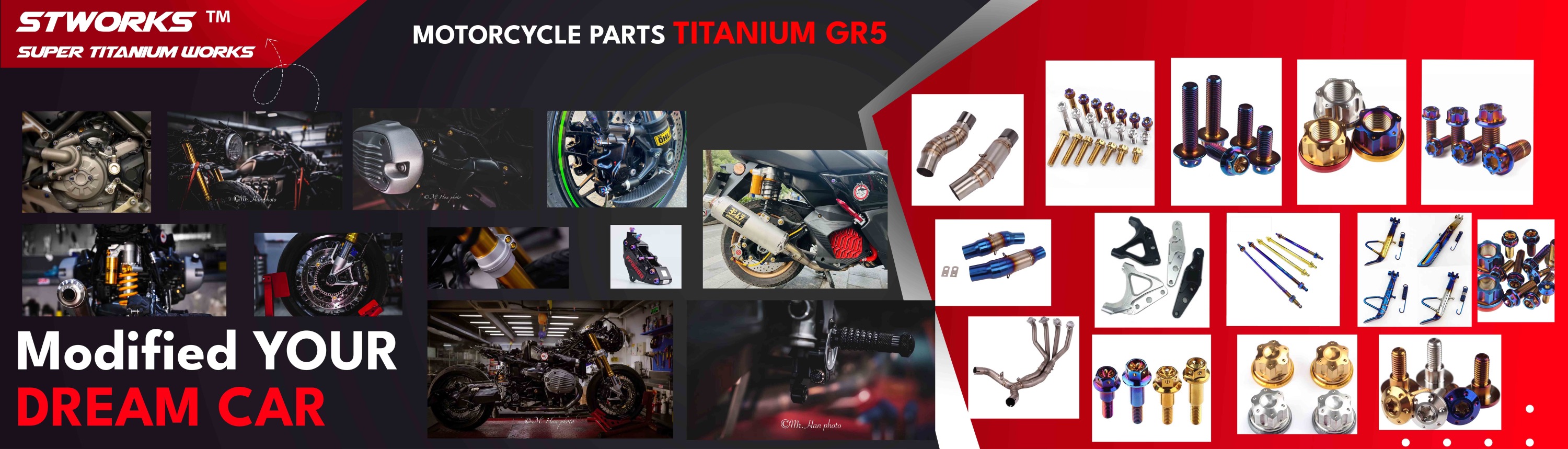
Featured Titanium Hardware & CNC Performance Components
Machined to exacting tolerances in Baoji ("China's Titanium Valley"). Fully compatible with DIN, ISO, and JIS engineering standards, our fastener solutions replace standard steel to slash rotational weight and eliminate thermal galling under extreme heat cycles.
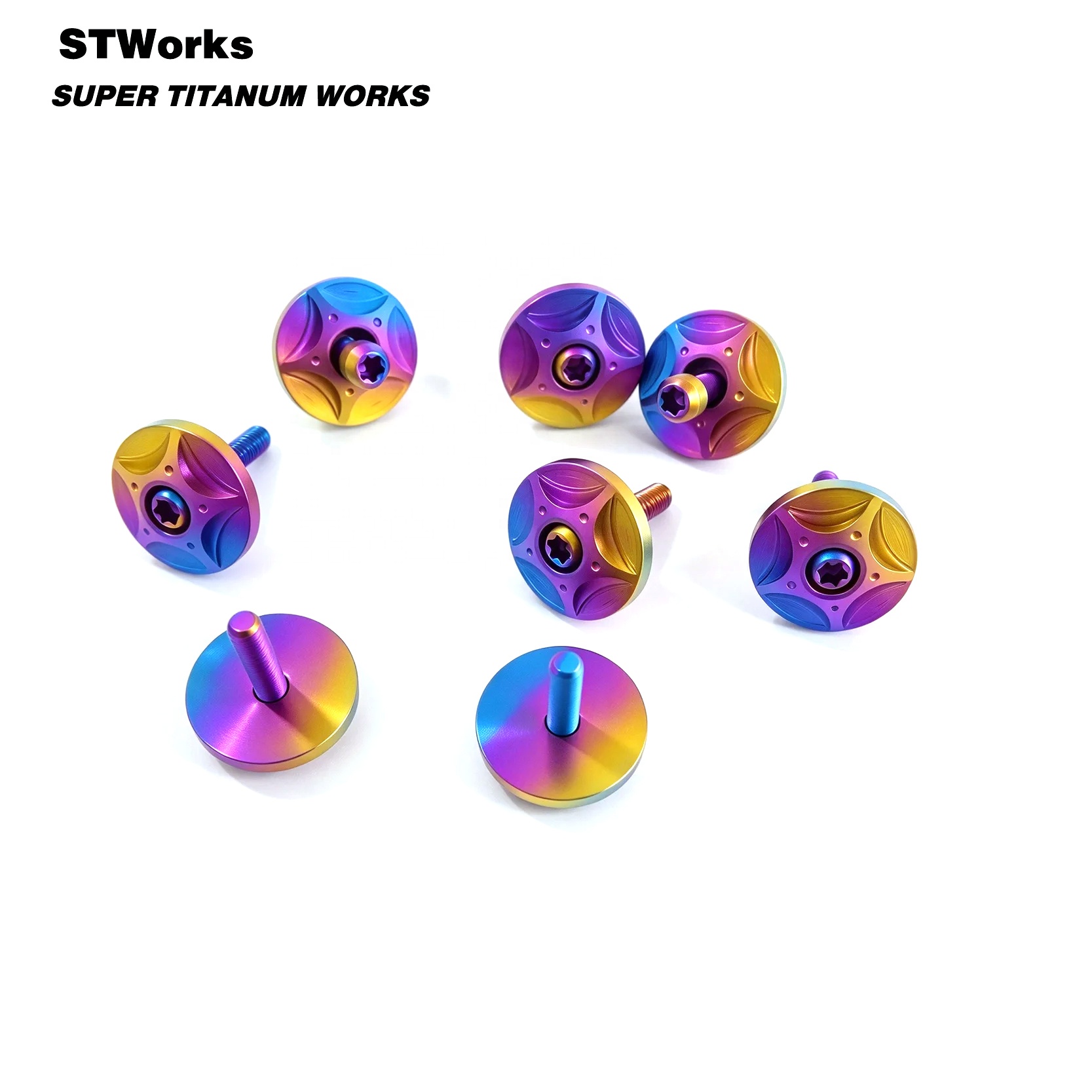
Factory Custom Ticat Ti Stem Top Cap M6*30 Bolt
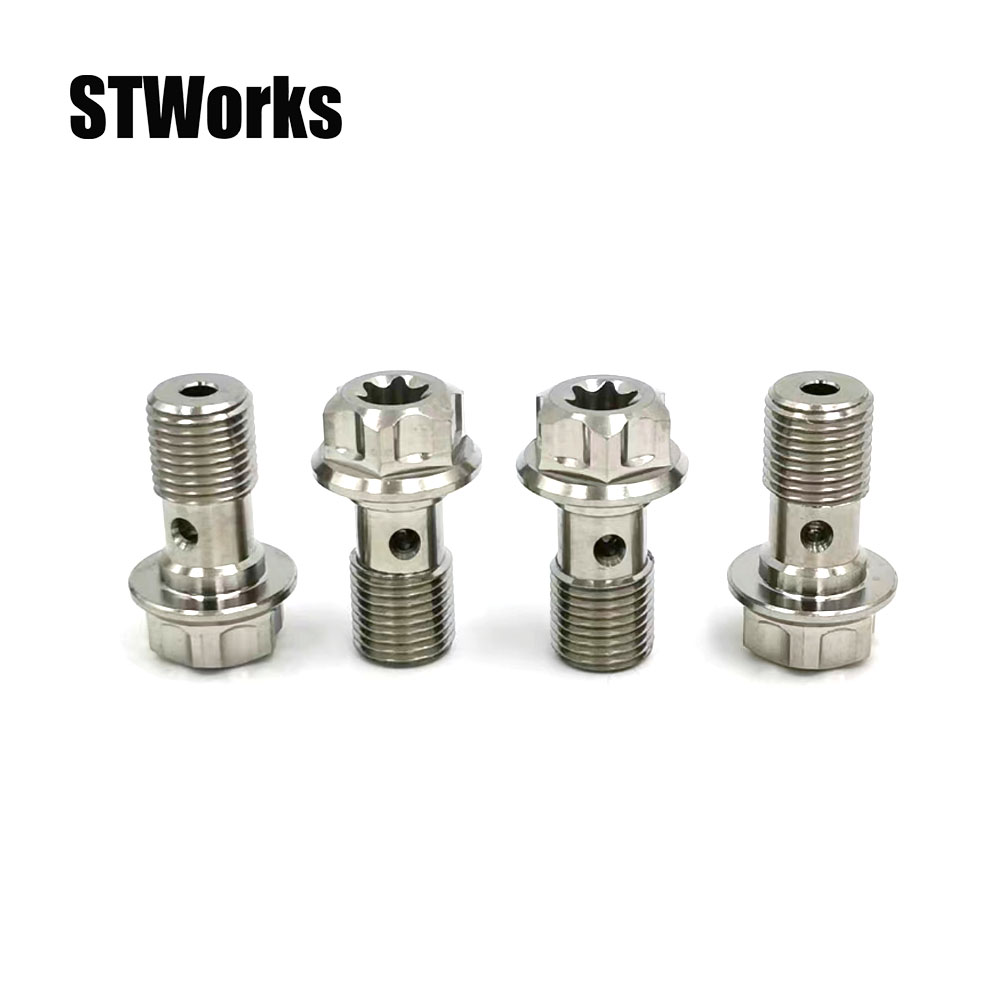
Gr5 Titanium Banjo Bolts Hex Head M10×1.25 / 1.0
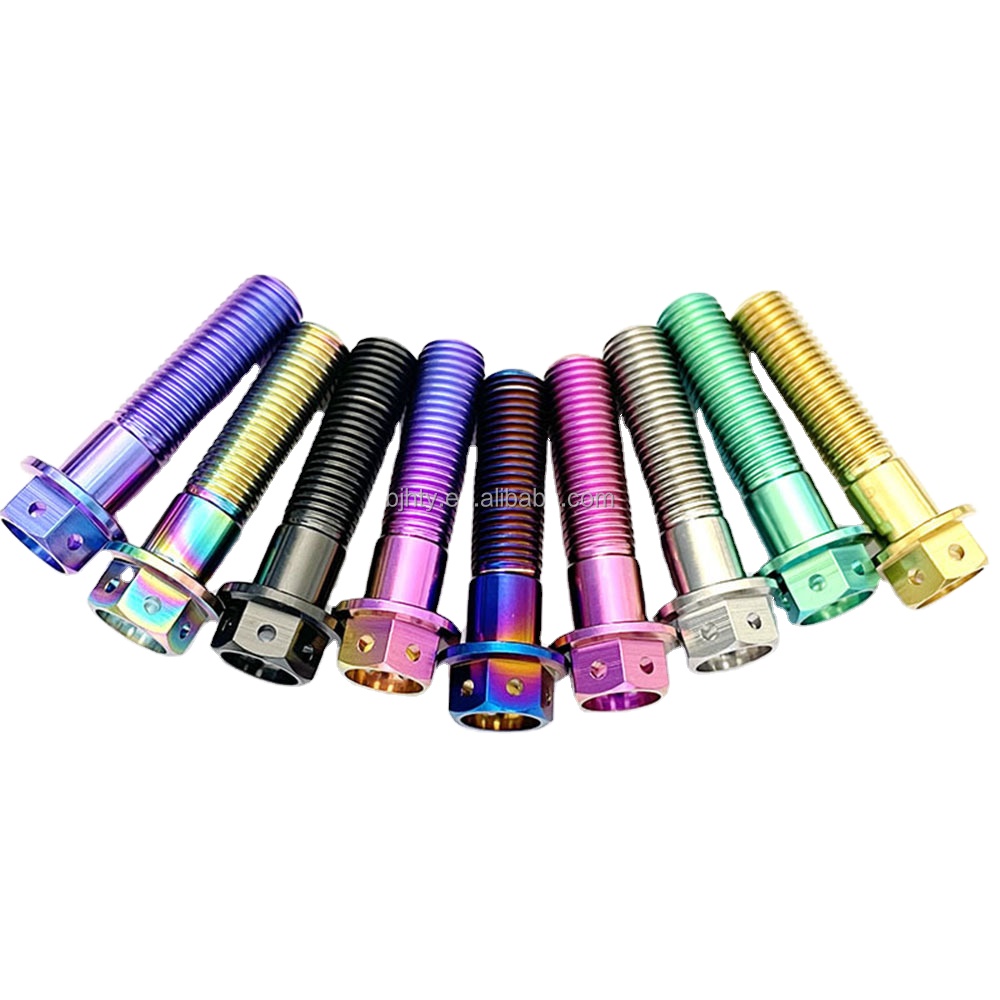
Titanium Alloy Flanged Hex Bolts M8/M10 Drilled
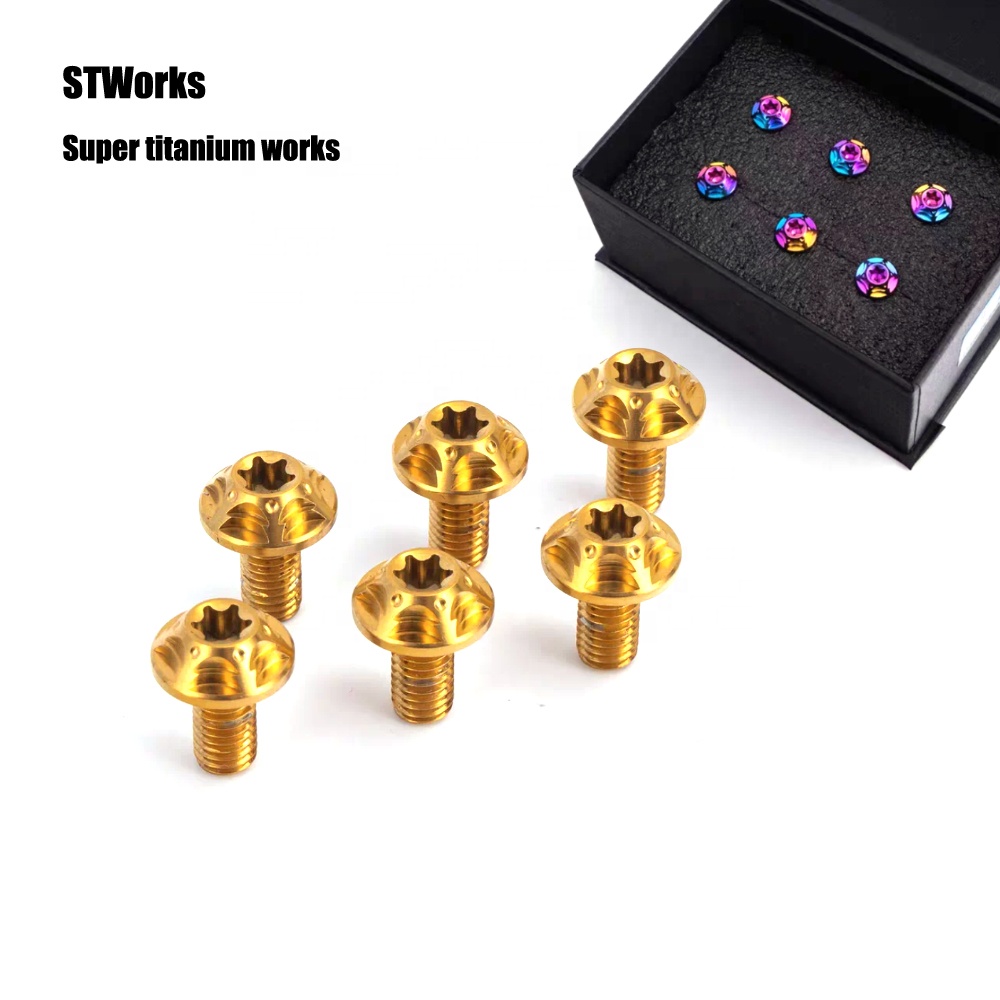
Rainbow Torx Pan Head Screws Gr5 M5×10mm
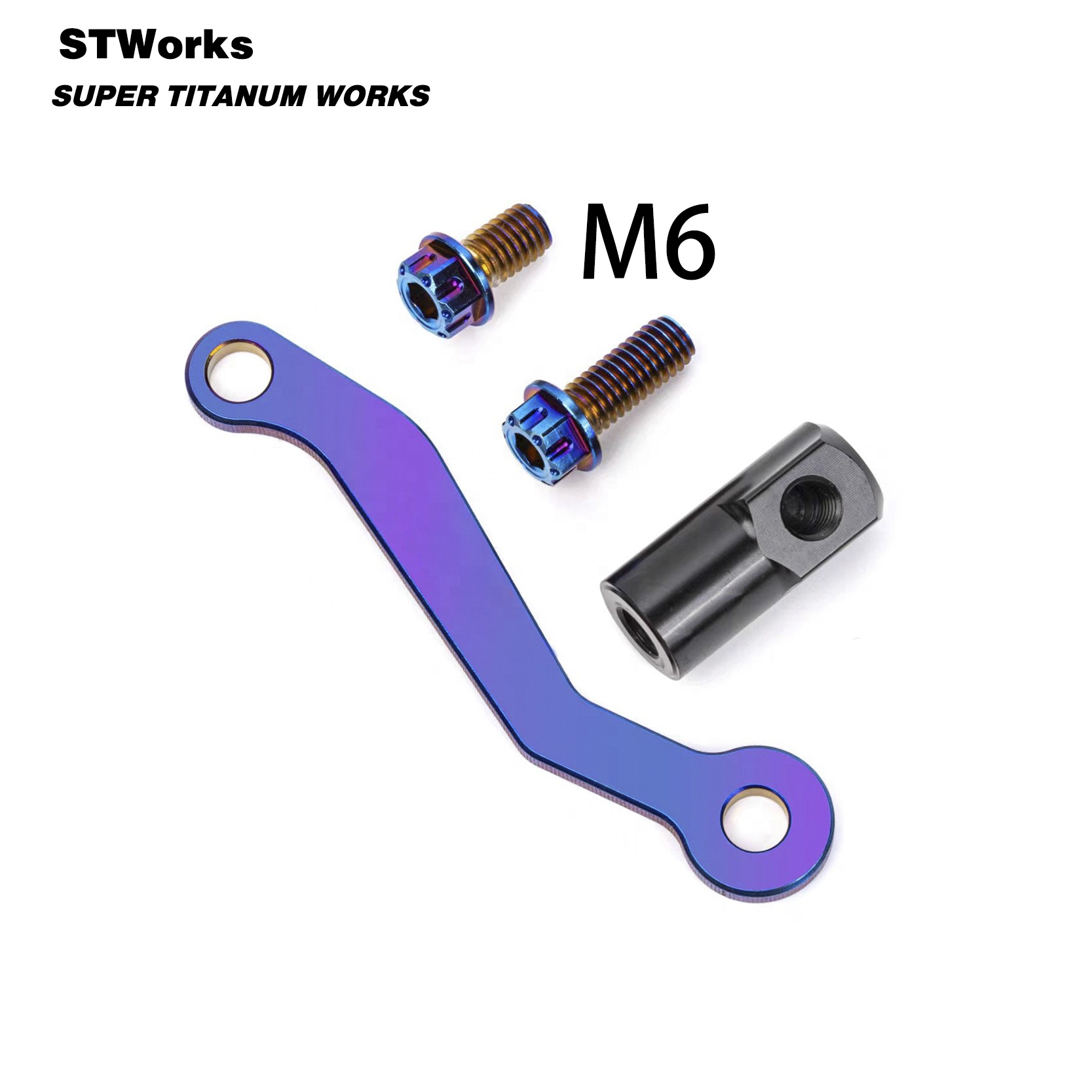
Gr5 TC4 Brake Reservoir Bracket CNC Mount
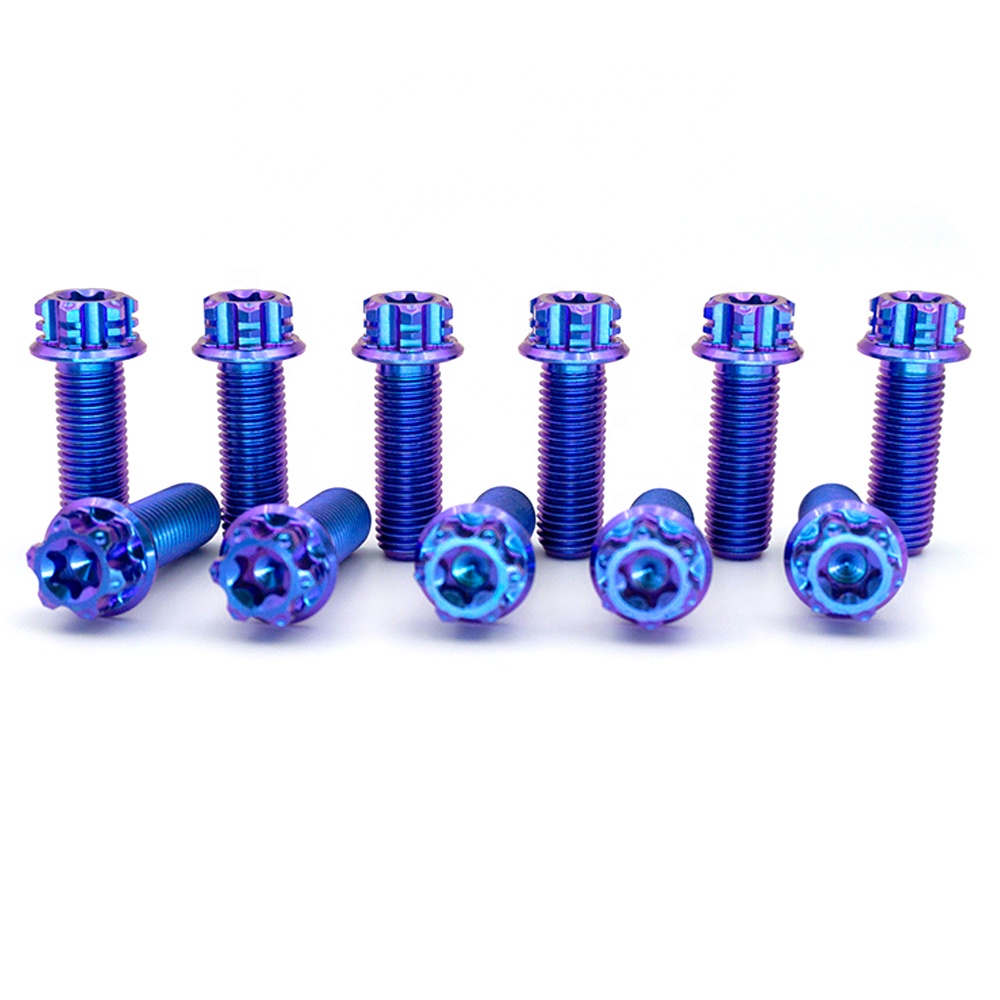
Titanium Hexagonal Flange Head Bolt System
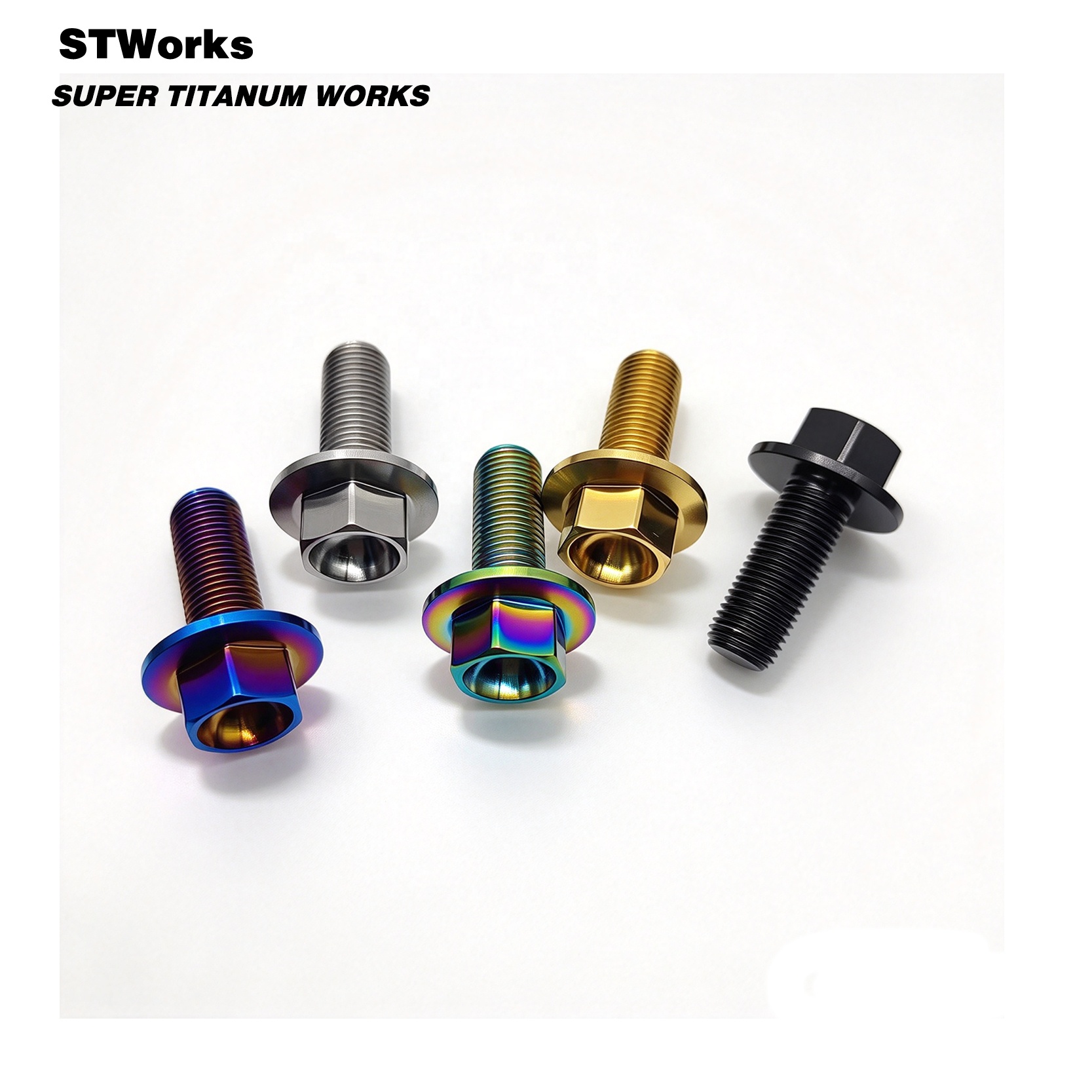
Anodized Hex Flange Fasteners M5 to M14 Range
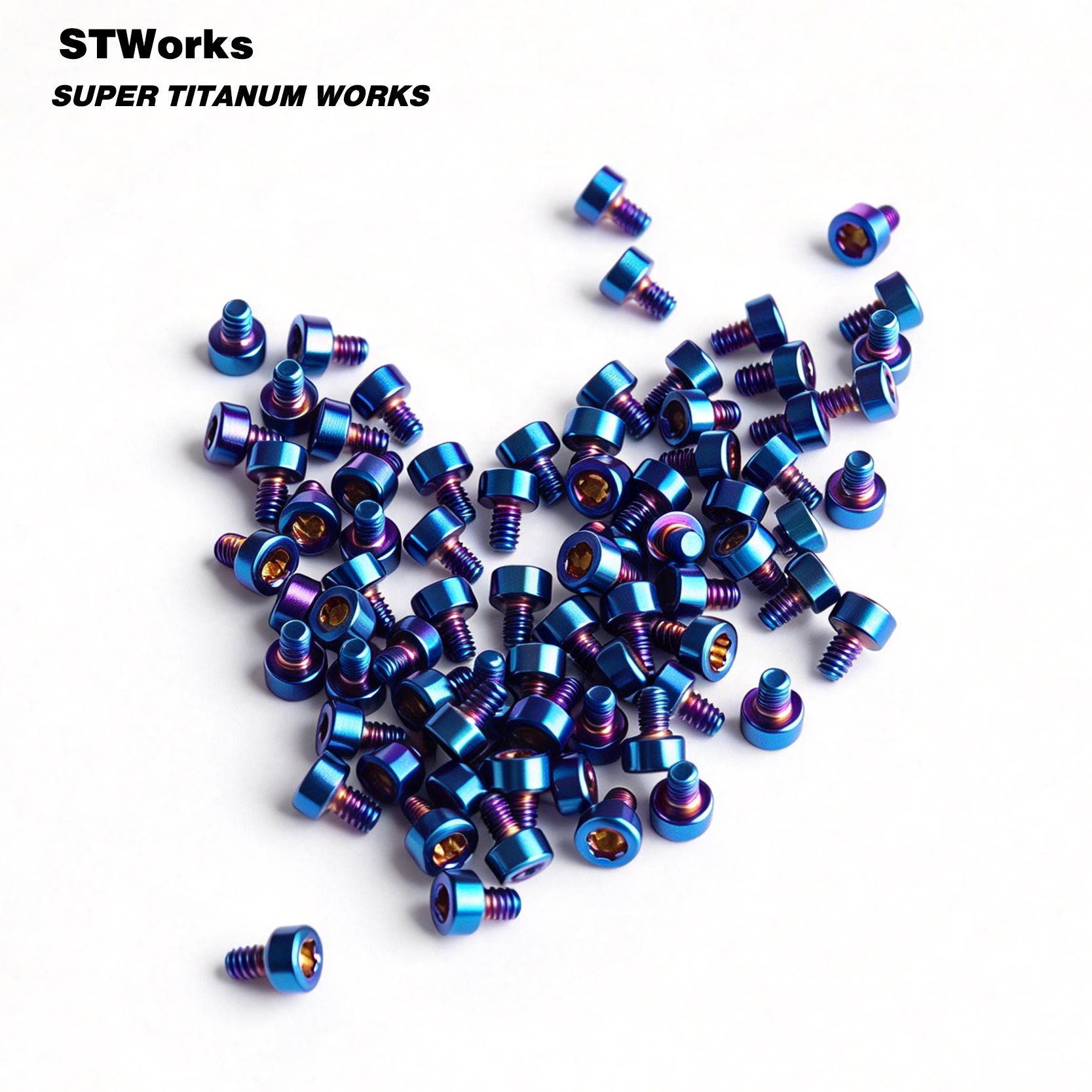
Mini Titanium Screws M2 / M2.5 DIN 912 Torx
Why Grade 5 (Ti-6Al-4V) Turbo Studs Outperform Inconel & High-Tensile Steel
For turbocharger turbine housings, exhaust manifolds, and downpipe flanges, traditional Grade 8.8, 10.9, or stainless studs experience thermal expansion mismatch, oxidation spalling, and stress fatigue under continuous 800°C+ exhaust gas pulses. Here is the thermodynamic breakdown.
| Physical & Mechanical Property | Ti-6Al-4V Gr5 (Velnora TC4) | 316L / 321 Stainless Steel | Inconel 718 Superalloy | Class 10.9 Carbon Steel |
|---|---|---|---|---|
| Density (ρ) | 4.43 g/cm³ (45% Lighter) | 7.98 g/cm³ | 8.19 g/cm³ | 7.85 g/cm³ |
| Tensile Strength (Rm) | 950 – 1,050 MPa | 580 – 680 MPa | 1,240 – 1,350 MPa | 1,040 MPa |
| Yield Strength (Rp0.2) | 880 – 920 MPa | 240 – 310 MPa | 1,030 MPa | 940 MPa |
| Thermal Expansion (α at 20–600°C) | 9.5 × 10⁻⁶ / K | 17.5 × 10⁻⁶ / K | 13.8 × 10⁻⁶ / K | 12.5 × 10⁻⁶ / K |
| Elastic Modulus (Young's E) | 110 GPa (Spring Elasticity) | 193 GPa | 205 GPa | 210 GPa |
| Thread Forming Method | Cold Rolled Threads (Continuous Grain) | Cut or Rolled | Ground / Cut | Rolled Threads |
| Chloride / Seawater Pitting Resistance | Immune (>100°C Salt Fog) | Prone to Stress Cracking | High Resistance | Rapid Oxidation / Rust |
Pre-Load Retention Under Thermal Shock
Due to its lower Young's Modulus (110 GPa vs 210 GPa for steel), a Grade 5 titanium turbo stud behaves like an engineered tension spring. When turbine housings expand under severe boost pressure, titanium stretches elastically without exceeding its yield point, maintaining constant clamping force and completely stopping exhaust gasket blowout.
Precision Thread Rolling Dynamics
Unlike cheap aftermarket studs made by machine-cutting threads (which severs grain structure and triggers micro-notch fractures under cyclic vibration), Velnora titanium studs undergo precision rolling dies after heat treatment. This increases superficial surface hardness, burnishes root radii, and boosts fatigue endurance by over 300%.
Anti-Galling Physical Vapor Deposition (PVD)
Gall-free disassembly is crucial for high-stress trackside servicing. We engineer our studs with proprietary PVD titanium nitride (TiN) or Diamond-Like Carbon (DLC) surface treatments paired with matched 12-point aero-reduction lock nuts, entirely preventing thread seizing even after hundreds of hours at 750°C operating temperatures.
Localized Application Scenarios Across the Danish Industrial Landscape
Denmark's maritime heritage, aggressive decarbonization goals, and competitive motorsport culture require specialized high-temperature fasteners that withstand harsh Scandinavian North Sea environments.
1. Maritime Turbochargers & Danish Commercial Marine Auxiliaries
Operating in the Kattegat, Skagerrak, and the Baltic Sea, Danish workboats, offshore wind servicing vessels (SOVs in Esbjerg), and specialized patrol craft demand zero-corrosion reliability. Sea-spray combined with exhaust manifold temperatures exceeding 650°C leads to rapid galvanic corrosion and seizing on standard marine alloy fasteners.
- Zero Creep Fatigue: Ti-6Al-4V sustains clamping load without thermal relaxation during continuous maritime transit.
- Salt-Mist Immunity: Passivated TiO2 oxide layer prevents pit formation in humid Scandinavian salt-spray zones.
- Direct Replacement: Engineered in M8×1.25, M10×1.25, and M10×1.5 metric profiles for BorgWarner, Garrett, and Holset turbo assemblies.

2. Danish Endurance Championship (DEC) & Professional Drift Platforms
Danish race engineering teams competing at Jyllandsringen, Padborg Park, and Ring Djursland operate highly-stressed turbocharged 4-cylinder and inline-6 engines pushing boost levels from 2.2 to 3.8 bar. Severe thermal cycling causes standard cast exhaust manifolds to expand violently against the cylinder head.
- Prevents Stud Shearing: High yield resilience accommodates manifold thermal expansion without snapping.
- Rotating Weight Reduction: 45% weight saving over steel turbo nuts and studs on top-mount turbo headers.
- Quick Pit Servicing: Double-hex / 12-point aerospace nut head geometry allows instant torque checks in tight engine bays.
3. Biogas Cogeneration (CHP) & District Energy Turbines in Denmark
Denmark is a world leader in biogas production and municipal combined heat and power (CHP) generation. Turbocharged stationary internal combustion engines run 24/7 on enriched biomethane and syngas, which produce acidic combustion condensate (H2S and moisture traces) combined with continuous thermal stress.
- Corrosion Resistance in Acidic Exhaust: Outlasts 300-series stainless steel in sulfurous bio-fuel exhaust gases.
- Extended Maintenance Windows: Eliminates fastener replacement downtime during scheduled 10,000-hour plant overhaul cycles.
- Thermal Creep Compliance: Withstands uninterrupted baseline turbocharger exhaust temperatures up to 600°C.
Key Market Trends Shaping Danish Fastener Procurement
Danish manufacturing and tuning businesses are moving away from commodity steel fasteners. Here are the top four trends transforming industrial demand across Copenhagen, Aarhus, Odense, and Aalborg.
Green Maritime Decarbonization
The Danish Maritime Authority and IMO Tier III regulations require reduced nitrogen oxides (NOx) and sulfur emission levels. Marine turbocharger retrofits run at elevated combustion temperatures to optimize burn efficiency. Danish fleet operators are mandating titanium Grade 5 hardware to prevent thermal fatigue in modern dual-fuel engines.
Total Cost of Ownership (TCO) Prioritization
With Danish engineering labor costs ranking among the highest in Europe, having a manifold stud seize or snap inside a cylinder head costs Danish workshops thousands of DKK in extraction labor. Investing in cold-rolled titanium studs guarantees clean, gall-free disassembly, vastly lowering lifetime maintenance expenses.
Near-Shoring & Direct Factory Audits
Danish B2B distributors are bypassing European trading middlemen to contract directly with specialized Tier-1 manufacturers in Baoji. By receiving raw mill test certs (EN 10204 3.1) and live video verification of CNC machining cycles, Danish procurement teams achieve up to 35% cost optimization without compromising quality.
Velnora Titanium: Baoji's Premier Fastener Facility
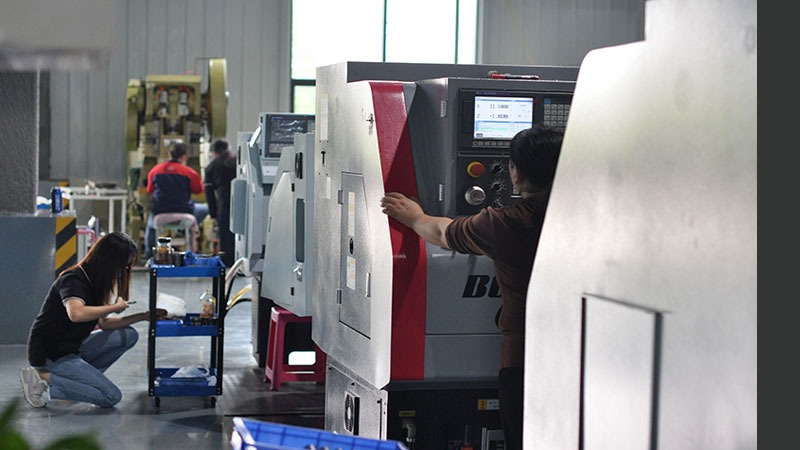
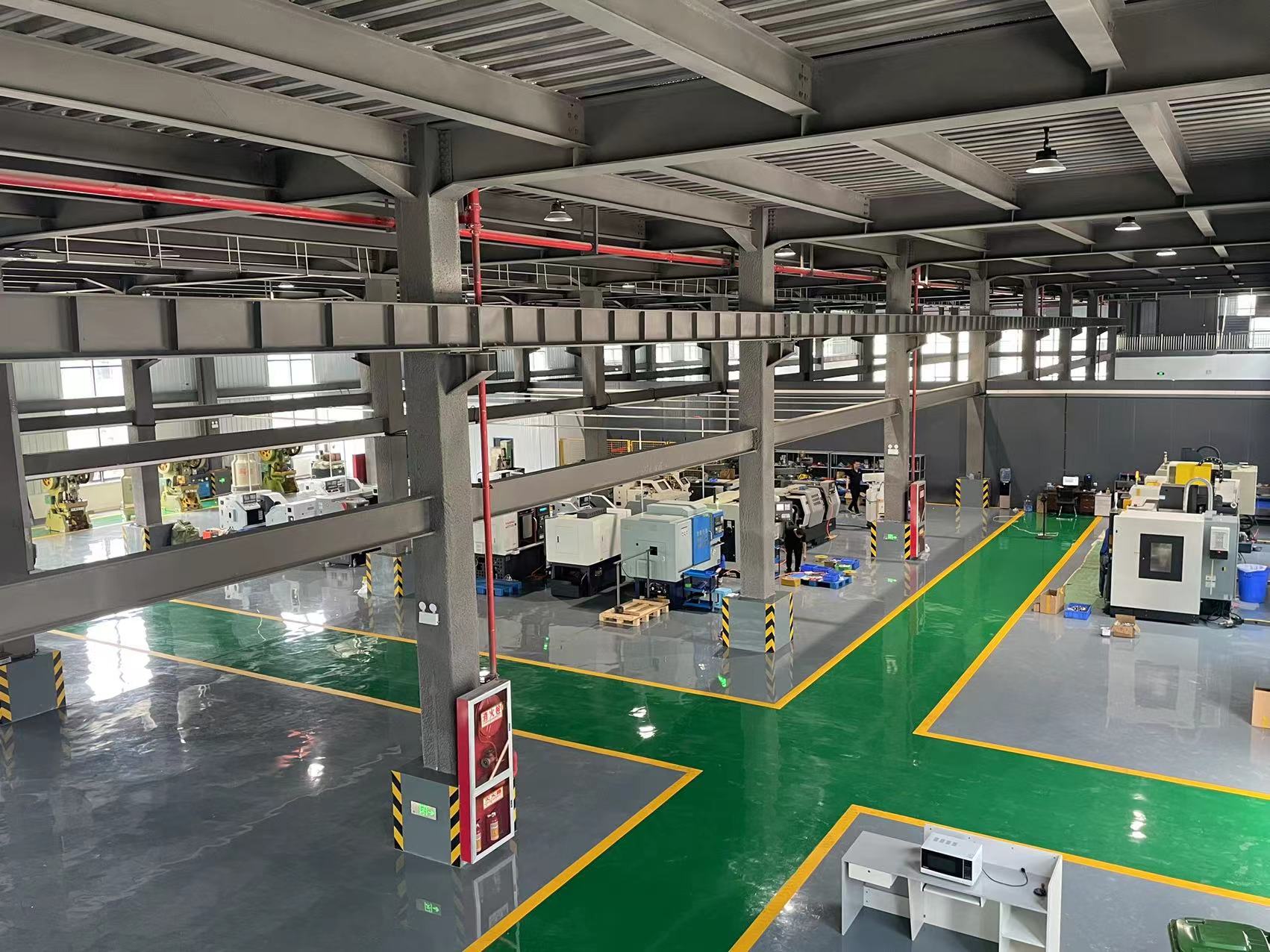
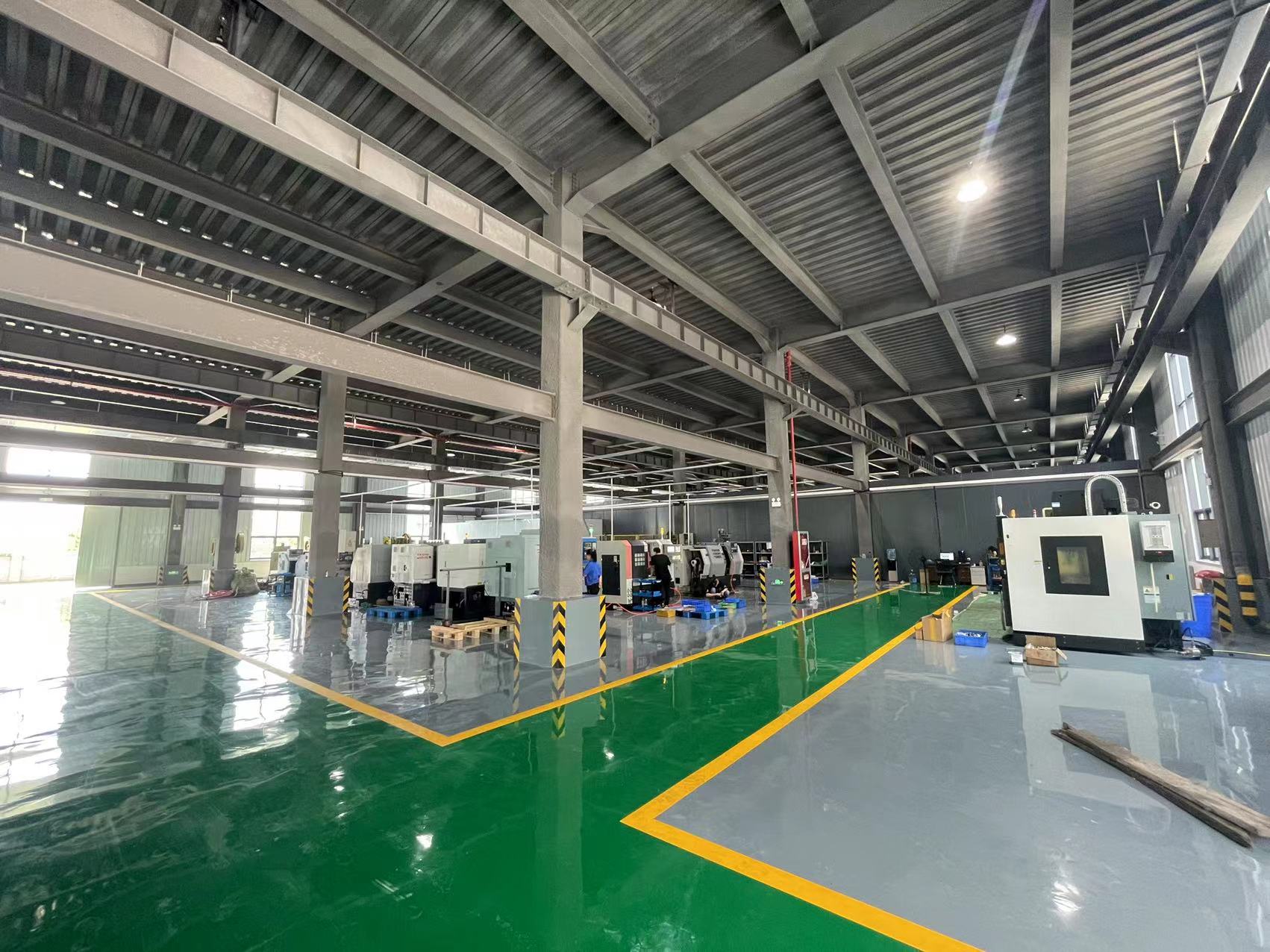
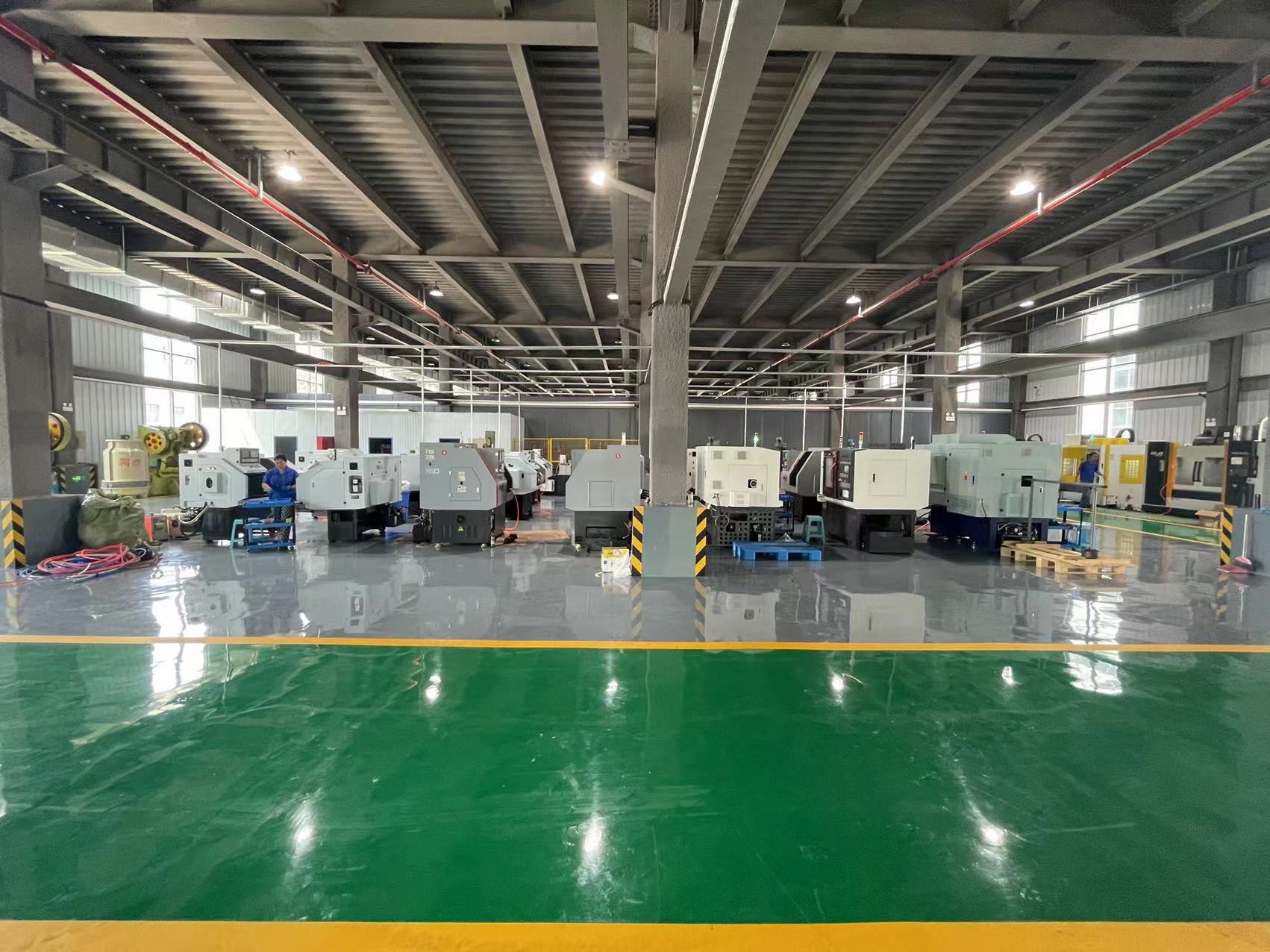
Founded in 2013 inside the Jinhe Precision Manufacturing Park, Baoji, Shaanxi — China's Titanium Valley. We integrate sponge titanium smelting, high-precision vacuum bar extrusion, multi-axis CNC turning, and thread-rolling lines under one roof.
Direct Engineering Collaboration with Zero Middlemen
When your engineering team in Denmark submits a technical drawing (STEP, IGES, or 2D PDF), your project is assigned directly to our CNC programmers and tooling metallurgists. We manufacture to exact DIN 938 / DIN 939 waist-stud dimensions, custom-length step-down studs (e.g., M10-to-M8), or proprietary exhaust flange designs.
- 100% Ti-6Al-4V Grade 5 TC4 certification with full chemical heat traceability.
- In-house production video inspections shared prior to export dispatch.
- Thread pitch accuracy maintained within ISO Class 6g tolerance bands.
- Flexible batch runs from 50-piece prototypes to 50,000-piece container orders.

Frequently Asked Questions for Danish B2B Buyers
Detailed technical, logistical, and customs answers for workshop owners, automotive performance distributors, and marine procurement directors in Denmark.
What are the exact import customs, tariff codes, and VAT rules for Danish companies importing titanium studs from China?
When importing titanium fasteners into Denmark (EU customs territory), the goods are classified under TARIC / HS Code 8108.90.90 (Titanium and articles thereof, other) or HS 7318 depending on custom declarations. For registered Danish businesses with an active CVR number, Danish import VAT (Moms, 25%) is accounted for via the reverse-charge mechanism on your quarterly SKAT return, without freezing working capital at the border.
Our export documentation package includes a compliant Commercial Invoice, Packing List, Certificate of Origin (Form A / COO), and EN 10204 Type 3.1 Material Test Certificate, ensuring smooth clearance through Toldstyrelsen (Danish Customs) at Copenhagen Airport (CPH) or the Port of Aarhus.
How does Velnora guarantee that titanium turbo studs will not seize into cast iron or billet aluminum cylinder heads?
Galling (cold welding) happens when dry titanium rubs against dissimilar metals under high torque. We prevent galling at the metallurgical level through three controlled steps:
1. Precision Rolled Roots: Thread rolling produces a surface finish Ra < 0.4 μm, eliminating microscopic burrs that trigger friction weld points.
2. PVD Hard-Coating Options: We apply ultra-thin PVD Titanium Nitride (TiN) or Diamond-Like Carbon (DLC) barriers that prevent metal-to-metal contact.
3. Anti-Seize Lubrication Protocols: We recommend high-nickel or copper-free ceramic anti-seize paste (rated to 1,200°C) during assembly, providing precise torque conversion values for all M8 and M10 installations.
Can titanium studs withstand thermal expansion differences when paired with heavy cast iron exhaust manifolds?
Yes. Cast iron has a thermal expansion coefficient around 10.5 × 10⁻⁶ / K, which closely matches Grade 5 titanium (9.5 × 10⁻⁶ / K). Stainless steel expands much faster (17.5 × 10⁻⁶ / K), which is why stainless studs loosen or snap exhaust ears on heavy iron manifolds.
Furthermore, because titanium's modulus of elasticity is half that of steel (110 GPa vs 210 GPa), the stud acts like an internal spring, elastically absorbing the thermal expansion difference without yielding or warping the exhaust mating surface.
What are the lead times and door-to-door express logistics options to Denmark (Aarhus, Copenhagen, Esbjerg)?
For standard dimensions (M8×1.25×45mm, M10×1.25×50mm, M10×1.5×55mm) kept in inventory, warehouse dispatch occurs within 48 hours. Express door-to-door courier deliveries (via DHL Express, FedEx Priority, or UPS) reach Danish addresses within 4 to 7 business days.
For bespoke OEM batches according to custom technical drawings, CNC tooling and rolling die setup takes 12 to 18 business days. Consolidated bulk ocean shipments to Aarhus or Esbjerg port take approximately 28 to 35 transit days.
Do you provide full EN 10204 3.1 Mill Test Certification and PMI spectrographic verification?
Every shipment is accompanied by a genuine EN 10204 Type 3.1 Inspection Certificate verifying the exact melt heat chemistry (Titanium balance, Aluminum 5.5–6.75%, Vanadium 3.5–4.5%, Iron ≤ 0.40%, Oxygen ≤ 0.20%) and room-temperature tensile/yield values.
We also perform in-house Positive Material Identification (PMI) using X-ray fluorescence (XRF) spectrometers to verify that no low-grade commercial pure titanium (Gr1/Gr2) is ever mixed into structural turbo fastener production runs.
What are the Minimum Order Quantities (MOQ) for custom-engineered or private-label retail hardware kits?
For standard metric studs and 12-point aero nuts, our MOQ starts at just 50 pieces per size, allowing Danish performance workshops to test samples on active builds. For fully customized private-label retail kits (including laser-etched custom logos on stud ends, bespoke anodized colors, and retail blister-carding), our standard production MOQ is 200 kits.