High-Integrity Titanium Fasteners & Fluid Port Systems
Precision-turned from aerospace-certified Ti-6Al-4V bars to DIN, ISO, and JIS engineering standards, optimized for European homologation.
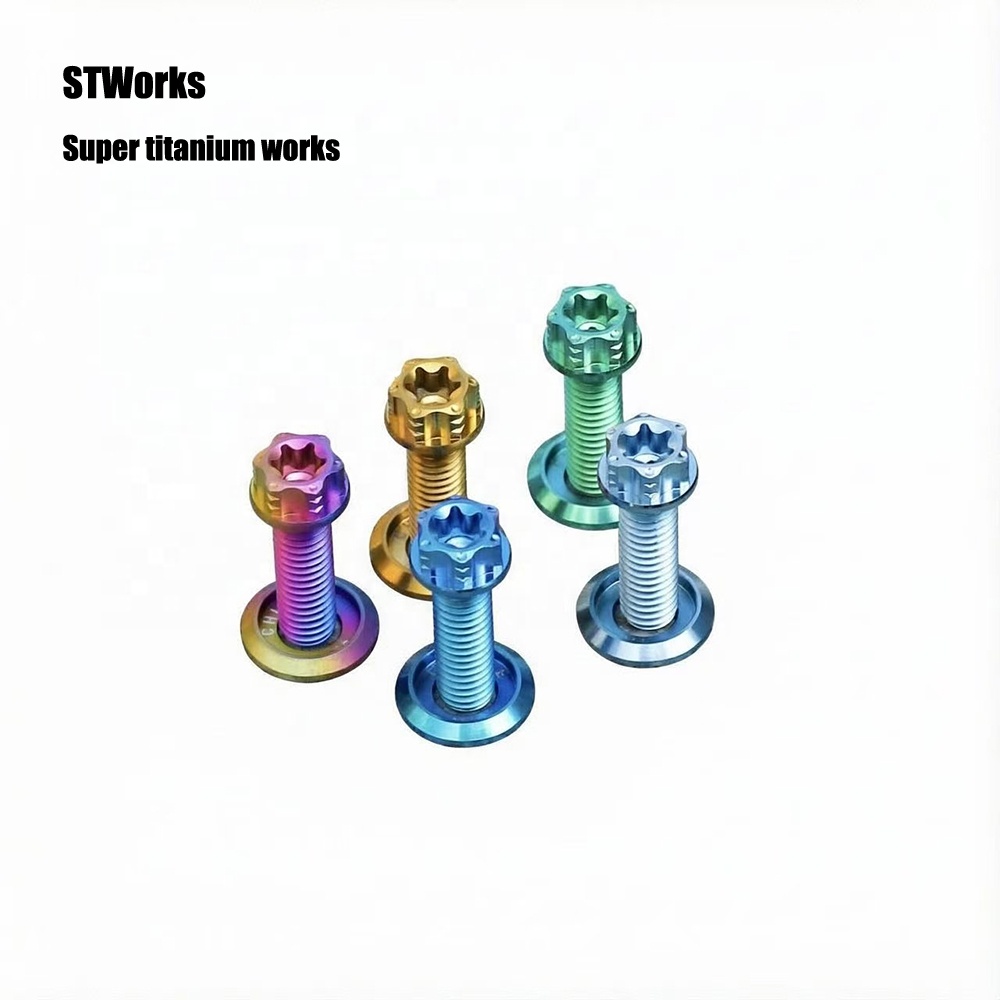
Titanium Alloy Bicycle Disc Brake Caliper Mounting Bolts Candy-Colored M6x20 with Washers
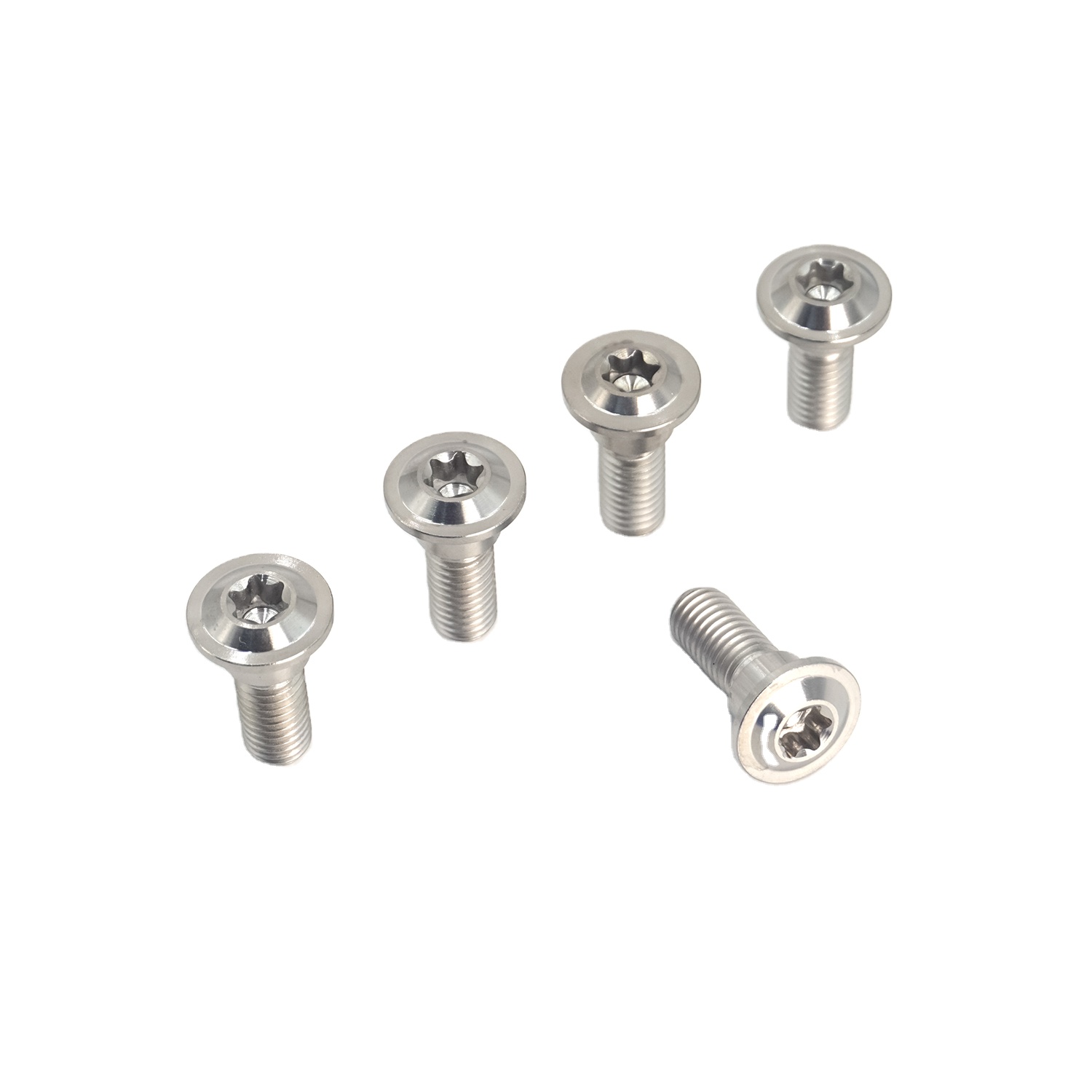
OEM CNC MACHINING Gr5 Titanium Disc Brake M8x23 Screws for Motorcycle Accessories
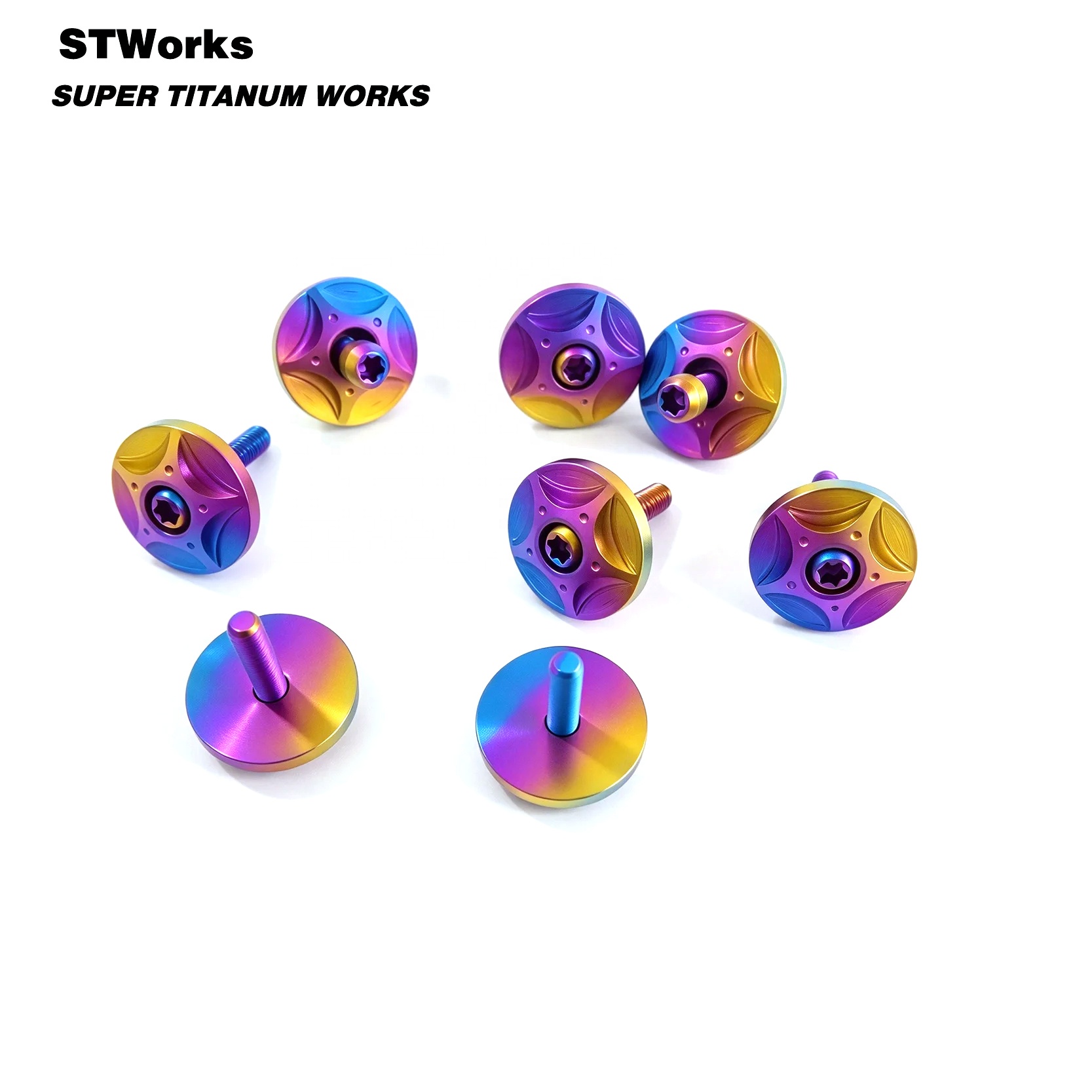
Factory Custom Ticat Ti Stem Top Cap Anodized M6 M6*30 Ti Bolt CNC Machined MTB Road
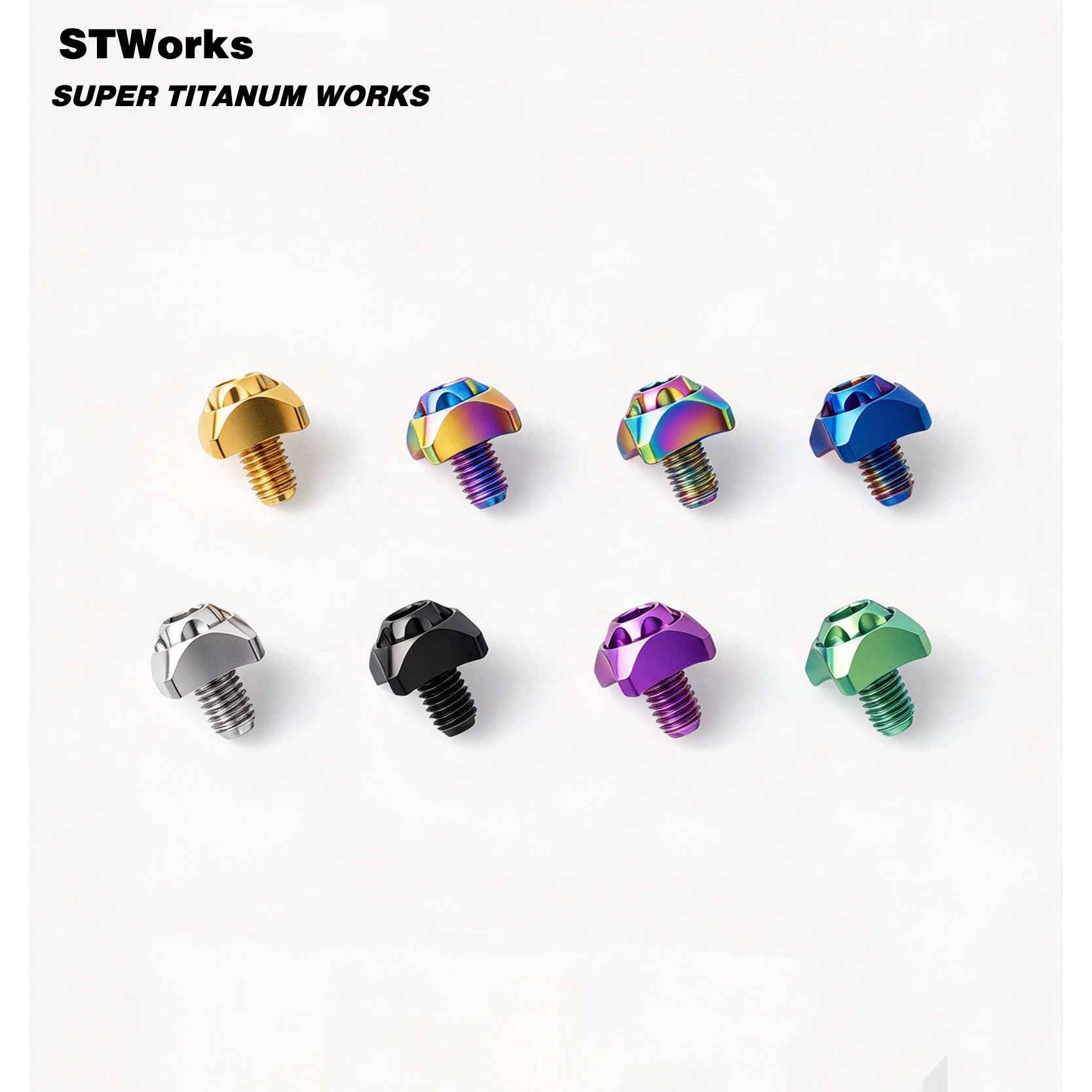
Titanium Screw & Shim Set for Shimano SRAM Front Derailleur Lightweight Upgrade Parts
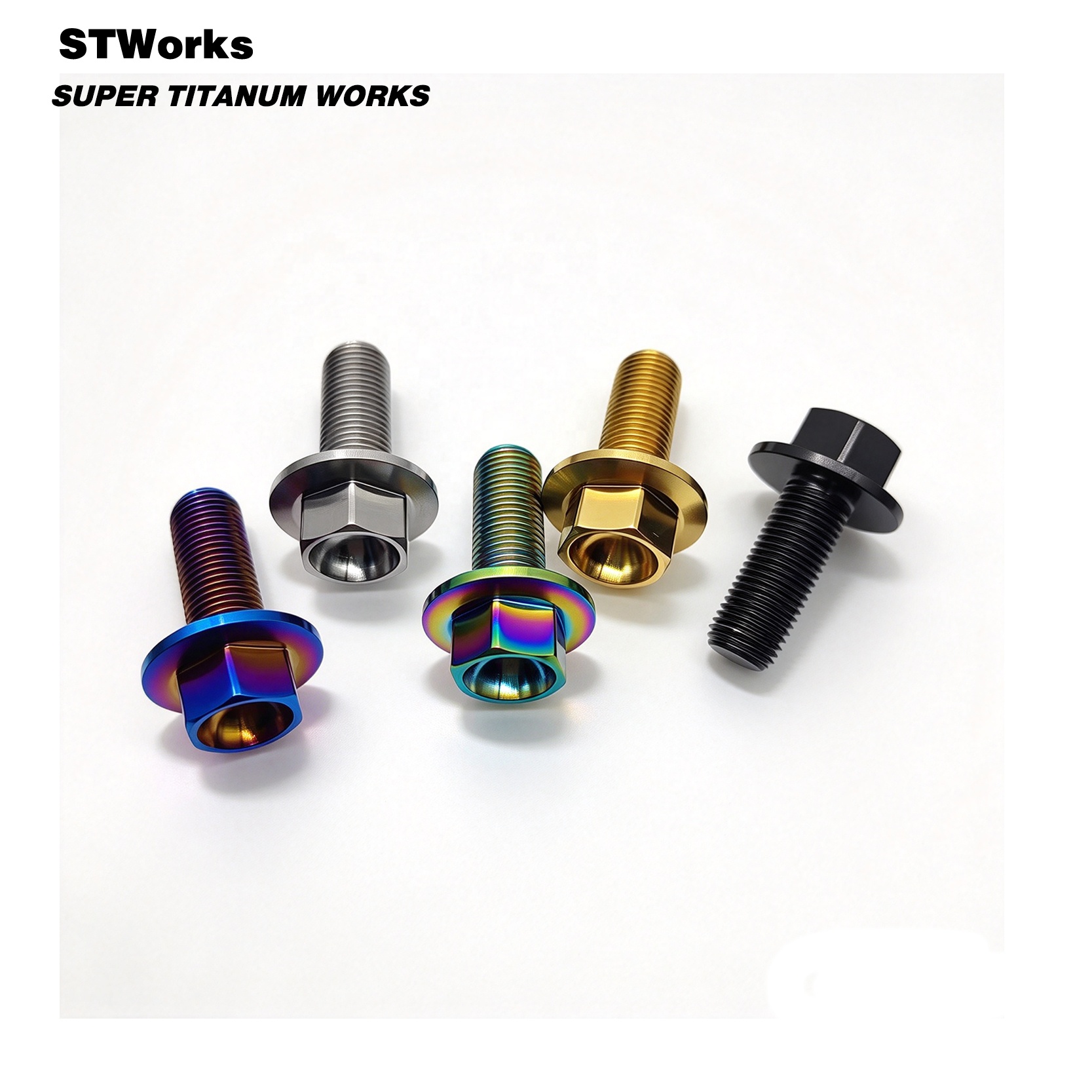
GR5 Titanium Anodized Colored Hexagon Head Flange Bolt M5 M6 M8 M10 M12 M14
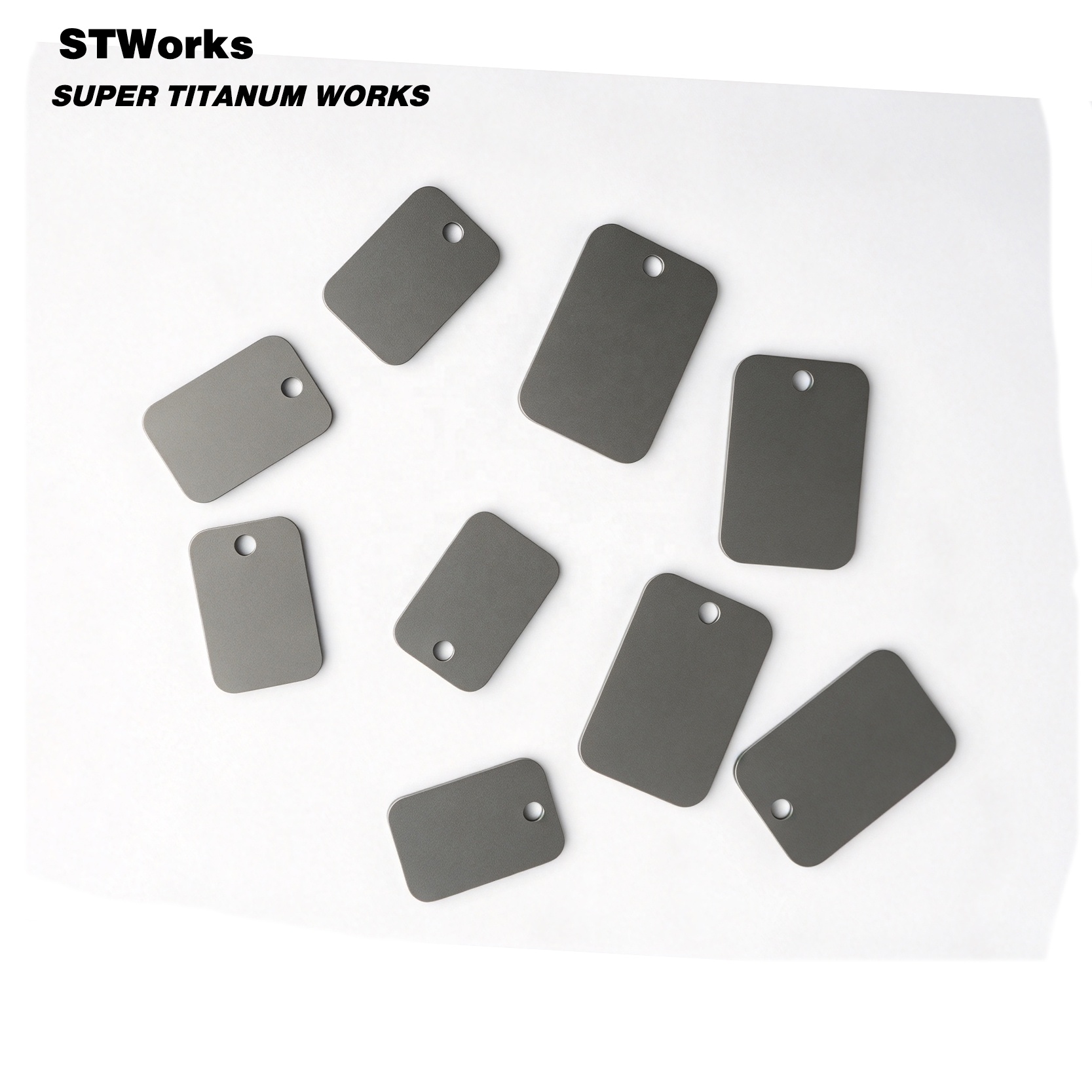
Custom Grade 5 Titanium Plate Tag Sandblasted Free Laser Engraved Logo Blank Titanium
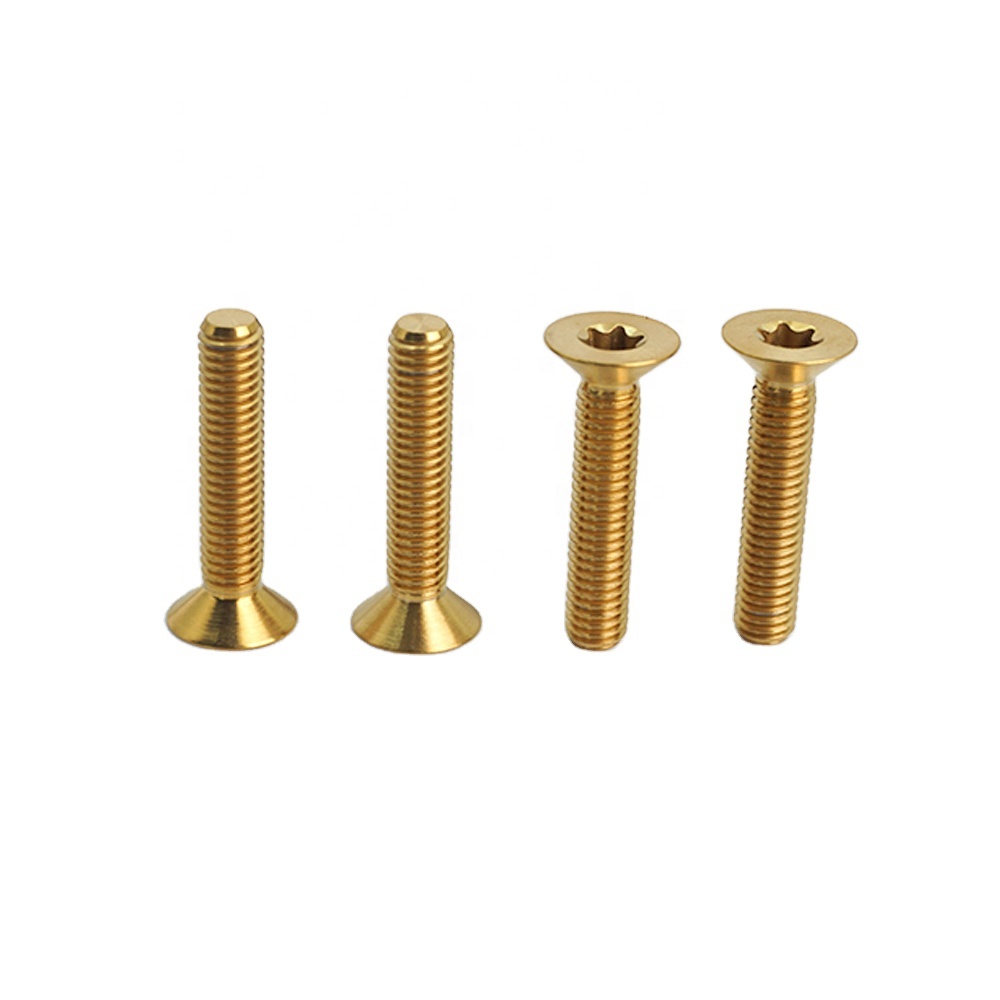
M6x25 Titanium Alloy Screw Countersunk Flat Head Bolt Bicycle Motorcycle Car Mod
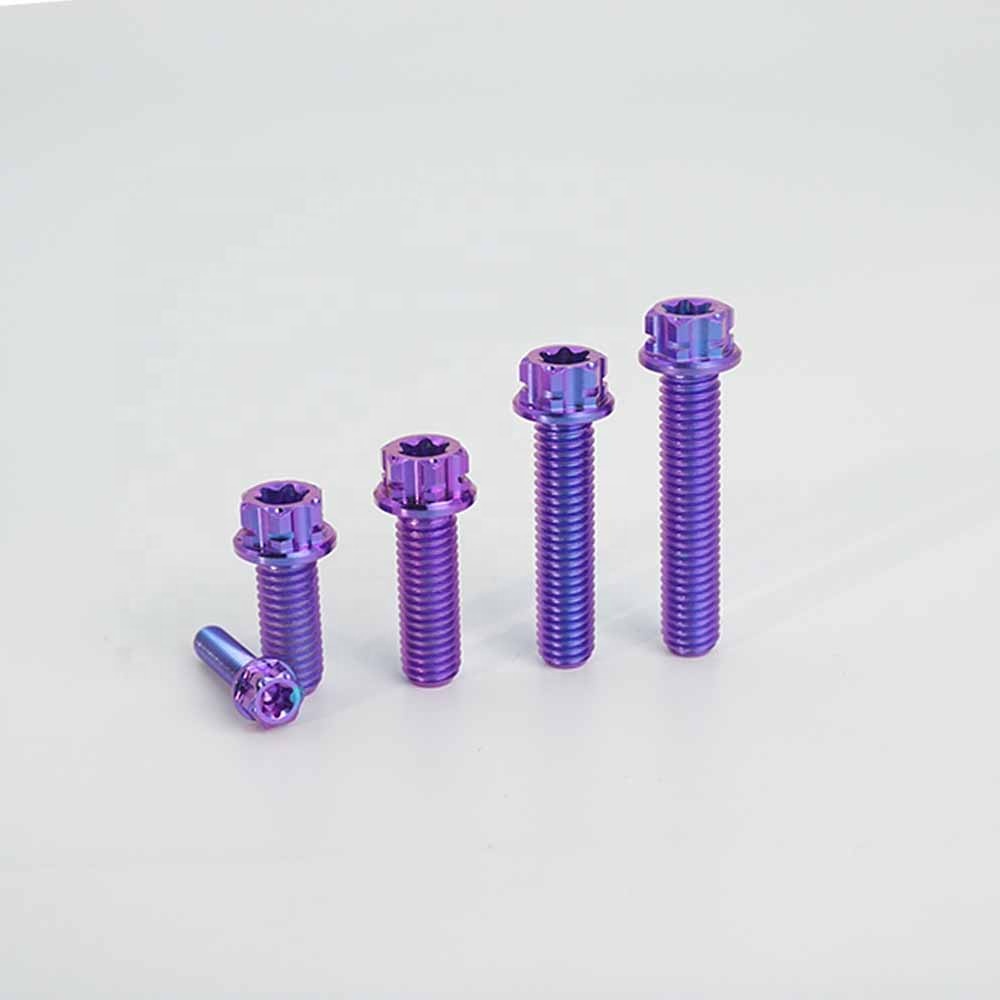
Gr5 Titanium Bolts M6x40 M6x10 M8x30 Modification Parts Torx Head Flange Bolts
The Fluid Mechanics & Finite Element Dynamics of Ti-6Al-4V Banjo Bolts
Analyzing hydraulic stress distributions, thread root fatigue resistance, and burst thresholds under high-temperature cycling in safety-critical brake assemblies.
1. Hydrodynamic Fluid Porting & Stress Relieving
A banjo bolt serves a dual mechanical function: maintaining clamping force on crush washers while providing an uninhibited conduit for hydraulic fluid under extreme pressures up to 300 bar (4,350 psi). In standard steel bolts, internal cross-drilling introduces localized shear stress risers where the axial and radial ports intersect.
Our Grade 5 titanium banjo bolts feature CNC-chamfered internal intersection ports machined via 5-axis micro-milling. This eliminates sharp transitional burrs, optimizes laminar fluid dynamics, and reduces fluid cavitation during high-frequency ABS modulation, preventing stress-corrosion cracking across thousands of thermal cycles.
2. Cold-Rolled Metric Threads vs. Lathe-Cut Threads
Thread integrity under cyclic tension is where budget fasteners fail catastrophically. Cutting threads on a standard lathe severs the continuous metallic grain flow of the titanium bar, introducing microscopic notch points at the thread root where cyclic brake pulsing initiates fatigue cracks.
We mandate thread rolling after CNC finishing. High-pressure rolling dies compress the crystal lattice of Ti-6Al-4V, generating beneficial residual compressive stresses at the root radius. This cold-working process increases root hardness by up to 18% and elevates fatigue endurance limit beyond 1,000,000 continuous pressure pulses.
3. Galvanic Passivation & Micro-Finish Sealing
Banjo joints require impermeable contact with soft metal crush washers (annealed copper DIN 7603 or aluminum Al99.5). Surface roughness on the bolt's under-head sealing face directly dictates seal reliability. A coarse machining mark causes weeping of aggressive DOT 4, DOT 5.1, or mineral brake fluids.
Our sealing shoulders receive a diamond-turned micro-finish achieving an Ra of less than 0.4 µm. Furthermore, we apply advanced electrochemical anodization and PVD coatings that eliminate microscopic galvanic coupling between titanium and aluminum calipers in saline, wet, and humid operating environments.
Material Performance Index for Fluid Power Fasteners
Quantitative property metrics comparing Grade 5 Titanium against standard motorsport and industrial fastener alloys.
| Mechanical / Chemical Property | Grade 5 Titanium (Ti-6Al-4V) | 316L Stainless Steel | Class 10.9 Zinc-Plated Steel | 7075-T6 Hard Anodized AL |
|---|---|---|---|---|
| Specific Density (g/cm³) | 4.43 (44% Lighter than Steel) | 7.98 | 7.85 | 2.81 |
| Tensile Yield Strength (Rp0.2 MPa) | 880 - 950 MPa | 220 - 300 MPa | 900 - 940 MPa | 480 - 505 MPa |
| Ultimate Tensile Strength (Rm MPa) | 950 - 1050 MPa | 520 - 620 MPa | 1000 - 1040 MPa | 540 - 570 MPa |
| Modulus of Elasticity (GPa) | 114 GPa (Superior Energy Damping) | 193 GPa | 210 GPa | 72 GPa |
| Corrosion Resistance (CASS Salt Spray) | >2,000 Hours (Impervious) | >600 Hours | <120 Hours (Red Rust Risk) | 300 Hours (Pitting Risk) |
| Thermal Operating Limit (°C) | -200°C to +450°C | -196°C to +400°C | -40°C to +250°C | -50°C to +120°C |
| Resistance to DOT Brake Fluid Acids | Complete Passivity | High Resistance | Prone to Accelerated Corrosion | Surface Degradation Over Time |
Critical Hydraulic Applications Across the Comunidad de Madrid
From the high-temperature braking loads of track cars at the historic Circuito del Jarama in San Sebastián de los Reyes to elite cycling collectives ascending the mountain passes of Navacerrada and Guadarrama, Madrid represents one of Southern Europe’s most demanding environments for performance fasteners.
Furthermore, Madrid’s industrial periphery—including the aerospace and defense engineering nodes in Getafe and Torrejón de Ardoz, as well as high-density distribution centers in San Fernando de Henares and Villaverde—demands hydraulic banjo couplings that combine complete corrosion resistance with verified dimensional compliance under European pressure directives.
Jarama Circuit Track Days
Preventing fluid boil and caliper brake fade in track-modified superbikes and GT cars through heat-dissipating Ti-6Al-4V single and double banjo assemblies.
Sierra MTB & Road Racing
Ultra-lightweight caliper banjo fittings for custom mountain bike braking systems exposed to granite dust, winter salt, and high vibrational shock.
Getafe Aerospace Tooling
Pneumatic, fuel, and test-bench fluid manifolds requiring EN 10204 3.1 chemical lot traceability and strict zero-porosity titanium bar integrity.
Madrid Custom Motos & ITV
Direct fitment for Brembo (M10x1.0mm) and Nissin/Tokico (M10x1.25mm) master cylinders with CE marking enabling seamless vehicle inspections.
Madrid Procurement Trends: Transitioning to Certified Titanium Hardware
Key regulatory and industrial growth vectors driving engineering procurement managers in Spain away from standard carbon steel and aluminum.
Stringent ITV Roadworthiness
Spain's Inspección Técnica de Vehículos (ITV) rigorously inspects modified brake systems under Real Decreto 866/2010. Uncertified aluminum bolts risk immediate rejection due to shearing hazards. Our CE-marked Grade 5 bolts come with full technical documentation, ensuring full compliance for aftermarket builders.
E-Mobility & Unsprung Mass
Madrid’s expanding electric motorcycle fleets and hyper-scooter OEM platforms require aggressive weight optimization to maximize battery range. Substituting heavy steel fluid hardware with Grade 5 titanium banjo bolts directly drops unsprung suspension weight without sacrificing structural safety margins.
Direct Baoji Factory Sourcing
Spanish supply chains face inflationary pressures from multi-tiered European middlemen. Madrid-based motorsport distribution warehouses and engineering workshops are increasingly establishing direct relationships with Baoji manufacturing hubs to secure stable pricing, custom thread pitch runs, and guaranteed lead times.
Corrosion Prevention in Winter
During the central Iberian winter, Madrid’s municipal de-icing salts on the M-30, M-40, and mountain transit arteries rapidly corrode mild steel and anodized aluminum banjo bolts. Titanium’s self-healing ruthenium-stable oxide film guarantees lifelong surface passivity against calcium and sodium chlorides.
Engineering & Homologation Questions Answered
Essential guidance for Madrid procurement specialists, workshop owners, and industrial maintenance engineers.
How do I match the thread pitch for Brembo vs. Japanese calipers in Spain?
In the Spanish market, Italian hydraulic systems (Brembo, Formula, Magura) standardly specify M10x1.0mm fine metric pitch. In contrast, Japanese brake systems commonly found across Madrid (Nissin, Tokico, Sumitomo on Honda, Yamaha, Kawasaki, Suzuki) use M10x1.25mm coarse pitch. We supply both specifications in single (one hose line) and double (two stacked lines) banjo lengths, clearly laser-etched on the bolt head to eliminate workshop installation error.
What documentation accompanies shipments for Spanish ITV homologation?
Every industrial production batch dispatched to Madrid is backed by an EN 10204 3.1 Mill Test Certificate (MTR) verifying the exact chemical composition (certified % of Ti, Al, V, Fe, and interstitial O2/N2) and mechanical yield/tensile test data. Furthermore, our bolts conform to the CE Machinery Directive 2006/42/EC standards for pressurized hydraulic fittings, providing workshop technicians with full certification proof for ITV individual vehicle approvals (Homologación Individual).
Can I use annealed copper crush washers with titanium banjo bolts?
Yes. Grade 5 titanium works exceptionally well with both annealed copper (Cu-ETP) and high-purity aluminum (Al99.5) crush washers. Due to titanium's exceptional surface hardness compared to soft copper, the washer plastically deforms evenly into our micro-finished (Ra < 0.4 µm) sealing shoulder. To prevent galvanic potential in high-humidity applications, we recommend applying a light dab of nickel-based anti-seize paste or synthetic fluoropolymer lubricant to the threads.
What are the recommended torque values compared to OEM steel?
Because Ti-6Al-4V Grade 5 has a lower modulus of elasticity (114 GPa) than steel (210 GPa) but equivalent or superior tensile yield (900+ MPa), torque values should closely mimic OEM specs when lubricated. For an M10x1.0 or M10x1.25 titanium banjo bolt into an aluminum caliper casting, the recommended tightening torque is 18 Nm to 22 Nm (13.2 to 16.2 lb-ft). Never exceed 28 Nm, as excessive torque will strip the female threads of the softer aluminum caliper, not the titanium bolt.
How does Velnora prevent thread galling during high-stress installation?
Thread galling (cold welding) is an inherent metallurgical characteristic of bare titanium when torqued dry under high preload. We address this at three levels: (1) precision thread rolling to achieve ultra-smooth root geometry; (2) optional physical vapor deposition (PVD) coatings such as Diamond-Like Carbon (DLC) or Titanium Nitride (TiN), which impart a micro-hard, low-friction exterior; and (3) specialized anti-seize assembly protocols detailed in our technical packaging.
What are logistics lead times and TARIC customs codes for importing to Madrid?
For Madrid air freight imports landing at Adolfo Suárez Madrid-Barajas Airport (MAD), transit time is standardly 4 to 7 business days via DHL Express or FedEx Priority. For bulk maritime consignments to Valencia or Algeciras with inland rail transfer to Madrid Dry Port (Puerto Seco de Azuqueca), typical transit is 22 to 28 days. Our titanium fasteners are classified under EU TARIC code 8108.90.90 (Titanium articles), simplifying clearance with Spanish customs (Agencia Tributaria).
Velnora Titanium Industry: Precision CNC Machining & Traceability
Operating since 2013 in Baoji—China's world-renowned Titanium Valley—serving tier-1 racing teams, specialized machine builders, and international distributors.
Certified Aerospace Barstock
All titanium raw material originates from vacuum arc remelted (VAR) ingots compliant with ASTM B348, AMS 4928, and ISO 5832 standards. Zero recycled scrap metal is used in structural fluid fasteners.
Multi-Axis Swiss CNC Centers
Operating high-speed Citizen and Star Swiss-type automatic turning centers equipped with high-pressure internal coolant, ensuring micrometer-level dimensional tolerances (±0.005mm) across high-volume production runs.
Pre-Shipment Video Verification
We maintain end-to-end transparency. Madrid B2B buyers receive high-resolution optical comparator inspection reports, coordinate measuring machine (CMM) dimensional scans, and workshop production videos before dispatch.
Request Your Madrid Custom Batch or OEM Drawing Review
Whether you need single or double M10x1.0 / M10x1.25 titanium banjo bolts, custom bleed port combinations, or private-label retail blister packs for your Madrid distribution business, our engineering team responds with complete DFM feedback and formal quotations within 4 working hours.
Contact Us