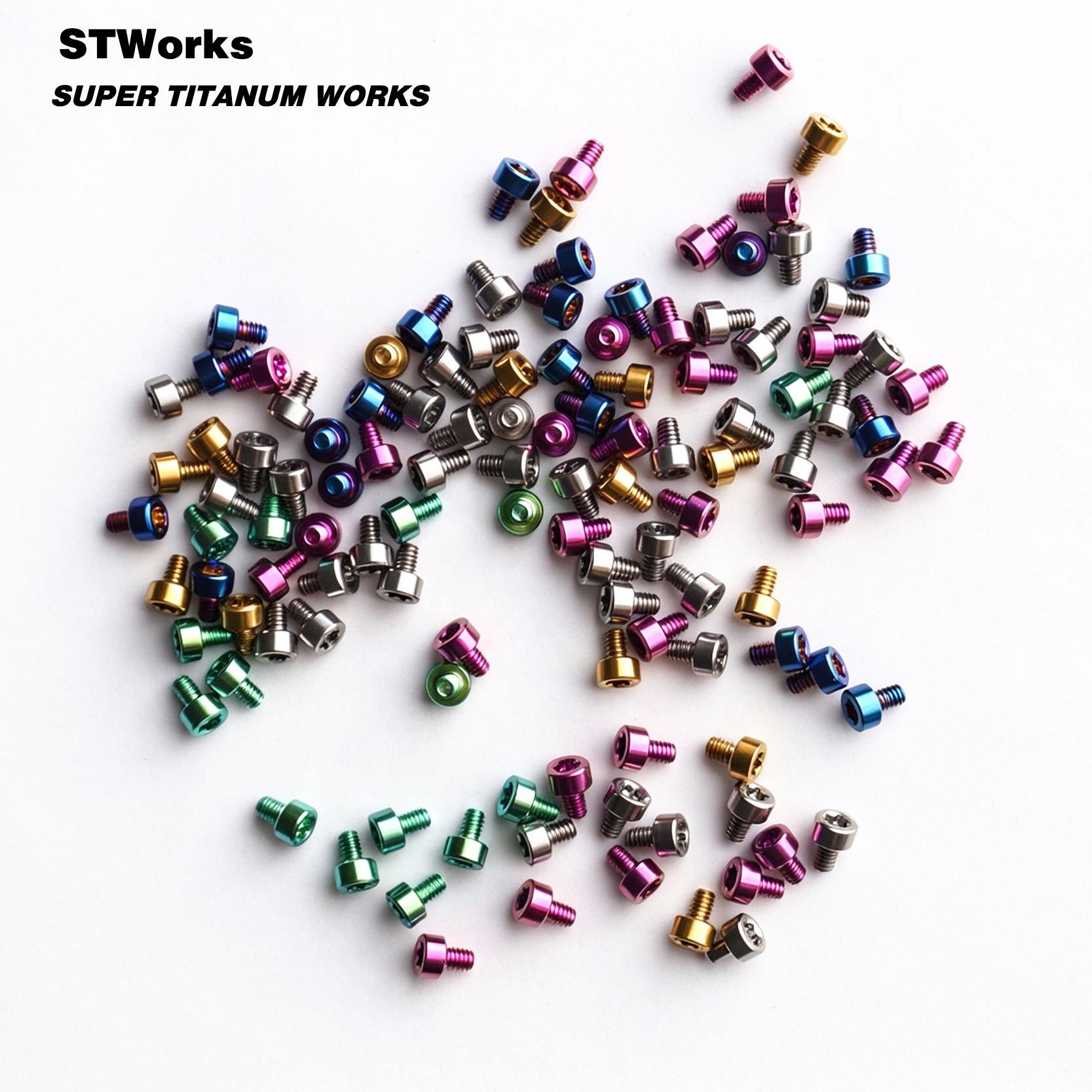
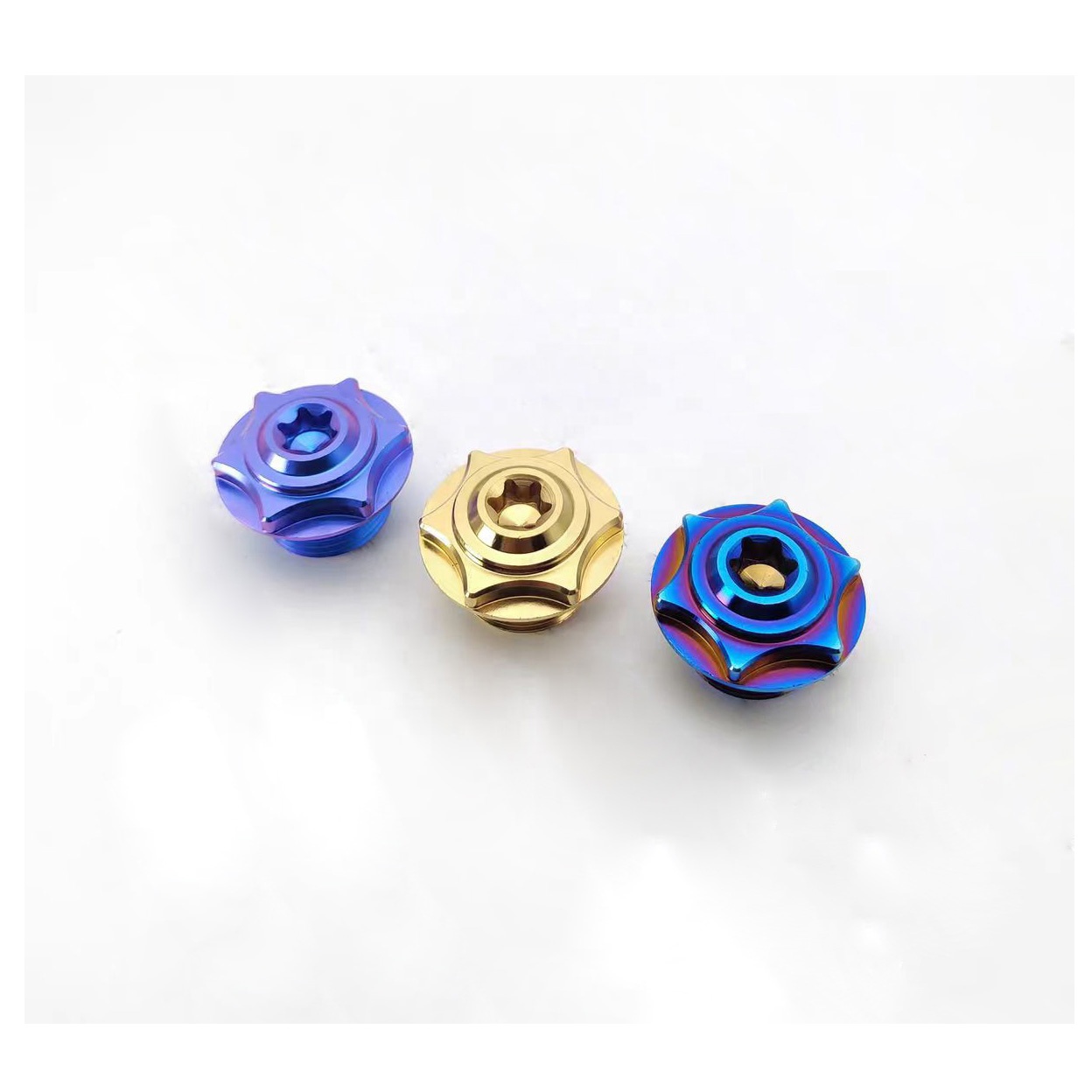
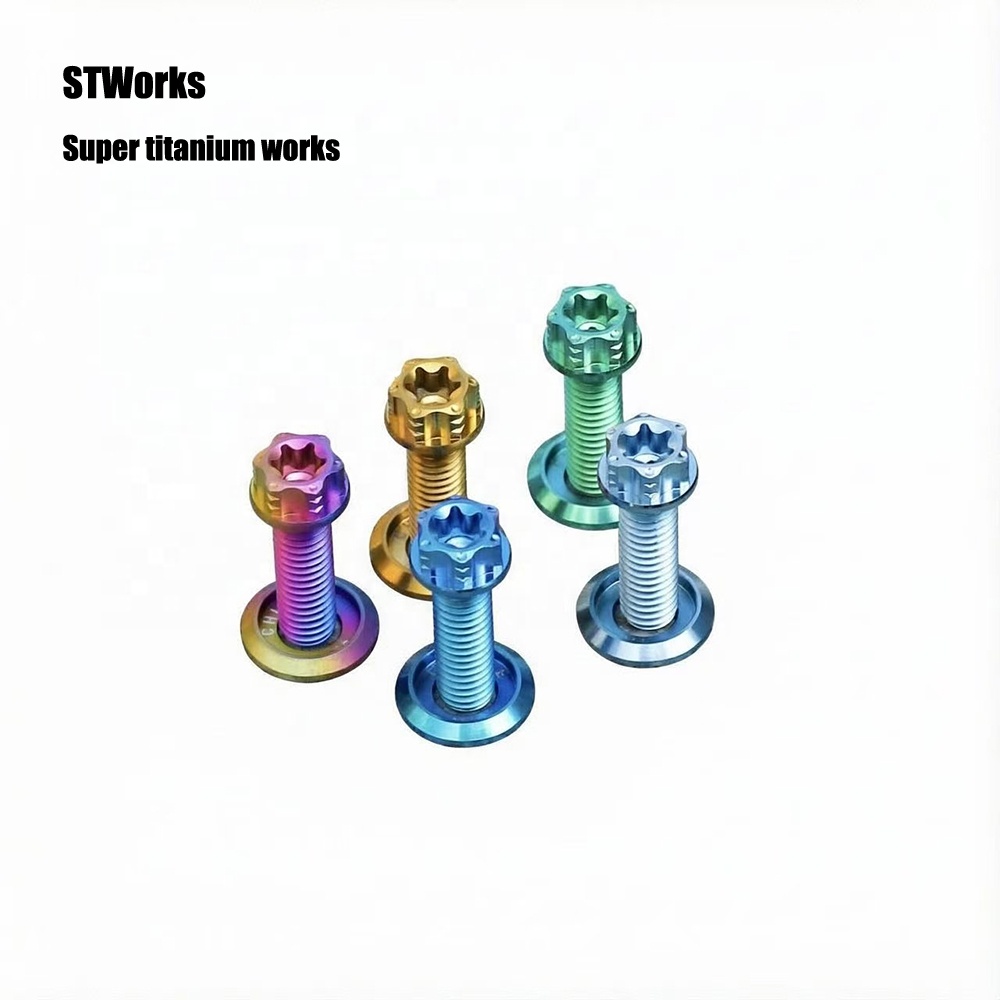
Supplying high-tolerance Gr5 Ti-6Al-4V fasteners, Mokuti raw materials, and precision CNC components directly to Dutch system builders, marine workshops, and cycling ateliers.
Understanding the solid-state co-deformation, vacuum diffusion mechanics, and phase boundary integrity in Timascus (Mokuti) billets engineered for critical applications.
Timascus (also known as Mokuti or titanium Damascus) achieves its distinct woodgrain patterns through the alternating synthesis of distinct titanium alloys, typically Commercially Pure Grade 2 (CP-Ti) and Grade 5 (Ti-6Al-4V TC4). When exposed to precise thermal oxidation (between 380°C and 720°C) or multi-stage electro-chemical anodization, CP-Ti and Gr5 develop refractive titanium dioxide (TiO2) films at markedly different ionic rates. This differential thickness generates vivid light interference colors ranging from vibrant bronze and imperial purple to electric blue and intense gold without artificial pigments.
Delamination under mechanical shear is the primary failure mode of inferior decorative damascus materials. Our Baoji facility employs Hot Isostatic Pressing (HIP) and high-vacuum solid-state diffusion bonding furnaces exceeding 10-3 Pa vacuum at temperatures near 920°C. Under multi-axial hydraulic pressure exceeding 120 MPa, atomic migration occurs across the alpha-beta crystalline interfaces. This eliminates voids, micro-porosity, and brittle intermetallic formations, yielding a cohesive structural billet capable of thread-cutting, 5-axis milling, and high-load marine deployment.
For Dutch industrial importers, compliance with the European Union's REACH Regulation (EC No 1907/2006) and RoHS Directive (2011/65/EU) is paramount. Velnora ensures our titanium raw stock and Timascus rods/sheets are 100% free of restricted Substances of Very High Concern (SVHC), including lead, nickel, and cadmium. Certified under CE standards for relevant structural components and backed by EN 10204 Type 3.1 Material Test Reports (MTR), our billets ensure frictionless customs processing at the Port of Rotterdam and Amsterdam Schiphol.
| Alloy Layer / Material | Tensile Strength (Rm MPa) | Yield Strength (Rp0.2 MPa) | Elongation at Break (A5 %) | Density (g/cm³) | Marine Salt-Fog Resistance |
|---|---|---|---|---|---|
| CP Grade 2 Titanium | ≥ 345 | ≥ 275 | ≥ 20% | 4.51 | Immune (Zero pitting in North Sea water) |
| Grade 5 (Ti-6Al-4V / TC4) | ≥ 895 | ≥ 828 | ≥ 10% | 4.43 | Exceptional (Passivating oxide layer) |
| Timascus / Mokuti (Bonded Billets) | 620 – 780 (Composite) | 540 – 680 (Composite) | ≥ 14% | 4.47 | Superior (Galvanic potential ΔV < 0.05V) |
| AISI 316L Marine Stainless Steel | ≥ 520 | ≥ 220 | ≥ 40% | 7.98 | Susceptible to crevice corrosion under biofilms |
| Cupronickel (CuNi 90/10) | ≥ 290 | ≥ 105 | ≥ 30% | 8.90 | Good, but 99% heavier than Timascus laminates |
How Netherlands-based engineering firms, naval architecture studios, and bespoke ateliers leverage CE-certified Timascus rods and sheets.
The Netherlands leads the world in ultra-luxury superyacht construction across shipbuilding hubs in Amsterdam, Rotterdam, and Makkum. Timascus rods and plates are increasingly specified by interior naval architects for bespoke deck fittings, custom helm controls, marine door handles, and saloon fixtures.
From the Dutch Blade Show to custom knife ateliers across Gelderland and Utrecht, Dutch custom knifemakers demand flawless Timascus sheets and rods for bolsters, liners, frame-locks, and pocket clips. The metallurgical bonding must endure rigorous cryogenic temper and wire EDM contouring without flaking.
As the bicycle capital of Europe, the Netherlands fosters a thriving culture of boutique titanium and carbon frame builders centered around Eindhoven, Utrecht, and Zwolle. Dutch cycling purists utilize Timascus for high-visibility components that resist humid, rainy canal environments.
Navigating sustainability, high-tech integration, and circularity within the Dutch manufacturing sector.
Dutch industry is pioneering the transition toward circularity and traceability in accordance with EU Green Deal directives. Dutch purchasers increasingly demand complete heat-lot traceability, scrap-free precision billets, and documented chemical composition from melting to finished rod. Velnora supports Dutch OEM partners with full spectroscopic verification reports, guaranteeing seamless compliance with future EU Digital Product Passport mandates.
Driven by the high-tech semiconductor ecosystem in Brainport Eindhoven, Dutch subcontractors prioritize materials with predictable machinability and zero internal stress. Low-grade patterned metals often suffer from warping when sliced with Wire EDM. Our vacuum stress-relieved Timascus sheets maintain absolute dimensional flatness down to ±0.05 mm, saving expensive tooling costs during multi-axis machining operations.
With much of the Netherlands situated below sea level and crisscrossed by canals and saline estuaries, architectural and outdoor recreational hardware faces severe atmospheric chloride exposure. High-end Dutch designers are intentionally replacing anodized aluminum and austenitic stainless steels with Mokuti and Gr5 fasteners to guarantee a lifetime of service without structural degradation or unsightly rust stains.
Headquartered in the core of China's Titanium Valley since 2013, combining raw ingot forging capacity with multi-axis CNC micro-machining.
Before any crate leaves our Baoji workshop for the Netherlands, our engineers film high-resolution digital microscope inspection runs, thread pitch micrometry, and anodized color uniformity, delivering total purchasing confidence across time zones.
Unlike large raw mill conglomerates requiring metric-ton minimums, we supply bespoke Timascus Mokuti plates, pattern-twisted rods, and pre-machined bolt blanks from as low as 1 piece for prototypes, scaling seamlessly to production runs of 50,000+ units.
We offer custom diffusion patterns including Basketweave, Raindrop, Herringbone, Ladder, and Twist Damascus. Our master metallurgical smiths ensure consistent pattern propagation throughout the entire core of the bar, not just surface cladding.
Addressing customs clearance, CE conformity, machining protocols, and heat coloration for European trade partners.
Titanium rods, sheets, and pre-machined billets entering the Netherlands typically clear under EU TARIC code 8108.90.00 (Other articles of titanium) or 8108.20.00 (Unwrought titanium; powders). As an experienced exporter to the EU, Velnora furnishes complete Commercial Invoices, Packing Lists with precise Net/Gross weights, and Certificates of Origin (CO). Goods routed via DHL Express, FedEx, or air freight into Schiphol (AMS) or ocean freight into Rotterdam clear Dutch Douane swiftly under DDP (Delivered Duty Paid) or DAP terms.
Every shipment of Timascus rods, plates, and Gr5 fasteners is accompanied by an EN 10204 Type 3.1 Inspection Certificate verifying heat number, optical emission spectroscopy (OES) chemical assay, and mechanical tensile/yield testing. All materials are tested to ensure non-detection of toxic heavy metals, compliant with EU REACH Annex XVII and the RoHS Directive. For pressurized or load-bearing applications in maritime machinery, full third-party test reports from SGS or TUV can be arranged upon request.
Because Timascus combines CP Grade 2 (ductile, adhesive tendency) and Grade 5 (high tensile, low thermal conductivity), machining requires sharp, positive-rake carbide tooling with PVD TiAlN or diamond-like coatings (DLC). We recommend moderate surface cutting speeds (Vc = 35 – 55 m/min), rigid tool setups to prevent work-hardening, and high-pressure flood coolant (8–10% water-soluble synthetic emulsion). Avoid dwelling or tool rubbing, which creates localized glazed spots that impede subsequent color etching.
Optimal contrast requires meticulous surface preparation: polish the piece progressively to 2,000 grit or mirror buff, followed by thorough ultrasonic degreasing using pure acetone or isopropyl alcohol. Thermal Coloration: Gently heat the component using a clean butane/propane torch or in an electric furnace at 380°C–450°C. The CP Grade 2 layers oxidize into vibrant blues and purples while the Grade 5 layers exhibit gold, bronze, or magenta hues. Etching: A brief dip in a hydrofluoric-nitric (HF/HNO3) acid bath creates rich topographical 3D relief prior to final heat coloring.
Titanium threads possess a natural affinity for microscopic adhesive wear (galling) when tightened against mating titanium, aluminum, or stainless components under high contact stress. We eliminate galling risks for Dutch clients through two proven engineering techniques: 1) Rolling all fastener threads instead of single-point lathe cutting to yield a burnished surface finish (Ra ≤ 0.4 μm); 2) Applying titanium-formulated anti-seize paste (containing copper, graphite, or MoS2) and adhering strictly to dry-torque compensation factor deratings.
For standard stocked patterns (such as Twist, Wave, and Raindrop in rods of Ø15mm to Ø45mm, and plates of 2.0mm to 8.0mm thickness), dispatch occurs within 48 to 72 hours from our facility. Air courier delivery via DHL/FedEx to Amsterdam, Rotterdam, Eindhoven, or Groningen takes approximately 4 to 6 business days. Custom billet forgings, specific alloy layering (such as Gr9 Ti-3Al-2.5V inclusions), or precision wire EDM sliced profiles typically require 12 to 18 production days.
Whether you require raw CE-certified Timascus billets for artisan cutlery, high-tensile Gr5 racing fasteners for motorcycle builds, or bespoke marine hardware for superyachts in the Netherlands, our metallurgy engineering team provides instant DFM reviews and transparent pricing within 4 hours.