Engineering Leadership in Titanium Turning & Swiss Screw Machining
Why leading Tier-1 aerospace contractors, racing performance tuners, medical device manufacturers, and high-end EDC designers consolidate their custom titanium turned components procurement with Velnora Titanium Industry in Baoji, China.
Titanium turning represents one of the most demanding sub-disciplines in advanced subtractive manufacturing. Characterized by low thermal conductivity ($k \approx 6.7 \text{ W/m}\cdot\text{K}$ for Ti-6Al-4V versus $50 \text{ W/m}\cdot\text{K}$ for typical carbon steel), high chemical reactivity at elevated cutting temperatures, and a low modulus of elasticity ($E \approx 114 \text{ GPa}$), machining Grade 5 and Grade 2 titanium demands hyper-rigid workholding, specialized tool geometries, and proprietary chip-control kinematics. Uncontrolled heat accumulation at the tool-workpiece interface induces rapid flank wear, notch wear, and thermal deflection, risking catastrophic dimensional drift on high-tolerance cylindrical components.
Founded in 2013 and situated within Baoji, Shaanxi Province—globally acknowledged as "China’s Titanium Valley"—Velnora Titanium Industry Co., Ltd. sits at the strategic epicenter of the international titanium supply chain. This geographic synergy grants direct access to primary vacuum-arc remelted (VAR) sponge titanium ingots, certified cold-drawn precision rod stock, and world-class metallurgical research institutes. By integrating Citizen and Star multi-axis Swiss-type screw lathes, dual-spindle live-tooled mill-turn centers, and ultra-high-pressure coolant delivery systems (up to 140 bar), Velnora delivers aerospace-grade dimensional repeatability, ultra-concentric threads, and superior Ra 0.4 μm surface topographies without secondary manual finishing.
Certified Vacuum-Melted Alloys
Full heat-level traceability for every batch of Gr5 (Ti-6Al-4V / TC4), Gr2 CP Titanium, Gr9, and surgical Gr23 ELI. Backed by EN 10204 3.1 Mill Test Certificates and chemical composition verification.
Swiss Micro-Turning ±0.005mm
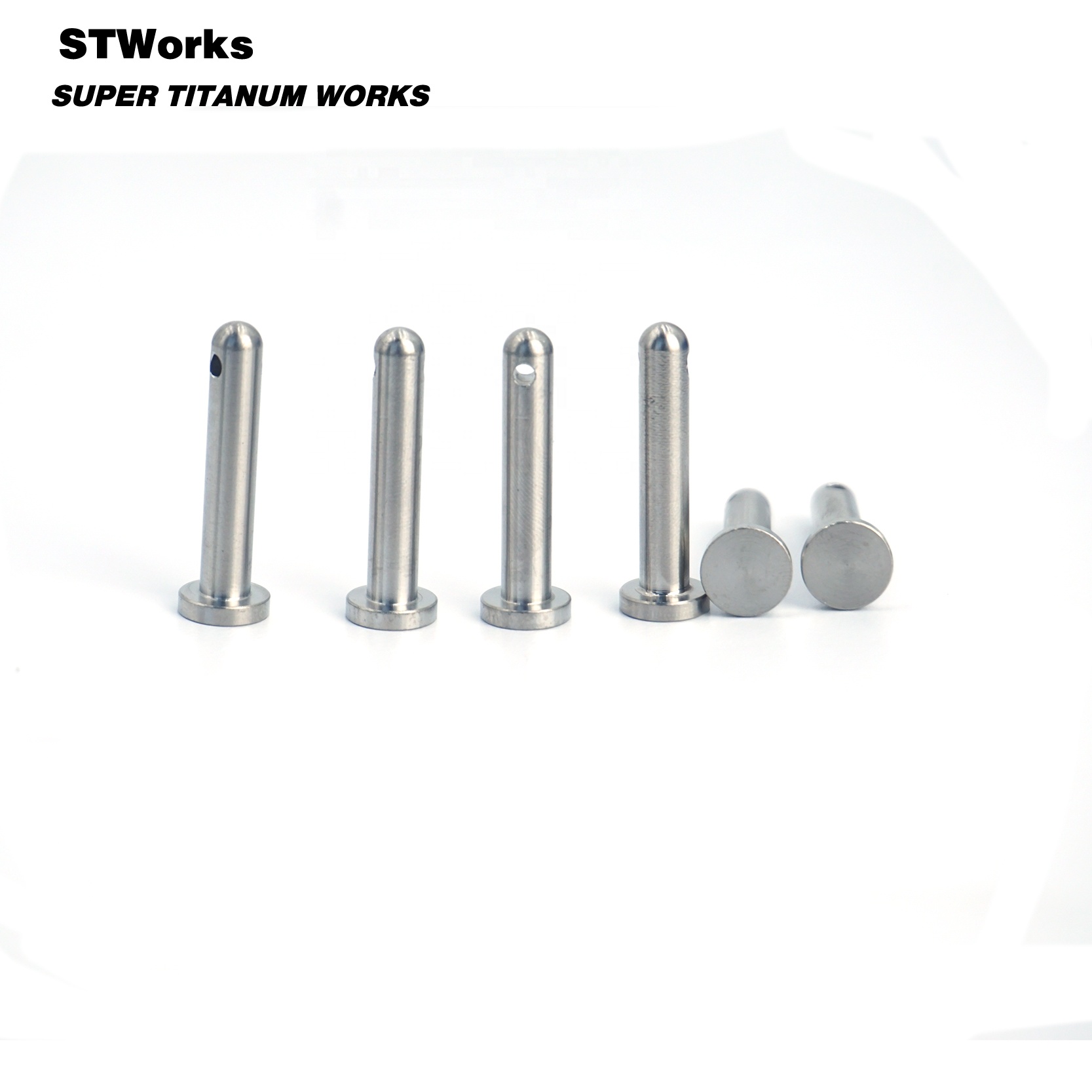
Equipped with 7-axis to 9-axis Swiss-lathe platforms capable of sub-miniature turning from Ø0.8mm to Ø38mm. Guide-bushing micro-turning ensures zero deflection on high aspect-ratio dowels and shafts.
Cold-Rolled Fatigue-Proof Threads
Unlike cut threads that sever metal grain lines, Velnora utilizes thread rolling dies for external fastener geometries. Continuous metal grain flow boosts cyclical tensile fatigue life by over 35%.
Engineering Specifications
Titanium Alloys vs. Ferrous & Non-Ferrous Alloys in Precision Turning
Material performance benchmarking for procurement officers, mechanical engineers, and stress-joint designers evaluating replacement of 304/316L stainless steel, 7075 aluminum, and structural alloy steels.
Material Grade
Yield Strength ($R_{p0.2}$ MPa)
Tensile Strength ($R_m$ MPa)
Density ($\text{g/cm}^3$)
Modulus ($E$ GPa)
Corrosion Mechanism
Typical Machined Application
Gr5 Ti-6Al-4V (Annealed)
828 – 910
895 – 1000
4.43
114
Passive $\text{TiO}_2$ Barrier (Impervious)
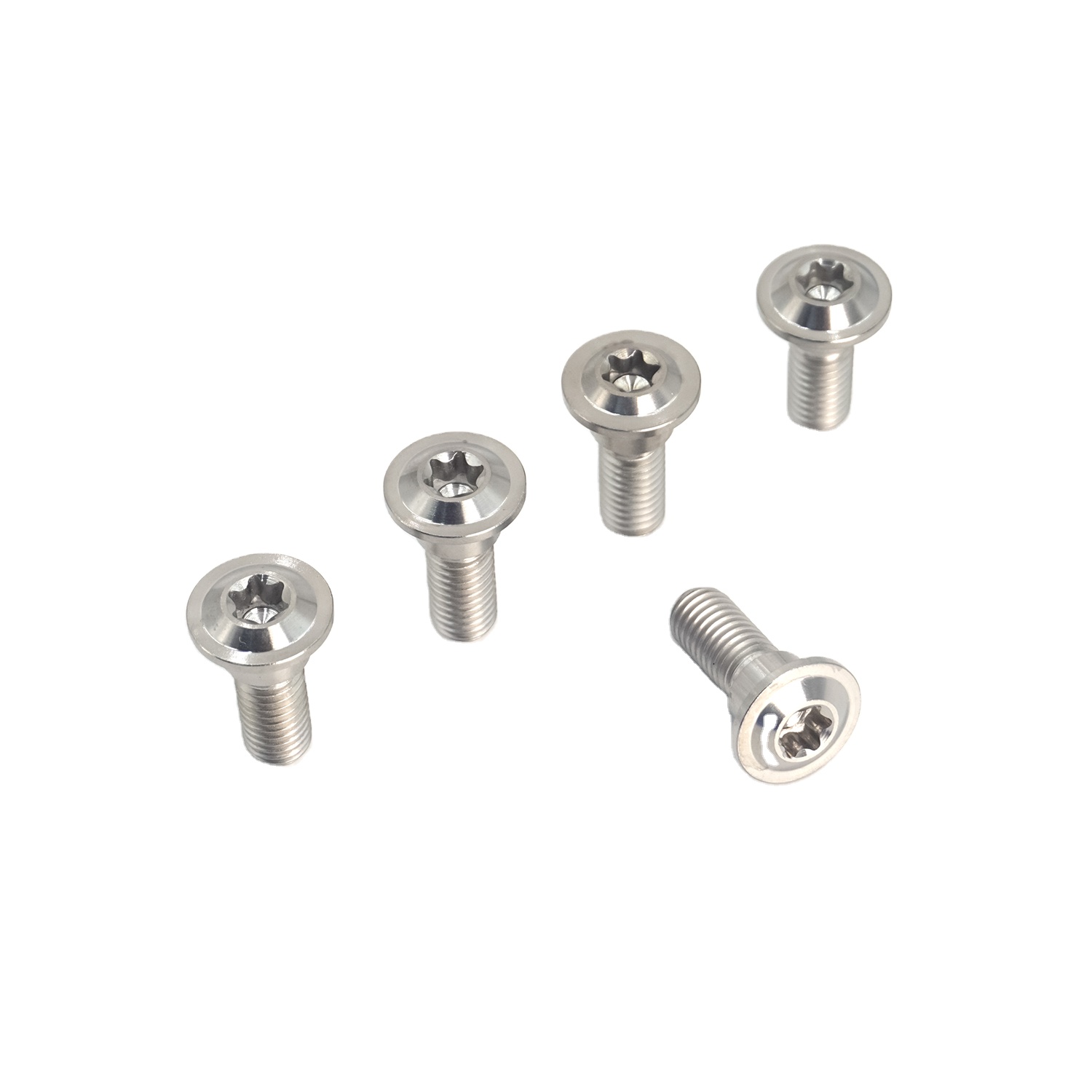
Brake Caliper Screws, Rotor Bolts, Axles, Racing
Gr2 Pure Titanium
275 – 350
345 – 480
4.51
105
Supreme Chemical/Chlorine Resistance
Marine Plugs, Chemical Fittings, Anodizing Racks
Gr23 Ti-6Al-4V ELI
790 – 860
860 – 965
4.43
110
Biocompatible / ASTM F136 Compliant
Surgical Screws, Dental Implants, Micro-Pins
304 / 316L Stainless Steel
205 – 290
515 – 620
7.98
193
Pitting & Crevice Risk in Halide Salts
Standard Metric Screws, Commercial Hardware
Aircraft 7075-T6 Al
480 – 505
540 – 570
2.81
71
Galvanic Pitting / Thermal Softening >120°C
Low-Stress Brackets, Fairing Washers, Caps
AISI 4140 Class 10.9 Steel
940 – 1040
1040 – 1200
7.85
210
Rapid Rust (Demands Zinc / Cadmium Plate)
Heavy Engine Head Studs, Suspension Fasteners
Crucial Design Note: While Grade 5 titanium offers an ultimate tensile strength exceeding 950 MPa—directly on par with Property Class 8.8 and approaching Class 10.9 structural steels—its modulus of elasticity is approximately half that of steel ($114 \text{ GPa}$ vs $210 \text{ GPa}$). Consequently, when substituting steel fasteners in shear-critical dynamic environments (such as motorcycle brake discs or automotive hub assemblies), design engineers must calculate pre-load elongation and apply lubricated friction-coefficient compensations. Utilizing rolled threads and precision-machined under-head radius transitions eliminates stress-riser concentration factors, preventing cyclical micro-fretting.
Forward Market Intelligence
Future Procurement Trends for Titanium Turned Parts (2025–2030)
Strategic procurement dynamics reshaping the global supply network for precision-turned titanium hardware, driven by aerospace light-weighting, micro-mobility, and automated high-mix low-volume supply chains.
1. Near-Net-Shape Preforms & Turning
With virgin titanium sponge prices fluctuating, high-volume procurement programs are turning toward hybrid manufacturing: sintering or additive manufacturing (EBM/SLM) of near-net blanks, completed by high-speed Swiss-lathe turning to achieve ±0.005mm critical seating surfaces while reducing scrap waste ratios by up to 55%.
2. In-Process Video & Digital Traceability
Tier-1 procurement teams no longer accept "black-box" manufacturing. The new industry benchmark requires digital live-audit protocols, wherein factories provide serialized optical inspection records, continuous tool-wear compensation logs, and high-definition video verification of raw bar turning prior to customs clearance.
3. Total Cost of Ownership (TCO) Dominance
B2B buyers are pivoting from piece-part price evaluation to Lifecycle TCO models. In marine, offshore chemical, and electric vehicle applications, titanium fasteners eliminate recurrent maintenance cycles, galvanic replacement labour, and anti-corrosion plating costs, yielding positive ROI inside 24 operating months.
Manufacturing Innovation
Technological Breakthroughs in High-Precision Titanium Turning
How Velnora overcomes titanium's inherent work-hardening tendencies, high spring-back properties, and extreme friction coefficients using proprietary toolpaths and specialized metallurgy.
High-Pressure Coolant (HPC) Micro-Jet
Conventional flood cooling creates an insulating vapor blanket at high feed rates. Velnora deploys targeted 140-bar through-tool micro-jets directly into the shear zone. This shatters stringy continuous chips into C-shaped segments, stabilizing insert life and securing Ra ≤ 0.4 μm cylinder surfaces.
Low-Frequency Vibration Turning (LFV)
To prevent severe tool-clogging and surface gouging during deep internal boring and micro-turning of small fasteners (M2–M4), our synchronized Swiss axes oscillate tools along the feed axis. This induces periodic air-cutting pauses that mechanically fracture swarf without compromising cycle time.
PVD Diamond-Like Carbon (DLC) & Anodizing
Titanium has high galling susceptibility under bare metal-to-metal torque. Velnora integrates in-house AMS 2488 Type II anodic barrier oxidation, multi-spectrum decorative anodization, and specialized PVD DLC (Diamond-Like Carbon) coatings that drop friction coefficients below 0.12.
Zero-Defect Quality Gates
How Velnora Guarantees Fastener & Turned Part Integrity
Quality management verified by multi-stage metrology, optical profile checking, eddy-current crack detection, and complete pre-shipment mechanical validation.
1. Raw Material Spectrometry & Tensile Validation
Every raw bar delivered to our workshop undergoes X-ray fluorescence (XRF) and optical emission spectrometry (OES) to inspect interstitial gas concentrations ($O \le 0.20\%$, $N \le 0.05\%$, $H \le 0.0125\%$). Excess interstitial pickup embrittles titanium, creating microscopic crack initiation sites during high-load mechanical tension.
2. Automated Optical & Contact CMM Inspection
Parts run through automated Keyence optical sorting systems checking 100% of thread pitch, major/minor diameters, underhead fillet radii, and drive socket concentricities. Critical mating interfaces are inspected on Zeiss Coordinate Measuring Machines (CMM) in our climate-regulated laboratory ($20\text{\textcelsius} \pm 0.5\text{\textcelsius}$).
Technical Q&A
Frequently Asked Titanium Turned Parts Procurement Questions
Authoritative technical resolutions to the most prevalent questions asked by mechanical engineers, supply chain directors, and purchasing agents before submitting RFQs.
What are the key differences between rolled threads and cut threads on titanium fasteners?
Single-point cut threads are generated by cutting into the titanium billet, which slices across the grain structure of the alloy and creates micro-notches at the thread root. Because titanium is notch-sensitive, these microscopic tear marks serve as stress-concentration points under cyclic vibration. In contrast, thread rolling cold-forms the profile using hardened cylindrical or flat dies under severe hydrostatic pressure. This plastically flows the titanium grains around the root and crest contours, retaining unbroken grain boundaries, burnishing the thread root to an Ra ≤ 0.2 μm mirror finish, and increasing shear and tensile fatigue strength by 30% to 40%. At Velnora, all high-stress racing, motorcycle, and aerospace bolts feature cold-rolled threads.
How do you resolve thread galling (cold-welding) when tightening titanium bolts?
Titanium threads gall because the protective titanium dioxide ($\text{TiO}_2$) surface film can break down under high friction and contact pressure. Metal-to-metal contact can lead to localized cold-welding and thread seizure. We solve this across three engineering vectors:
Surface Hardening & Coatings: Applying Type II Anodization (AMS 2488) creates a lubricious, hardened anti-wear oxide matrix. Alternatively, PVD DLC or titanium carbo-nitride (TiCN) coatings create an ultra-hard barrier that blocks direct metal adhesion.
Precision Thread Classing: Cutting threads to ISO 6g/6H or Class 3A/3B specifications guarantees adequate clearance for anti-seize pastes without causing pitch misalignment.
Assembly Protocol: We advise using a copper-based, molybdenum disulfide ($\text{MoS}_2$), or fluoropolymer anti-seize paste. Torque values should be reduced by 15% to 20% compared to dry torque to maintain consistent clamping force without overstretching the shank.
Can Grade 5 titanium bolts directly replace Class 10.9 or 12.9 high-tensile steel fasteners?
Grade 5 titanium ($R_m \approx 950\text{ MPa}$, $R_{p0.2} \approx 880\text{ MPa}$) can directly replace Class 8.8 steel ($R_m \approx 800\text{ MPa}$) with an immediate 44% weight reduction and improved corrosion performance. It can also safely replace Class 10.9 steel ($R_m \approx 1040\text{ MPa}$) in the vast majority of non-yield-critical clamping joints, such as brake calipers, triple trees, sprocket mounts, and exhaust headers. However, for Class 12.9 joints ($R_m \approx 1220\text{ MPa}$) located in extreme load scenarios (e.g., engine cylinder head studs or connecting rods), direct substitution requires careful consideration. A qualified engineer should evaluate whether bolt sizing can be increased (e.g., upgrading from M8 to M10) to compensate for the lower modulus ($114\text{ GPa}$ vs $210\text{ GPa}$) and maintain design safety margins.
What drawing file formats and CAD standards does your engineering team accept?
Our engineering team uses Siemens NX, SolidWorks, and Mastercam. We prefer 3D native models in STEP (.stp, .step) or IGES (.igs, .iges) formats, along with a companion 2D drawing in PDF or DWG format clearly indicating critical dimensions, Geometric Dimensioning and Tolerancing (GD&T per ASME Y14.5 or ISO 1101), thread tolerances (e.g., ISO 6g/6H), under-head radii, and surface roughness targets ($Ra$). If no formal CAD model is available, our engineers can reverse-engineer physical components sent to our Baoji facility using 3D laser scanning and coordinate measurement.
What are your minimum order quantities (MOQ) and production lead times?
For standard catalog fasteners (DIN 912, DIN 6921, disc rotor bolts) kept in un-anodized finished inventory, our MOQ starts at 50 to 100 pieces per size. For custom build-to-print Swiss CNC turned components requiring custom tooling and fixture setups, production runs typically start at 100 to 300 pieces, with specialized EDC Timascus components available from 1 to 5 pieces. Prototype and First Article samples (FAI) are typically turned, inspected, and dispatched via DHL/FedEx Express in 7 to 10 business days. Full container and high-volume recurring batch orders ship within 18 to 28 days depending on surface finishing (such as PVD, anodizing, or heat-treating).
How are anodized colors produced on titanium turned parts, and will the finish fade?
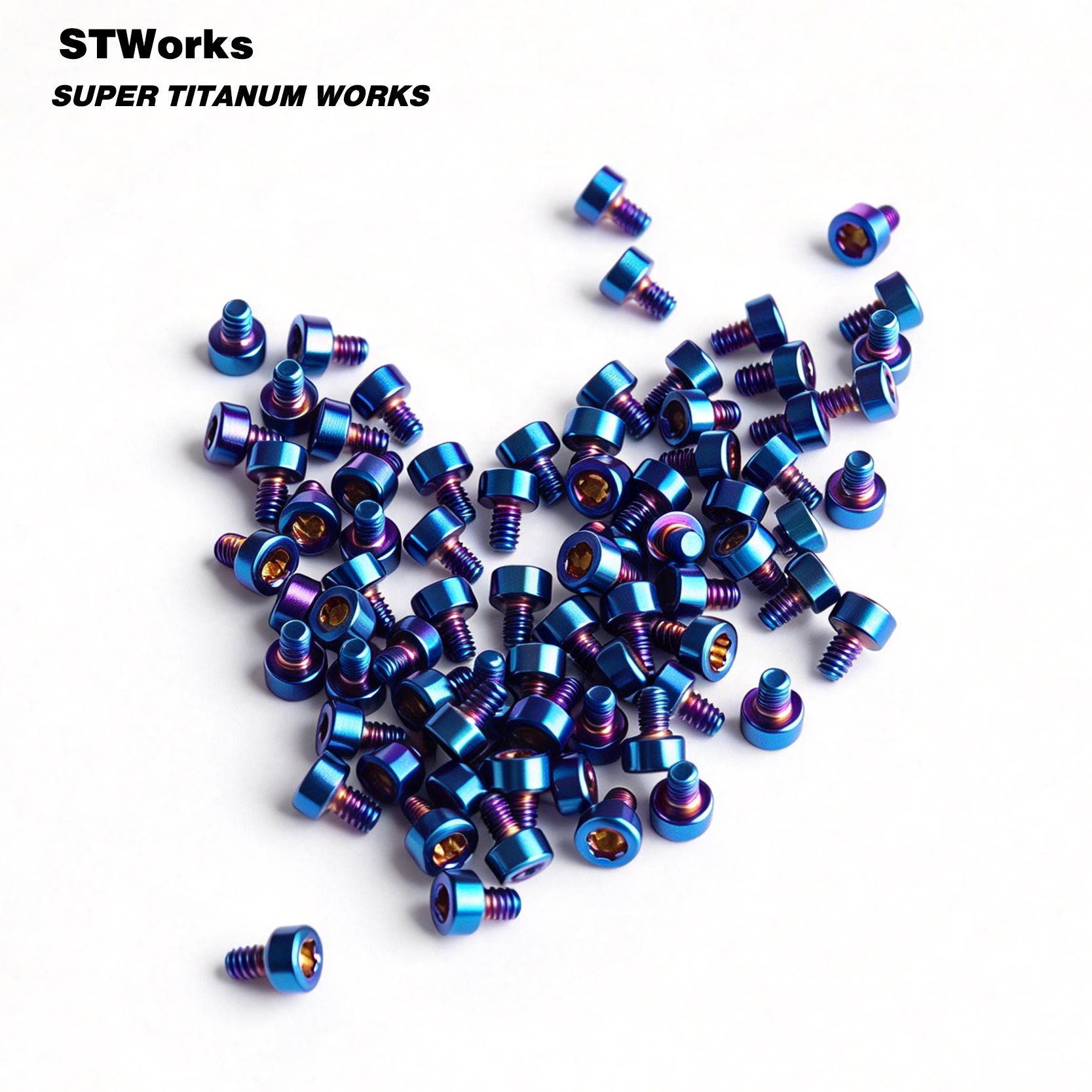
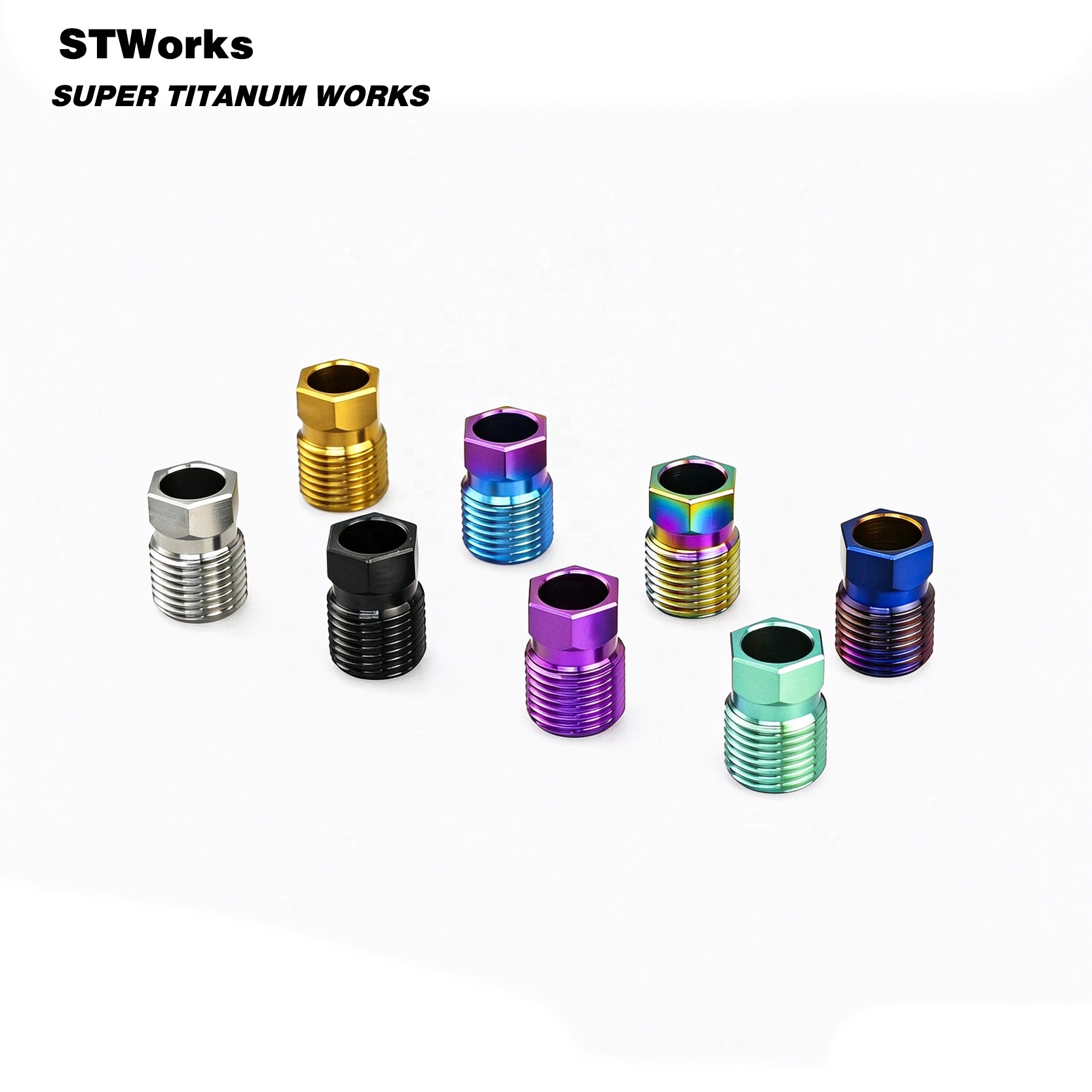
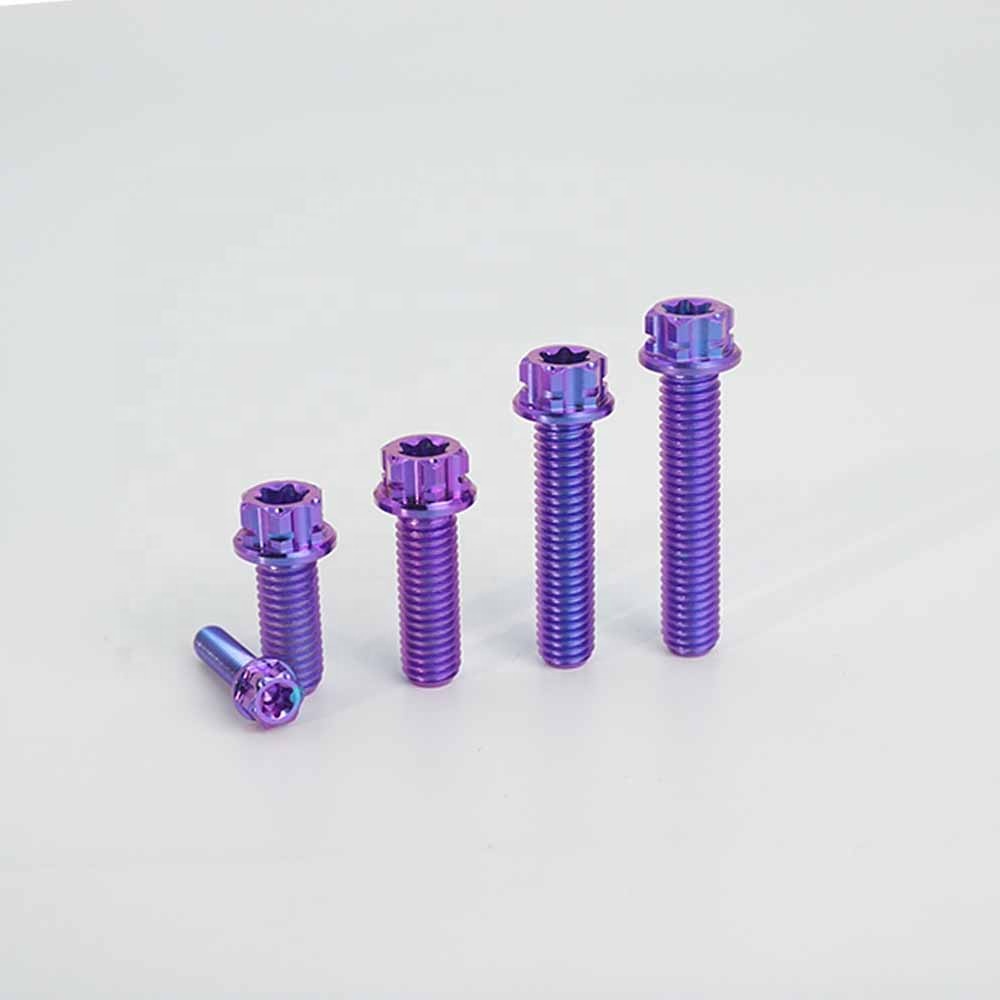
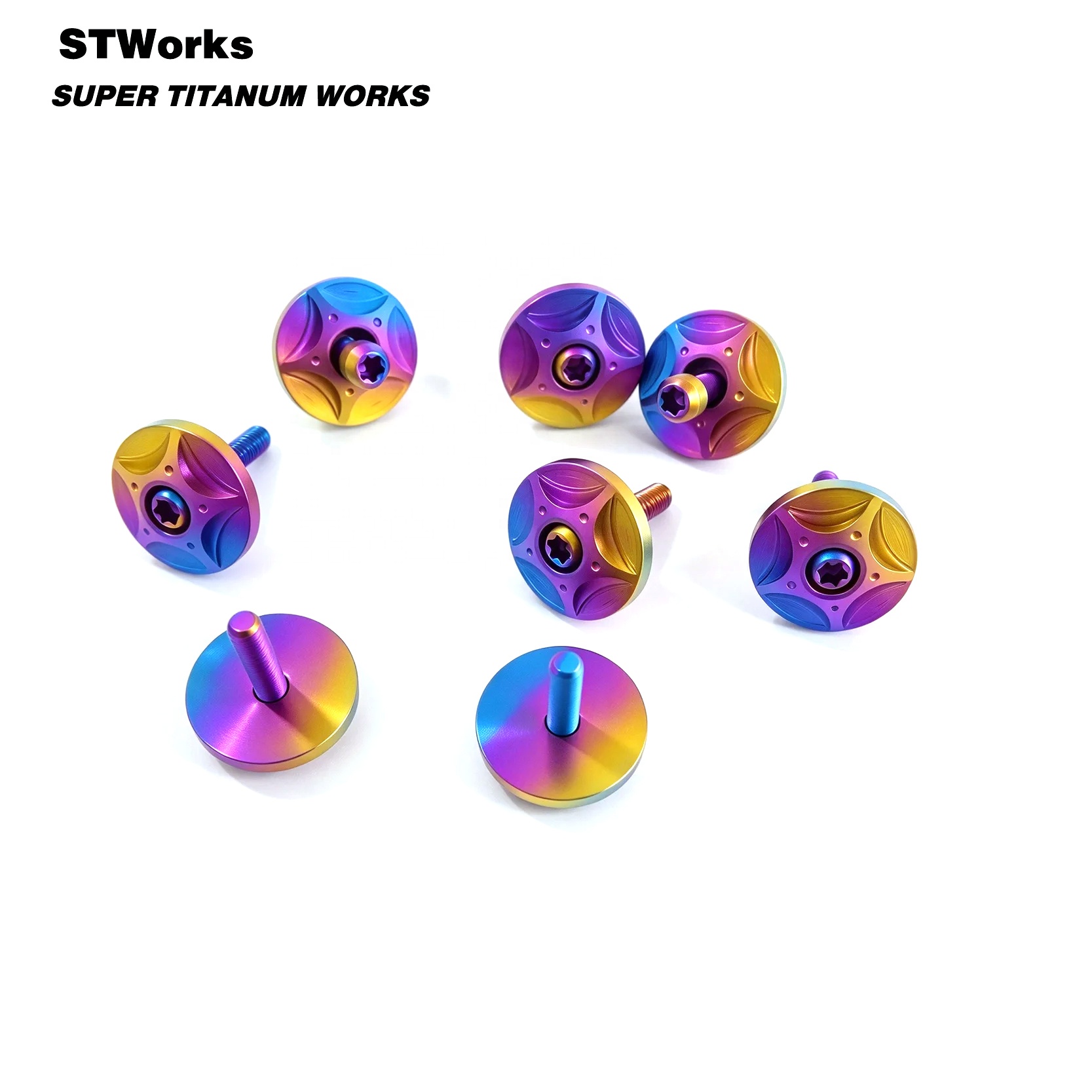
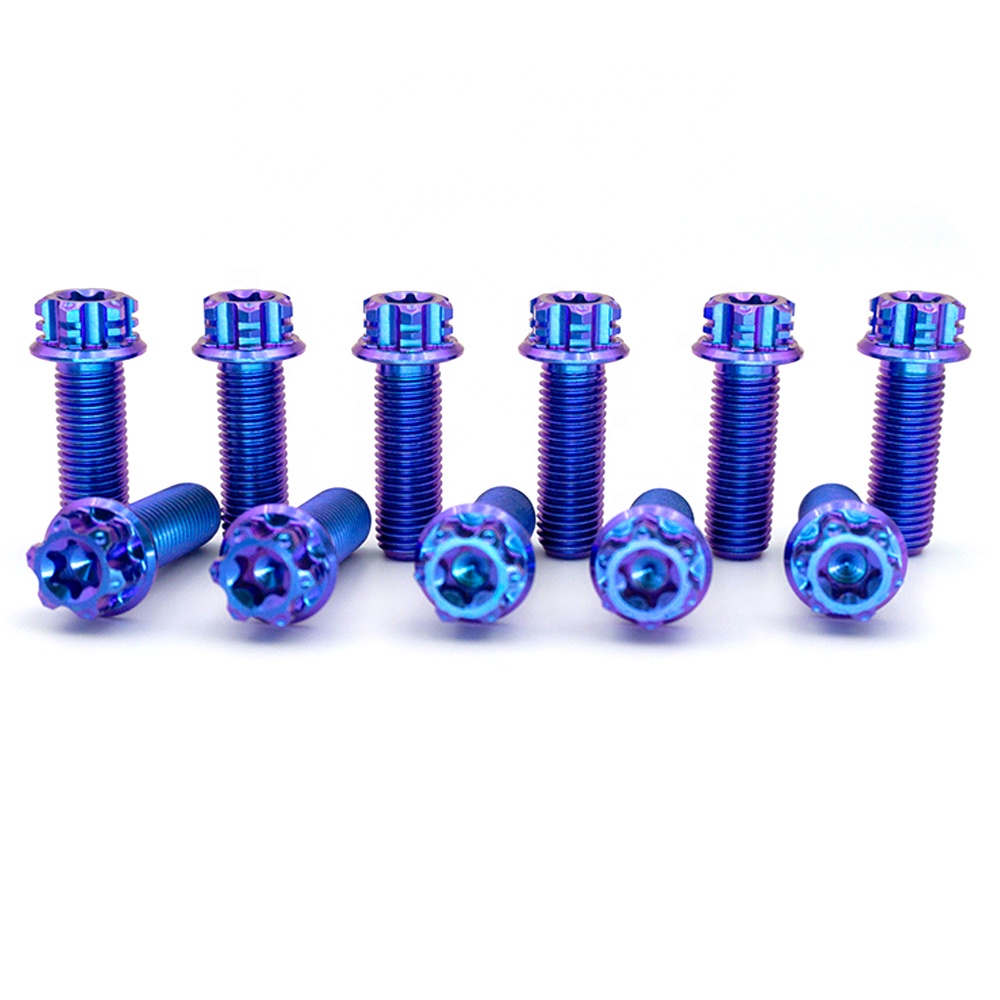
Unlike aluminum anodizing—which uses organic chemical dyes sealed into a porous oxide layer—titanium anodizing uses no dyes, pigments, or chemical colorants. The vibrant spectrum of colors (gold, bronze, purple, blue, emerald green, and oil-slick rainbow) is created through thin-film optical interference. When electrical voltage (ranging from 12V to over 100V) is applied in an electrolyte bath, a controlled titanium dioxide ($\text{TiO}_2$) barrier layer grows on the surface. This transparent oxide layer refracts light waves against the underlying metallic titanium, generating specific reflected wavelengths based on film thickness (in nanometers). Because it contains no organic dyes, the finish will not bleach, chip, or fade from UV exposure. Under abrasive conditions, the oxide can slowly wear away, which is why we recommend recessed or PVD-coated treatments for high-contact surfaces.
Accelerate Your Titanium Turned Parts Program with Velnora
Upload your 2D/3D part drawings (.STEP, .IGES, or .PDF) or request standard DIN/ISO/ANSI fastener quotes. Our technical engineering team in Baoji reviews tolerances, toolpaths, and DFM feasibility, providing pricing and lead times within 4 business hours.