Featured Precision Titanium Fasteners & Hardware
Explore our top-tier titanium hub bolts, motorcycle brake hardware, stem fasteners, and custom CNC-machined titanium accessories, manufactured to precise tolerance limits with complete material traceability.
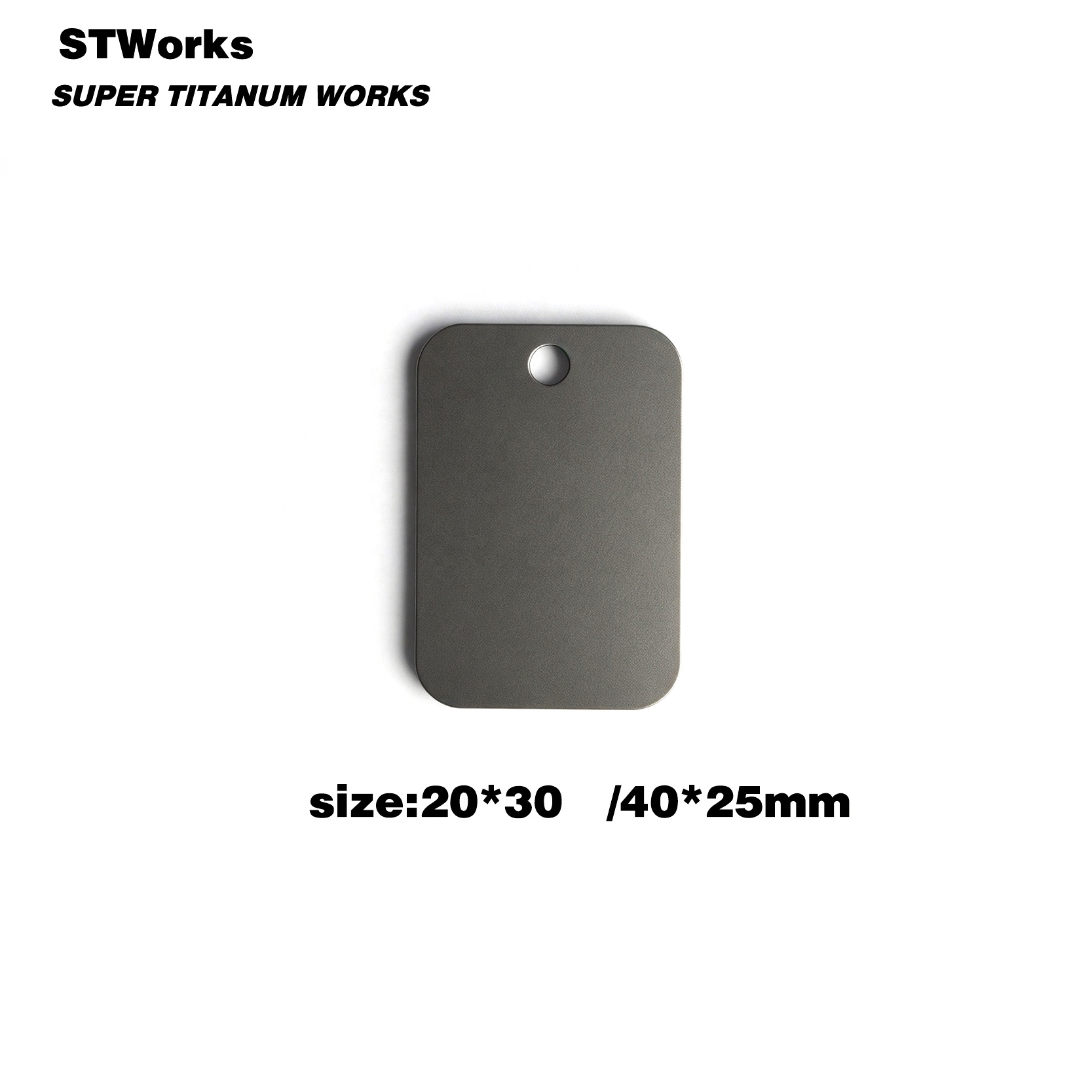
Custom Grade 5 Titanium Plate Tag 1.5mm/2mm Sandblasted Blank
- Material: Gr5 Ti-6Al-4V
- Processing: Wire EDM / Laser Engraving
- Thickness: 1.5mm / 2.0mm
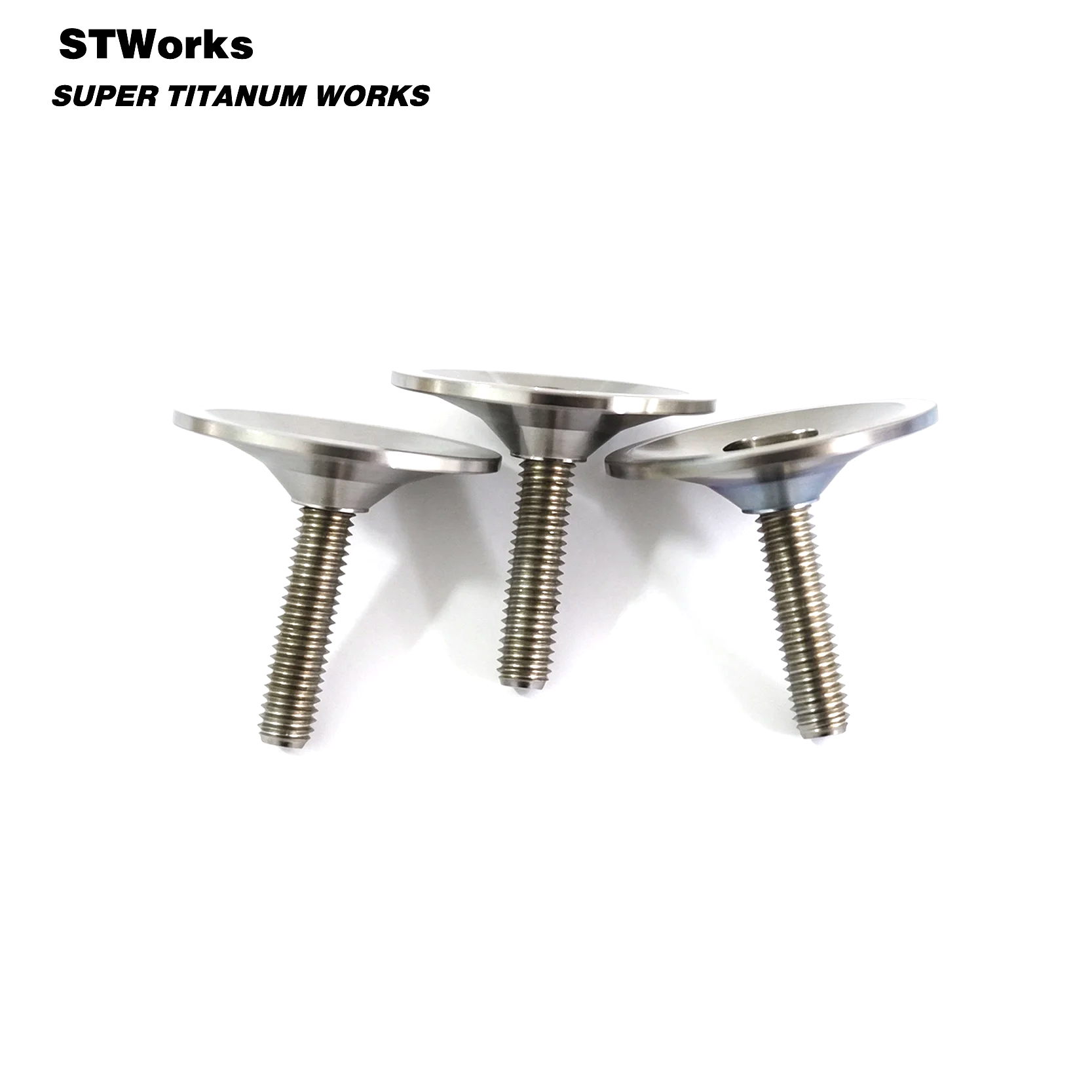
Titanium Bicycle Headset Top Cap CNC Machined Grade 5 with M6x30 Bolt
- Thread Spec: M6 × 30mm Rolled
- Finish: PVD / Anodized Color
- Weight Savings: -46% vs Stainless
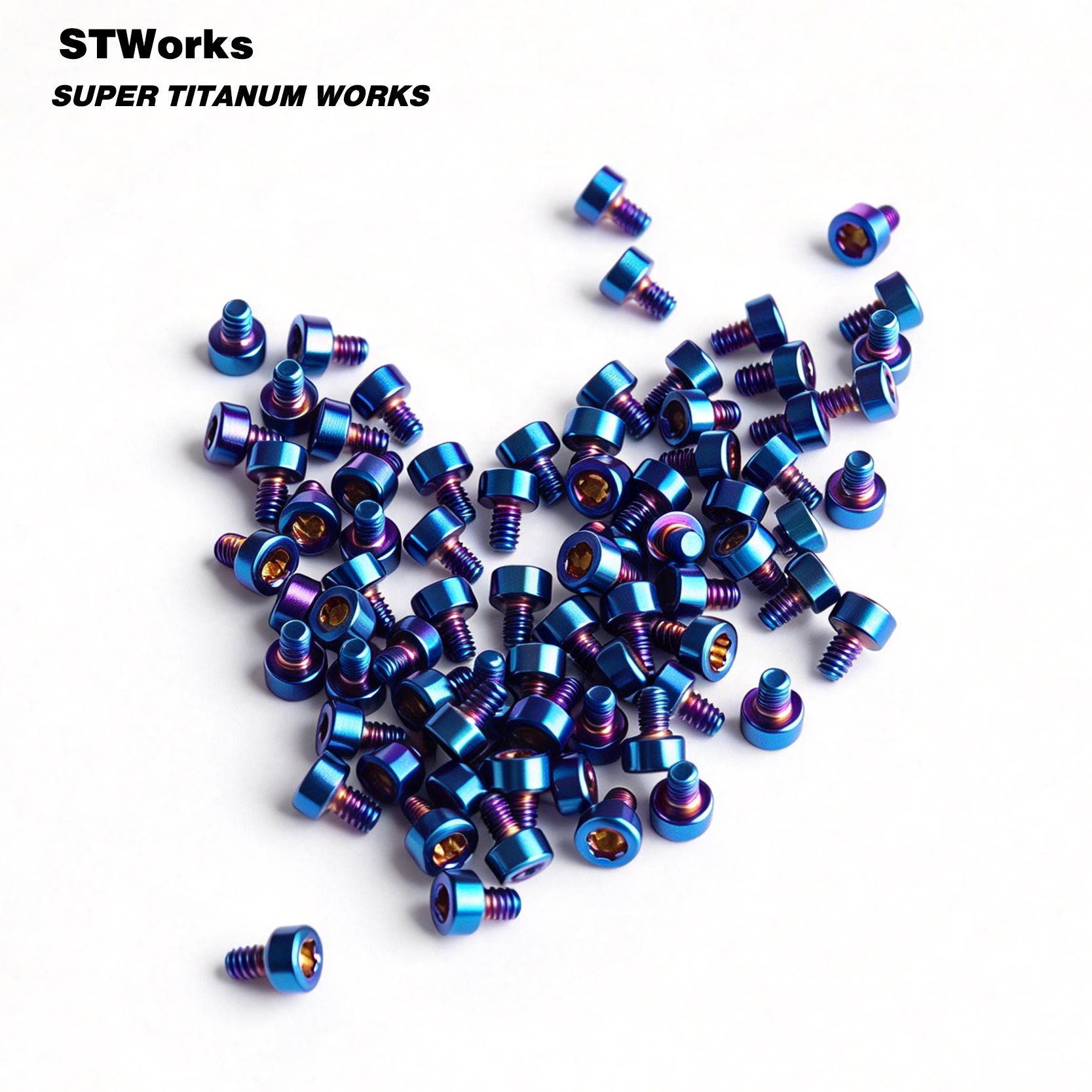
Custom Mini Titanium Screws M2 / M2.5 Cylinder Head DIN 912 Torx
- Standard: DIN 912 / ISO 4762
- Drive Style: Torx (Star) / Hex Socket
- Diameter Range: M2.0 – M2.5
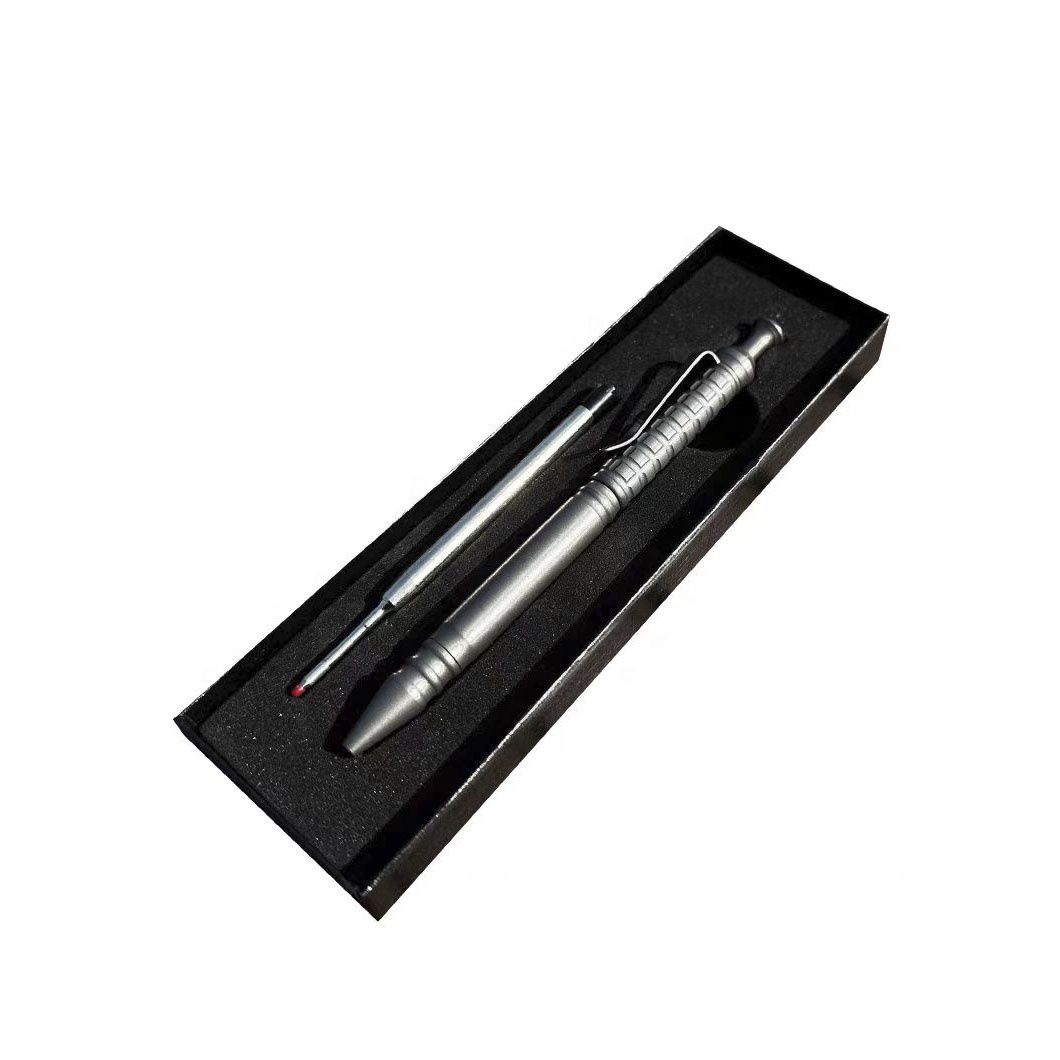
CNC Machined Wire EDM Multifunctional Bolt Tactical EDC Pen
- Material: TC4 Titanium Alloy
- Craft: Multi-Axis Turning & EDM
- Surface: Stonewashed / Satin Brushed
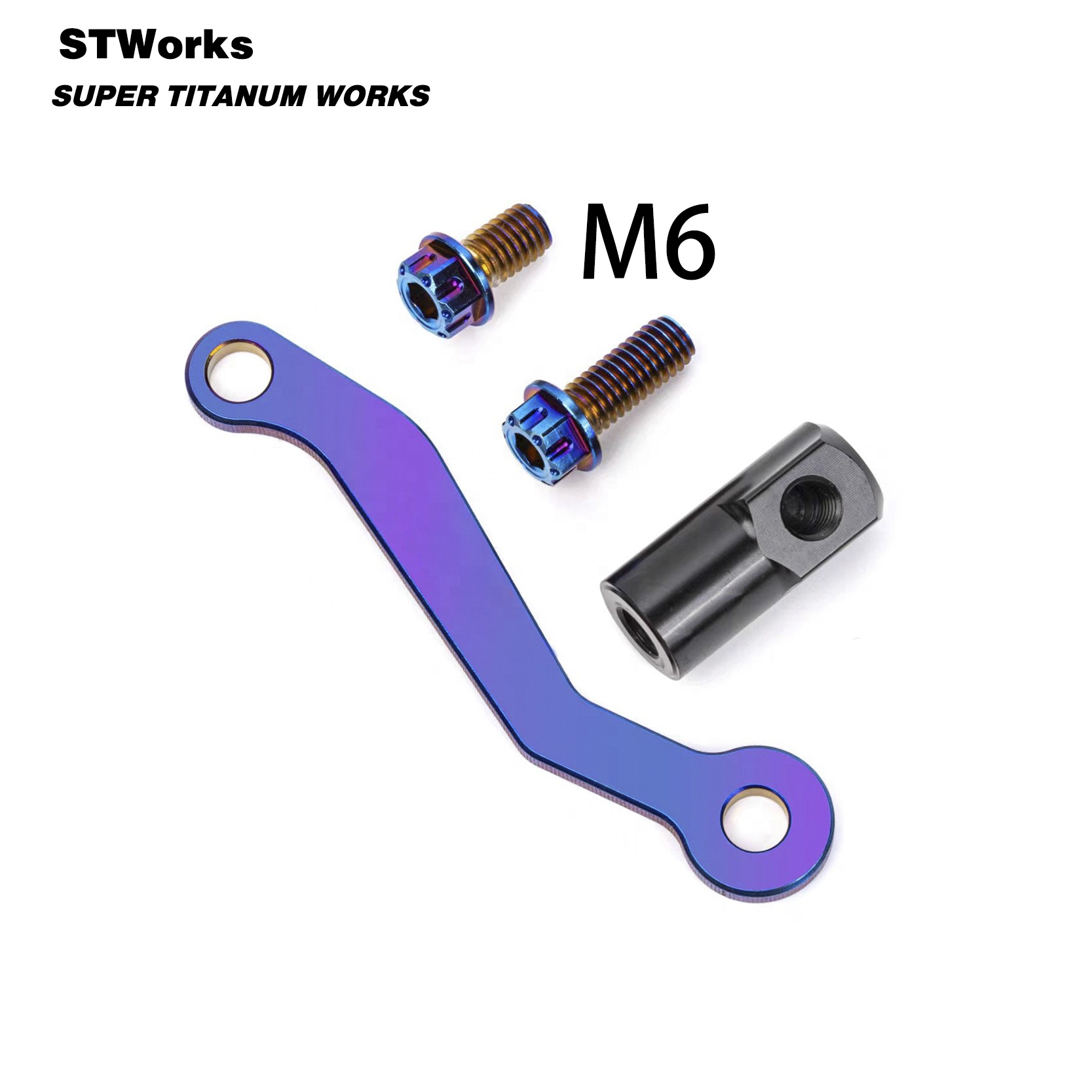
Gr5 TC4 Brake Fluid Reservoir Mount Bracket for Radial Master Cylinders
- Compatibility: Brembo / Radial Systems
- Alloy: High-Stiffness Gr5 Ti
- Vibration: Fatigue Damping Structural
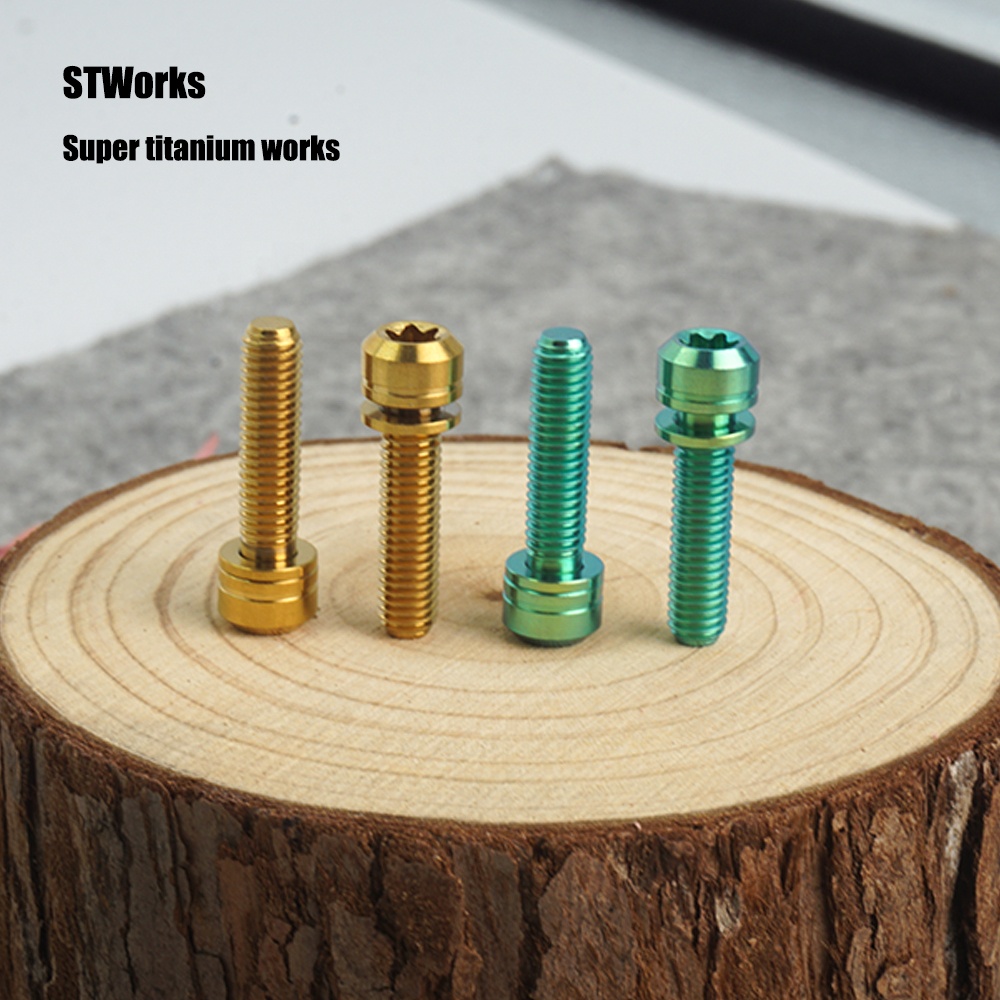
TC4 Titanium Torx M5x16/18/20/25mm Tapered Head Bolts with Washer
- Thread Pitch: 0.8mm Rolled Threads
- Head Geometry: Tapered Torx T25 Drive
- Included: Integrated Captive Washer
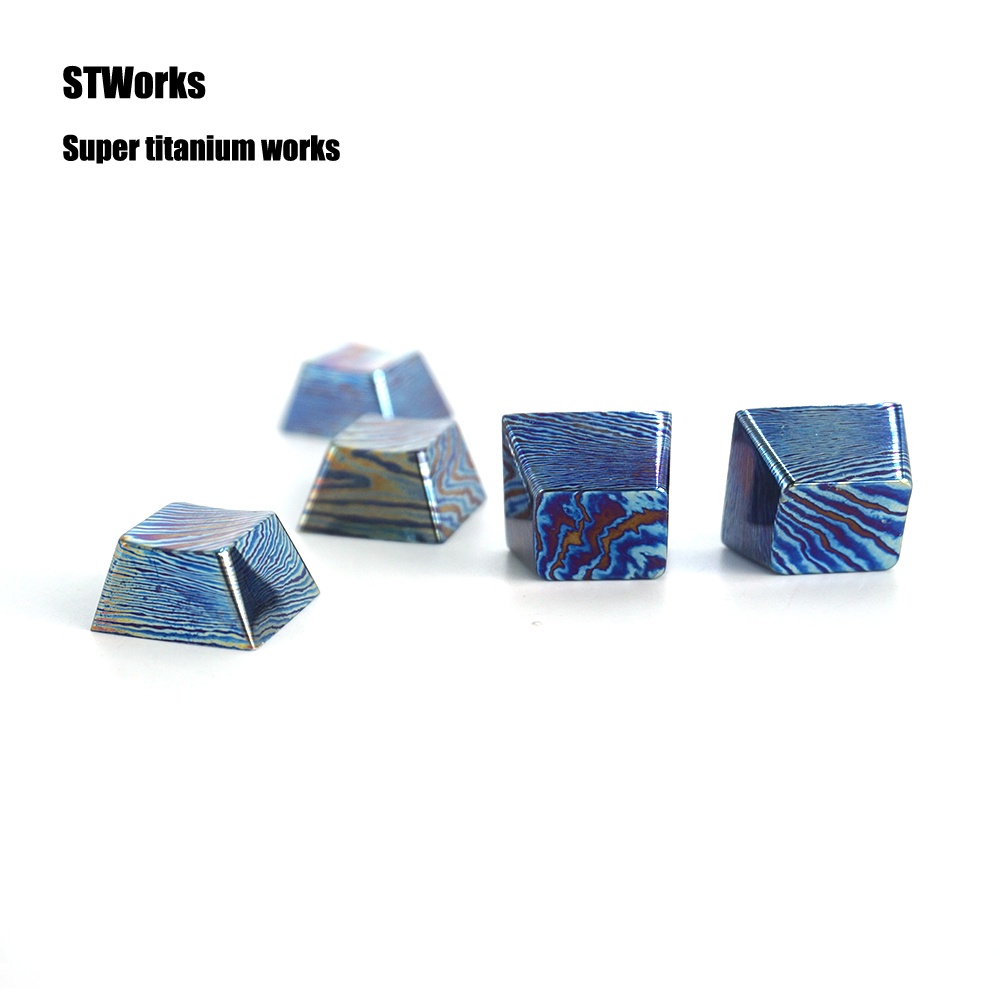
Titanium Gaming Keyboard Caps CNC Broaching & Anti-Corrosion PVD
- Dimensions: 18mm × 8.5mm Profile
- Process: Wire EDM + Broached Stem
- Finish: PVD Vapor Shield Coating
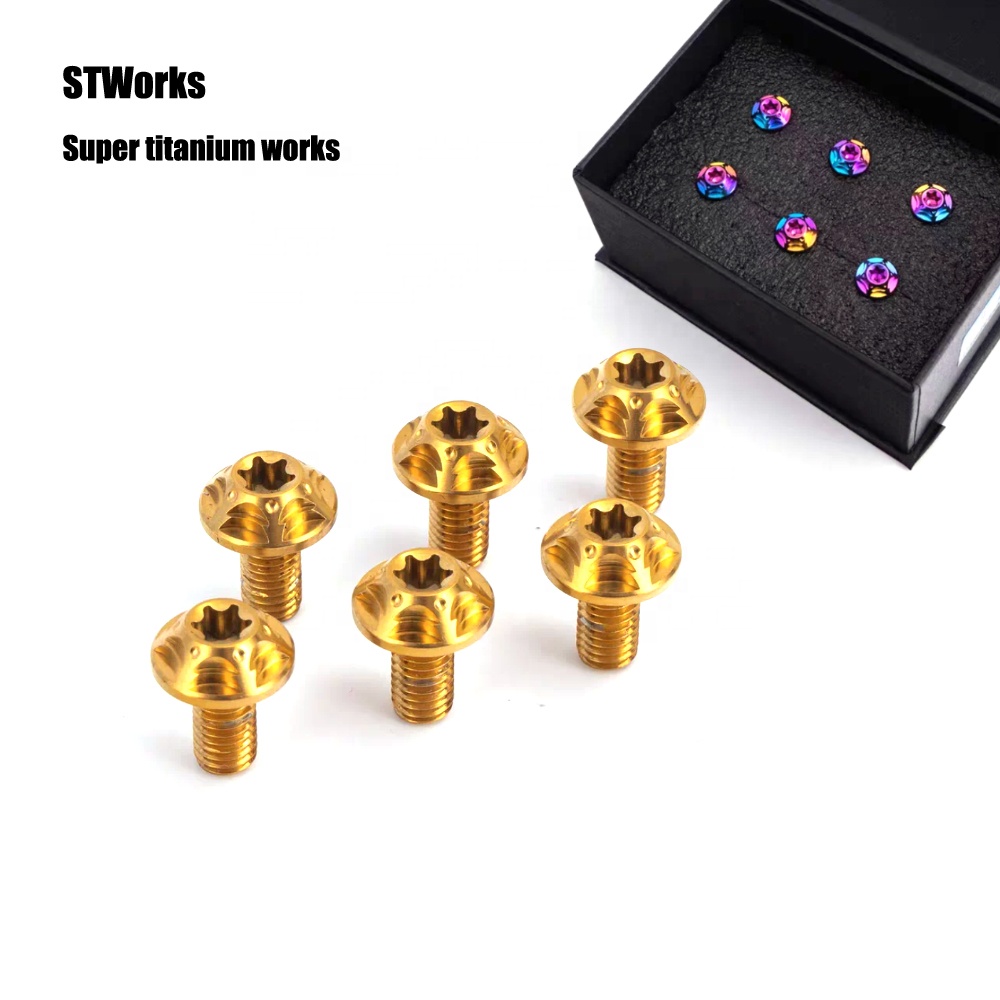
Rainbow Color Torx Pan Screws Gr5 Titanium Rear Brake Rotor Bolt M5*10
- Shear Strength: >550 MPa Constant
- Torque Rating: 5.5 – 6.2 N·m Spec
- Treatment: Electrolytic Anodized Rainbow
Engineering Foundations of Titanium Hub Bolts: Mechanical Dynamics, Unsprung Mass & Metallurgical Integrity
Wheel hub bolts, wheel studs, and lug fasteners occupy the most demanding dynamic junction in any high-performance vehicle, aerospace ground support platform, or precision motorsport assembly. Unlike static frame fasteners, a titanium hub bolt is continuously subjected to combined multi-axis stress regimes: cyclic tension induced by proper pre-load clamping force, high-frequency alternating shear loads during lateral acceleration, violent torsional stresses transmitted during extreme launch or regenerative braking, and localized thermal spikes emanating from adjacent carbon-ceramic or cast-iron brake rotors exceeding 650°C.
As the automotive and motorsport industries push aggressively toward lightweighting and electric powertrain optimization, the conversion from traditional quenched-and-tempered alloy steels (such as AISI 4140, 4340, or ISO Grade 10.9/12.9) to Grade 5 Titanium (Ti-6Al-4V, TC4, UNS R56400) has transitioned from an exotic racing luxury to an engineering imperative. This whitepaper analyzes the structural mechanics, manufacturing metallurgy, thread-rolling dynamics, and lifecycle durability that establish Velnora Titanium as the trusted global manufacturer and supply partner for mission-critical hub fastening solutions.
1. Metallurgy & Phase Structure of Ti-6Al-4V Grade 5
Titanium exists in two crystallographic allotropes: low-temperature hexagonal close-packed (HCP) alpha phase (α) and high-temperature body-centered cubic (BCC) beta phase (β). Pure commercially available titanium (such as Grade 2) exhibits an unalloyed alpha matrix, providing superior chemical corrosion resistance but insufficient tensile yield strength (approximately 345 MPa) for safety-critical wheel attachment applications.
For high-load hub bolts, Velnora exclusively utilizes aerospace-grade Ti-6Al-4V (Grade 5). The alloy contains 6% aluminum (an alpha stabilizer that elevates tensile strength and increases the phase transformation temperature) and 4% vanadium (a beta stabilizer that suppresses the beta-transus temperature, permitting ductile beta phase retention at ambient temperatures). Through precise solution treating and aging (STA) or thermo-mechanical controlled processing, the resulting dual-phase α+β microstructure yields a remarkable tensile strength exceeding 895 to 1050 MPa, coupled with an elongation at break of 10% to 15%, providing the mandatory ductility required to resist brittle catastrophic shear failure under violent lateral wheel impacts.
| Mechanical Property | Gr5 Ti-6Al-4V (Annealed/STA) | Property Class 10.9 Steel | Property Class 12.9 Steel | 7075-T6 Aluminum |
|---|---|---|---|---|
| Density (ρ, g/cm³) | 4.43 (-44% vs Steel) | 7.85 (Baseline) | 7.85 (Baseline) | 2.81 |
| Tensile Strength, Ultimate (Rm, MPa) | 895 – 1,050 | 1,000 – 1,040 | 1,200 – 1,220 | 570 – 590 |
| Tensile Yield Strength (Rp0.2, MPa) | 828 – 950 | 900 – 940 | 1,080 – 1,100 | 505 |
| Modulus of Elasticity (E, GPa) | 113.8 (High Compliance) | 205 – 210 | 205 – 210 | 71.7 |
| Strength-to-Weight Ratio (kN·m/kg) | 202 – 237 | 127 – 132 | 152 – 155 | 203 |
| Fatigue Limit @ 107 Cycles (Rot. Bending, MPa) | 510 – 620 | 480 – 520 | 540 – 580 | 160 |
| Thermal Expansion Coeff. (20-100°C, 10-6/K) | 8.6 (Matches Ceramic Rotors) | 11.7 | 11.7 | 23.4 |
| General Salt Spray Resistance (ASTM B117) | Immune (>3,000 hrs, 0 rust) | Corrodes / Requires Plating | Hydrogen Embrittlement Risk | Galvanic Pitting Prone |
2. Advanced Manufacturing: CNC Turning vs. Thread Rolling & Hot Forging
The manufacturing process determines the operational safety threshold of a titanium wheel bolt. When examining market failures, nearly 85% of catastrophic fastener failures originate at the thread root or the transition radius under the bolt head due to cyclic fatigue fracturing. Velnora employs strict aerospace manufacturing protocols that prohibit obsolete machine-cut thread manufacturing on primary structural hub bolts.
Grain Flow Integrity in Rolled Threads: Machine-cutting threads with a single-point CNC lathe tool or threading die severs the metallurgical grain flow lines of the extruded titanium bar stock, generating micro-notches, burrs, and microscopic stress-concentration crack initiation points. In contrast, Velnora utilizes high-tonnage precision cylindrical thread rolling dies at room or induction-assisted temperatures. Thread rolling cold-works the Ti-6Al-4V metal blank, forcing the material into the thread profile without severing the crystallographic grains. The grain fibers remain continuous and burnished along the thread crest, flank, and root radius.
Furthermore, thread rolling introduces deep compressive residual stresses (-300 to -500 MPa) within the root radius, which directly counteract the tensile operational stresses experienced during wheel bolt pre-tensioning. This work-hardening process elevates thread root fatigue endurance by more than 240% relative to single-point cut threads, easily exceeding the punishing requirements of 24-hour endurance racing and heavy track-day braking cycles.
Hot-Forged Head Geometry: The transition junction connecting the bolt shank to the drive head (conical 60° seat, ball seat, or flat flange) is another critical stress zone. Velnora forms the bolt head blanks using controlled induction hot-upsetting forging. The continuous grain structure flows outward from the shank through the head fillet radius, eliminating the axial delamination flaws commonly found in cheap bolt designs turned down entirely from oversized hexagonal bar stock.
Pre-Load Clamping Accuracy
Because titanium's modulus of elasticity (~114 GPa) is roughly half that of steel (~210 GPa), a titanium bolt stretches roughly twice as far as steel under identical clamp loads. This higher elastic elongation acts as an internal spring washer, significantly reducing the hazard of joint loosening under dynamic thermal expansion and high-frequency hub vibration.
Zero Embrittlement & Corrosion
High-tensile Grade 10.9 and 12.9 chromoly steels are notoriously prone to catastrophic hydrogen embrittlement during acid pickling, electroplating, or road-salt corrosion exposure. Ti-6Al-4V instantaneously regenerates a passive, chemically inert titanium dioxide (TiO2) ceramic film, completely eliminating oxidation, pitting, and stress-corrosion cracking.
Thermal Stability at 450°C
Brake heat soak from repeated deceleration can spike wheel hub temperatures well above 350°C. While aluminum lug nuts soften and fail rapidly past 150°C, Grade 5 titanium maintains over 85% of its structural tensile yield strength up to 400°C, preventing thread stripping or catastrophic loss of wheel torque clamp load under severe track conditions.
3. Tribology, Anti-Galling Protocols & Torque-Tension Relationships
A fundamental physical property that design engineers must manage when adopting titanium wheel fasteners is titanium's high coefficient of dry friction and susceptibility to adhesive galling (cold welding). Under high axial torque, raw titanium sliding against female wheel hub threads (often cast iron, steel, or aluminum) can experience localized micro-asperity welding. If driven dry, the threads tear, gall, and seize, resulting in false torque wrench readings where friction consumes up to 90% of applied torque, leaving the joint with critically inadequate axial clamping force.
To eliminate galling and guarantee repeatable torque-tension dynamics, Velnora applies two proprietary engineering methodologies:
1. Surface Conversion & PVD DLC/TiN Coating: We apply advanced Physical Vapor Deposition (PVD) Diamond-Like Carbon (DLC) or Titanium Nitride (TiN) hard coatings, as well as controlled Type II / Type III micro-arc electrochemical anodization. These treatments deposit an ultra-dense, low-friction surface layer (hardness reaching 2,500 – 3,000 HV) that prevents direct metal-to-metal contact between the titanium fastener and the internal hub thread flanks.
2. Standardized K-Factor Lubrication Specification: Every customer is supplied with exact torque compensation tables. Using the standard torque-tension formula:
Where T = Applied Torque (N·m), K = Torque Friction Coefficient, D = Nominal Bolt Diameter (m), and F = Desired Clamp Pre-Load Force (N).
With untreated dry titanium, the friction coefficient $K$ can spike uncontrollably from 0.28 to 0.45. Utilizing Velnora's recommended high-pressure titanium anti-seize paste (containing synthetic molybdenum disulfide or hexagonal boron nitride), $K$ stabilizes to a precise 0.12 – 0.15, mirroring OEM factory steel torque values and ensuring 100% predictable wheel clamping force without plastic deformation or thread galling.
Future Procurement Trends for Titanium Fasteners & Hub Hardware (2025–2035)
In-depth market analysis for procurement directors, Tier-1 automotive supply managers, and aerospace purchasing agents navigating changing industrial supply chains.
EV Range Optimization & Heavy Curb Weights
Electric vehicles carry massive battery pack weights, pushing curb masses above 2,200 kg. Automotive OEMs are aggressively stripping mass from outboard corners to preserve suspension dynamics and extend battery range (Wh/km). Over the next decade, titanium wheel fasteners will transition from luxury supercars into mainstream premium EV architectures seeking unsprung weight reductions without compromising structural wheel retention.
Raw Material Traceability & EN 10204 3.1 Certification
Global supply chains demand authenticated raw material origins. B2B purchasers are rejecting uncertified secondary scrap melting. Procurement trends demand full Vacuum Arc Remelting (VAR) certifications, complete spectrographic chemical breakdowns (limiting interstitial elements O ≤ 0.20%, Fe ≤ 0.30%, H ≤ 0.015%), and mechanical test reports compliant with EN 10204 Type 3.1 for zero-defect liability coverage.
Consolidated Tier-1 Vendor Nearshoring & Hubs
Rather than fragmenting purchases across machining shops and coating subcontractors, procurement leaders are aligning with integrated full-cycle manufacturers situated in primary raw material epicenters like Baoji. Direct access to primary sponge titanium smelting drastically lowers raw material price volatility, compresses lead times, and stabilizes high-volume OEM contracts against global geopolitical disruptions.
Technological Milestones Shaping Modern Titanium Fastener Production
The manufacturing landscape for titanium hub bolts has evolved from manual multi-step machining into integrated, lights-out Industry 4.0 automation. Fastener integrity in mission-critical motorsport and hypercar assemblies depends on eliminating micro-defects that could serve as crack propagation vectors.
High-Precision Multi-Axis Turn-Mill Centers
Modern production at Velnora utilizes high-speed CNC Swiss-type automatic lathes and 5-axis turn-mill machining centers equipped with high-pressure internal coolant through tooling (exceeding 70 bar). Titanium's extremely low thermal conductivity (approx. 6.7 W/m·K compared to 50 W/m·K for steel) means that without high-pressure targeted cooling, cutting heat concentrates directly at the cutting edge, leading to rapid tool wear, work-hardening of the workpiece surface, and residual micro-tensile surface stress. Our multi-axis tooling ensures that every cylindrical surface, thread-relief groove, and under-head fillet radius is machined within tolerances as tight as ±0.005 mm in a single chucking operation, guaranteeing absolute concentricity and eliminating run-out eccentricity between the bolt axis and the seated washer.
Inline Optical Laser Metrology & Non-Destructive Testing
To ensure 100% compliance with ISO, DIN (e.g., DIN 912, DIN 6921), and custom customer specifications, advanced manufacturing lines feature automated high-resolution optical sorting machines. These non-contact laser inspection systems verify pitch diameter, major/minor thread diameters, lead angle variation, and head-to-shank perpendicularity at speeds up to 300 pieces per minute. Subsurface integrity is confirmed through non-destructive eddy-current and ultrasonic testing to identify any interstitial voids, inclusions, or micro-cracks present in the titanium ingot stock prior to forging.
Surface Passivation & Advanced Vapor Deposition
The final manufacturing frontier involves engineered barrier layers. Beyond standard aesthetic anodizing, specialized micro-arc oxidation (MAO) and physical vapor deposition (PVD) apply ultrathin ceramic coatings that chemically bond with the titanium substrate. These coatings elevate the surface Vickers hardness past 2,500 HV and withstand aggressive automotive de-icing chemicals (such as magnesium chloride and calcium chloride) while isolating the titanium bolt from direct electrochemical contact with carbon-fiber reinforced polymer (CFRP) composite wheel rims, preventing galvanic corrosion across dissimilar materials.
Why Top Global Brands Partner with Velnora Titanium
Headquartered in Baoji, China's Titanium Valley, Velnora Titanium Industry Co., Ltd. combines sovereign material reserves, advanced CNC machinery, and complete production visibility.
Direct Epicenter Sourcing from Baoji Titanium Valley
Founded in 2013, Velnora operates at the very center of China's world-renowned titanium industrial base. Baoji accounts for over 60% of domestic titanium output and more than 20% of global production. This geographical and industrial advantage provides our facility with direct access to prime virgin 0-grade sponge titanium, regional vacuum arc remelting facilities, and dedicated metallurgical laboratories, bypassing intermediate trading markups and ensuring complete raw material provenance.
Our engineering team specializes exclusively in reactive and refractory metal fabrication—machining titanium Grade 5 (TC4), Grade 2, Grade 7, and artisanal Timascus (Mokuti) daily. We understand the specific chip-breaking dynamics, feed-rate formulas, and tool geometries necessary to machine titanium without inducing surface thermal stress.
-
Factory LocationBaoji, Shaanxi, China
-
Founding Year2013 (13+ Years Exp.)
-
Fastener StandardsDIN, ISO, ANSI, JIS, Custom
-
Core Alloy StockGr5 Ti-6Al-4V / Gr2 / Timascus
-
Inquiry Response Time≤ 4 Hours (Business Days)
-
QA TransparencyLive CNC Video & Photo Audits
Custom Print to Production
We accept CAD models in STEP, IGES, DXF, and PDF formats. Whether you require bespoke floating-collar M14×1.25 Porsche-style wheel bolts, extended racing hub studs, or hollow-drilled weight-reduction bolts, our machinists review drawings for manufacturability (DFM) within hours.
Digital Video Inspection Tracking
Distance is never a barrier to quality oversight. Velnora provides real-time CNC machining footage, thread pitch gauge verifications, and CMM dimensional check videos directly to our international clients before packaging and shipping, guaranteeing zero surprises upon customs clearance.
Global Door-to-Door Logistics
With over a decade of continuous export operations to North America, Western Europe, Japan, and Australia, we provide seamless DAP/DDP freight via DHL, FedEx, air cargo, and sea container freight, with pre-cleared customs documentation, HS coding, and comprehensive export packaging.
Frequently Asked Questions: Titanium Hub Bolts & Hardware
Clear, engineering-backed answers addressing the critical mechanical, procurement, and installation questions asked by professional buyers.
◆ Can Grade 5 Titanium hub bolts safely replace factory 10.9 or 12.9 steel wheel bolts?
Yes, provided they are engineered from genuine Ti-6Al-4V Grade 5 with hot-forged heads and rolled threads. Grade 5 titanium exhibits a minimum tensile strength of 895–1050 MPa, directly matching the operational envelope of Property Class 10.9 steel fasteners (1000–1040 MPa) while slashing weight by 44%. For direct replacement of Class 12.9 bolts in extreme high-downforce racing, we perform customized finite element analysis (FEA) to verify that thread pitch engagement and root radius radii provide an equivalent safety margin.
◆ How do you prevent thread galling during rapid pit stops or wheel changes?
Galling is prevented by two measures: surface barrier coating and proper lubrication. Velnora offers specialized PVD DLC (Diamond-Like Carbon) coatings that deposit a ceramic-like boundary layer on thread flanks. Additionally, technicians must apply an approved synthetic anti-seize compound containing MoS2 or boron nitride, and strictly avoid running unlubricated bolts at high-RPM air-impact gun speeds, which generates instantaneous friction heat that triggers adhesive galling.
◆ What is the recommended torque specification for titanium wheel bolts?
Titanium's lower elastic modulus requires precise torque calibration. When using a lubricated titanium fastener ($K \approx 0.12 - 0.15$), the required torque setting is typically identical to or roughly 5% lower than the vehicle manufacturer's OEM dry steel specification to achieve identical clamping preload force. A calibrated hand torque wrench should always be used for final tightening in a cross-star pattern.
◆ Does titanium cause galvanic corrosion when paired with aluminum wheels or carbon rims?
Titanium is exceptionally noble on the galvanic series. When in contact with aluminum alloy wheels, titanium's self-healing TiO2 passive oxide film prevents electrochemical attack in normal environments. In severe salted marine conditions, a thin floating aluminum seat washer or PVD barrier layer completely isolates the potential difference. Unlike steel, titanium is completely chemically compatible with carbon-fiber reinforced polymer (CFRP) wheels and will not corrode in contact with graphite fibers.
◆ What manufacturing standards and tolerances do you maintain for custom drawings?
We machine to DIN, ISO metric, ANSI/ASME inch, and JIS automotive standards. Standard machined tolerances are held to ISO 2768-m or ±0.01 mm, with critical thread pitch and bearing journal tolerances ground to ±0.005 mm. Standard thread classes are 6g for external bolt threads and 6H for nuts. Custom drawings can be submitted in 2D PDF or 3D STEP/IGES format.
◆ What is your typical Minimum Order Quantity (MOQ) and production turnaround?
For standard in-stock fasteners, our MOQ starts as low as 50 to 100 pieces per specification. Custom CNC and hot-forged designs generally carry an MOQ of 100 to 300 pieces depending on part geometry and tooling setup. Prototype sample runs can be machined and dispatched via air courier within 7–10 business days, with full-scale production batches completing in 3–4 weeks.
Accelerate Your Product Performance with Trusted Titanium Engineering
Contact our engineering team in Baoji today for comprehensive drawing reviews, material test reports, or custom volume manufacturing quotations. We reply within 4 hours during business days.