Precision Titanium Assemblies & Exhaust Hardware
Explore our top-performing Grade 5 & TC4 titanium components. Every unit is CNC-machined, ultrasonic cleaned, and quality-verified before global shipment.
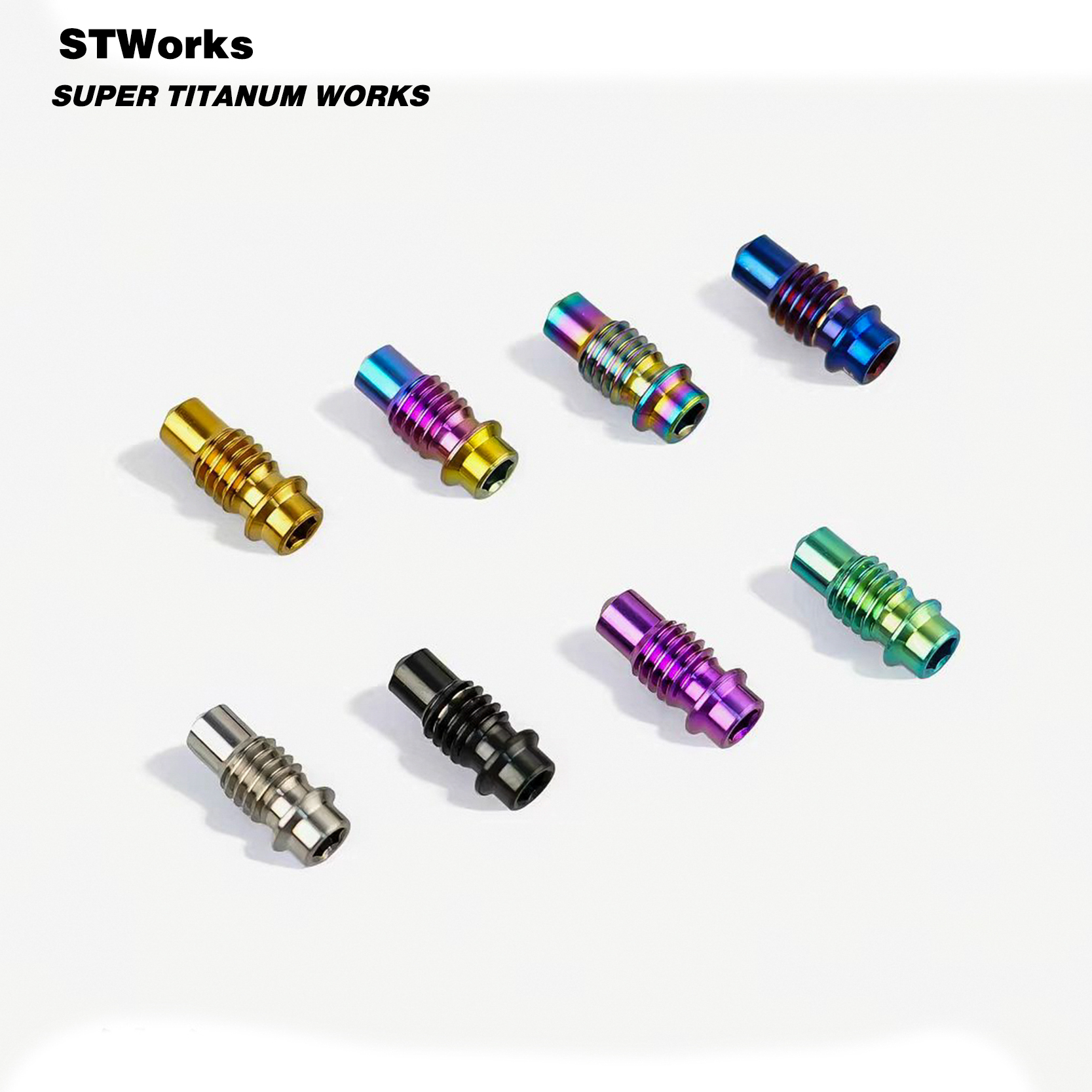
TC4 Titanium Caliper Bleed Port Screw for Shimano Road Disc Brake Caliper Road Bike Cycling Replacement Parts
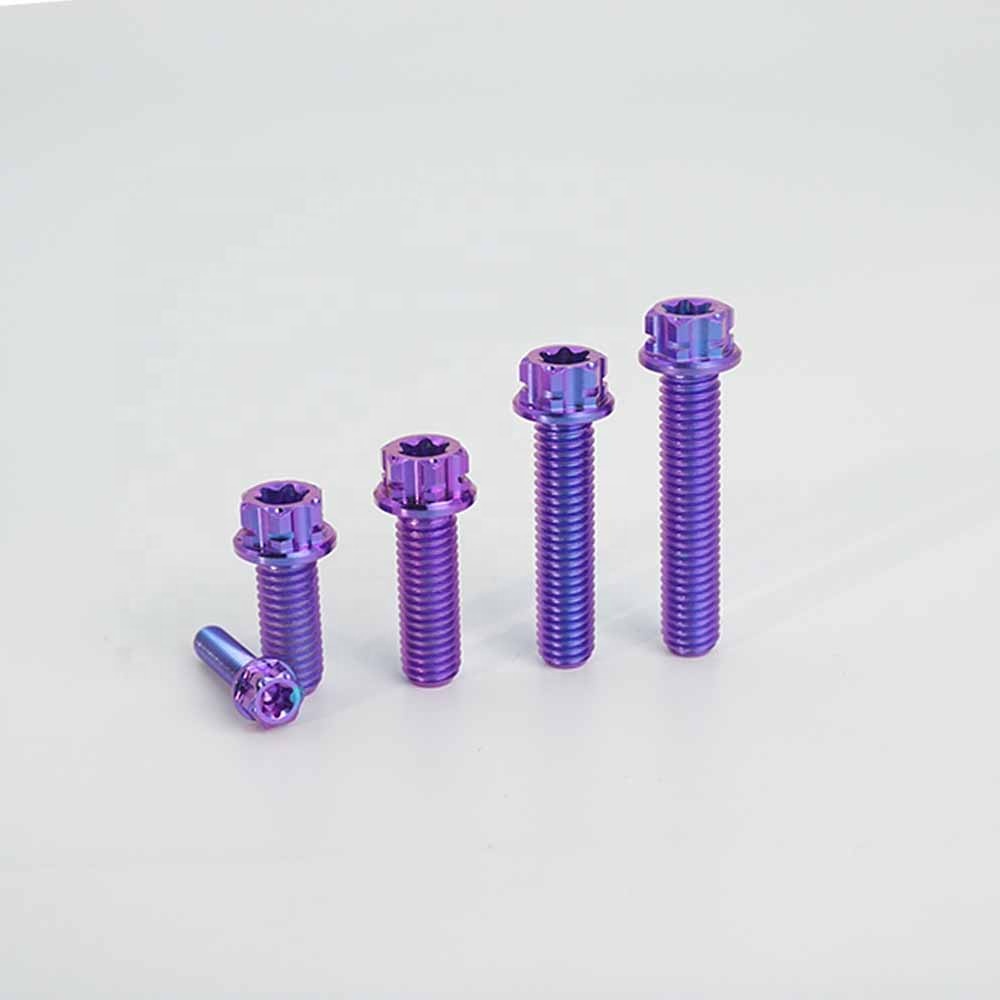
Gr5 Titanium Bolts M6x40 Titanium Bolts M6X10 Bicycle/Motorcycle Modification M8x30 Accessory Parts Torx Head Flange Bolts
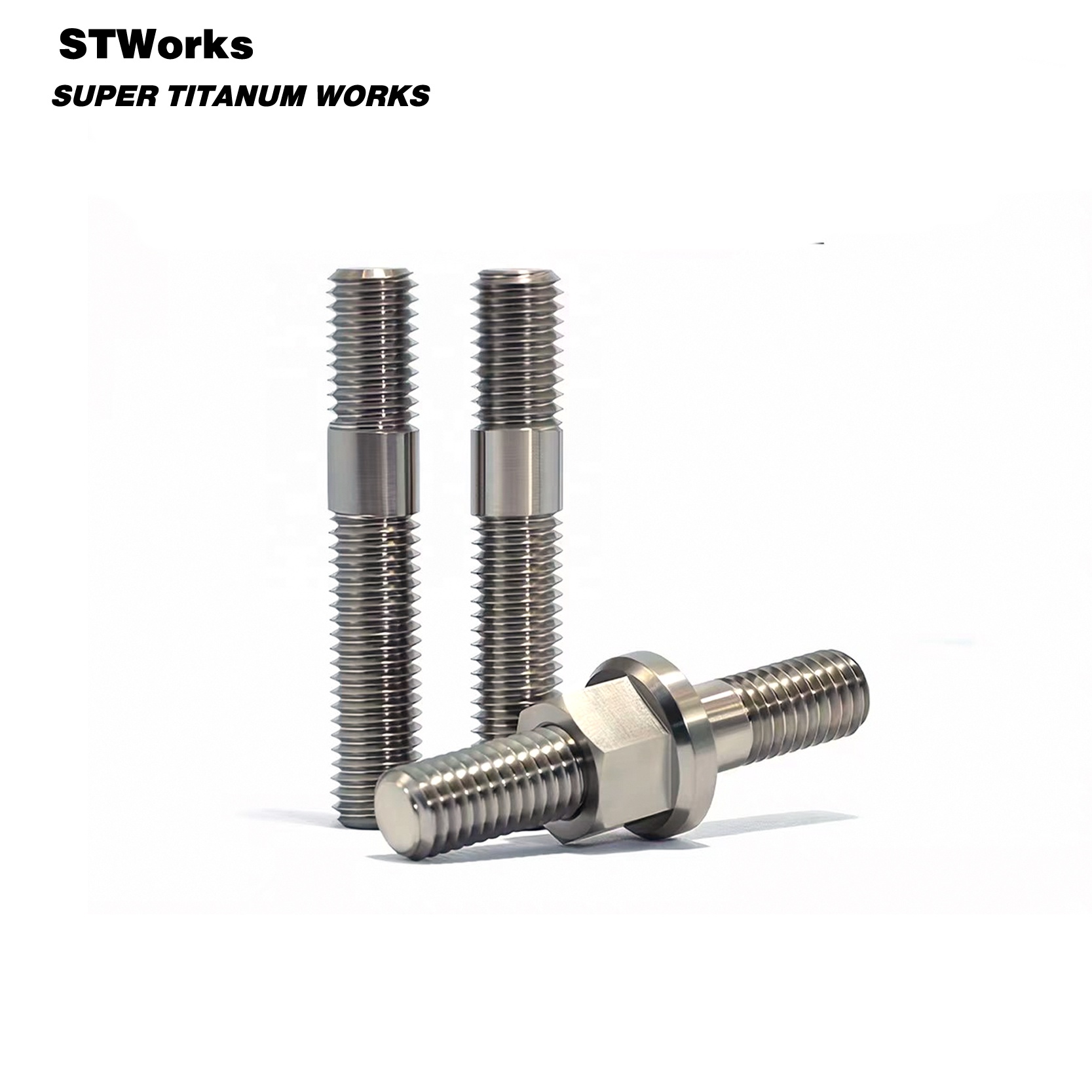
12 Point Nuts Titanium 6AL-4V Grade Exhaust Pipe Screws M8x1.25 Ultra Light Corrosion Resistant Motorcycle Auto Modification
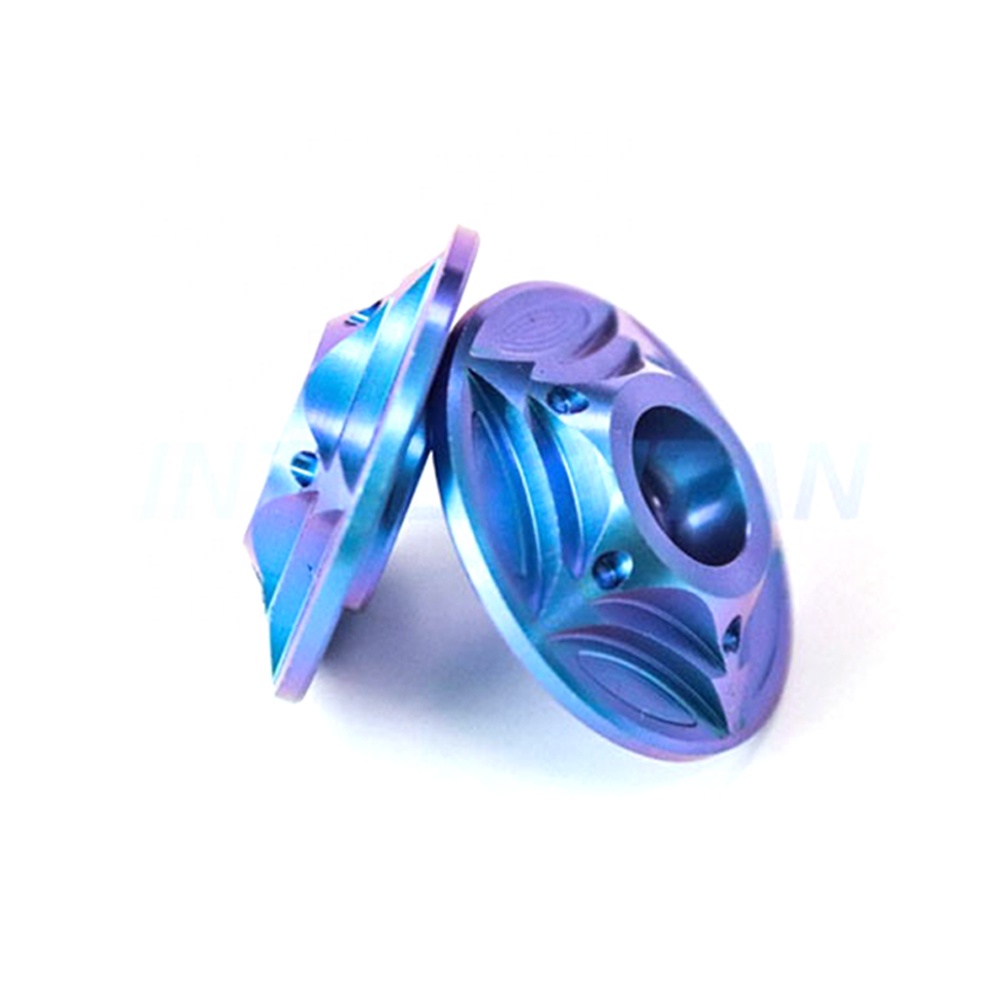
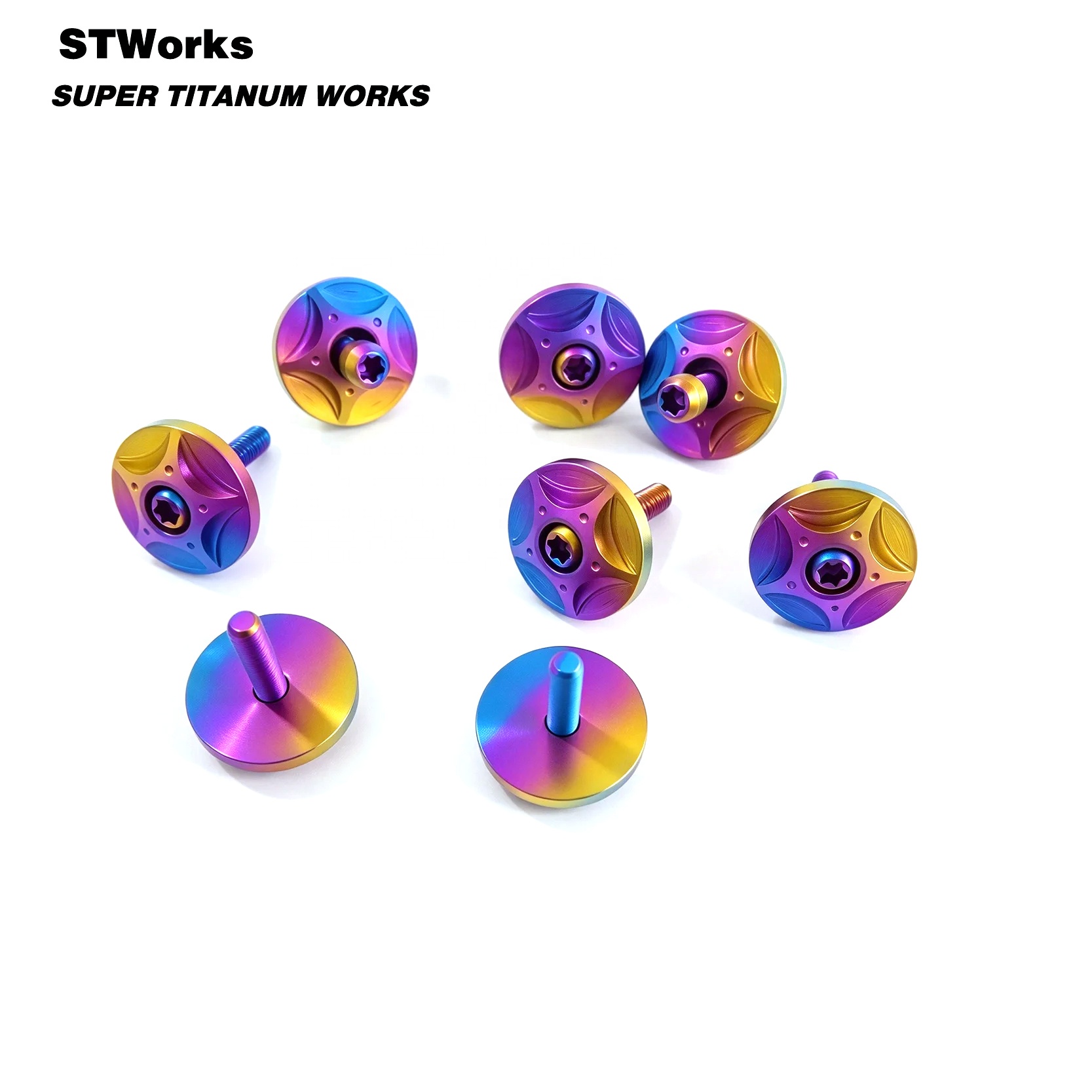
Customized Titanium Alloy Washers with PVD Coating M6 Handlebar End for Motorcycle Modification Headset Cap
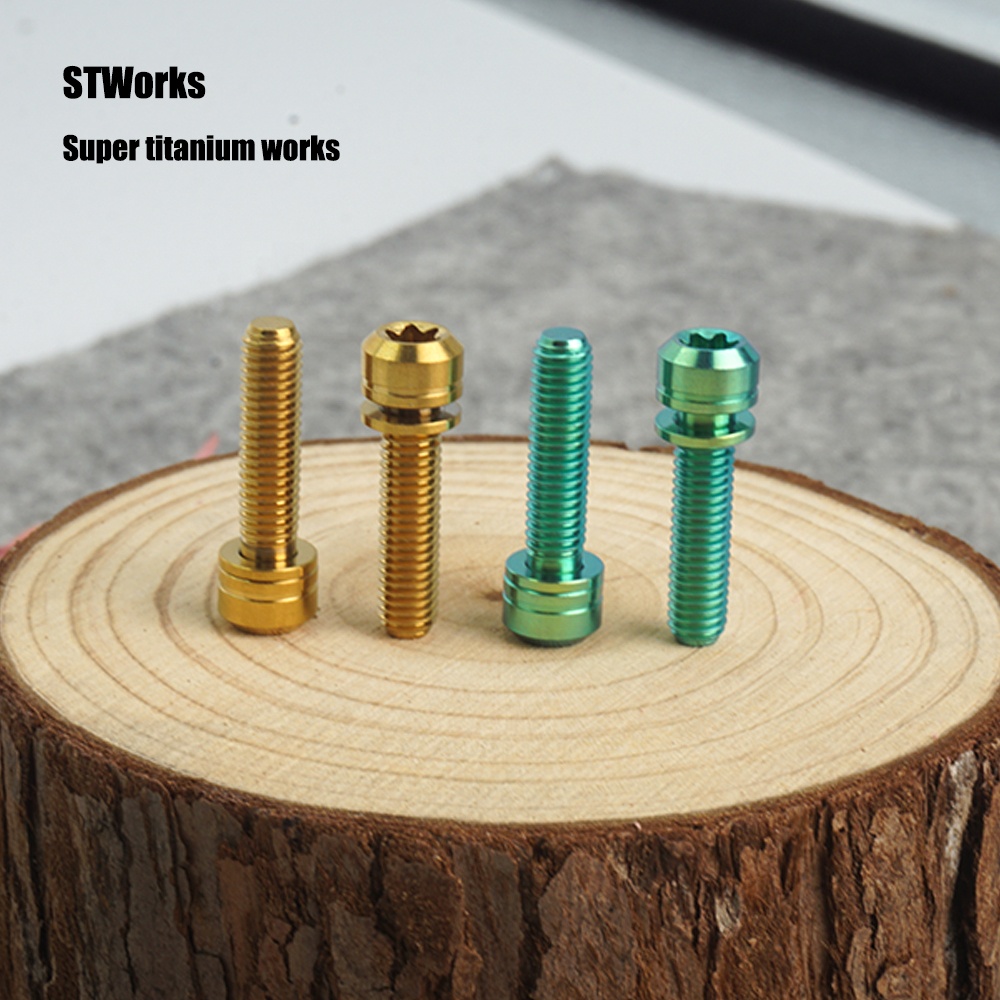
TC4 Titanium Ti Torx M5x16 /18/20/25mm Tapered Head Bolt with Washer Screw for Bicycle Stem Bolts
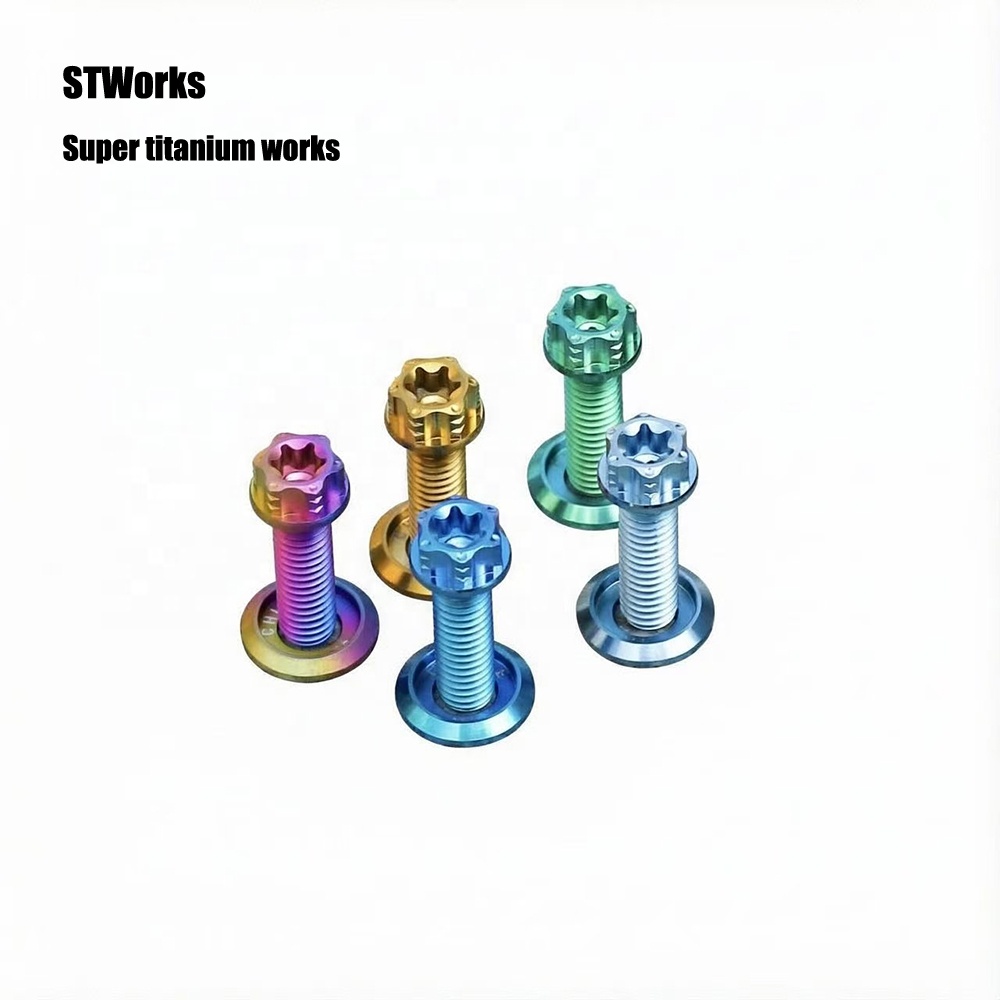
Titanium Alloy Bicycle Disc Brake Caliper Mounting Bolts Candy-Colored M6x20 with Washers
Industrial Engineering Whitepaper: Metallurgical Supremacy of Titanium in Performance Exhaust Systems
Modern internal combustion engines, turbocharged performance vehicles, and hybrid-assisted hypercars place intense thermomechanical demands on exhaust terminations. Tailpipes and exhaust tips are not merely cosmetic components; they serve as critical fluid-dynamic orifices that modulate exhaust gas exit velocity, control acoustic back-resonance, and endure radical cyclic thermal shocks. When vehicles operate at high boost thresholds, exhaust gas temperatures (EGTs) entering the tip zone oscillate rapidly between ambient temperatures and 650°C to 800°C. Under these severe operating regimes, conventional 304 stainless steel suffers from chromium carbide precipitation along grain boundaries (sensitization), resulting in micro-fissuring, surface scaling, and unsightly discoloration due to poor oxide integrity.
Titanium solves these failure modes at a molecular level. By capitalizing on an exceptionally stable, self-regenerating titanium dioxide (TiO2) passivating surface layer, titanium exhibits absolute immunity to corrosive road de-icing salts (magnesium chloride and sodium chloride), acidic condensate from unburnt fuel fractions, and extreme environmental moisture. Structurally, titanium boasts a density of approximately 4.43 g/cm³ to 4.51 g/cm³—roughly 45% lighter than standard 304 stainless steel (7.93 g/cm³). Removing mass at the extreme overhang of the vehicle's rear axle delivers dramatic improvements to polar moments of inertia, eliminating structural hanger stress, and significantly optimizing chassis dynamics in competitive motorsport and premium road vehicles.
Acoustic Velocity and Resonance Modulation: The Signature Titanium Note
Beyond physical longevity and weight minimization, a primary driver for titanium exhaust tip adoption is its unmatched acoustic resonance. The speed of sound through a metallic crystalline structure is defined by the square root of its elastic modulus divided by its density (v = √(E/ρ)). In Grade 5 titanium (Ti-6Al-4V) and Grade 2 Commercially Pure (CP) titanium, the sonic transmission speed reaches roughly 6,070 m/s, compared to approximately 5,790 m/s in austenitic steel. Because titanium features an elastic modulus of approximately 105–114 GPa (roughly half that of steel) paired with ultra-thin wall capability (typically 1.0mm to 1.2mm wall thickness versus 1.5mm to 2.0mm in steel), the material acts as a high-frequency acoustic resonator. It filters out muddy low-frequency drone while crisping higher-order harmonic engine frequencies, producing the sharp, metallic acoustic roar celebrated by performance vehicle connoisseurs globally.
Comparative Engineering Matrix: Exhaust Material Selection
To ensure accurate B2B procurement choices, our engineering department provides a direct empirical comparison between primary alloys utilized in exhaust manufacturing, tailpipes, and hardware clamping:
| Alloy Standard & Grade | Density (g/cm³) | Tensile Strength (MPa) | Thermal Conductivity (W/m·K) | Max Continuous Temp (°C) | Corrosion Resistance | Primary Application |
|---|---|---|---|---|---|---|
| Grade 5 Ti (Ti-6Al-4V / TC4) | 4.43 | 895 - 1000 | 6.7 | 450°C - 550°C | Immune (Atmospheric/Brine) | Exhaust studs, 12-point nuts, CNC flanges, brackets |
| Grade 2 Titanium (CP-Ti) | 4.51 | 345 - 485 | 16.4 | 400°C - 450°C | Immune (ASTM B117 salt spray) | Exhaust tip bodies, mandrel bends, pie-cut tailpipes |
| Grade 1 Titanium (Ultra-Formable) | 4.51 | 240 - 380 | 16.0 | 350°C - 400°C | Immune | Hydroformed dual-wall exhaust tips, flared cones |
| AISI 304 Stainless Steel | 7.93 | 515 - 620 | 16.2 | 750°C - 800°C | Moderate (Susceptible to pitting/pitting) | Heavy baseline OEM exhaust systems, budget mufflers |
| Inconel 625 (Nickel Superalloy) | 8.44 | 830 - 1030 | 9.8 | 980°C - 1000°C | Exceptional | Formula 1 turbo manifolds, extreme racing downpipes |
Baoji Industrial Ecosystem: Unrivaled Strategic Factory Advantages
Unlike ordinary trading intermediaries or generic CNC workshops that machine titanium occasionally, Velnora is dedicated exclusively to reactive and exotic metals. Our facility is equipped with automated CNC turning centers, multi-axis machining cells, automated slow-feeding wire EDM arrays, and advanced rotary draw bending machinery. Every batch of titanium tube and round bar originates from certified vacuum arc remelted (VAR) ingots, thoroughly cataloged with EN 10204 3.1 chemical and mechanical inspection certificates to guarantee zero interstitial oxygen contamination or premature embrittlement.
Orbital Pure-Argon TIG Welding
Titanium absorbs atmospheric gases (O2, N2, H2) rapidly above 400°C. We utilize sealed, 99.999% high-purity argon trailing shield chambers and internal back-purging to ensure silver-bright, ductile weld beads completely free from micro-porosity.
Direct Shop-Floor Transparency
We eliminate supply chain opacity. During every production run, our machining technicians generate high-resolution video documentation and macro-photography of tooling, threading, and finishing, providing real-time quality verification prior to dispatch.
Advanced PVD & Anodic Surface Finishing
From aerospace rainbow thermal bluing to high-wear PVD vacuum titanium-nitride sputtering, our in-house surface treatment department produces repeatable, non-fading custom finishes tailored to bespoke private label brand specifications.
Future B2B Procurement Trends: The Titanium Exhaust Market (2025–2030)
Procurement managers and supply chain directors across Europe, North America, and Australia face evolving market dynamics. Anticipating these shifts is essential for maintaining product margins and avoiding obsolete inventory. Over the next five years, four dominant trends will reshape the titanium exhaust hardware landscape:
1. Electrified Performance & Hybrid Vehicle Thermal Isolation: As luxury and sports vehicle OEMs integrate high-voltage battery architecture adjacent to rear subframes, rear thermal radiation management has become paramount. Titanium features an exceptionally low thermal conductivity (6.7 W/m·K for Gr5 and ~16 W/m·K for Gr2) relative to aluminum (~205 W/m·K) and steels. Consequently, dual-wall titanium exhaust tips serve as effective thermal barriers, preventing exhaust plume heat soak into sensitive EV battery modules, rear inverters, and carbon-fiber aerodynamic diffusers.
2. Proliferation of Modular "Pie-Cut" Aesthetics & Multi-Section Tailpipes: Custom fabrication shops and aftermarket retail buyers increasingly favor visible, precision TIG-welded segmented bends ("pie cuts"). These modular aesthetic tips exhibit artisanal engineering value while maintaining strict geometric tolerances. Importers who stock prefabricated, deburred, and pre-chamfered titanium pie-cut segments and turnkey fabricated tips capture significantly higher retail margins compared to generic cast or rolled steel tips.
3. Direct-to-Mill Traceability and Strict De-risking: With stringent ESG guidelines, RoHS compliance, and REACH substance regulations enforced globally, tier-1 aftermarket brands can no longer rely on unverified secondary traders. Procurement protocols now demand full heat-number traceability back to the titanium sponge melting furnace. Velnora maintains comprehensive metallurgical records, spectroscopic chemical analyses, and tensile yield documentation for every raw material bar, plate, and tube batch.
4. Specialized Timascus (Mokuti) Accents for Supercar Tuning: The ultra-luxury tuning sector (specializing in bespoke Porsche, Lamborghini, McLaren, and Ferrari platforms) has embraced Timascus (forge-laminated Grade 2 and Grade 5 titanium damascus). Utilizing modern wire EDM profiling, our facility crafts solid Timascus outer exhaust trim bezels, providing a distinct swirled Damascus pattern that shifts colors dramatically when exposed to exhaust heat cycles.
Strategic Product Recommendations for Distributors & Wholesalers
To maximize turnover velocity and minimize capital lockup, Velnora recommends maintaining a structured, tiered inventory profile encompassing both structural fastening components and consumer-facing exhaust tip assemblies:
Dual-Wall Slip-On Titanium Tips
Primary Sizes: 2.5" / 3.0" Inlet × 3.5" / 4.0" Outlet.
Target Application: High-end German, Japanese, and American turbo sports cars. Feature inner acoustic perforated sleeves and rolled lips with adjustable slip-fit clamp systems for universal bolt-on fitment.
12-Point Gr5 Exhaust Fasteners
Primary Specs: M8×1.25, M10×1.25/1.5 Titanium 6AL-4V studs and flanged nuts. Designed to completely eradicate seized exhaust manifold studs and tailpipe flange galling under severe thermal cycles. High volume repeat purchase rate.
Titanium Motorcycle Slip-Fit Tips
Primary Specs: 51mm, 60.5mm, 63mm inner diameter slip-on terminations with spring retainers and CNC machined bleed screws. Extreme weight reduction for track, superbike, and dual-sport adventure motorcycles.
Six-Stage Precision Manufacturing & Quality Control Architecture
Every custom titanium exhaust tip, flange, bolt, and accessory leaving our Baoji production facility follows an unyielding, standardized quality management pathway designed to guarantee 100% mechanical repeatability:
Spectroscopy Check
Spectrometric verification of Ti ingot raw materials to confirm chemical compliance with ASTM B861/B862 and ASTM B348.
CNC Turning
Multi-axis Swiss precision turning and wire EDM cutting to hold critical slip-fit diameters within ±0.02mm tolerances.
Mandrel Forming
Cold-forming and hydraulic expansion of exhaust tip cones and angle cuts without wall thinning or structural wrinkling.
Chamber Welding
Full argon gas purge orbital TIG welding, guaranteeing complete root penetration and zero discoloration or oxidization.
Surface Regimes
Micro-bead blasting, hand satin-brushing, physical vapor deposition (PVD), or precision electrolyte anodic coloring.
CMM Metrology
3D Coordinate Measuring Machine (CMM) dimensional verification, optical thread checking, and export clean-packing.
Frequently Asked Technical Questions (B2B Procurement & Engineering)
Detailed technical answers addressing critical installation, metallurgy, and supply chain questions encountered by automotive engineers and aftermarket wholesale purchasers:
How do you prevent thread galling on titanium exhaust studs and hardware?
Can titanium exhaust tips be welded directly to stainless steel exhaust piping?
How durable are the burnt blue / rainbow finishes over continuous heat cycles?
What is the typical Minimum Order Quantity (MOQ) and sample lead time?
How does titanium perform against corrosive road de-icing agents and winter conditions?
Do you offer private labeling, custom laser marking, and custom packaging?
Accelerate Your Titanium Exhaust Product Line
Partner directly with a proven Baoji manufacturer. Upload your dimensional CAD drawings or request our comprehensive B2B component catalog with complete technical pricing tiers. Our senior metallurgical machinists respond within 4 business hours.
Get Catalog