Featured Titanium Hardware & Precision CNC Fasteners
Engineered from certified aerospace-grade TC4 titanium bar stock, our fasteners deliver exceptional tensile strength, zero corrosive degradation, and a 44% rotational weight reduction for demanding cycling and motorsport applications.
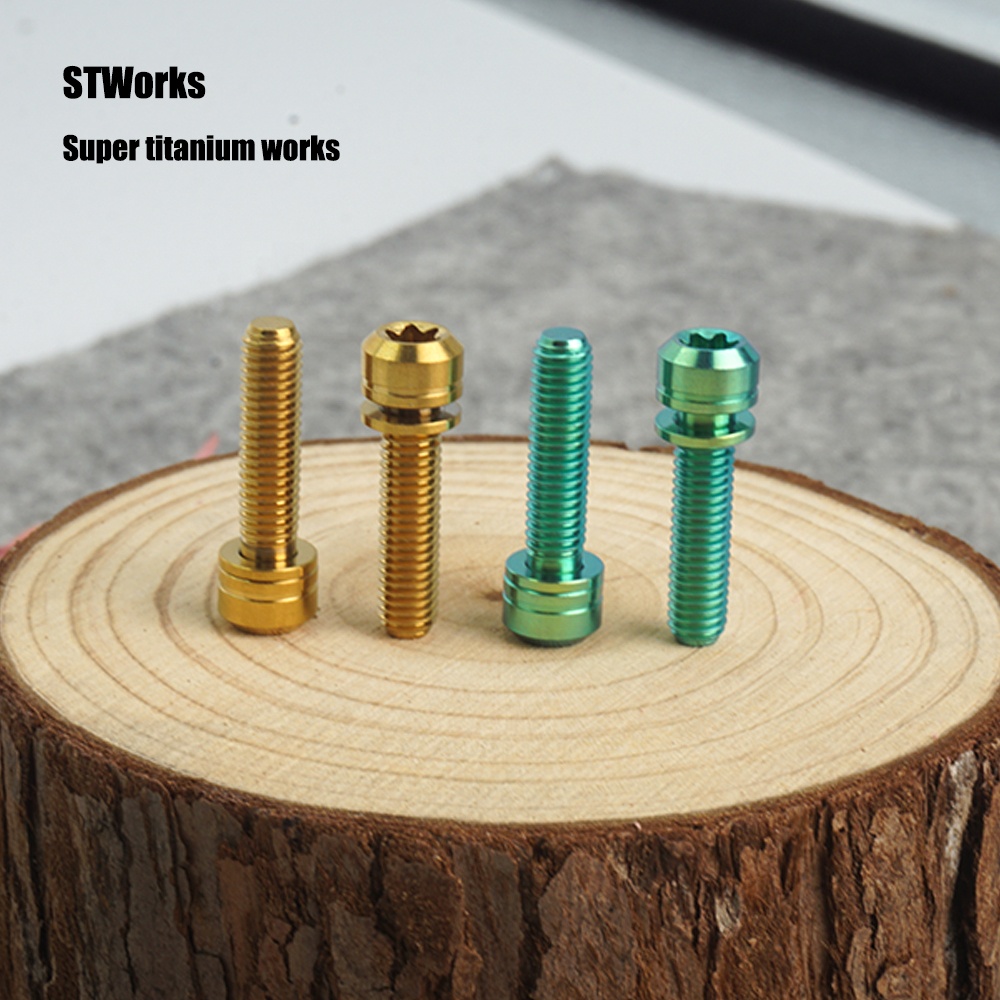
Engineering Excellence: Titanium Chainring Bolts in Modern Drivetrain Architecture
An exhaustive technical evaluation on mechanical stress distribution, anti-galling thread interfaces, cold-forged rolling dynamics, and high-volume procurement metrics for OEM crankset assemblers and tier-one aftermarket brands.
1. Mechanical Physics and Failure Mode Analysis in Modern Crankset Assemblies
The bicycle drivetrain crank-spider interface represents one of the most mechanically demanding micro-environments in cycling engineering. A chainring bolt is not merely a static clamping pin; it functions as a highly stressed dynamic coupling subject to severe cyclic shear, fluctuating bending moments, and axial tension loads. With the global market pivoting decisively toward 1x12 and 1x13 narrow-wide drivetrain configurations, the entire torque output generated by elite competitive cyclists or high-torque electric mountain bike (e-MTB) mid-drive motors—frequently peaking between 85 Nm and 120 Nm at the crank spindle—is concentrated across four or five discrete fastening points.
Under heavy pedaling cadence during hill climbs or aggressive sprint launches, the chain tension creates an asymmetric tangential pull across the pitch circle diameter (BCD), typically 104 BCD, 110 BCD, or direct-mount asymmetric patterns. If fasteners lack sufficient shear strength or exhibit micro-yield under clamping preload, microscopic displacement occurs between the inner chainring face and the spider mounting tabs. This micro-fretting leads directly to annoying drivetrain creaking, localized work-hardening, fatigue propagation, and eventual catastrophic shearing of the bolt shank.
Critical Engineering Insight: Traditional 7075-T6 aluminum chainring bolts, while light, exhibit high notch sensitivity and low fatigue resistance under alternating dynamic bending. Once an aluminum bolt experiences even minor over-torquing during service, its elastic limit is permanently breached, triggering catastrophic thread stripping under peak sprint loads. Conversely, high-tensile steel fasteners introduce unwanted rotating inertia and are chronically prone to galvanic rusting when exposed to sweat, road salt, and degreasers. Grade 5 Ti-6Al-4V provides the optimum mechanical equilibrium: exceptional fatigue resilience, superior yield-to-density ratio, and virtually indefinite immunity to environmental corrosion.
2. Metallurgical Comparative Benchmarking: Ti-6Al-4V vs. Competing Fastener Alloys
B2B procurement teams must carefully evaluate material performance characteristics against rigorous operating requirements. Velnora Titanium utilizes exclusively certified Grade 5 Ti-6Al-4V (chemically equivalent to Chinese aerospace-spec TC4), ensuring optimal hardness, elongation properties, and high fatigue endurance under high cyclic stress reversals.
| Material Specification | Density (g/cm³) | Tensile Strength (MPa) | Yield Strength (MPa) | Shear Strength (MPa) | Galvanic Risk (w/ Carbon) |
|---|---|---|---|---|---|
| Titanium Gr5 Ti-6Al-4V (Velnora) | 4.43 | 950 – 1050 | 880 – 920 | ≈ 650 | Virtually Zero (Noble) |
| 7075-T651 Billet Aluminum | 2.81 | 570 | 505 | ≈ 330 | Severe Galvanic Anode |
| AISI 304 / 316 Stainless Steel | 7.93 | 520 – 620 | 210 – 290 | ≈ 400 | Low Risk |
| Alloy Steel Class 10.9 (Phosphate) | 7.85 | 1040 | 940 | ≈ 620 | Moderate to High Pitting |
3. Cut Threads vs. Cold-Forged CNC Rolled Threads: Grain Flow Integrity
A primary factor governing fastener lifespan in dynamic drivetrains is thread root stress concentration. In standard low-cost manufacturing, thread profiles are formed via single-point CNC cutting or thread-milling inserts. This subtractive process literally severs the longitudinal grain structure of the titanium bar stock, leaving micro-notches and microscopic burrs along the root radius where tensile stress peaks under torque.
At Velnora Titanium, our proprietary manufacturing protocol incorporates secondary precision cold thread rolling. By forcing the titanium blank between ultra-hard carbide cylindrical dies under immense, continuous hydraulic pressure, the metallurgical grain boundaries are displaced plasticly rather than sheared. The grain lines conform seamlessly along the thread crests and roots, introducing favorable compressive residual stresses. This cold-working process achieves three distinct engineering milestones:
1. Up to a 35% enhancement in dynamic fatigue life under cyclic pedaling load reversals.
2. Enhanced thread surface finish down to Ra 0.2–0.4 µm, drastically minimizing friction coefficients during torque application.
3. Exceptional resistance to galling and thread seizure when mating with alloy crank spider counterbores.
4. Strategic Future Procurement Trends in Chainring Fasteners (2025–2030)
Global procurement directors and drivetrain brand managers must plan their purchasing portfolios around clear technological evolution. Below are the five macro trends defining high-end chainring bolt sourcing over the next decade.
1. e-Bike Mid-Drive Torque Proliferation
Electric assist motors produce instantaneous torque spikes that sheer aluminum hardware within 1,000 km. Tier-1 brands are mandating Gr5 titanium hardware as factory standard to honor drivetrain warranty obligations.
2. Torx Drive (T30/T40) Standardization
Traditional 5mm hex sockets frequently cam out and round off under tight field maintenance. Modern specifications have transitioned toward precision Torx T30/T40 drives, which distribute tightening torque evenly and prevent tool slipping.
3. Advanced PVD Diamond-Like Carbon (DLC)
Anodizing offers decorative color, but Physical Vapor Deposition (PVD) applied in vacuum chambers delivers extreme surface hardness (2,500–3,000 HV), total anti-galling lubrication, and permanent scratch resistance for premium race bikes.
4. Integrated Nut-and-Bolt Monobloc Systems
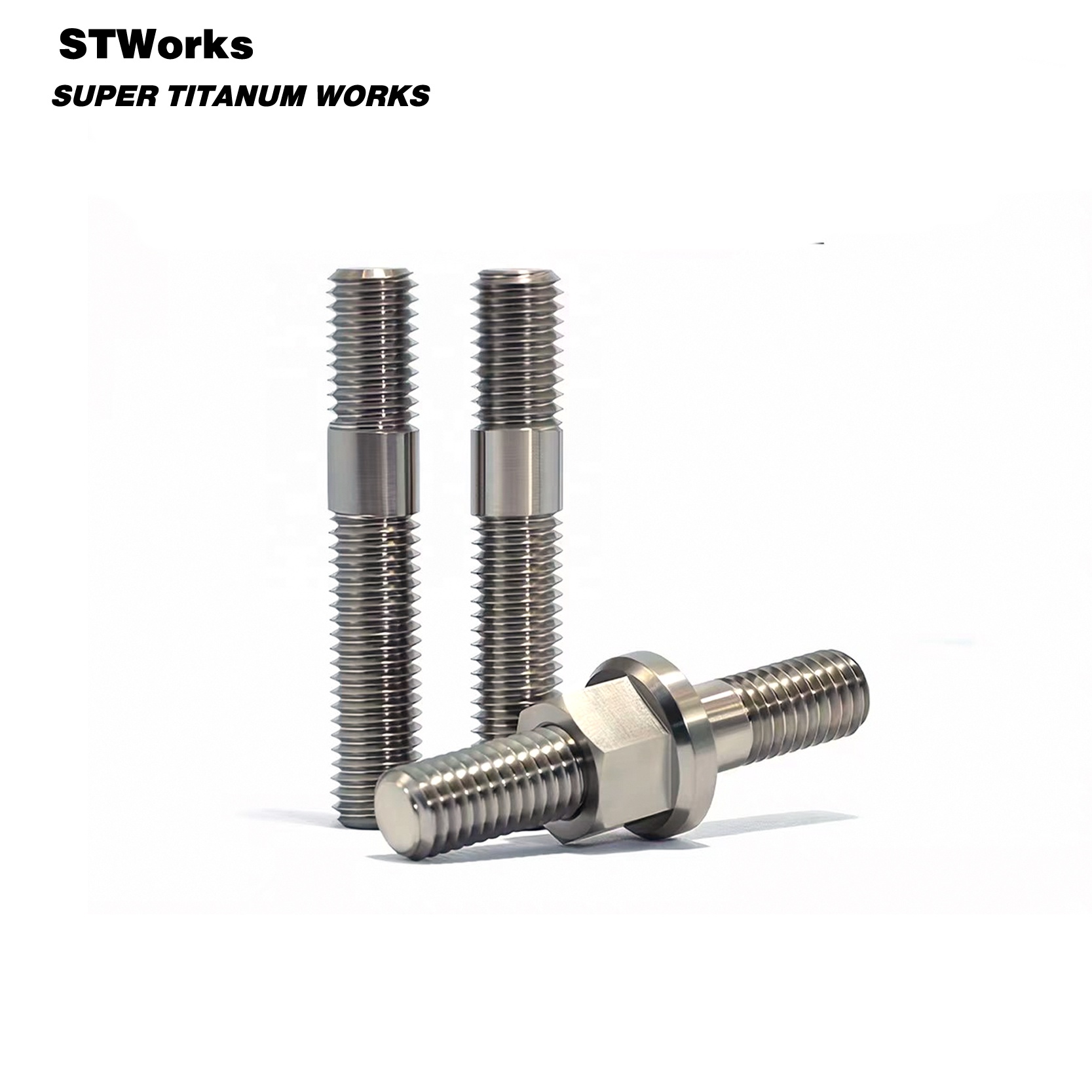
To accelerate automated assembly line cycles, crank builders are demanding captured sleeve designs, anti-spin knurled nut flanges, and captive washer assemblies that eliminate manual back-holding wrenches during robotic assembly.
5. Direct Supply Chain Integration via Baoji Cluster
Global supply chain volatility has driven major European and American importers away from multi-tier trading brokers. Procurement teams now connect directly with integrated Baoji manufacturing facilities where raw ingot melting, precision Swiss machining, automated optical sorting, and direct export customs clear seamlessly from a unified industrial hub.
5. Enterprise Strengths & Factory Infrastructure: Velnora Titanium Industry
Operating since 2013 from the core of China's Titanium Valley in Baoji, Shaanxi, Velnora Titanium Industry Co., Ltd. represents the cutting edge of non-ferrous precision engineering. Our modern manufacturing campus is purpose-engineered to bridge the gap between heavy aerospace metallurgy and the hyper-refined aesthetic and dimensional demands of cycling and motorsport innovators.
Multi-Axis Swiss CNC Centers
Equipped with high-precision Star and Citizen CNC sliding-head Swiss lathes, enabling complete single-setup turn-mill processing of complex hollow-head chainring bolts within ±0.005mm tolerances.
Full Spectrometric Batch Tracing
Every batch of Gr5 TC4 bar stock undergoes raw spectroscopic glow-discharge optical emission spectrometry (GD-OES) to certify chemical compliance: Aluminum 5.5–6.75%, Vanadium 3.5–4.5%, Iron < 0.3%, Oxygen < 0.2%.
Zero-Defect Optical Sorting
Our automated high-speed glass turntable sorting machines verify thread pitch diameter, total runout, concentricity, and head height at speeds exceeding 400 parts per minute, ensuring zero defective parts reach your assembly line.
In-House Surface Finishing
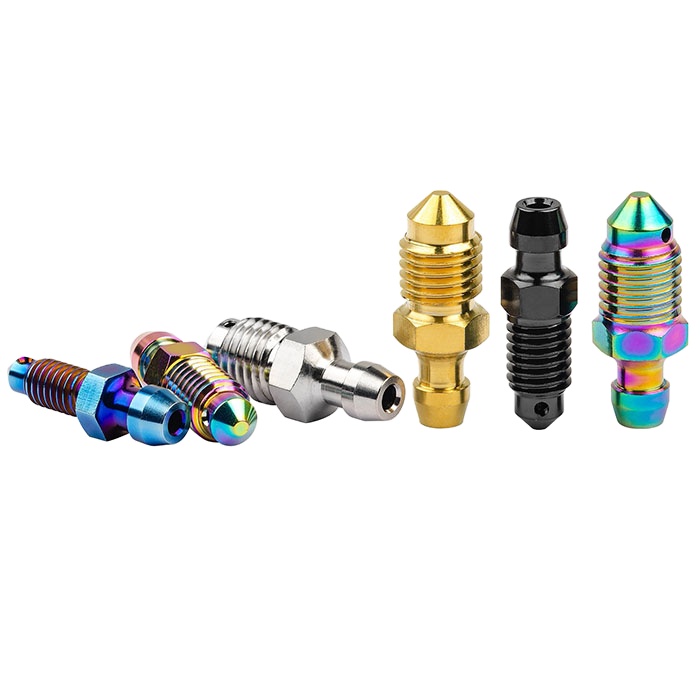
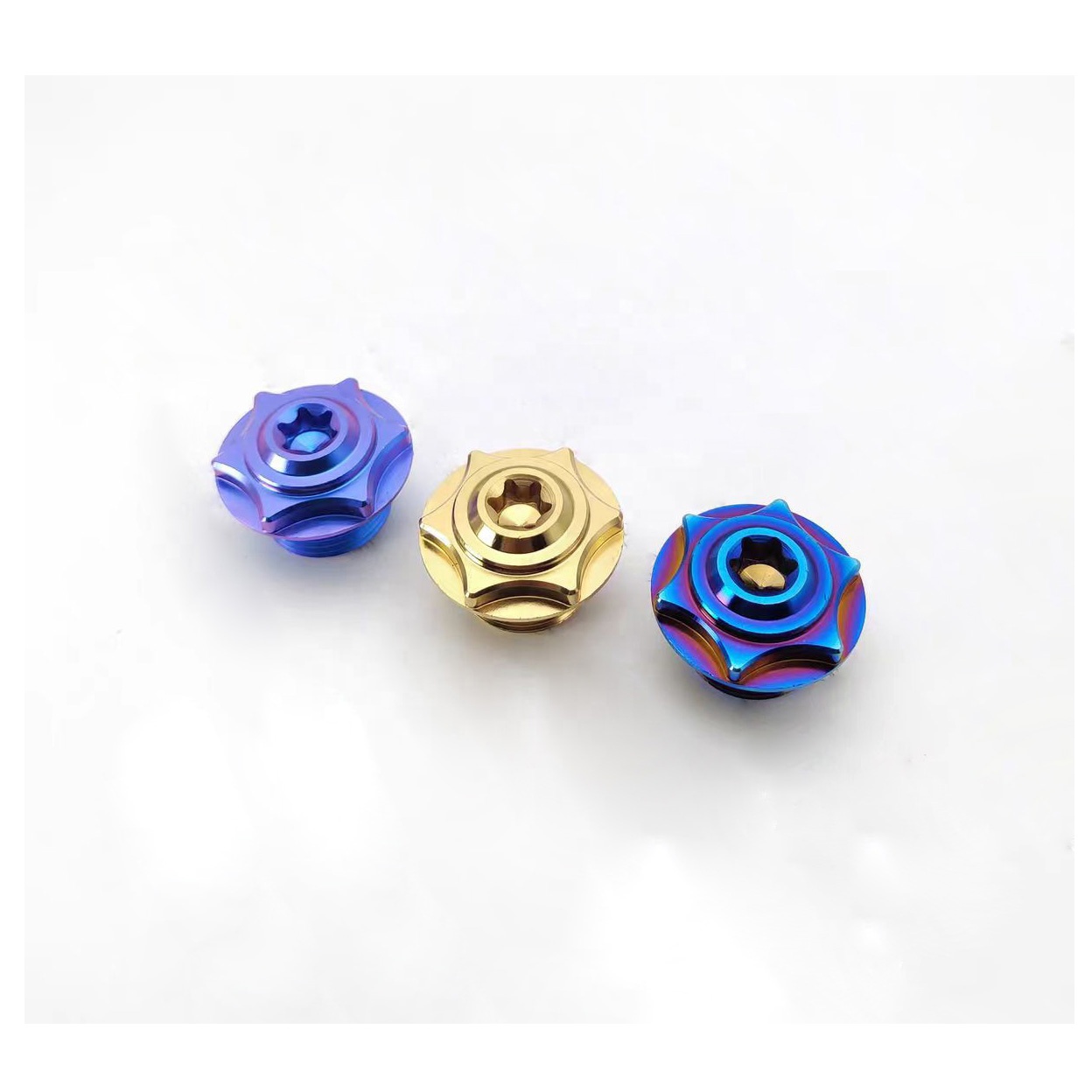
Electrolytic multi-color anodizing (gold, oil slick rainbow, electric blue, violet, burnt titanium) and industrial PVD coatings (DLC black, titanium nitride TiN gold) completed under cleanroom conditions.
Rapid OEM/ODM Prototyping
Our senior mechanical engineering desk provides comprehensive DFM (Design for Manufacturability) analysis on custom 3D STEP or IGES files within 4 hours, dispatching fully finished first-article samples in as little as 7 to 10 days.
Direct Factory Transparency
Say goodbye to communication blackouts. We provide clients with on-demand video production tracking directly from our machine shop, verifying your order setup, inspection, and packaging prior to air dispatch.
Frequently Asked Sourcing & Engineering Questions
Essential technical guidelines covering assembly torque, thread chemistry, anti-galling lubrication, and custom OEM manufacturing parameters.
What are the exact dimensional standards for single vs. double chainring bolt configurations?
+
Chainring bolts are primarily divided into single-ring (1x) and double-ring (2x) formats. Standard single-ring configurations typically feature an M8 male bolt with a thread length of 4.5mm to 5.5mm paired with a female backing nut with a shank outer diameter of 10mm and an overall sleeve length of 4.0mm to 5.0mm. This ensures sufficient thread engagement without bottoming out on thin 1x narrow-wide chainring tabs.
Double-ring (2x) setups require longer female nuts (typically 7mm to 8.5mm in sleeve length) and matching 6.5mm to 8mm male bolts to effectively clamp both the outer big ring and inner ring tabs across the spider. Velnora manufactures to DIN, ISO metric, and custom proprietary standards (including Shimano 4-arm asymmetric BCD, SRAM hidden-bolt, and e-MTB offset spiders).
What is the recommended tightening torque for Grade 5 titanium chainring bolts?
+
For standard M8×0.75 Grade 5 Ti-6Al-4V chainring fasteners, the recommended assembly torque is between 8.0 Nm and 10.5 Nm, depending entirely on whether a dedicated anti-seize paste or threadlocker is utilized.
Because titanium possesses a lower modulus of elasticity (≈114 GPa) compared to carbon steel (≈210 GPa), it elongates elastically under clamping load, providing superior pre-load retention under vibration. However, torquing dry without lubrication can cause false torque readings due to friction. Always calibrate torque wrenches and strictly avoid pneumatic impact drivers during bike assembly.
How does Velnora prevent thread galling (cold welding) between titanium male and female threads?
+
Galling occurs when micro-asperities on mating titanium surfaces tear away their passive titanium oxide (TiO2) film under high frictional pressure, causing atomic-level welding. Velnora prevents galling through three proprietary engineering solutions:
1. Cold Rolled Mirror Roots: Our threads feature a sub-micron surface roughness (Ra < 0.3 µm) that minimizes mechanical interlocking of microscopic peaks.
2. Surface Hardening via PVD Coating: Applying TiN or DLC hard coatings creates a ceramic barrier that separates direct metal-to-metal contact.
3. Assembly Chemistry Protocol: We supply and recommend copper- or nickel-based anti-seize compounds, or PTFE-loaded medium-strength threadlockers that maintain boundary lubrication during torque cycles.
Is galvanic corrosion possible when titanium bolts are installed in carbon fiber crank spiders?
+
No. Titanium and carbon fiber composite materials reside adjacent to one another on the galvanic potential chart, with a standard potential differential of less than 0.10V. Unlike aluminum fasteners—which act as a severe sacrificial anode when touching carbon fiber in the presence of an electrolyte (water, sweat), causing violent white galvanic oxidation—Grade 5 titanium is completely noble and electrochemically stable in direct contact with pre-preg carbon fiber matrix materials.
What are the practical advantages of Torx drives over standard hexagonal hex sockets?
+
Standard 5mm or 6mm internal hex sockets rely on high surface angles that generate concentrated outward radial stress, frequently causing wrench slip or stripped fastener corners when torque exceeds 8 Nm. Torx drive geometries (such as T30 and T40) utilize a true 15-degree drive angle, delivering positive mechanical interlocking with zero radial cam-out forces. This dramatically increases tool engagement lifespan and prevents mechanic errors during factory assembly or trackside adjustments.
Can Velnora deliver custom laser logo engraving and specialized PVD anodized colorways?
+
Yes. Our precision fiber laser engraving stations achieve sharp, permanent vector micro-marking of customer logos, torque specifications, and batch serial numbers with line resolutions down to 0.02mm. For surface finishing, we offer high-voltage anodic oxidation for a vibrant spectrum of colors (Gold, Purple, Blue, Green, Rose, Rainbow) as well as hard-wearing PVD DLC (Diamond-Like Carbon) matte black and brilliant metallic chameleon finishes.
What are your minimum order quantities (MOQ) and production lead times for OEM orders?
+
For standard catalog sizes and thread specifications, our typical MOQ starts at 100 to 200 sets. For completely customized geometries (custom shoulder steps, non-standard thread pitches, bespoke head caps), our initial sampling run is 50 to 100 sets, scaling up to mass production batches of 10,000+ units. Lead times for first-article CNC prototypes are 7 to 10 days; mass production repeat runs generally dispatch within 18 to 25 business days via DHL, FedEx, or air freight directly to your assembly plant.
How does your quality control team guarantee dimensional consistency across large-volume runs?
+
We deploy a multi-tiered quality assurance protocol. In-process inspection includes hourly dimensional auditing via digital micrometer and optical profile projectors on the production floor. Completed lots are transferred to our temperature-controlled inspection laboratory for Coordinate Measuring Machine (CMM) full-geometry mapping and automated 360-degree glass plate optical sorting to guarantee zero thread pitch or head runout defects.