Featured Titanium Fasteners & Performance Components
Direct from our manufacturing workshop in Baoji, explore our high-demand OEM/ODM Grade 5 (Ti-6Al-4V) titanium automotive, motorcycle, and cycle hardware.
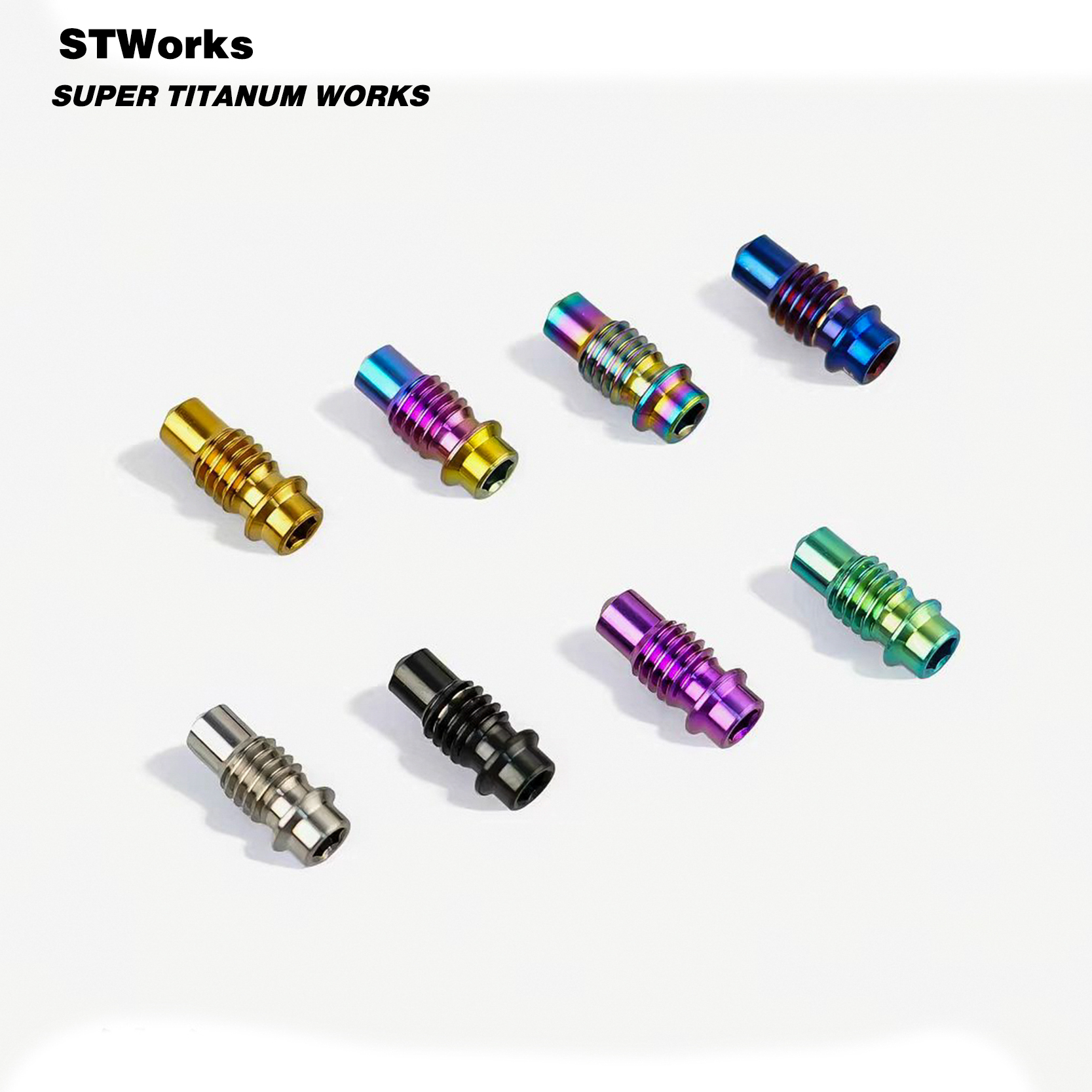
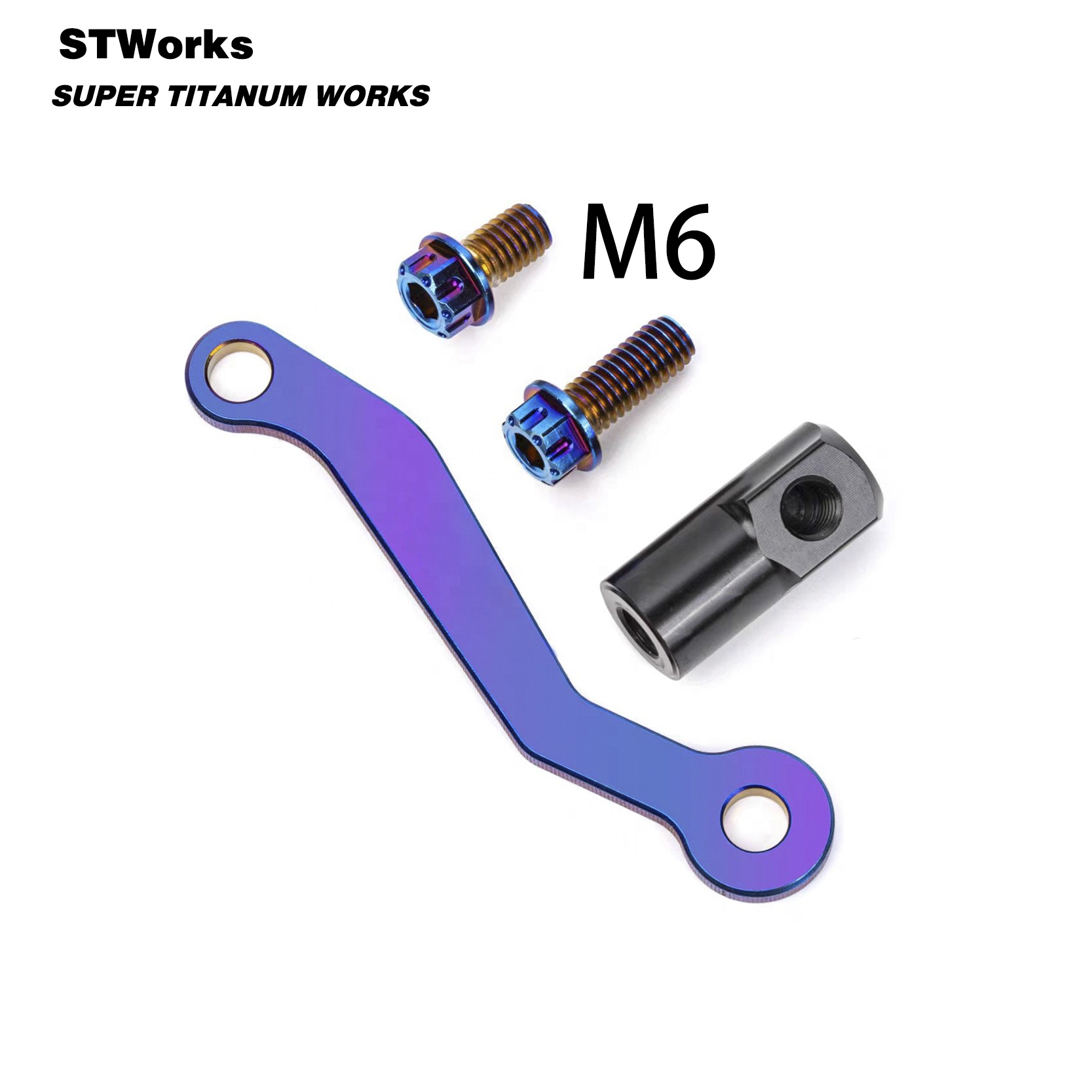
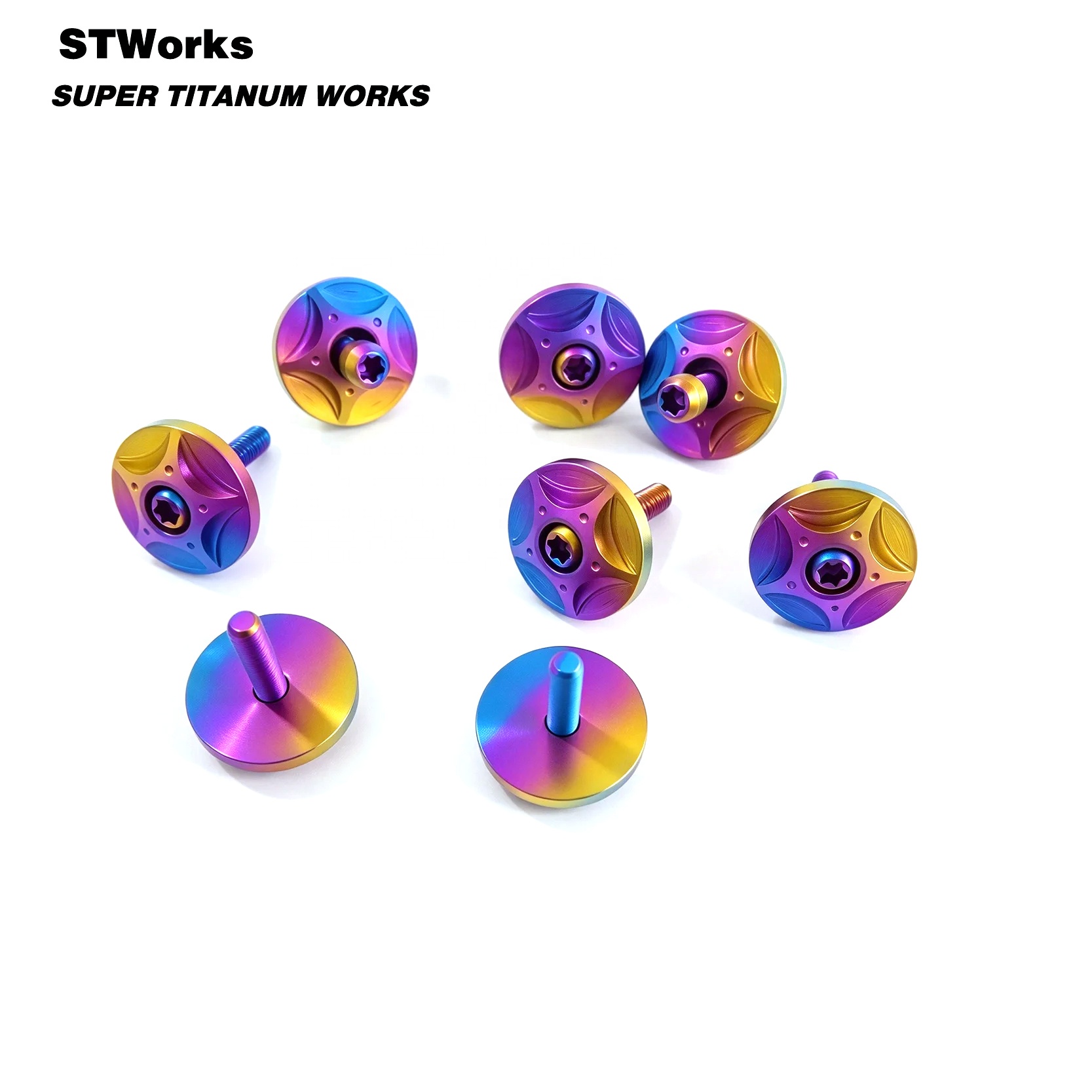
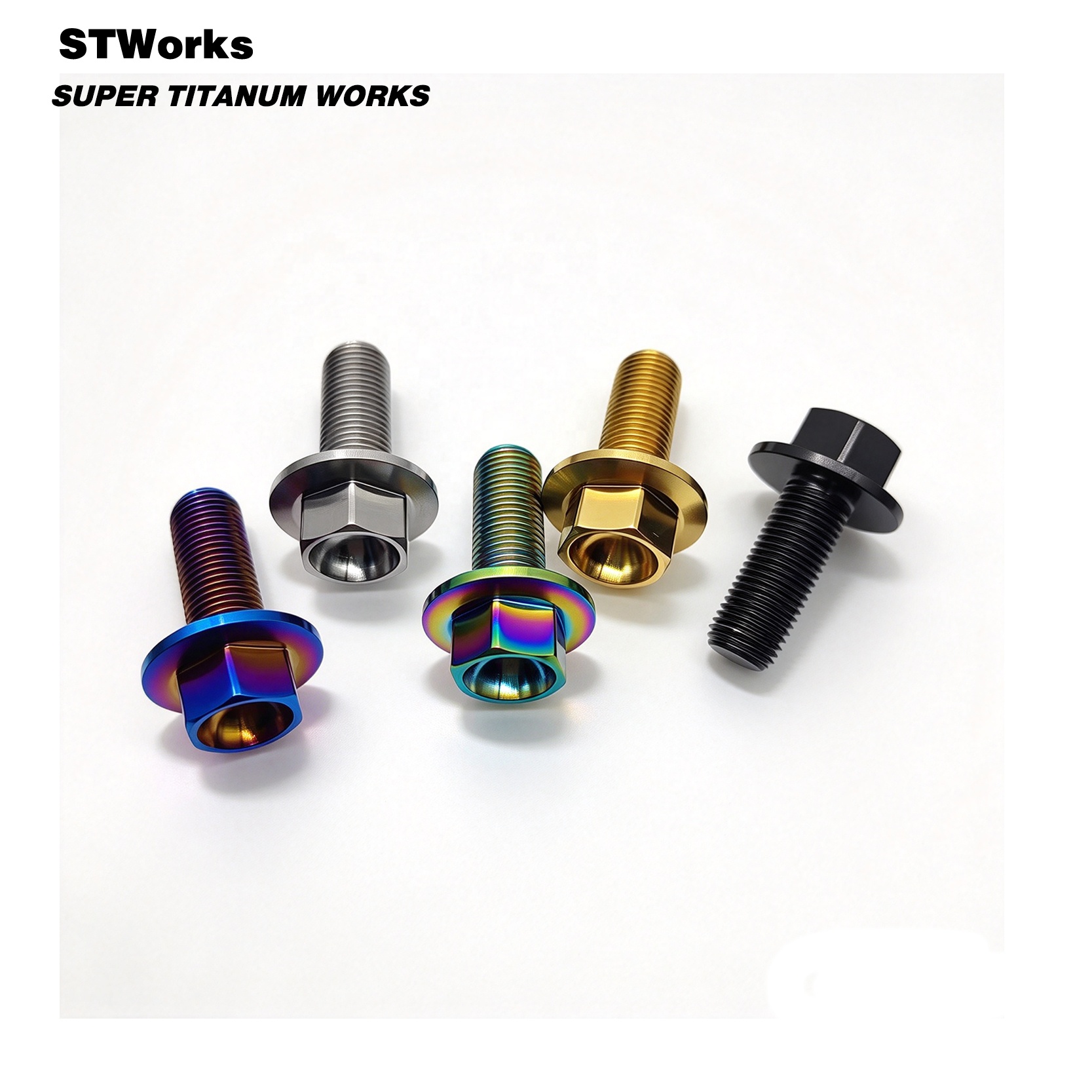
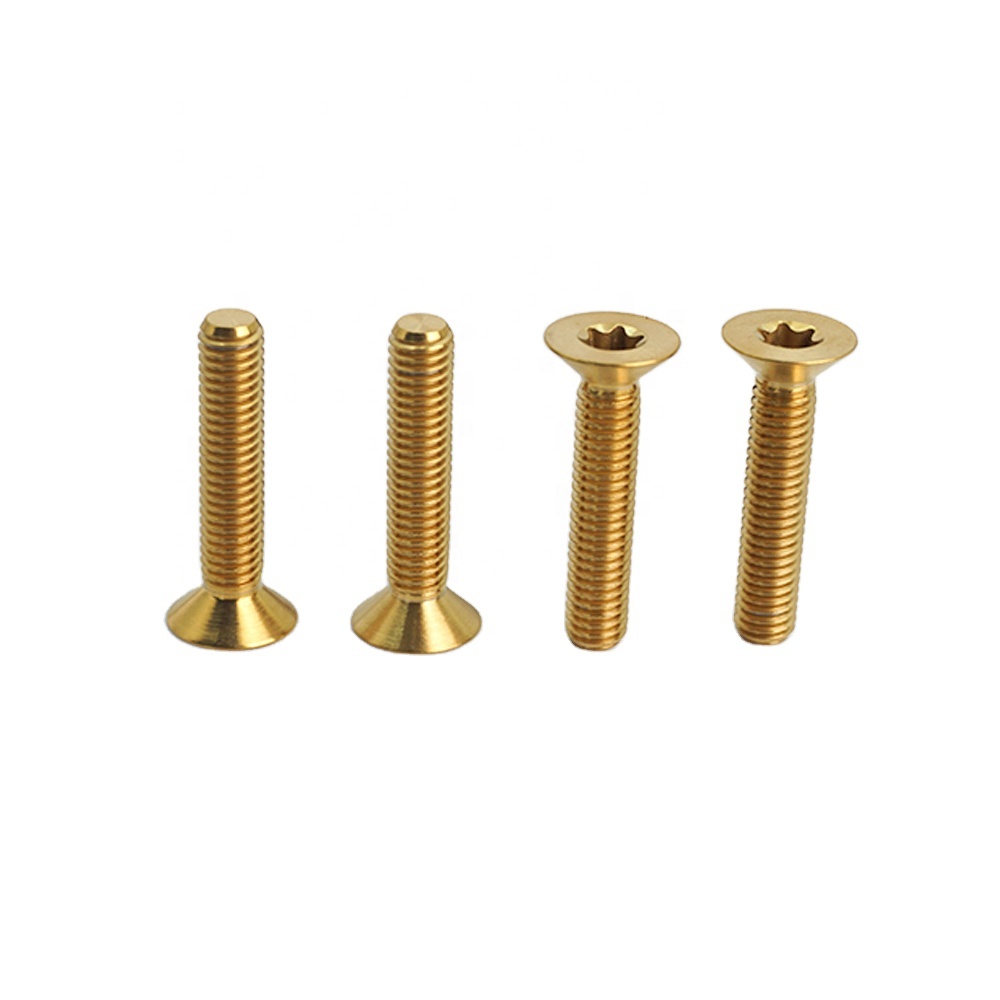
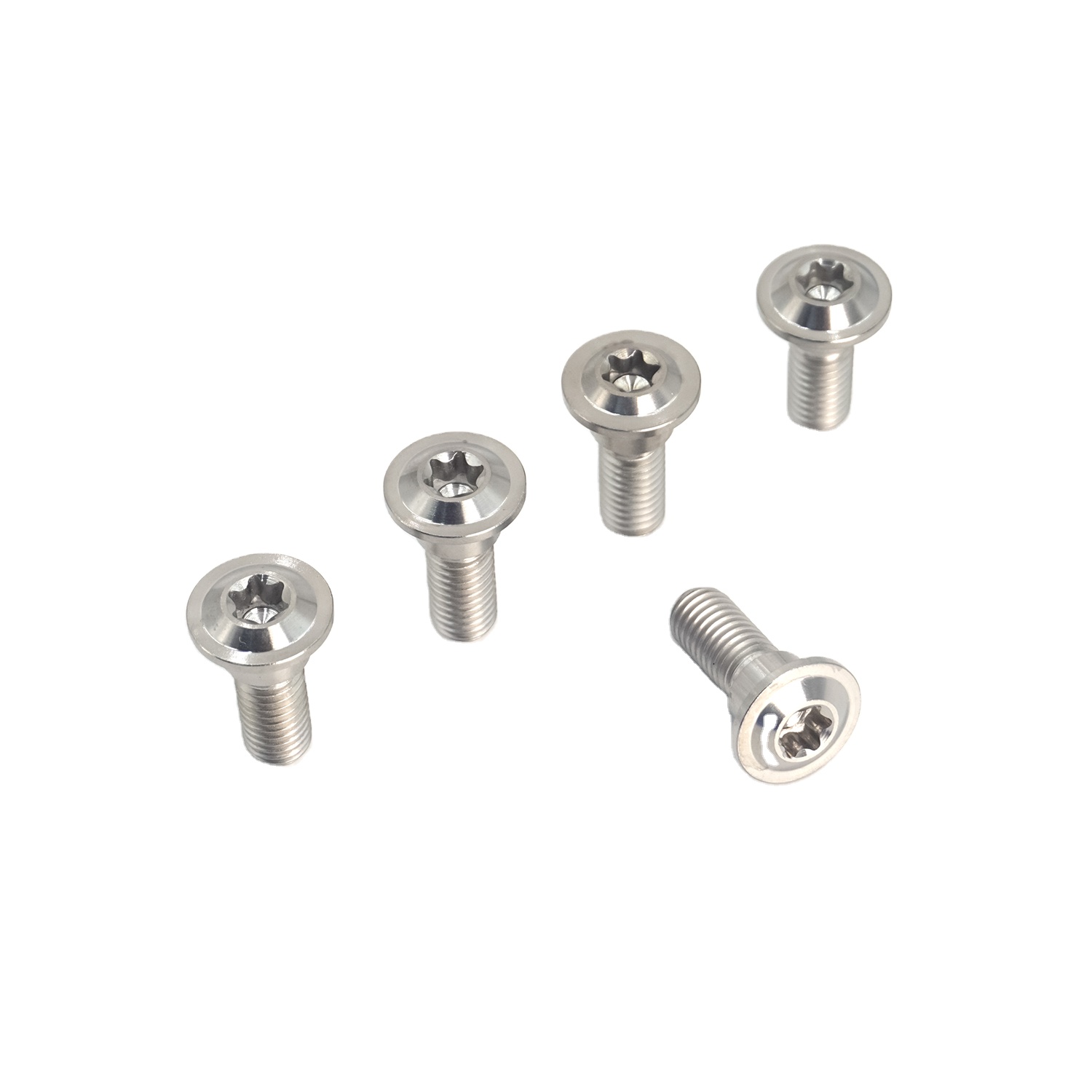
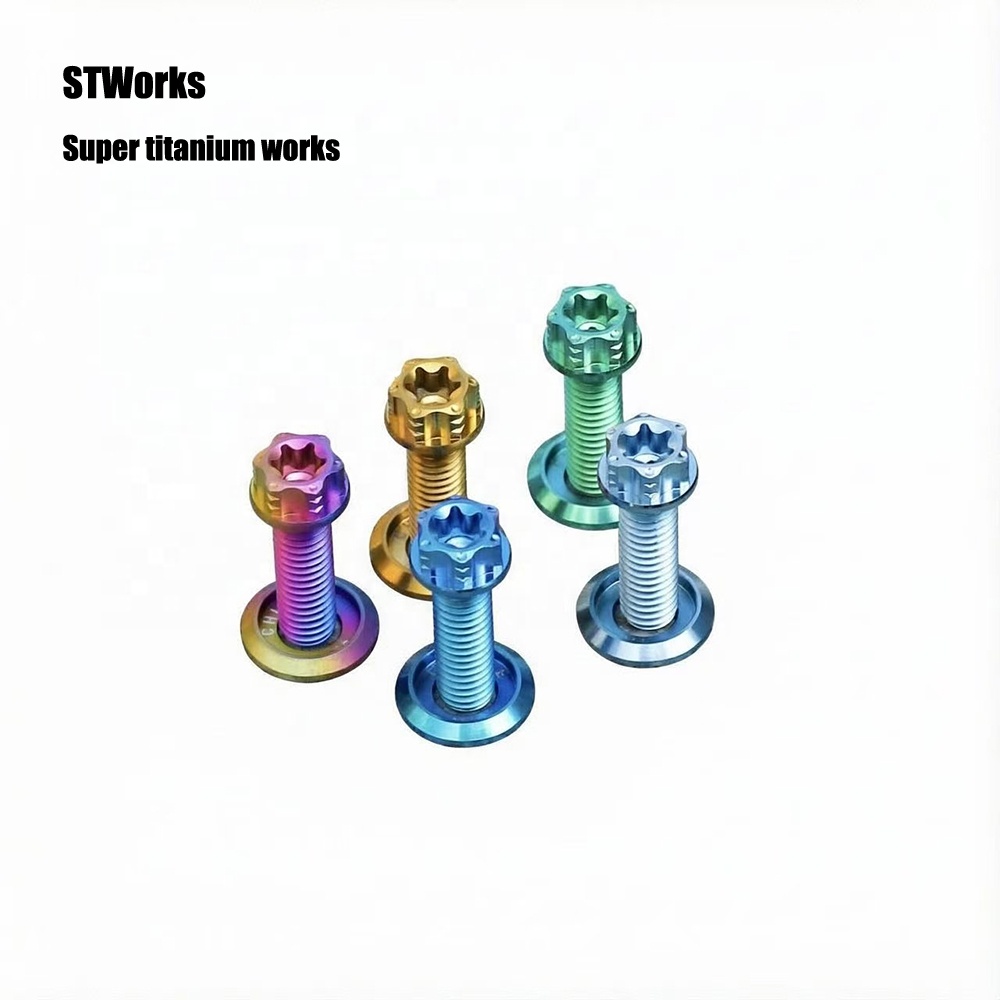
The Engineering Paradigm: Why Titanium Wheel Studs Outperform Traditional Steel
In high-performance automotive engineering, motorsport racing, and next-generation electric mobility, wheel studs endure extreme cyclic dynamic loads, rotational shear stress, and elevated brake-rotor thermal saturation.
Eliminating Unsprung Rotational Inertia
Wheel studs and lug hardware represent unsprung rotational mass. According to rotational kinetic energy equations ($E_k = \frac{1}{2} I \omega^2$), reducing mass furthest from the center of rotation exponentially enhances suspension rebound response, dampening fidelity, and steering acceleration. Ti-6Al-4V Grade 5 titanium delivers a density of just 4.43 g/cm³, representing a 44% weight reduction compared to standard 10.9 or 12.9 class chrome-moly steel fasteners.
Beyond straight-line weight savings, reducing rotational mass at the wheel hub curtails gyroscopic precession effects during high-speed corner transitions, providing GT3 racing teams and performance track enthusiasts with razor-sharp steering turn-in and dramatically reduced lap degradation.
- Yield Strength Superiority: Solution-treated and aged Grade 5 reaches 950–1050 MPa yield, matching or exceeding typical Class 10.9 automotive steel.
- Total Salt Spray Immunity: Natural titanium dioxide ($TiO_2$) passive passivation layer ensures zero oxidation or galvanic seizing during salted winter road conditions or coastal racing.
| Mechanical Property | Velnora Gr5 Ti-6Al-4V Titanium | Class 10.9 Automotive Steel | Class 12.9 High-Tensile Steel | 7075-T6 Billet Aluminum |
|---|---|---|---|---|
| Density (g/cm³) | 4.43 | 7.85 | 7.85 | 2.81 |
| Tensile Strength (MPa) | 980 – 1120 | 1000 – 1040 | 1200 – 1220 | 520 – 570 |
| Yield Strength 0.2% (MPa) | 910 – 1000 | 900 – 940 | 1080 – 1100 | 460 – 500 |
| Fatigue Limit ($10^7$ cycles, MPa) | 510 | 420 | 480 | 160 |
| Modulus of Elasticity (GPa) | 114 | 210 | 210 | 72 |
| Corrosion Resistance (ASTM B117) | Impervious (>5000 hrs) | Moderate (Depends on zinc/phosphate) | Poor (Hydrogen embrittlement risk) | Fair (Anodizing dependent) |
| Thermal Stability Window | -50°C to +450°C | -20°C to +300°C | -20°C to +300°C | Max 150°C before softening |
Rolled Threads vs. Cut Threads: The Critical Distinction
Why high-end Tier-1 automotive brands insist on rolled threads for critical chassis and wheel retention joints.
Continuous Grain Flow & Compressive Residual Stress
Conventional low-cost machining uses CNC single-point threading tools to cut grooves into raw cylindrical bars. This machining process severs the metallic grain lines across the pitch diameter, introducing micro-notches at the thread root where cyclic stress concentrations nucleate fatigue cracks under heavy cornering loads.
At Velnora, our OEM/ODM titanium wheel studs are manufactured utilizing precision high-pressure cylindrical die thread rolling after centerless cylindrical grinding. Thread rolling plasticizes the Ti-6Al-4V crystal structure, inducing uninterrupted grain flow contours that follow the root radius and flank angles. This cold-work process introduces substantial beneficial compressive residual stresses at the thread roots, amplifying fatigue endurance limits by more than 300% over cut threads.
- Anti-Galling Surface Coatings: We provide specialized Physical Vapor Deposition (PVD) Titanium Nitride (TiN), Diamond-Like Carbon (DLC), and micro-arc anodizing to stabilize friction coefficients ($μ = 0.12 - 0.15$).
- Radius-Blended Underhead Fillet: Machined transition zones distribute hub clamping loads uniformly across the mating seat, eliminating shear fractures under track curb impacts.

Future Procurement Trends in Automotive Titanium Fasteners (2025–2030)
Key macroeconomic shifts, technological advancements, and supply-chain realignments driving worldwide demand for OEM/ODM titanium wheel hardware.
1. Electric Vehicle Weight Compensation
Heavy battery architecture increases curb weights by 25–35%, creating intense pressure on EV automakers and aftermarket tuners to shave unneeded mass from suspension, hubs, and wheel assemblies. Titanium wheel studs offer immediate, bolt-on weight reductions without structural compromise, directly improving range efficiency and regenerative braking responsiveness.
2. Rise of European Stud Conversion Kits
European car platforms (Porsche, BMW M, Audi RS, Mercedes-AMG) traditionally rely on factory wheel lug bolts. Global motorsport enthusiasts and endurance teams are overwhelmingly standardizing on screw-in or press-in titanium wheel stud conversion kits featuring bullet-nose tips for rapid tire swaps and spacer versatility during pit stops.
3. Source Concentration in Baoji "Titanium Valley"
Procurement directors are bypassing non-specialized trading intermediaries, establishing direct factory OEM/ODM agreements with certified Chinese producers located in Baoji. Baoji accounts for over 60% of domestic titanium smelting, providing uninhibited raw material batch traceability and significant cost efficiencies for custom CNC manufacturing.
4. Stringent Chemical & Mill Traceability
Buyers now demand EN 10204 3.1 material test certificates, spectral chemical assays, and ultrasonic non-destructive testing (NDT) to verify zero void inclusions or interstitial oxygen contamination in raw TC4 bar stock, eliminating premature brittle failure under extreme torsional loads.
5. Advanced Multi-Axis Hybrid Machining
Modern product lines combine Swiss-style CNC turning, 5-axis simultaneous milling, and high-precision broaching in a single clamping setup. This guarantees concentricity within 0.005mm TIR between thread pitch diameter, bullet nose, and internal hex/Torx driver sockets.
6. Lifecycle Economics Over Initial Unit Cost
Commercial fleet operators, aftermarket retailers, and race teams are realizing that while steel fasteners require periodic replacement due to thread corrosion, galling, and stretch fatigue, aerospace-grade titanium wheel studs feature essentially infinite fatigue life within elastic limits, offering lower total cost of ownership.
Titanium Wheel Stud Architecture: Options for OEM Private-Labeling
Every fastener component we manufacture is customizable to your exact mechanical drawings, pitch requirements, knurl press fits, and packaging specifications.
Screw-In Conversion Studs
Engineered with dual-thread configurations (e.g., M14x1.25 hub-side to M14x1.5 wheel-side). Features integrated Allen/Torx broached installation sockets on the tip, bullet-nose starter sections to prevent cross-threading, and precision rolled threads on both ends.
Press-In Knurled Studs
Designed for direct OEM hub replacement in domestic and Japanese vehicles. Precision helical or straight knurled shoulders machined with sub-0.01mm interference tolerances to lock into the hub flange, avoiding spinning or looseness under heavy impact torque.
Hollow-Core Lightweighting
For elite motorsport applications where every gram counts, we offer deep gun-drilled hollow center-bore configurations. By removing inactive metallurgical mass along the neutral axis, we achieve an extra 15–20% weight reduction while preserving 98% of torsional and shear strength.
Why Global Importers Partner with Velnora Titanium
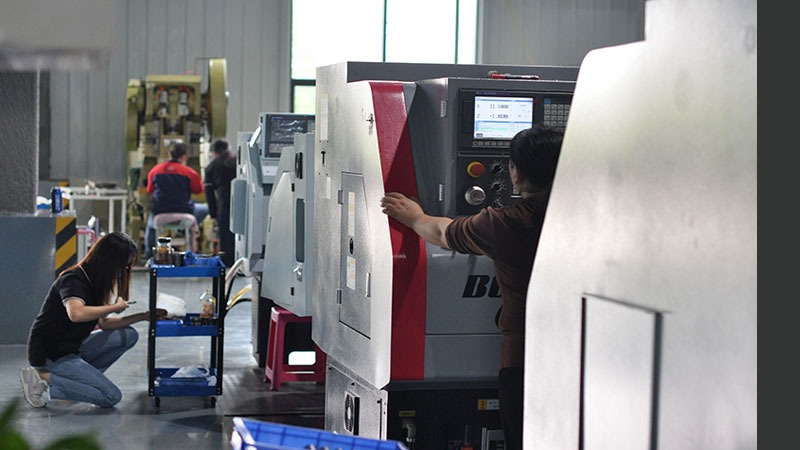
Established in 2013 in Jinhe Industrial Park, Baoji, Shaanxi, Velnora operates comprehensive in-house CNC turning, multi-axis milling, wire EDM, and metallurgical quality inspection labs.
Real-Time Digital Video Verification
Unlike traditional trading companies that hide supplier provenance, Velnora brings total visibility directly to the purchasing manager. Throughout your OEM/ODM production run, we document machine tool setups, centerless grinding, thread rolling passes, and optical CMM inspections through high-definition photos and video logs sent straight to your team prior to shipping.
Our engineering team is fluent in DIN, ISO, ANSI/ASME, and JIS fastener standards. We accept CAD models in STEP, IGES, and DWG formats, with comprehensive technical Design-for-Manufacturability (DFM) reviews returned in under 4 hours.
Frequently Asked Questions for Titanium Wheel Stud Sourcing
Detailed technical answers to common queries raised by automotive aftermarket brands, racing teams, and quality control engineers.
What titanium grade is recommended for automotive wheel studs, and why not pure titanium?
For safety-critical structural joints like wheel studs, brake caliper mounts, and steering knuckles, Grade 5 Ti-6Al-4V (also denoted as TC4) is mandatory. Commercially Pure (CP) Grade 2 titanium possesses a tensile strength of roughly 345–450 MPa, which is entirely insufficient for the cyclical shear, clamping, and bending loads experienced at the hub. Grade 5 is an alpha-beta alloy containing 6% aluminum and 4% vanadium, delivering minimum tensile strengths of 895–1050 MPa and yield strengths above 828 MPa, mirroring the mechanical capabilities of high-tensile Class 10.9 structural automotive steel bolts while cutting mass by 44%.
How does Velnora prevent thread galling during high-torque wheel nut installation?
Galling (cold welding) is a known phenomenon when identical passive metals rub under dry high-pressure contact. Velnora mitigates galling through three rigorous engineering practices: First, our threads are cold-rolled to achieve an ultra-smooth surface finish ($Ra \le 0.4 \mu m$), eliminating microscopic asperities. Second, we offer specialized Physical Vapor Deposition (PVD) surface treatments like DLC (Diamond-Like Carbon), TiN, or Type II electrolytic anodizing, which alters surface hardness and friction coefficients. Third, we specify and supply compatible high-pressure molybdenum disulfide or copper-free anti-seize lubricants with adjusted torque-tension calculation factors ($K$-factor of 0.12–0.15) for flawless, repeatable torquing cycles.
Can titanium wheel studs handle the intense heat transfer generated by carbon-ceramic or track brakes?
Yes. Grade 5 titanium exhibits exceptional thermal stability up to +400°C to +450°C without significant phase transformation or reduction in tensile yield strength. In fact, titanium has a notably lower coefficient of thermal conductivity ($\approx 6.7 \text{ W/m}\cdot\text{K}$) compared to chrome-moly steel ($\approx 42 \text{ W/m}\cdot\text{K}$) and aluminum ($\approx 130 \text{ W/m}\cdot\text{K}$). This property acts as a thermal barrier, limiting the transfer of dangerous brake disc heat into wheel bearings, hub grease, and sensitive wheel center seals during prolonged track sessions.
What are the recommended torque specs for titanium wheel studs and lug nuts?
Because titanium has a modulus of elasticity approximately half that of steel (114 GPa vs. 210 GPa), titanium fasteners stretch more elastically at a given load, storing clamping energy effectively. When installing Gr5 titanium wheel studs with quality anti-seize paste, torque should closely follow the vehicle OEM manufacturer specification (typically 110–135 Nm for M12 threads, and 140–160 Nm for M14 threads). We strongly advise using calibrated manual torque wrenches rather than pneumatic impact guns for the final seating to maintain precise clamping tension without over-stretching the fastener.
What documentation and quality control reports accompany custom OEM shipments?
Every OEM/ODM batch from Velnora is accompanied by complete quality assurance documentation: Raw Material Mill Test Certificates (EN 10204 3.1) confirming chemical composition (Al, V, Fe, C, N, H, O content) and mechanical tensile data; Full Dimensional Inspection Reports using coordinate measuring machines (Zeiss CMM) and optical thread profile projectors; and Certificate of Conformance (CoC). Non-Destructive Testing (NDT) reports, including ultrasonic flaw detection and dye penetrant testing, can also be provided upon client specification.
What is the minimum order quantity (MOQ) and production turnaround for custom designs?
For custom OEM/ODM titanium wheel studs requiring new CNC tooling or specific thread rolling dies, our standard MOQ is typically 100 to 300 pieces per dimensional specification. Prototype sample runs (20–50 pieces) can be scheduled for engineering fitment tests in approximately 10 to 15 business days. Mass production runs generally dispatch within 20 to 30 days after drawing sign-off, supported by express air freight (DHL, FedEx, UPS) or consolidated sea freight.
Accelerate Your Product Line with Baoji's Premier Titanium Supplier
Whether you require private-labeled titanium wheel studs for Porsche, BMW, or trackday racing platforms, or complete custom chassis hardware machined to your STEP drawings, our machinists deliver perfection within tolerances of ±0.005mm.