Precision CNC Titanium Components & Fasteners
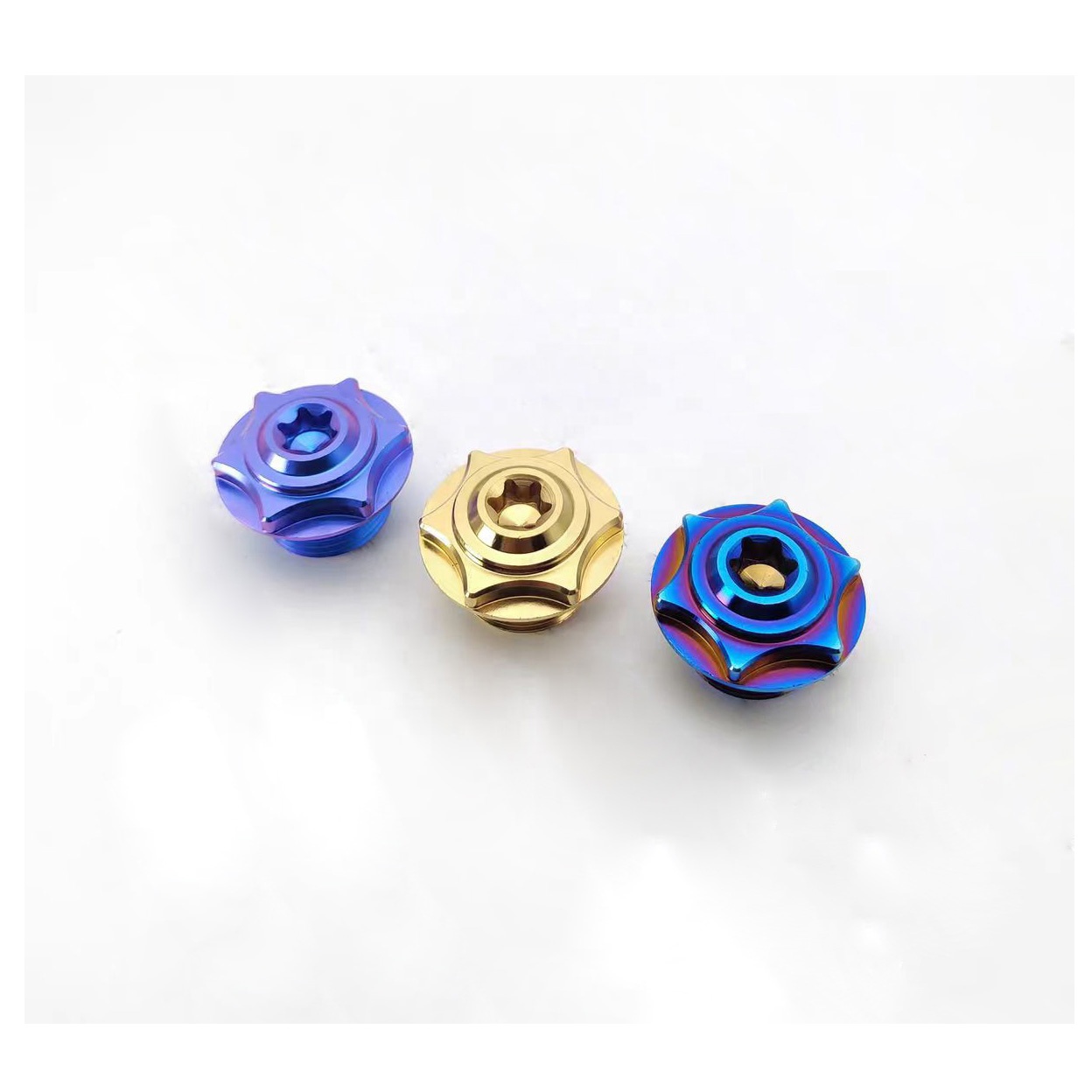
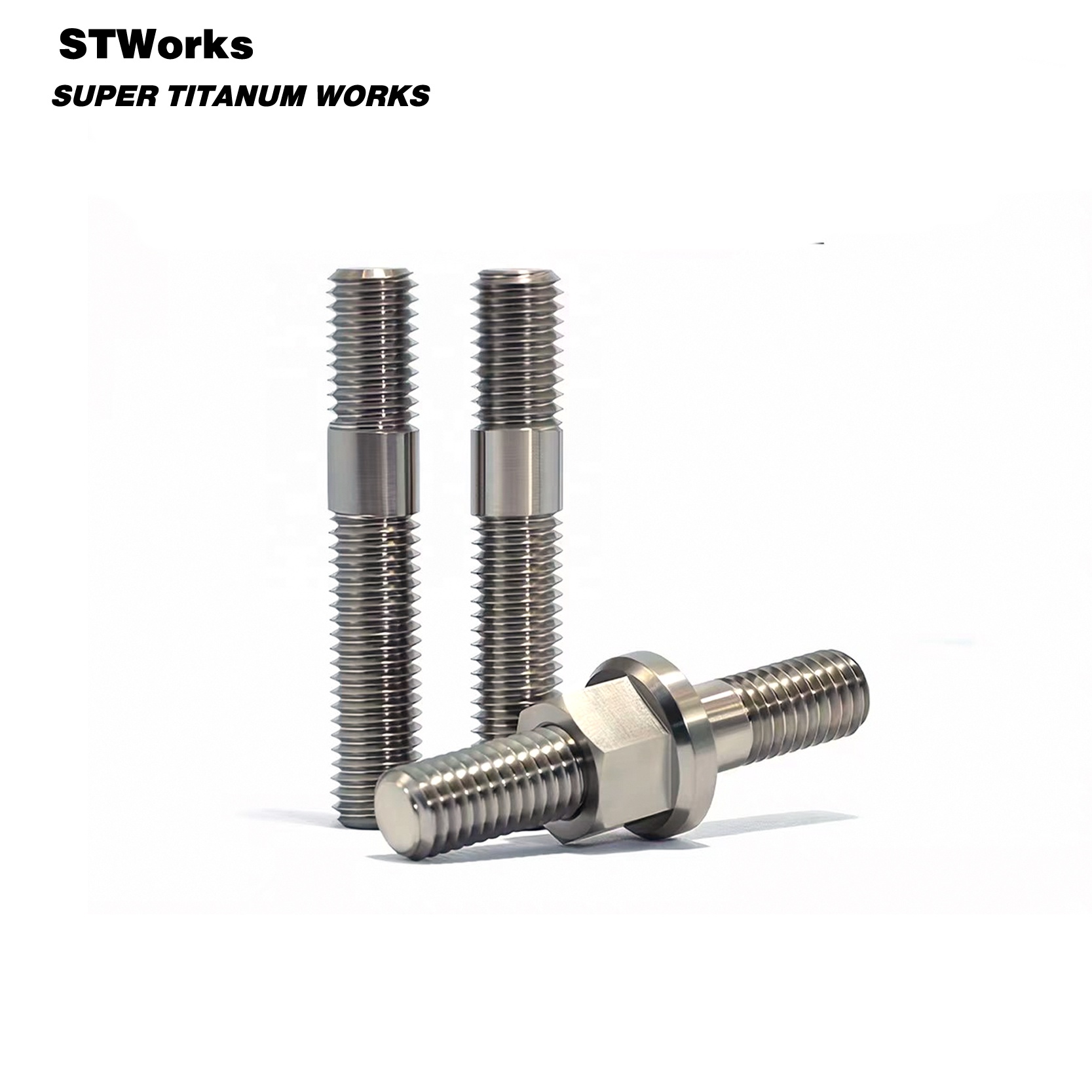
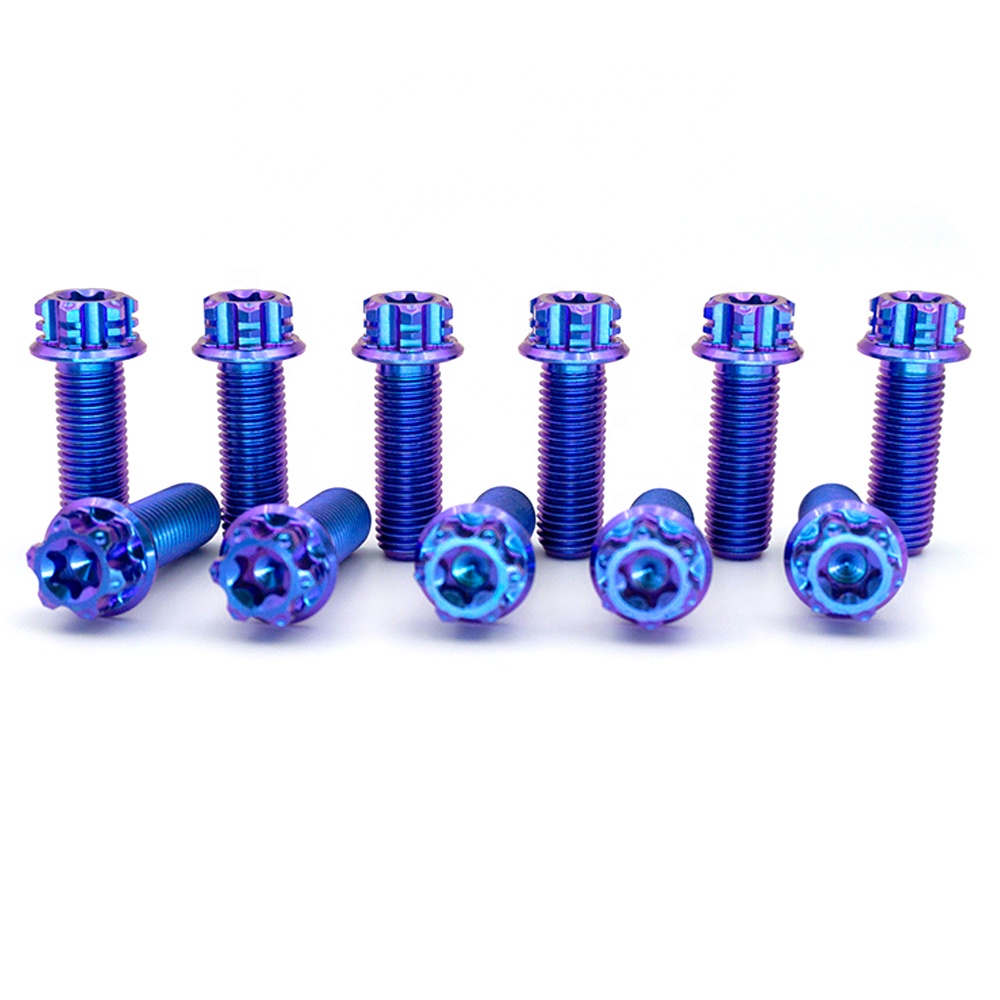
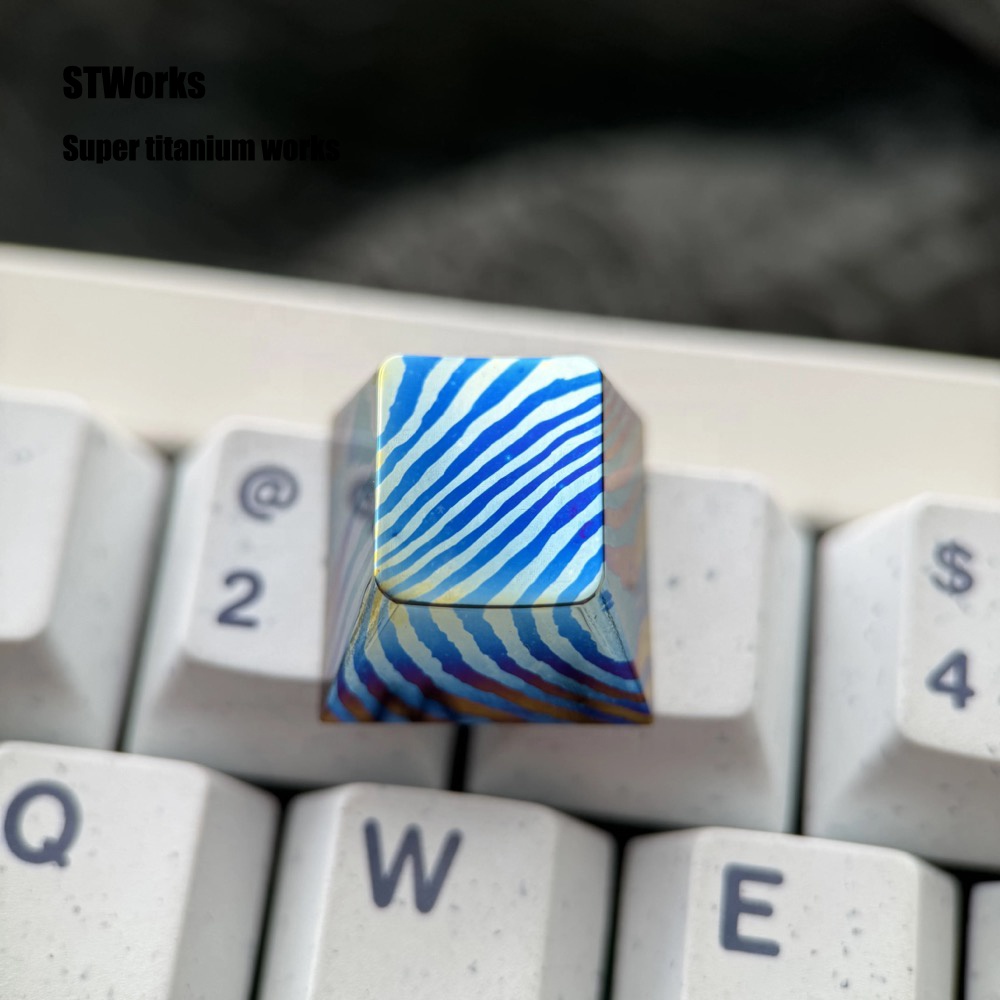
Machined from certified Ti-6Al-4V Grade 5 titanium bars to DIN, ANSI, and ISO tolerances. Explore 8 high-performance products ready for custom OEM/ODM production batches.
Kinetic Inertia & Reciprocating Mass Dynamics in Titanium Retainers
In high-performance internal combustion engines—ranging from Formula 1, MotoGP, and NHRA drag racing to precision aftermarket turbocharged builds—the valvetrain operates as a complex, high-frequency oscillatory harmonic system. At operational speeds exceeding 9,000 RPM, the mechanical valves, locks (keepers), and spring retainers cycle back and forth dozens of times every single second. The primary limiting factor in increasing maximum engine speed (redline) without inducing catastrophic valve float is reciprocating mass.
Traditional automotive engine configurations have long relied on quenched and tempered chromoly steel (such as 4140 or 4340 alloy steel) for valve spring retainers due to its raw structural strength. However, steel's high mass density (approximately 7.85 g/cm³) generates severe inertial resistance during rapid deceleration and directional reversal at peak valve lift. According to Newton's Second Law ($F = m \cdot a$), the inertial force exerted onto the valve stem and camshaft lobes scales directly with the mass of the reciprocating assembly. When the inertial opening force exceeds the pre-load and dynamic spring rate of the valve springs, the valve assembly separates from the cam profile—a failure phenomenon known as valve float.
42%–45% Reciprocating Mass Reduction
By substituting Grade 5 Ti-6Al-4V titanium (density 4.43 g/cm³) for alloy steel, valvetrain inertia drops precipitously. This enables elevated RPM thresholds, sharper throttle response, and reduced mechanical friction across the rocker arms and cam lobes.
Harmonic Resonance Dampening
Lighter retainers shift the natural resonant frequency of the spring-retainer assembly well beyond common operational engine harmonic zones. This suppresses destructive spring surge, violent seat bounce, and erratic sealing ring wear.
Decreased Spring Seat Pressure Demand
Reducing inertial momentum allows engine tuners to run lower static spring pressures without risking valve separation. Lower seat pressure directly diminishes parasitic friction losses, timing belt stretch, and camshaft wear.
Furthermore, seat bounce—where the valve snaps back into the cylinder head seat and momentarily rebounds into the combustion chamber—leads to sudden compression leakage, power drop-offs, and valve-to-piston collisions. OEM and ODM titanium retainers engineered by Velnora Titanium Industry precisely optimize the structural taper angle (such as standard 7-degree, heavy-duty 10-degree, or custom radius bead-lock configurations) and pocket stepped diameters to securely anchor both dual and conical beehive spring designs, dampening destructive kinetic energy at the valve head interface.
Engineering Material Matrix: Titanium vs. Alternative Alloys
Selecting the optimal alloy for valvetrain retainers requires balancing ultimate tensile strength, yield limits, young's modulus (elasticity), fatigue endurance under cyclical compression, and surface wear resistance. While 7075-T6 aluminum is occasionally used in low-budget, single-event qualifying runs due to its light weight, it exhibits a distinct lack of a definitive fatigue endurance limit and suffers extreme micro-fretting under steel spring contact. Chromoly steel offers ruggedness but incurs an unacceptable inertial mass penalty. Grade 5 Ti-6Al-4V (TC4) remains the undisputed gold standard for severe-duty motorsport engineering.
| Physical / Mechanical Property | Grade 5 Ti-6Al-4V (Velnora Core) | 4140 Chromoly Steel | 7075-T6 Billet Aluminum | Beta-C Titanium (AMS 4957) |
|---|---|---|---|---|
| Density (g/cm³) | 4.43 | 7.85 | 2.81 | 4.82 |
| Ultimate Tensile Strength (MPa) | 950 – 1050 | 900 – 1020 | 570 | 1150 – 1250 |
| Yield Strength (MPa) | 880 – 920 | 750 – 850 | 505 | 1050 – 1100 |
| Elastic Modulus (GPa) | 114 | 210 | 71 | 105 |
| High-Cycle Fatigue Limit (10⁷ Cycles) | 510 MPa | 480 MPa | 160 MPa (Degrades rapidly) | 580 MPa |
| Thermal Stability Threshold | Up to 450°C (Stable) | Up to 400°C | Fails above 150°C | Up to 480°C |
| Primary B2B Application | Pro Racing Retainers, Rods, Bolts | Heavy Industrial Fasteners | Short-run Drag Qualification | Formula 1 / Extreme Aerospace |
Grade 5 titanium features an alpha-beta dual crystal structure. The addition of 6% aluminum stabilizes the alpha phase to enhance high-temperature tensile capacity, while 4% vanadium stabilizes the ductile beta phase, optimizing structural toughness. For high-RPM applications where valve springs generate extreme localized friction and thermal heat (transferred up through the valve stem and guide), Ti-6Al-4V provides an exceptional strength-to-weight ratio that maintains structural geometry without embrittlement or creeping under continuous spring pressure.
Precision OEM/ODM Machining & Micro-Geometry Control
A valve spring retainer may appear geometrically simple, but it is one of the most mechanically demanding components in an engine. An internal taper angle variance as slight as 0.1° can cause the valve collets (locks) to seat unevenly. This creates localized stress concentrations (point loading) that shear the valve keeper grooves, dropping the valve into the cylinder bore with catastrophic consequences.
At Velnora Titanium Industry, our manufacturing facility in Baoji employs multi-axis CNC turn-mill machining centers equipped with high-rigidity spindles and live tooling. We maintain geometric runout between the inner keeper taper and outer spring register step within ±0.005 mm. Every collet taper angle is inspected via optical profile projectors and coordinate measuring machines (CMM) to guarantee complete 100% surface engagement with matching 7-degree, 10-degree, or Super Alloy keepers.
- Collet Taper Angle Precision: Controlled to ±0°03' to eliminate fretting and point-loading.
- Spring Pocket Profiling: Precision-radiused step transitions eliminate internal stress notches.
- Surface Roughness (Ra): Diamond micro-turned contact surfaces achieve Ra 0.2 μm smoothness.
- Spring Compatibility: Tailored for Beehive, Conical, Dual Spring with Damper, and PAC/PSI setups.
Surface Fretting Prevention: Tribological Coatings
Because steel valve springs possess high hardness (55–60 HRC) and twist slightly under compression, contact fretting can occur on bare titanium surfaces over extended operating hours. Velnora offers specialized proprietary surface finishing treatments:
Diamond-Like Carbon (DLC) & PVD Nitriding
Physical Vapor Deposition (PVD) applies a ultra-thin 2–3 μm layer of Titanium Nitride (TiN) or DLC. This elevates surface hardness past 2,500 Vickers (HV), producing a frictionless, mirror-like barrier immune to abrasive spring scrubbing.
Micro-Arc Oxidation (MAO) & Hard Anodizing
Creates an integrated ceramic oxide conversion layer grown from the parent titanium metal. Unlike electroplating, it will never flake or delaminate under severe thermal cycling and high-frequency valve spring vibrations.
Future Procurement & Technological Trends (2025–2030)
As the international automotive and powersports landscape shifts towards ultra-efficient forced-induction architectures and electrified performance hybrids, valvetrain development is undergoing a technological transformation. B2B procurement managers, racing engine rebuilders, and high-volume performance brands must adapt to several evolving sourcing criteria:
1. High-Revving Hybrid ICE Powertrains
Modern hybrid supercars and hypercars combine electric torque with downsized, extreme-revving internal combustion engines operating above 10,000–12,000 RPM. This demands unprecedented valvetrain lightweighting to maintain valve timing accuracy during sudden high-g transitional loading.
2. Digital Quality Traceability (MTR 3.1)
Global aftermarket distributors now mandate aerospace-grade raw material traceability. Sourcing low-cost titanium from unverified suppliers introduces risks of alpha-case brittleness and internal voids. Complete Mill Test Reports (EN 10204 3.1) and ultrasonic flaw detection are becoming universal baseline requirements.
3. Direct CAM-to-Spindle Agile Prototyping
Long tooling lead times are disappearing. Tier-1 racing clients require CAD/CAM-integrated suppliers capable of transitioning from STEP/IGES digital models to dynamometer-ready physical titanium test retainers in 5 to 7 days without custom stamping dies or dedicated hard tooling.
Additionally, valvetrain designers are transitioning rapidly from traditional multi-spring configurations to single beehive springs. Because beehive springs taper towards the top, the outer retainer diameter is significantly smaller. When manufactured from Grade 5 titanium, a modern beehive retainer weighs as little as 8 to 11 grams—roughly a 60% mass savings over conventional OEM steel retainers. Sourcing partners must maintain specialized multi-spindle Swiss-type CNC lathes and precision wire EDM to machine these delicate, thin-walled geometries without inducing residual chucking stress or thermal distortion.
Enterprise Strengths & Factory Infrastructure: Velnora Titanium Industry
Headquartered in Baoji, Shaanxi Province—globally acknowledged as China's Titanium Valley—Velnora Titanium Industry Co., Ltd. has specialized in the precision machining, metallurgy, and export of Grade 5 (Ti-6Al-4V), Grade 2, and specialized Timascus (Mokuti) components since 2013. We do not act as an intermediary broker; we operate our own precision manufacturing park with comprehensive, in-house turning, milling, and wire EDM machinery.
Our localized advantage inside Baoji's Titanium Valley gives us immediate, direct access to premium sponge titanium and certified aerospace bar stock melted under vacuum arc remelting (VAR) furnaces. This ensures 100% density, zero internal micro-porosity, and strict compliance with AMS 4928 and ASTM B348 specifications. What truly differentiates Velnora from ordinary manufacturers is our complete digital transparency protocol: during active production runs, our technicians send real-time CNC machining photos and high-definition video inspection clips directly to procurement managers before batch packaging and air freight dispatch.
Whether you require standard DIN/ANSI/JIS titanium fasteners, 12-point exhaust studs, lightweight bicycle stem bolts, or fully custom OEM valve spring retainers with proprietary lock angles, our team of dedicated metallurgical engineers reviews your STEP/IGES/PDF drawings and provides a comprehensive DFM (Design for Manufacturability) review within 4 business hours.
Frequently Asked Questions: Sourcing Titanium Valve Retainers
Why is Grade 5 (Ti-6Al-4V) titanium preferred over steel for racing valve retainers?
Grade 5 titanium provides an exceptional strength-to-weight ratio. It weighs approximately 44% less than 4140/4340 chromoly steel while delivering an ultimate tensile strength exceeding 950–1000 MPa. In a valvetrain, cutting retainer mass dramatically reduces the kinetic reciprocating weight that the valve spring must control at high RPM. This eliminates valve float, raises the engine's safe rev limit, curbs timing drift, and minimizes valvetrain friction losses across the camshaft lobes.
How does Velnora prevent contact fretting and wear between steel springs and titanium retainers?
High-tensile steel valve springs possess high hardness (approx. 55–60 HRC) and can cause abrasive fretting on bare titanium retainers during high-RPM cyclical rotation. To prevent this, Velnora offers specialized surface engineering treatments: Physical Vapor Deposition (PVD) application of Diamond-Like Carbon (DLC), Titanium Nitride (TiN), or Chromium Nitride (CrN). Additionally, we provide thermal nitriding and micro-arc oxidation (MAO), which creates a glass-smooth, ultra-hard ceramic surface layer exceeding 2,500 HV that completely isolates the spring from raw titanium contact.
What lock taper angles and keeper configurations can be custom machined?
We machine all standard and proprietary valve lock configurations. These include standard 7-degree OEM profiles, heavy-duty 10-degree locks for drag and circuit racing, 8-degree radius bead locks, and specialized Super Alloy multi-groove configurations. Every internal taper is turned using multi-axis live tooling and verified with optical comparators to ensure full conical contact along the entire length of the collet, avoiding catastrophic localized point-stress loading.
Can you produce retainers compatible with aftermarket dual or beehive springs (e.g., PAC, PSI, Supertech)?
Yes. We regularly engineer and manufacture custom retainer batches matched specifically to major high-performance spring designs. Whether you need a stepped locator for a dual spring setup with a flat inner damper or a compact, lightweight pocket for an oval-wire conical beehive spring, we machine the inner and outer spring step registers to your precise fitment tolerances (±0.01 mm) to eliminate spring wander at high lifts.
What certifications and quality inspection documents accompany B2B export shipments?
Every production batch includes an EN 10204 Type 3.1 Mill Test Certificate guaranteeing chemical composition and mechanical tensile limits. In addition, our QA department provides CMM full-dimensional measurement sheets, surface roughness (Ra) profilometer reports, and 100% thread gauge verification records. Third-party supplier verification reports and on-site factory assessments are readily accessible for international audit compliance.
What is the typical Minimum Order Quantity (MOQ) and production turnaround for custom retainers?
For custom OEM/ODM valve spring retainers, our standard initial trial order MOQ is generally 50 to 100 pieces (typically 3 to 6 engine sets, depending on cylinder count). For repeat high-volume production, batch runs of 500 to 5,000+ pieces benefit from tiered volume pricing. Prototype samples from customer drawings (STEP/IGES/PDF) are typically machined, measured, and shipped via express air courier within 7 to 10 business days.
Ready to Engineer or Source Precision Titanium Retainers?
Submit your 2D/3D CAD models, spring dimensions, or sample specifications to Velnora's engineering team in Baoji. Receive a detailed DFM analysis, volume pricing schedule, and production schedule within 4 hours.