Featured Titanium Fasteners & Precision CNC Hardware
Direct from our Baoji precision machining facility: Inspect the production catalog below, featuring rolled threads, high-precision broached drives, and optical-bench verification.
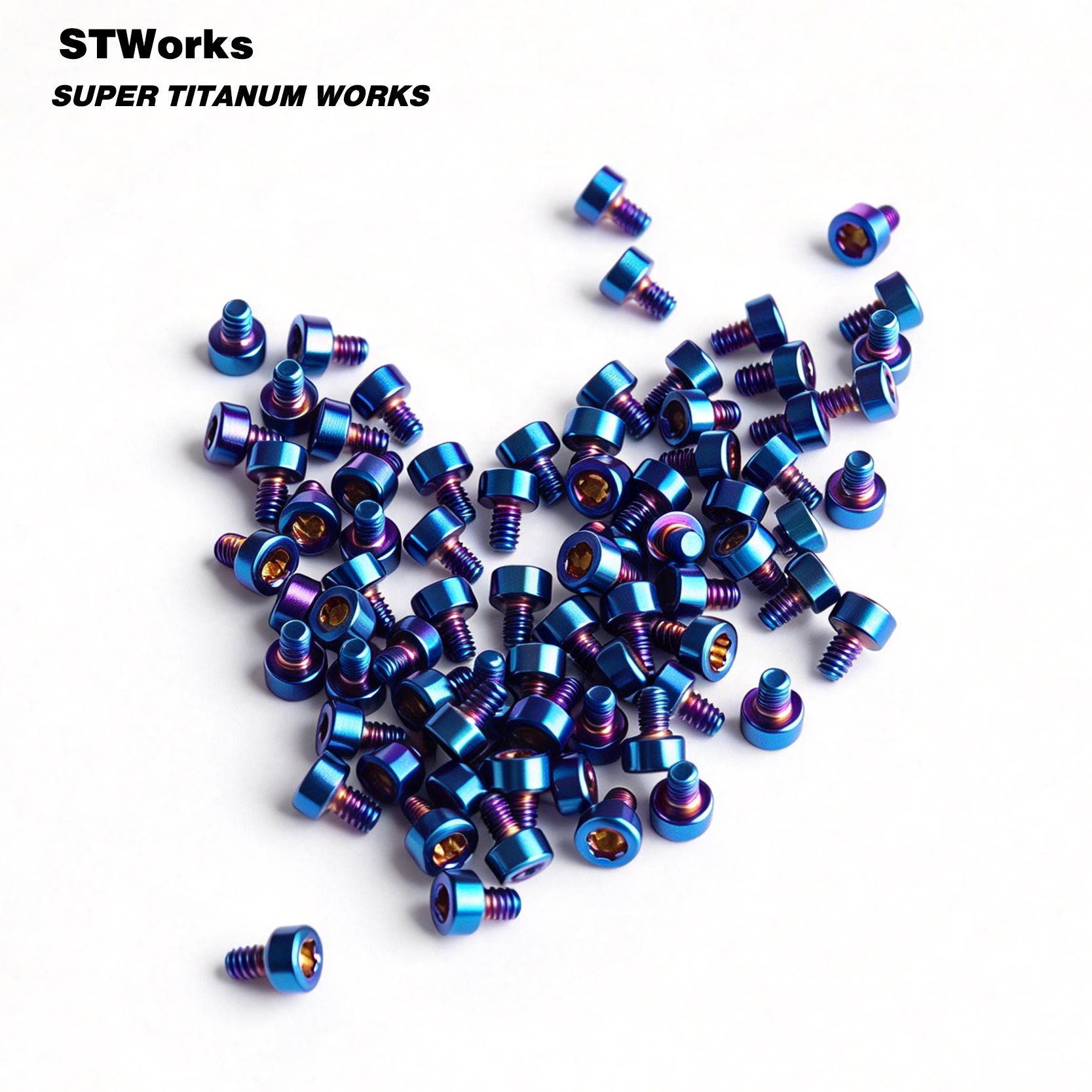
Customized Titanium Screws Mini Screws M2 M2.5 Cylinder Head Bolt DIN912 Torx Micro Machine Screw
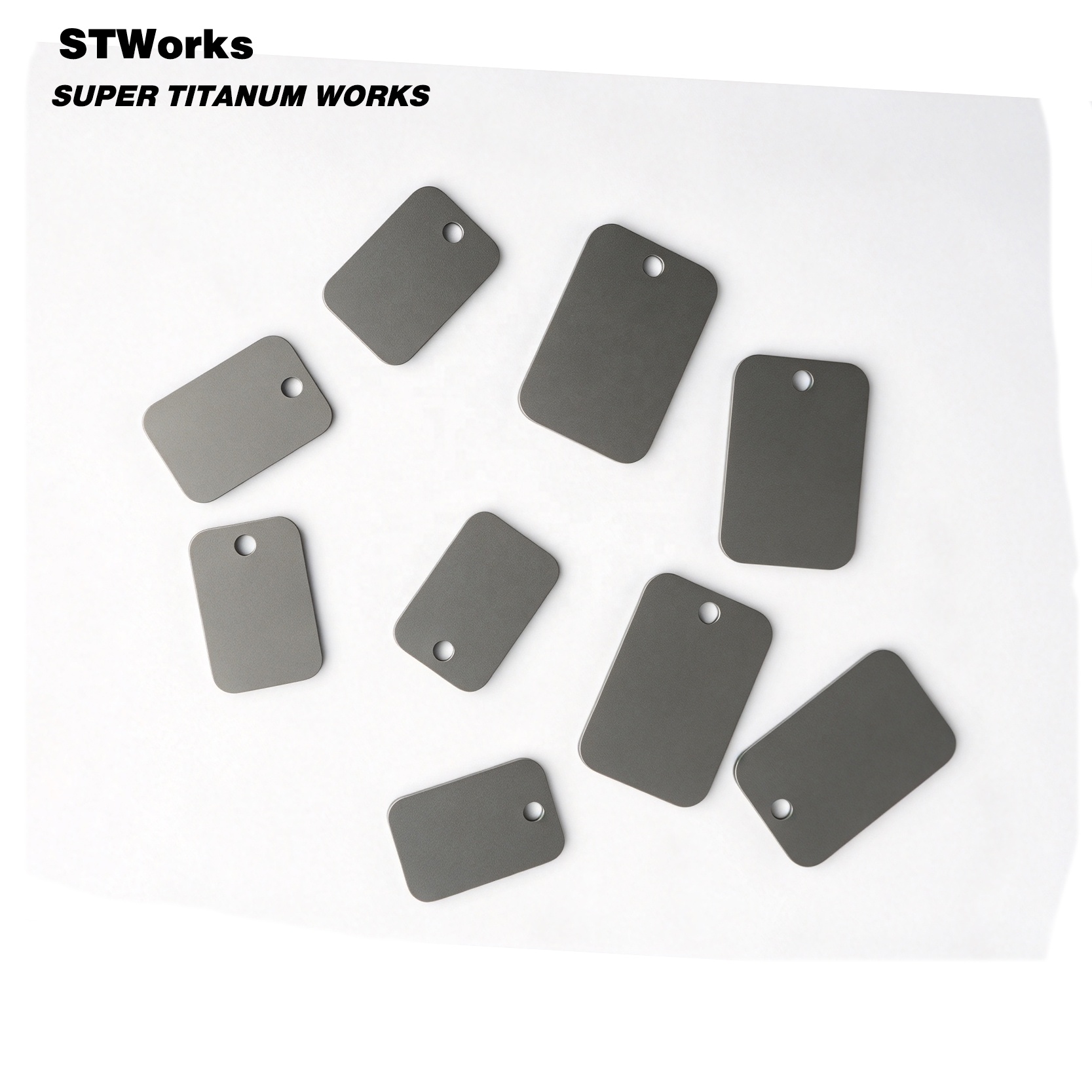
Custom Grade 5 Titanium Plate Tag Sandblasted Free Laser Engraved Logo Blank Titanium
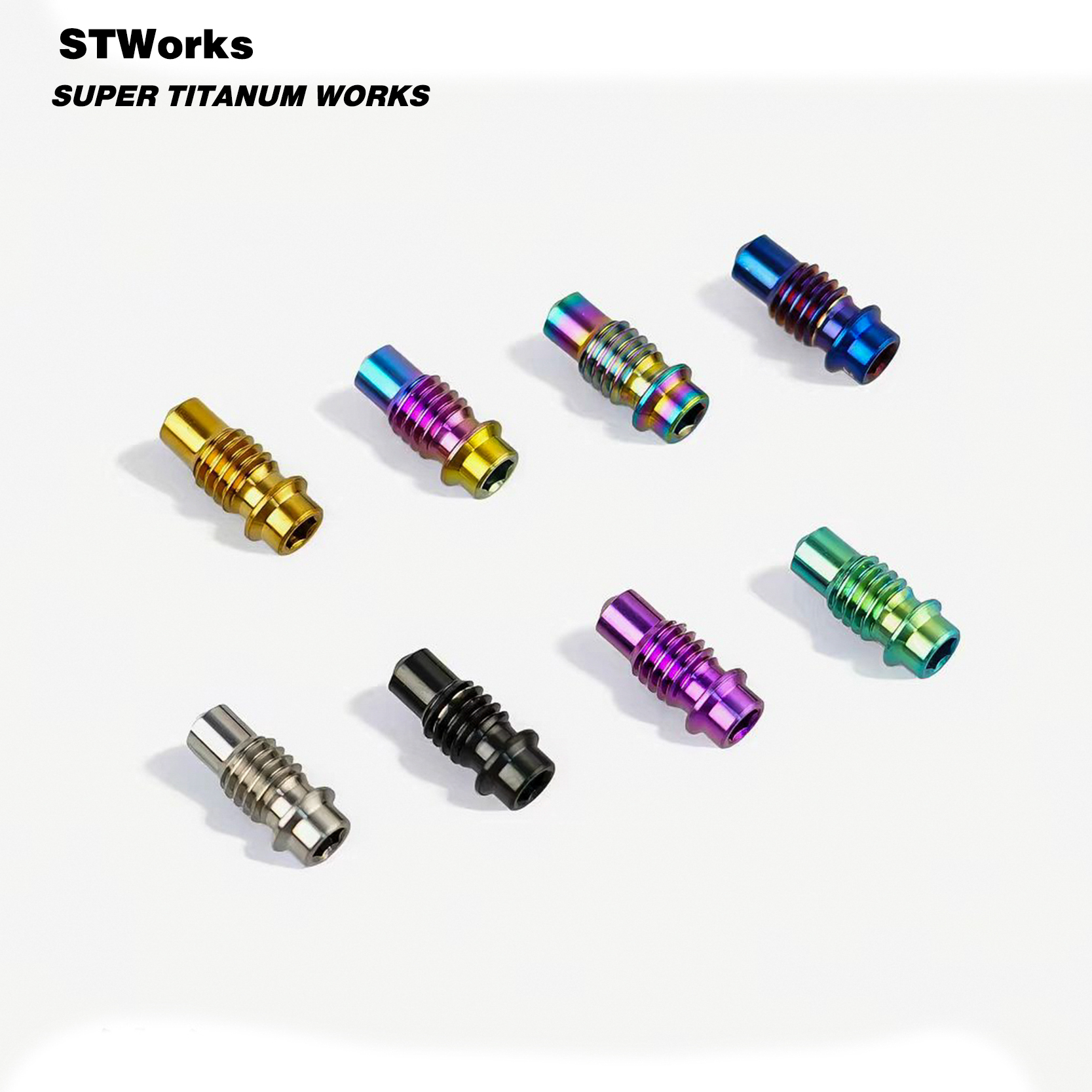
TC4 Titanium Caliper Bleed Port Screw for Shimano Road Disc Brake Caliper Cycling Upgrades
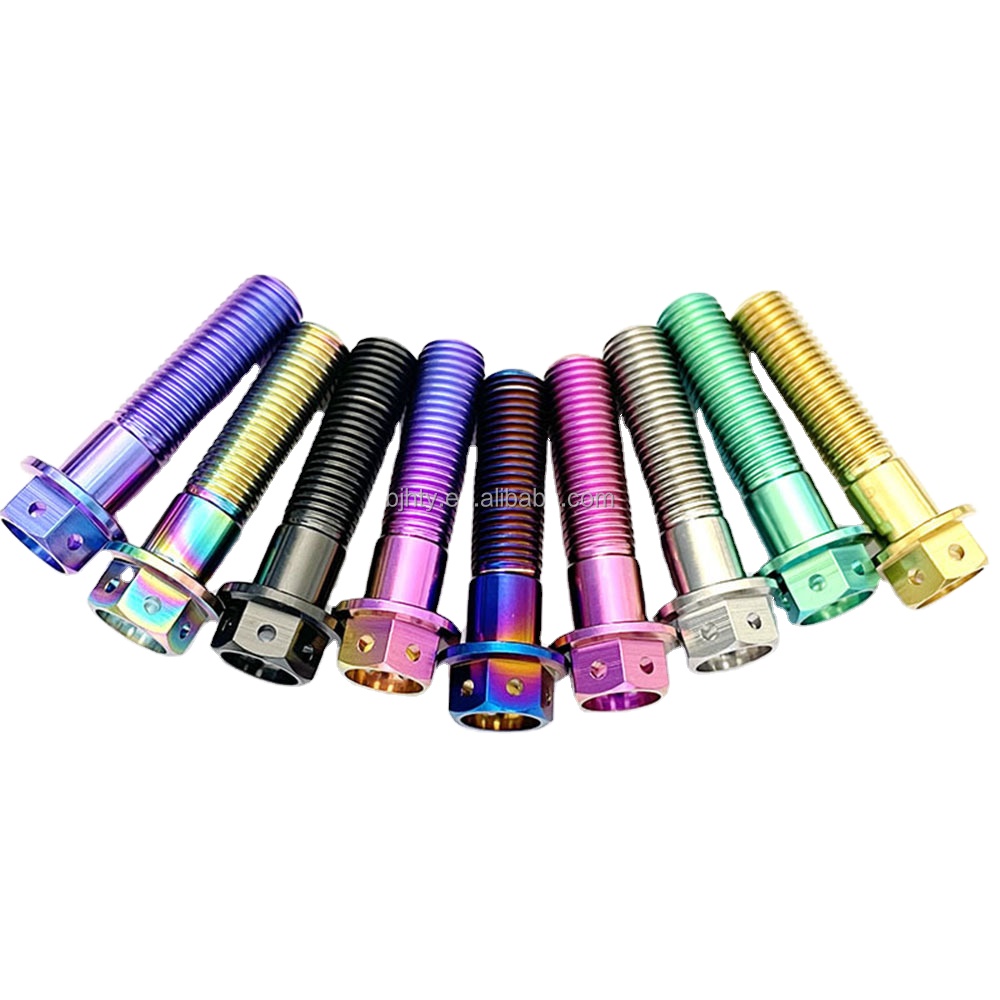
Titanium Double Drive Head Flanged Hex Bolts for Motorcycle Race Spec M8/M10 Drilled Rotor Bolts
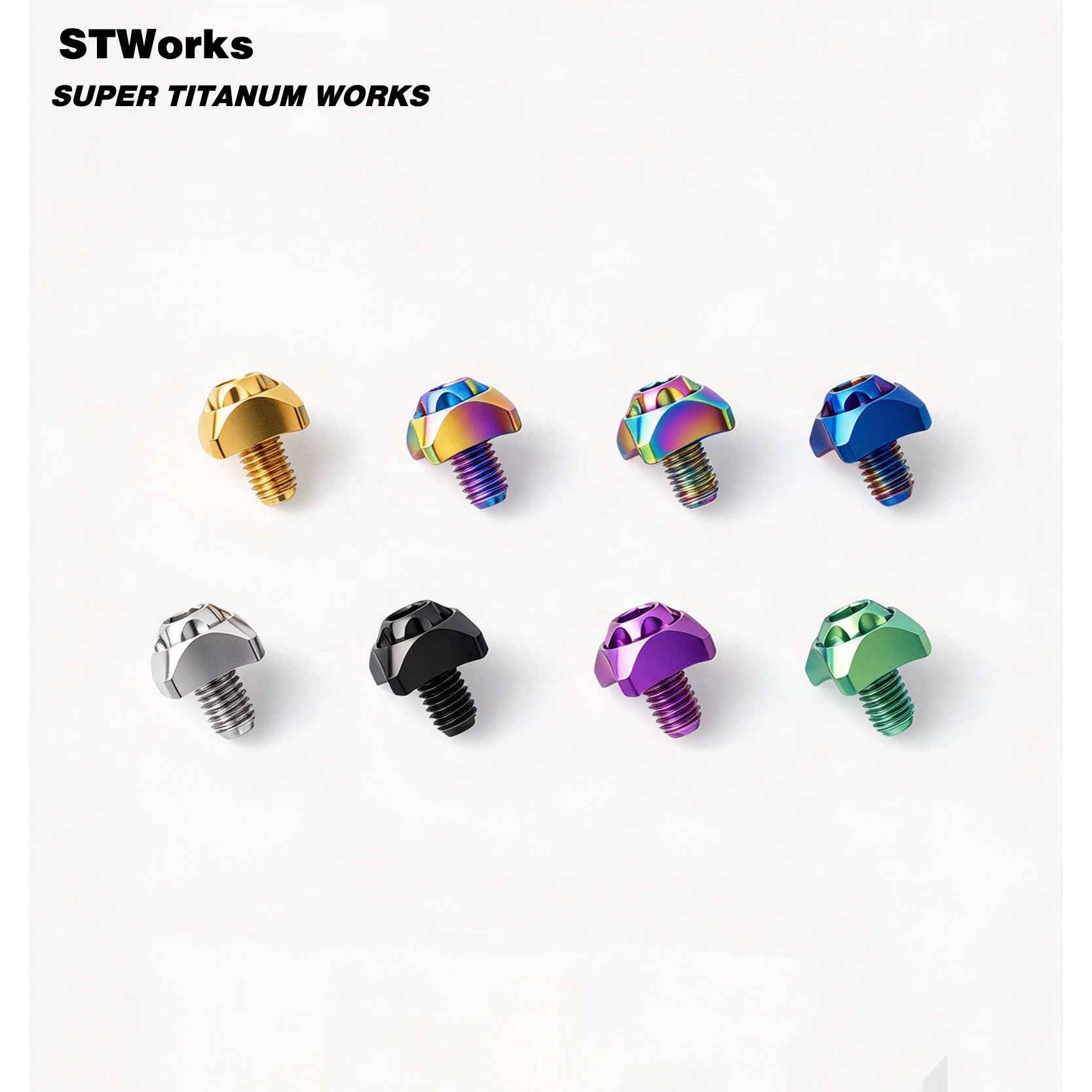
Titanium Screw & Shim Set for Shimano SRAM Front Derailleur Lightweight Cycling Hardware
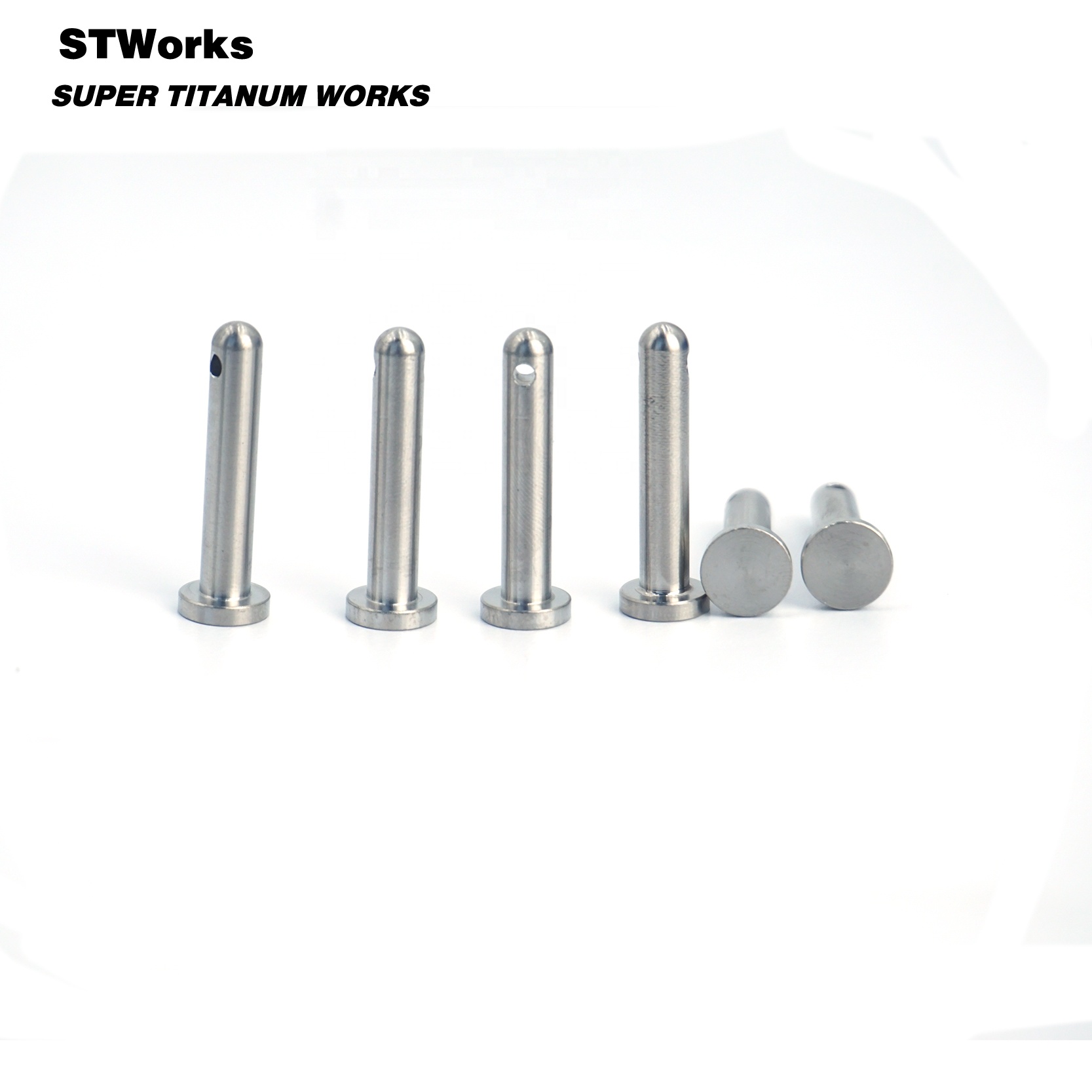
Titanium Alloy Clevis Pins Flat Head With Hole Cylindrical Locating Dowel Pins M3–M20
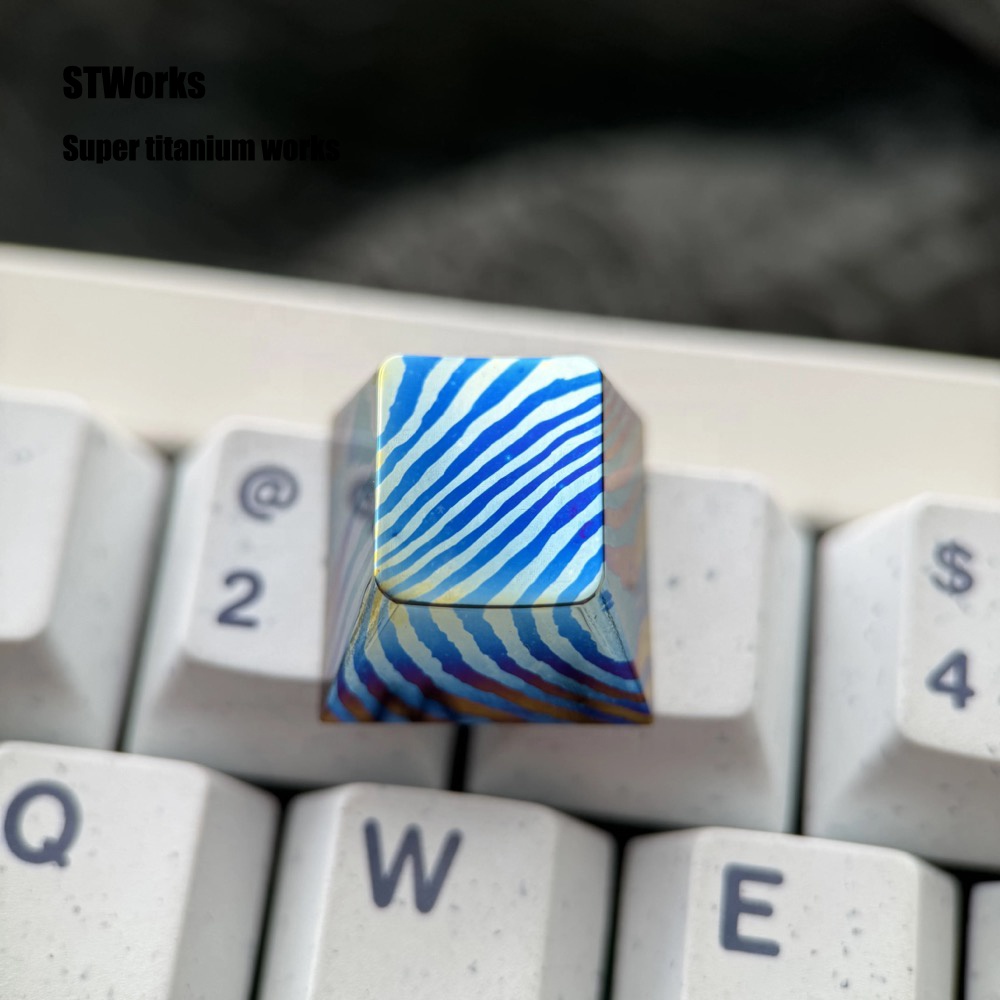
Timascus Alloy Mokuti CNC Parts Computer Keyboard 1U ESC Mechanical Keycaps Custom Anodized
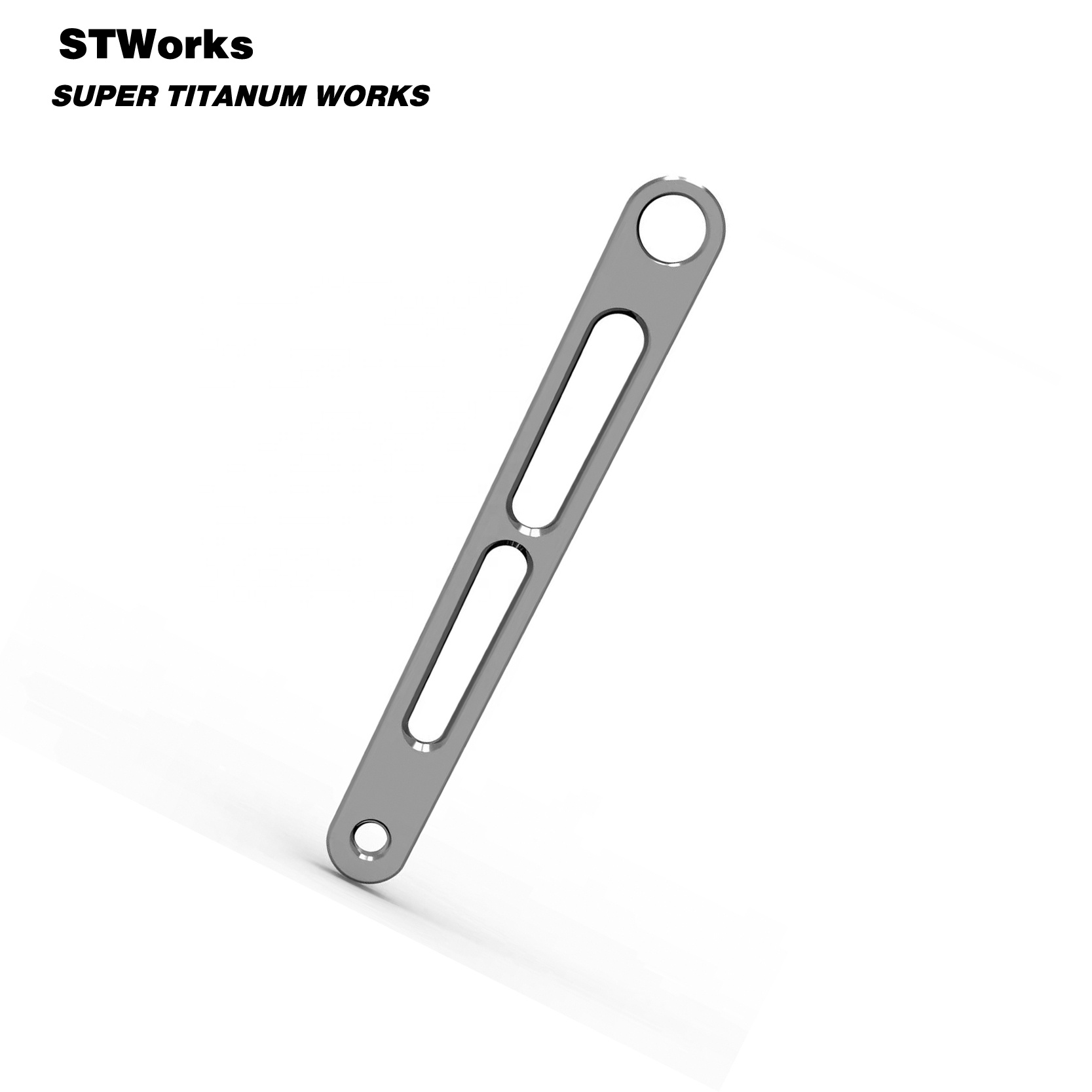
Titanium CNC Machined Multi-Function Spotlight Bracket Auxiliary Light Mount for Dirt Bike & E-Scooter
Rotor Joint Integrity: Metallurgical & Mechanical Performance in Braking Assemblies
Disc brake rotor bolts are among the most safety-critical structural fasteners in any vehicular architecture, whether installed on an elite UCI WorldTour carbon disc road frame, an international Superbike paddock machine running twin 320mm floating discs, or a bespoke hypercar carbon-ceramic brake (CCB) system. In these dynamic operational regimes, brake rotor bolts are not merely static clamping elements; they act as primary torque transfer pins subjected to compound cyclic stresses. These include high-frequency shear loads during threshold deceleration, intense thermal soak cycles exceeding transient interface temperatures of 600°C, and severe axial preload fluctuations caused by the thermal expansion differential between cast iron / carbon matrix rotor hats and forged aluminum / magnesium wheel hubs.
1. Thread Rolling vs. Thread Cutting: The Microstructural Difference
A fatal point of failure in low-grade titanium fasteners is thread cutting. When metric rotor bolt threads (such as M5x0.8, M6x1.0, M8x1.25, or M10x1.25) are machined via subtractive CNC single-point threading or chasing dies, the natural grain boundaries of the extruded titanium bar are severed perpendicularly. This creates microscopic notch concentrations along the thread roots, drastically accelerating fatigue crack propagation under the pulsating brake torque cycles inherent to ABS actuation and aggressive pad bite.
At our Baoji production facility, all Velnora OEM/ODM titanium rotor bolts feature 100% cold-rolled threads executed under hydraulic pressures exceeding 250 kN. Thread rolling plastically deforms the Grade 5 (Ti-6Al-4V) crystal matrix without slicing through the longitudinal grain lines. The grain flow contours continuously around the thread crests and thread root radii, inducing significant beneficial compressive residual stresses along the entire engagement length. Comprehensive internal Wohler S-N fatigue benchmark evaluations demonstrate that rolled-thread titanium rotor bolts sustain over 3.8x greater high-cycle fatigue lifespans than cut-thread equivalents under identical alternating tensile-shear loading amplitudes.
| Mechanical / Thermal Metric | Velnora Gr5 Ti-6Al-4V (TC4) | Class 10.9 Alloy Steel | Class 8.8 Structural Steel | 7075-T6 Billet Aluminum |
|---|---|---|---|---|
| Density (g/cm³) | 4.43 (-44% vs Steel) | 7.85 (Baseline) | 7.85 (Baseline) | 2.81 (-64% vs Steel) |
| Ultimate Tensile Strength (MPa) | 950 – 1050 | 1040 | 800 | 570 (Unsafe for Rotors) |
| 0.2% Yield Strength (MPa) | 880 – 920 | 940 | 640 | 505 |
| Thermal Conductivity (W/m·K) | 6.7 (Thermal Insulator) | 42.6 (Conductive) | 50.2 (Conductive) | 130 (Extreme Heat Transfer) |
| Corrosion / Salt Spray Endurance | Immune (> 2,000h ASTM B117) | Poor (Requires Zinc/Phosphate) | Poor (Oxidizes rapidly) | Galvanic Pitting Prone |
| Dynamic Thermal Shock Tolerance | Stable up to 450°C continuous | Tempering degradation > 350°C | De-rates sharply > 250°C | Precipitates anneal > 150°C |
2. Heat Barrier Dynamics & Brake Fluid Preservation
One profound technical advantage of Ti-6Al-4V titanium rotor bolts often overlooked by general procurement agents is its exceptionally low coefficient of thermal conductivity (k ≈ 6.7 W/m·K). Compare this to standard chromoly steel fasteners (k ≈ 42.6 W/m·K) and aluminum mounting hardware (k > 130 W/m·K). In motorsport and downhill MTB braking, the friction interface between pad and rotor reaches flash temperatures exceeding 750°C. Fasteners with high thermal conductivity act as super-conductors, channeling intense thermal spikes directly into the wheel bearing races, axle hubs, and surrounding hydraulic caliper fluid.
By specifying Velnora Grade 5 titanium rotor bolts, engineers effectively install a micro-metallurgical thermal barrier. Titanium's thermal resistance dramatically diminishes the conduction rate into the wheel hub assembly, preventing localized grease breakdown within wheel bearings and mitigating the catastrophic risk of boiling hydraulic DOT or mineral fluid in high-frequency braking corners.
3. Clamp Load, Tightening Torque & Galling Prevention
Because titanium has a modulus of elasticity of approximately 114 GPa—roughly half that of carbon steel (210 GPa)—a titanium rotor bolt elastically elongates twice as much as a steel bolt under the same axial preload clamp force. This compliance provides superior retention of clamping torque under severe dynamic thermal expansion and contraction cycles. However, improper assembly torque calculation without considering thread friction can compromise joint integrity.
The relationship between torque ($T$), nominal bolt diameter ($d$), and clamped axial preload ($F_p$) is governed by the standard nut factor equation:
T = K · d · Fp
Titanium-to-aluminum or titanium-to-steel contact pairs exhibit higher friction coefficients when unlubricated, introducing galling (cold-welding) vulnerability if torqued dry with pneumatic impact guns. To ensure repeatable B2B quality control, Velnora manufactures titanium rotor bolts with an engineered Ra 0.4 μm thread root finish and offers proprietary factory pre-coatings, including micro-encapsulated medium/high-strength threadlockers, MoS2 dry film lubricants, or physical vapor deposition (PVD) titanium nitride (TiN) / diamond-like carbon (DLC) finishes that reduce the tightening friction coefficient ($K$) to a reliable 0.12–0.15 range.
Future Procurement Trends for Titanium Rotor Hardware
How tier-1 automotive suppliers, high-end motorcycle builders, and bicycle OEMs are navigating supply-chain, regulatory, and metallurgical shifts over the next five years.
EV Rotational Inertia Demands
With electric vehicles and high-power electric motorcycles requiring maximal battery efficiency, reducing rotating and unsprung wheel weight has transitioned from an exotic racing obsession to an OEM range-optimization imperative. Titanium rotor bolts yield immediate rotational inertia reductions that directly lower energy expenditure in acceleration-deceleration duty cycles.
Hybrid Forged-Blank Economics
Traditional B2B procurement viewed titanium rotor bolts as cost-prohibitive due to excessive chip-scrap ratios during CNC subtractive turning. The market is aggressively pivoting to suppliers like Velnora utilizing warm-heading and cold-forging to form near-net bolt blanks prior to final CNC thread rolling, driving unit purchase prices down toward parity with high-tier coated chromoly steel.
EN 10204 3.1 Digital Traceability
Global supply chain auditing now heavily disfavors generic trading houses lacking ingot-level provenance. Institutional buyers demand full chemical composition spectrum analysis, vacuum arc remelting (VAR) certifications, and heat-lot specific batch test reports conforming to strict aerospace material specifications (AMS 4928 and ASTM B348).
Rotor Bolt Geometric Evolution: Weight Optimization & Safety Redundancy
The physical geometry of rotor bolts has undergone radical refinement. Where older assemblies relied on heavy, high-profile standard hex head bolts, modern engineering leverages high-density computational FEA (Finite Element Analysis) to strip parasitic mass while maximizing interfacial clamping contact area.
Double-Drive Flanged Geometries
Integrating an external low-profile 12-point or hex flange with a deep internal Torx (T25, T30, T40) or hex broached socket. This dual-drive configuration permits rapid air-tool installation during assembly-line production, while safeguarding against stripped sockets during trackside maintenance in wet, debris-heavy paddocks.
Cross-Drilled Motorsport Lockwiring
FIM, AMA, and FIA sanctioned competition mandates mechanical safety wire lockage on all brake rotor fasteners. Velnora utilizes high-speed micro-drilling and EDM precision through-holes across the outer flange perimeter, allowing safety wiring without creating stress notches in the load-bearing bolt shank.
Integrated Disc Floating Bobbins
For modern two-piece floating rotor assemblies, the boundary between bolt and disc bobbin has converged. Velnora engineers complex stepped titanium shoulder bolts with micro-machined wave-washer clearances that accommodate the axial float and radial expansion of carbon-ceramic and stainless friction bands.
Furthermore, surface treatment technologies have evolved significantly beyond conventional low-voltage decorative anodizing. High-performance brake rotor applications now frequently employ Physical Vapor Deposition (PVD) Titanium Nitride (Gold TiN), Titanium Carbonitride (TiCN), or Diamond-Like Carbon (DLC Black). These thin-film vacuum coatings confer a surface hardness exceeding 2,500 HV (Vickers), providing impenetrable abrasion protection against track grit, brake dust scouring, and corrosive road salts, all while preserving the fundamental ductility and toughness of the Grade 5 titanium core.
Why Engineering Teams Choose Velnora Titanium
Operating directly from Baoji, China's Titanium Valley, since 2013: Combining localized raw material supply supremacy with aerospace-grade precision manufacturing.
The Baoji Valley Ingot Advantage
Baoji produces over 60% of China's titanium and over 20% of the world's commercial supply. Our direct proximity to top-tier smelters guarantees that all Ti-6Al-4V titanium rod stock is melted from 100% virgin sponge titanium, thoroughly eliminating recycled scrap contamination that causes hidden inclusion voids and catastrophic shear cleavage.
Multi-Axis Precision Machinery
Our machine park includes Star and Citizen Swiss-type multi-axis CNC sliding-head lathes, multi-spindle machining centers, hydraulic cold-heading stations, and Sodick submerged wire EDM units. We maintain continuous operational dimensional tolerances within ±0.005 mm and thread pitch concentricity within 0.01 mm.
Speed-to-Market SLA (≤ 4h)
With an average drawing review response time under 4 hours and an inquiry reply rate of 95.7%, your engineering queries are handled directly by tooling machinists, not generic middle agents. Rapid prototype sample batches can be turned, threaded, coated, and dispatched within 7 working days.
Optical Bench 100% Sorter Inspection
Fastener batches destined for automated factory assembly lines undergo high-speed laser optical sorting. Pitch diameter, lead angle, under-head fillet radius, and total runout are screened at speeds up to 600 pieces per minute, ensuring near-zero PPM defect rates at your assembly stations.
Transparent Digital Factory Updates
We believe in total manufacturing transparency. For all custom OEM/ODM production runs, our quality assurance team provides scheduled high-definition video walkthroughs and macro-lens photographs showing CNC chucking, thread rolling verification, and spectrographic checks before final export packaging.
Verified Global Credit & Compliance
Velnora maintains an unblemished global compliance record with verified on-site third-party international factory audit assessments, ISO 9001 quality systems, and a verified 4.9/5 buyer rating from commercial importers across North America, Europe, Japan, and Australasia.
Brake Rotor Fastener Sourcing & Engineering Questions
In-depth technical answers addressing metallurgy, joint mechanics, tightening torque, galvanic interactions, and order logistics.
Can Grade 5 titanium rotor bolts directly replace Grade 10.9 steel rotor bolts in racing applications?
Yes, provided the joint is engineered with rolled threads and tightened to appropriate preload specifications. Grade 5 Ti-6Al-4V titanium features an ultimate tensile strength of 950–1050 MPa and a yield strength exceeding 880 MPa, closely matching property class 10.9 steel (1040 MPa tensile). Because disc rotor fasteners predominantly operate in dynamic shear across the bolt shank rather than pure axial tension, Grade 5 titanium delivers more than adequate mechanical shear strength while slicing rotating mass by approximately 44%. For extreme heavy-duty commercial applications, Velnora also formulates high-strength modified titanium alloys upon custom engineering request.
How does Velnora prevent galvanic corrosion between titanium bolts and aluminum or magnesium wheel hubs?
While titanium is chemically noble and will not corrode, the galvanic potential difference between titanium and raw aluminum or magnesium in the presence of an electrolyte (such as winter road salt spray) can theoretically induce sacrificial galvanic oxidation on the softer mating hub threads. Velnora mitigates this risk through several manufacturing solutions: (1) application of physical vapor deposition (PVD) dielectric thin films like DLC or ceramic oxide layers; (2) factory-applied micro-encapsulated anaerobic thread-locking sealants that act as an impermeable dielectric barrier; and (3) supplying precision Grade 5 titanium or passivated stainless-steel Belleville conical spring washers to isolate the interfaces.
What torque values and lubrication protocols must be applied during assembly?
Due to titanium's distinct thread friction dynamics, tightening torque should not be guessed. If using anti-seize paste (such as copper, aluminum, or nickel-based assembly paste), the friction coefficient drops, requiring a 15–20% torque reduction compared to a dry steel specification to avoid over-stretching the fastener. If utilizing medium-strength blue threadlocker (e.g., Loctite 243), the liquid acts momentarily as a lubricant during installation before curing; we recommend torquing bicycle M5 disc screws to 5.0–5.5 N·m and motorcycle M8 rotor bolts to 22–26 N·m, using calibrated hand torque wrenches rather than uncontrolled pneumatic impact guns.
Why are your threads rolled rather than cut via CNC turning lathes?
Subtractive thread single-point turning severs the internal metallurgical grain lines of the titanium bar stock, producing micro-burrs and sharp stress risers at the thread root. Under continuous alternating braking torque, these microscopic notches initiate fatigue cracks. Thread rolling is a cold-forming chipless process that plastically compresses the metal crystal boundaries around continuous curves. This work-hardens the thread flanks, enhances surface finish to Ra 0.2–0.4 μm, and yields up to a 300%+ increase in dynamic high-cycle fatigue resistance under rigorous brake cyclic load tests.
What custom OEM/ODM parameters can clients specify when submitting technical drawings?
Clients can customize every structural and aesthetic variable: thread pitch (metric standard, metric fine, or UNC/UNF inch series), shank shoulder diameter and stepped lengths for floating bobbins, head styles (low-profile Torx countersunk, button head, race flanged double-drive, 12-point aero, drilled lockwire patterns), laser logo etching, pre-applied chemical threadlocking patches, and surface treatments (natural satin micro-sandblasted, mirror polished, voltage anodized bronze/purple/blue/gold/green/rainbow, or high-vacuum PVD TiN and DLC coatings). We accept drawings in STEP, IGES, DXF, DWG, and PDF formats.
What is the standard Minimum Order Quantity (MOQ) and production lead time?
For standard catalog rotor bolts (such as standard M5x10 Torx T25 bicycle rotor bolts or M8x20/25 motorcycle flange bolts), in-stock quantities ship within 24–48 hours. For custom OEM/ODM CNC configurations requiring specialized tooling or custom cold-heading dies, typical MOQs range from 100 to 500 pieces per specification. Prototype evaluation runs can be accommodated from 50 pieces. Production turn-around typically spans 10 to 20 business days depending on surface treatment complexity and order volume.
What metallurgical verification documents do you provide with commercial shipments?
Every commercial batch is accompanied by comprehensive quality compliance documentation, including EN 10204 Type 3.1 Mill Test Certificates (MTC) certifying the raw ingot melt chemistry (aluminum, vanadium, iron, oxygen, nitrogen, hydrogen, and carbon limits), tensile pull strength test certificates, Rockwell hardness (HRC) data, and dimensional optical inspection reports. Third-party testing by accredited labs such as SGS or TUV can be arranged upon agreement.
Can Velnora produce bespoke titanium fasteners for carbon-ceramic (CCB) and two-piece floating rotor hats?
Yes. We routinely manufacture specialized two-piece floating rotor mounting sets, including ground-shank titanium shoulder bolts, heat-treated anti-rattle spring clips, floating drive bobbins (drive pins), and matching titanium 12-point self-locking prevailing torque aerotight nuts. These systems are custom-toleranced to accommodate the high radial thermal expansion rates typical of carbon-ceramic friction rings when used on closed-circuit track applications.
Launch Your Custom Titanium Rotor Bolt Project
Submit your 2D/3D CAD technical drawings or OEM replacement specifications. Our Baoji metallurgists and CNC tooling engineers provide a comprehensive manufacturability audit, tolerance review, and quotation within 4 business hours.