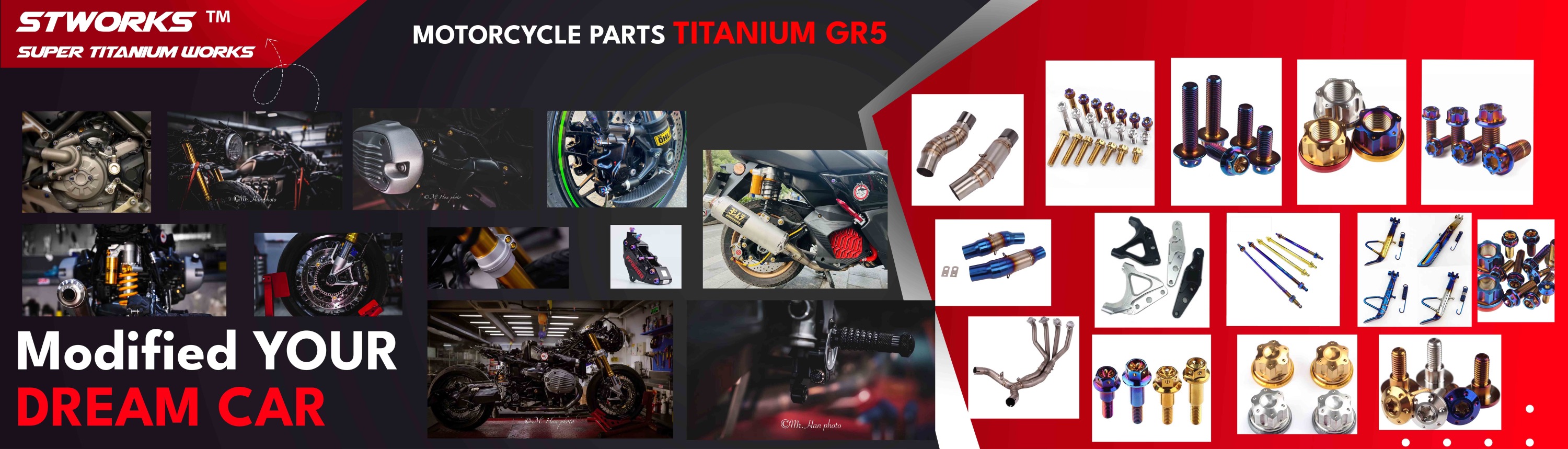
Featured OEM/ODM Production Portfolio
Machined directly from aerospace-grade titanium ingot and cold-drawn seamless tubing. Explore our core lineup of high-heat exhaust hardware, CNC-milled structural components, and custom aftermarket tuning solutions.
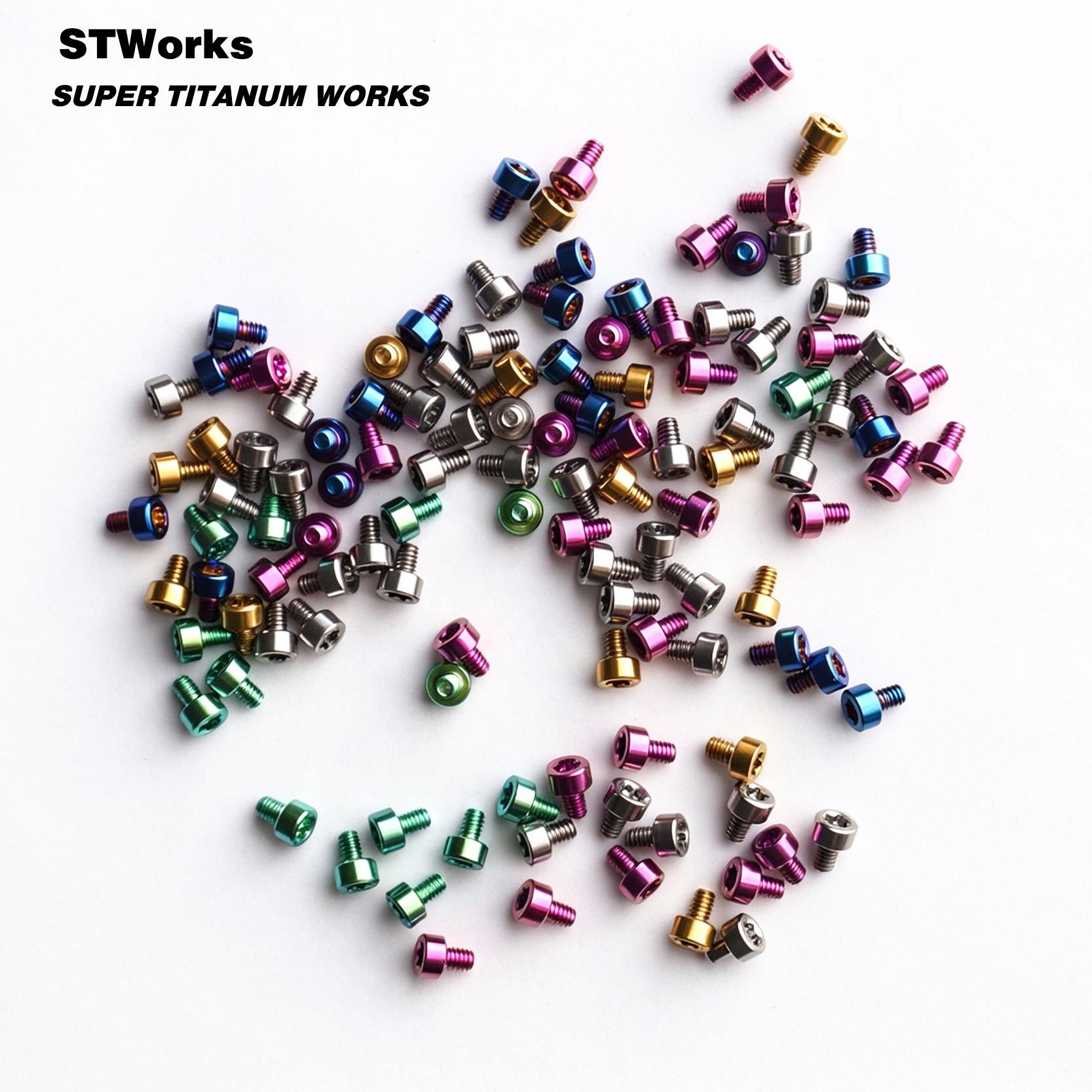
Titanium Screws M2 M2.5 Customized Cylinder Head Bolt Din912 Torx Micro Machine Screw
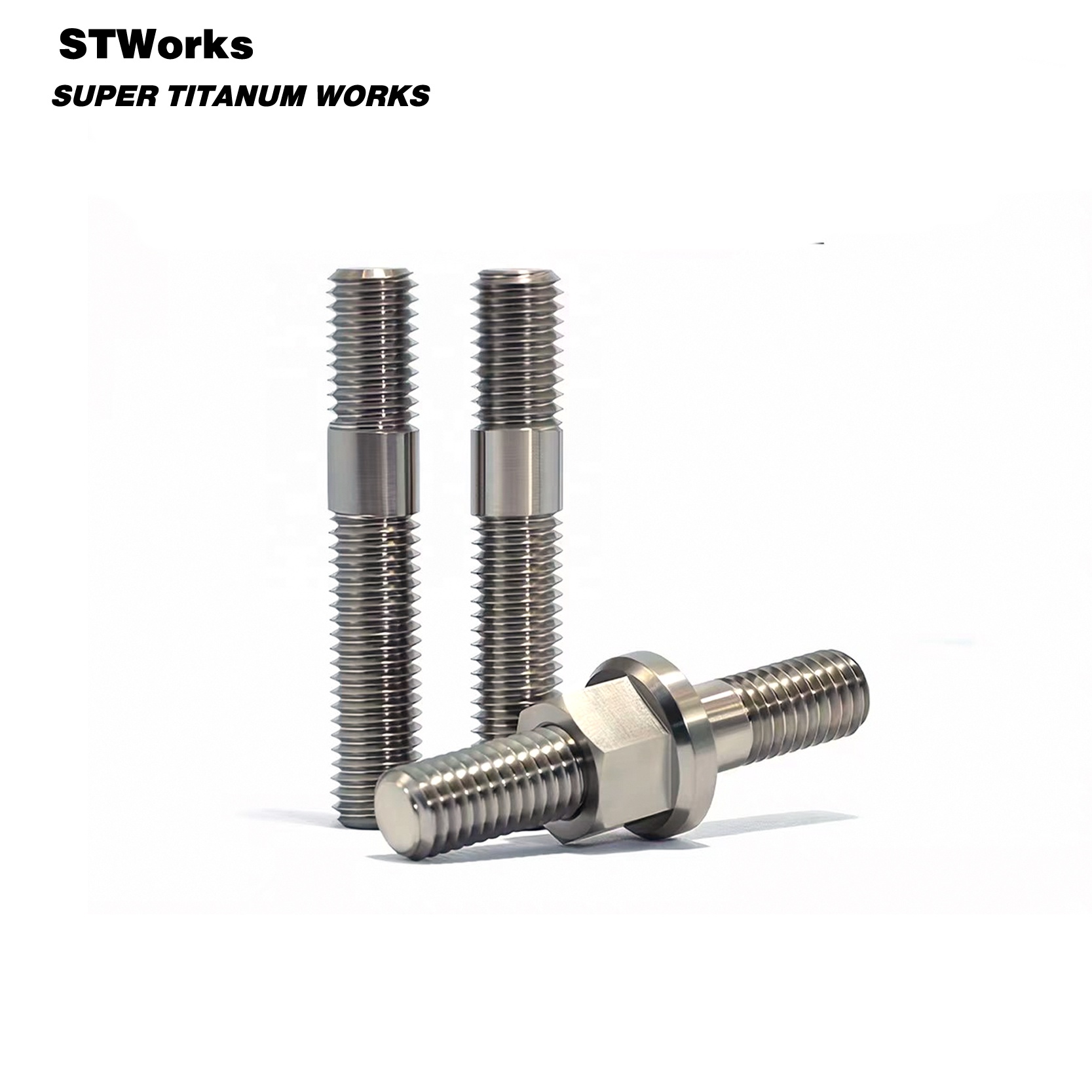
12 Point Nuts Titanium 6AL-4V Grade Exhaust Pipe Screws M8x1.25 Ultra Light Corrosion Resistant Motorcycle Auto Modification
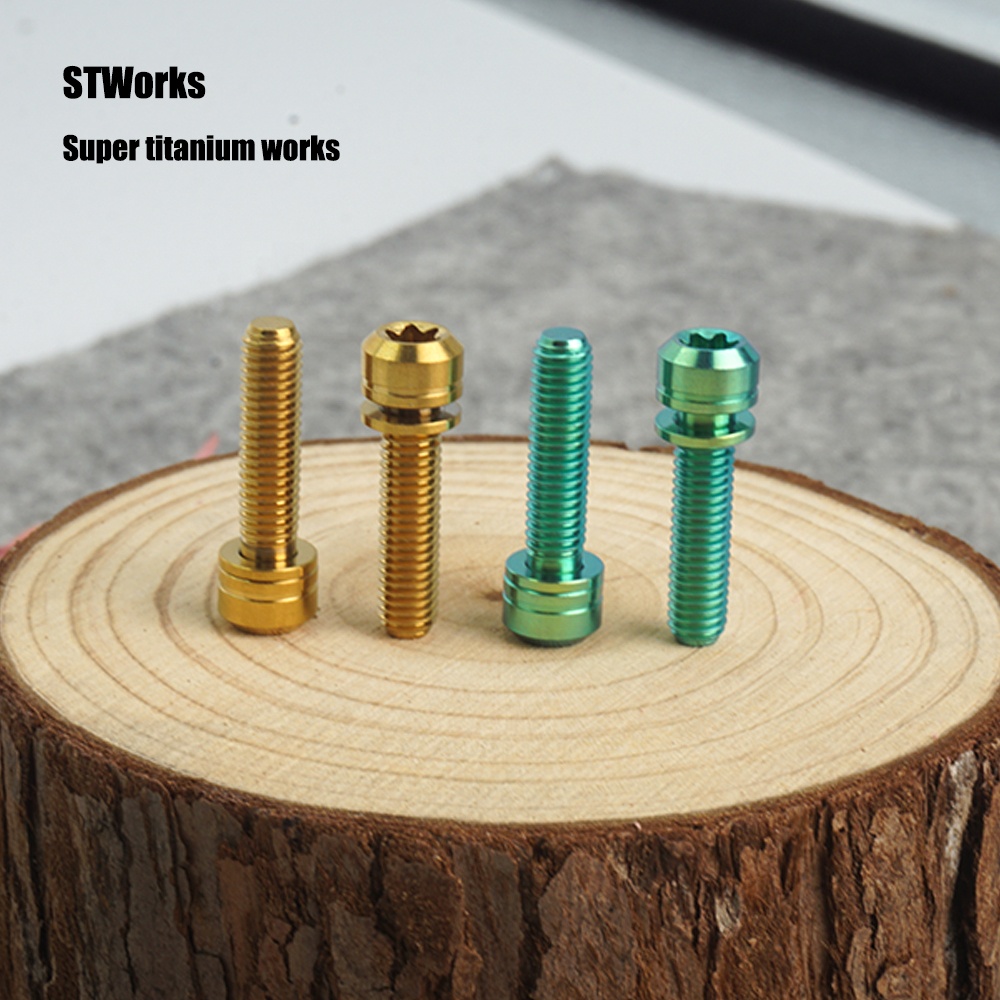
TC4 Titanium Ti Torx M5x16 /18/20/25mm Tapered Head Bolt with Washer Screw for Bicycle Stem Bolts
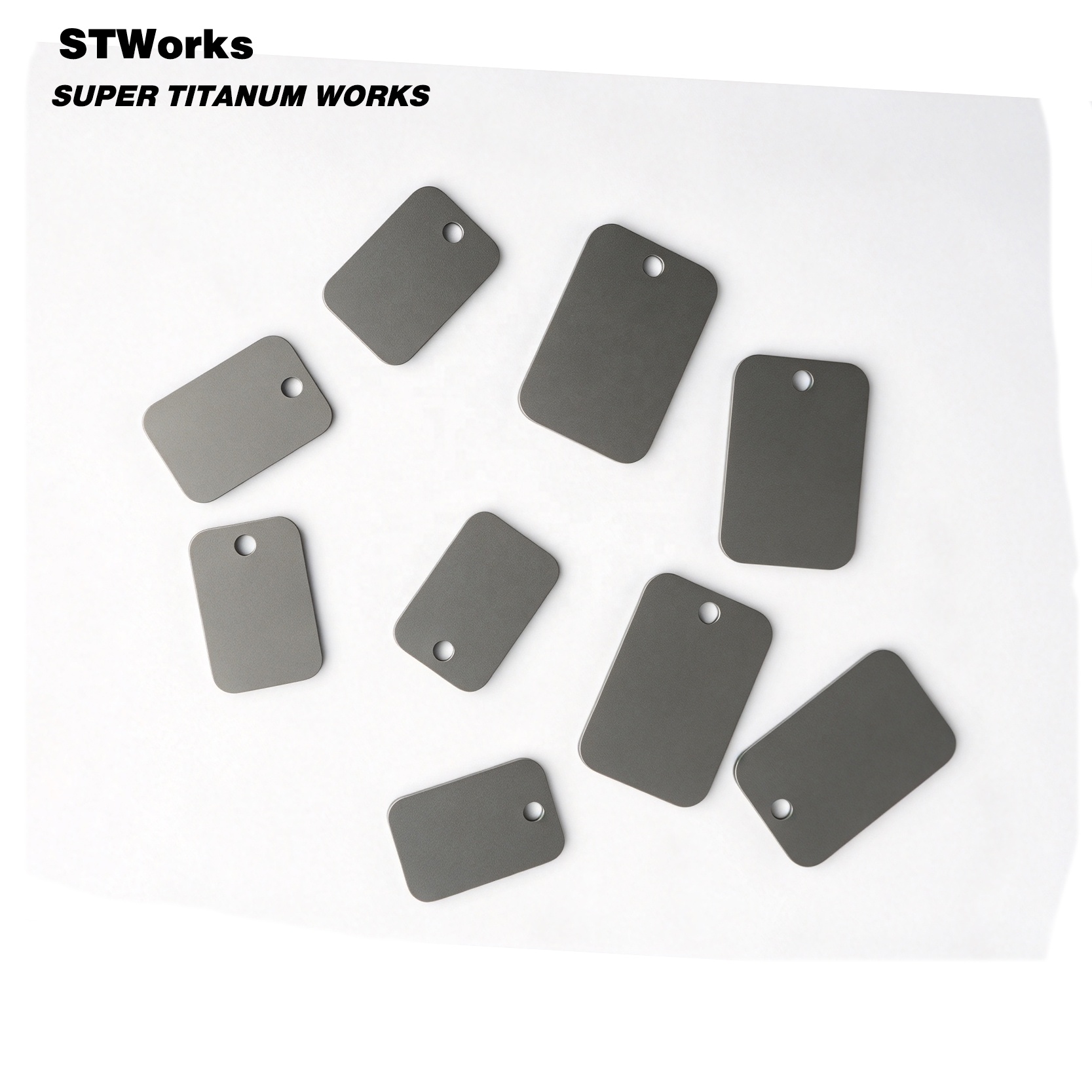
Custom Grade 5 Titanium Plate Tag Sandblasted Free Laser Engraved Logo Blank Titanium
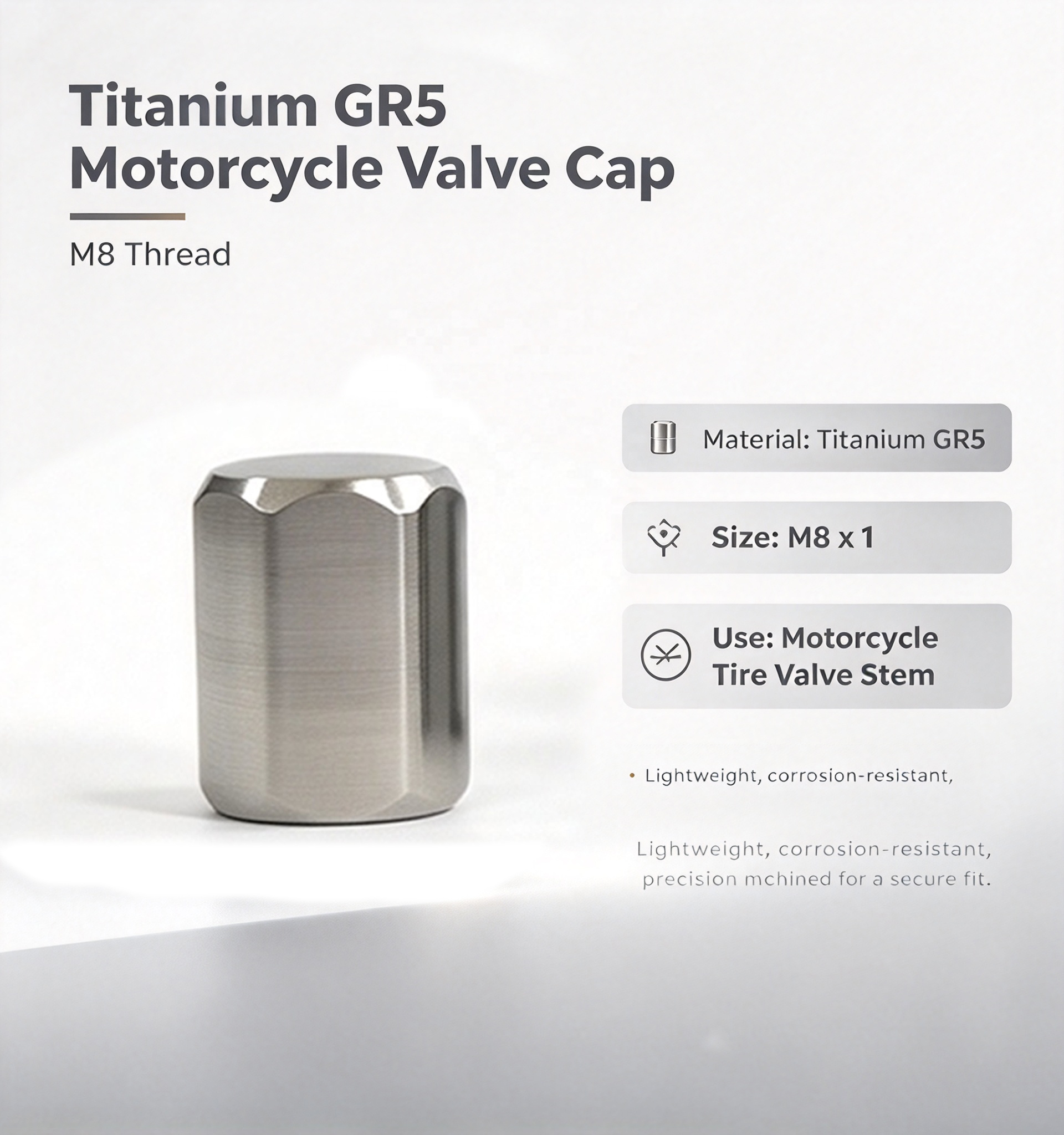
Custom logo CNC Titanium Alloy Gr5 M8 Auto Bike Motorcycle with Seal Car Tire Valve Stem
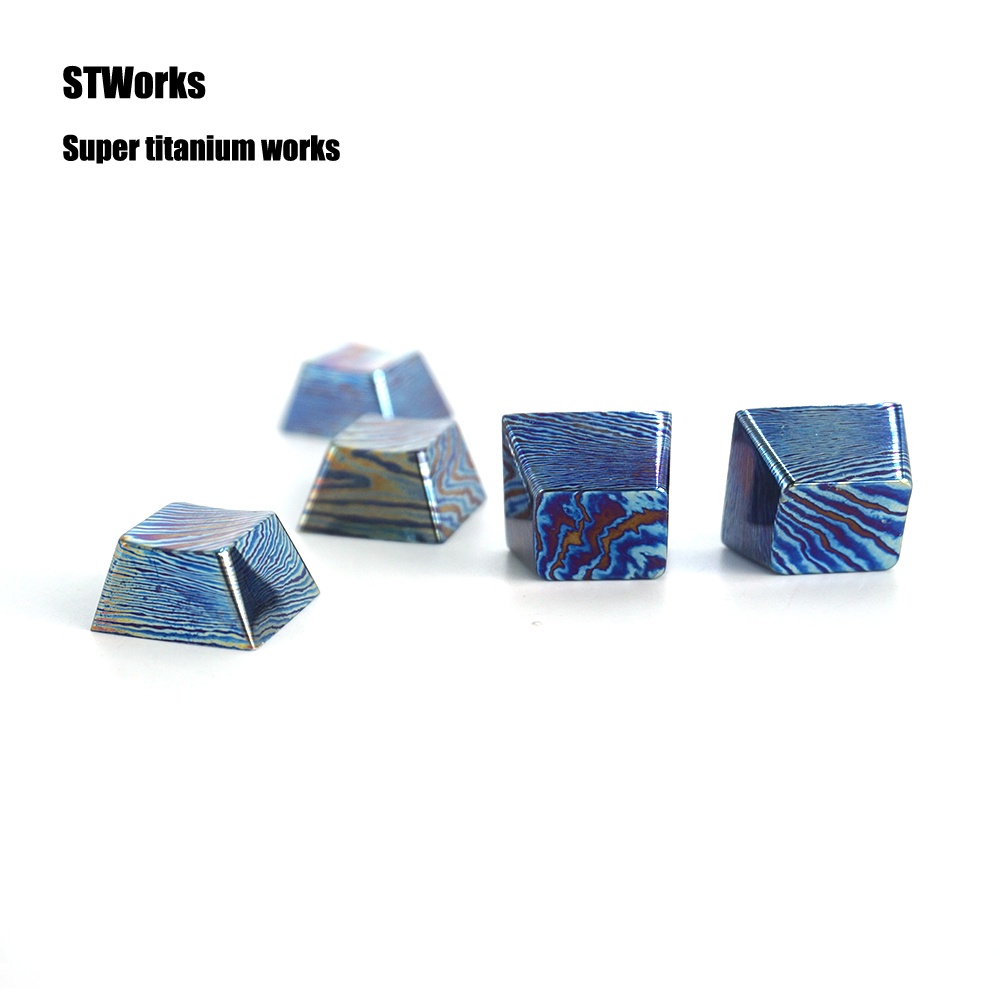
Titanium Gaming Keyboard Caps-CNC Machined Broaching Wire EDM Stainless Steel Options Anti-Corrosion PVD Coating 18mm X 8.5mm
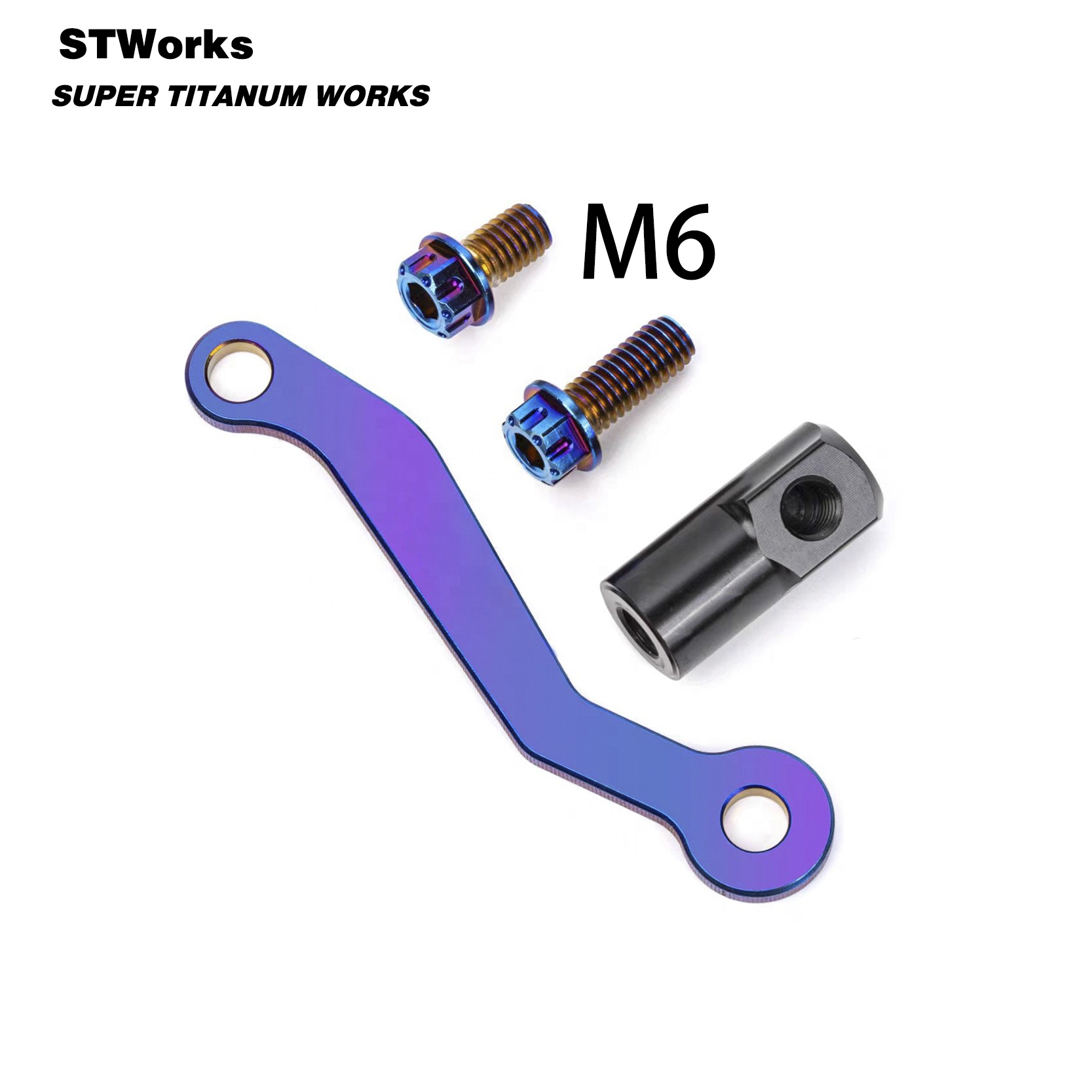
Gr5 TC4 Titanium Alloy Brake Fluid Reservoir Mount Bracket for Radial Master Cylinder Motorcycle E-Bike Modification Parts
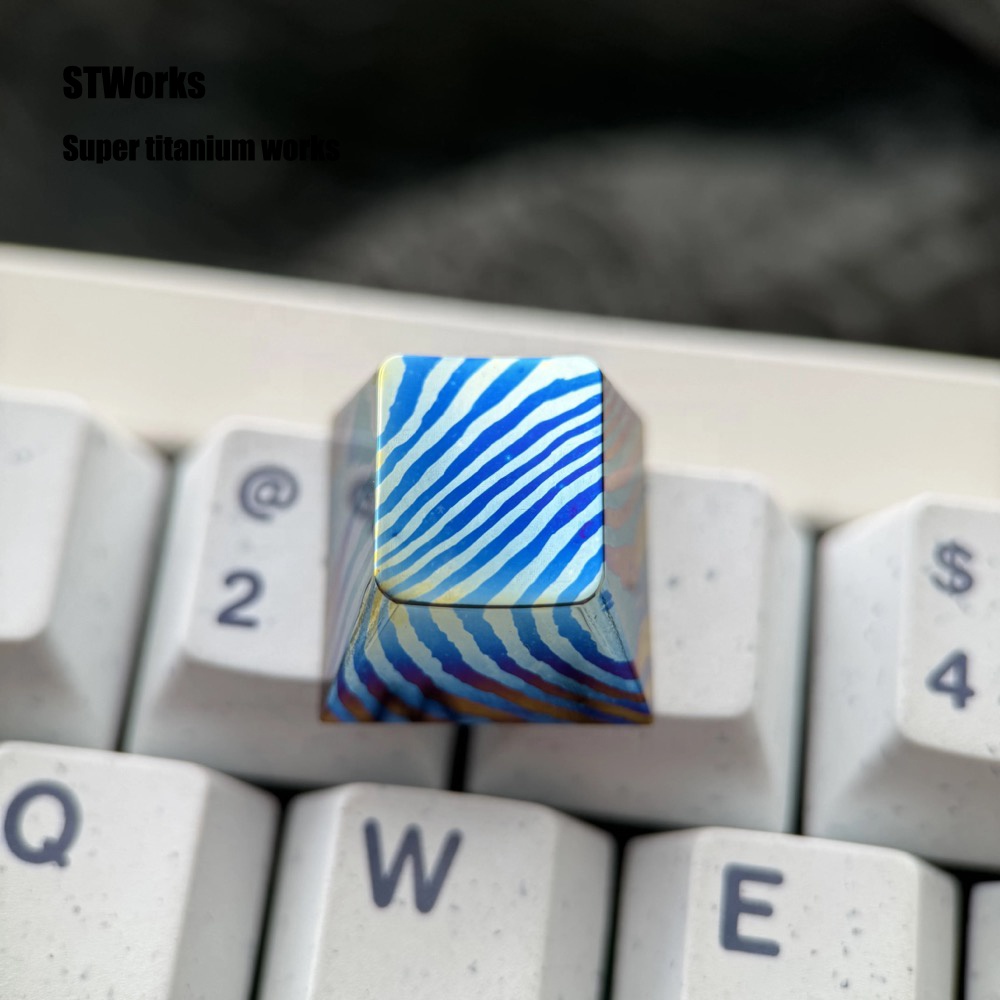
Timascus Alloy Mokuti CNC Parts Computer Keyboard 1U ESC Buttons /KEY CAPS Random Colors
Engineering Principles of Titanium Exhaust Fabrication
Why Tier-1 supercar constructors, professional racing divisions, and premium aftermarket exhaust brands specify commercial purity and aerospace titanium over Austenitic Stainless Steel (SUS304) and Nickel Alloys.
Acoustic Resonance & Thermal Physics
The acoustic resonance characteristics of high-performance exhaust piping are governed by wall thickness, modulus of elasticity, and sound wave transmission velocity through metal. Titanium possesses a sound transmission speed of approximately 6,070 m/s compared to only 5,000 m/s in SUS304 stainless steel. Coupled with thin-wall fabrication (typically 1.0mm to 1.2mm for titanium compared to 1.5mm to 1.8mm for steel), titanium exhaust headers and mufflers produce a distinctive high-pitch, crisp, metallic exhaust tone prized across racing applications.
From a thermodynamic standpoint, titanium exhibits a remarkably low thermal conductivity (approximately 16.4 W/m·K for CP-Ti and 6.7 W/m·K for Grade 5, versus 16.2 W/m·K for 304 stainless and over 200 W/m·K for aluminum alloys). This localized thermal containment retains exhaust gas enthalpy within the exhaust gas column. By minimizing thermal dissipation into surrounding chassis components, exhaust kinetic velocity and scavenging efficiency remain optimized across peak power curves.
- 44% Mass Reduction: Density of 4.51 g/cm³ vs 7.93 g/cm³ in conventional stainless steel.
- Zero Condensation Corrosion: Complete immunity to hot exhaust condensate acidic pit attack.
- Thermal Fatigue Resistance: Resists severe cyclic thermal expansion without grain crack propagation.

| Material Grade | Tensile Strength (MPa) | Density (g/cm³) | Max Continuous Service Temp | Elongation at Break (%) | Ideal Exhaust Segment |
|---|---|---|---|---|---|
| Grade 1 CP Titanium | 240 – 380 MPa | 4.51 | 400 °C | ≥ 24% | Deep drawn muffler end-caps, hydroformed cones |
| Grade 2 CP Titanium | 345 – 480 MPa | 4.51 | 450 °C – 500 °C | ≥ 20% | Mandrel bends, center catback pipes, exhaust tips |
| Grade 5 Ti-6Al-4V (TC4) | 895 – 1000 MPa | 4.43 | 550 °C – 600 °C | ≥ 10% | CNC exhaust flanges, hangers, 12-point manifold nuts |
| AISI 304 Stainless Steel | 505 – 700 MPa | 7.93 | 850 °C | ≥ 40% | Standard baseline heavy exhaust systems |
| Inconel 625 (Nickel Alloy) | 827 – 1000 MPa | 8.44 | 980 °C | ≥ 30% | F1 / Extreme Turbo Manifold collector headers |
From Raw Ingot to Precision Exhaust Systems
Operating out of Baoji, China’s Titanium Valley, Velnora Titanium Industry integrates seamless tube extrusion, multi-axis mandrel bending, laser robotic cutting, and continuous inert-gas purged TIG welding.
CNC Mandrel Tube Bending
Ultra-tight centerline radius (1.0D to 1.5D CLR) without tube buckling, wall thinning, or ovality distortion. We process outer diameters from 25.4mm (1.0") up to 127mm (5.0") in wall gauges of 1.0mm, 1.2mm, and 1.5mm under precision servo-mandrel control.
Argon Back-Purged TIG Welding
Titanium readily scavenges oxygen and nitrogen at temperatures above 400 °C, leading to embrittlement. Our welding operations utilize closed purge trailing shields and 99.999% (5N) pure argon internal backing to ensure silver and pale straw welds meeting AWS D17.1 specifications.
Pie-Cut Segment Fabrication
For complex packaging envelopes in mid-engine supercars and custom race configurations, we fabricate laser-cut pie-cut sections with bevel angles calibrated to ±0.05°. This allows fabricators to route runners smoothly around steering racks, subframes, and aero diffusers.
5-Axis CNC Machined Flanges
Instead of stamped sheet flanges that warp under heat cycles, our exhaust flanges are 5-axis CNC-milled from solid Grade 5 (TC4) billet blocks. Engineered with integrated o-ring receiver grooves and relief pockets to optimize sealing and reduce thermal deflection.
Valvetronic Actuator Integration
Turnkey active valve integration featuring CNC-milled titanium butterfly valves, high-temp Inconel return springs, and electronic or vacuum actuator mounts. Enables switchable quiet touring and unobstructed straight-pipe acoustic profiles.
Anodized & Flame-Treated Finishes
Electrochemical voltage-controlled anodizing or thermal flame-coloring delivering consistent golden bronze, royal blue, royal violet, and iridescent rainbow gradients without adding foreign paint, coatings, or interfering with metallurgical base integrity.
Future Procurement Trends (2025–2035)
The global transition toward high-performance hybrid powertrains and lightweight internal combustion sports platforms is restructuring the exhaust supply chain. OEM and Tier-1 procurement teams are navigating three crucial procurement shifts:
1. Stringent Fleet Emission & Hybrid Weight Balancing: With battery packs adding 200 kg to 350 kg to hybrid performance vehicles, automotive engineers are actively replacing legacy stainless steel catback systems (25–35 kg) with full titanium architectures (11–16 kg). This 50%+ reduction behind the rear axle drastically lowers yaw inertia and unsprung vehicle dynamics.
2. Direct-from-Source Factory Integration: Tier-1 brands are bypassing regional distributors and partnering directly with specialized Baoji raw material processors. Sourcing from unified extrusion-to-fabrication centers cuts multi-tier markup by 30–45% while guaranteeing mill-to-exhaust batch traceability according to EN 10204 3.1 standards.
3. Additive Manufacturing Hybridization: Selective Laser Melting (SLM 3D printing) of complex 4-to-1 merge collectors combined with traditionally bent thin-wall titanium runners allows flow paths impossible with traditional stamping, optimizing boundary layer gas velocity.
Why Global B2B Brands Choose Velnora
Established in 2013 in Baoji, Shaanxi—widely recognized as China's Titanium Valley—Velnora Titanium Industry Co., Ltd. combines raw titanium sponge sourcing advantages with high-precision multi-axis CNC manufacturing and exhaustive quality validation.
Baoji Supply Chain Advantage
Direct proximity to local smelting, forging, and sponge reduction infrastructure grants Velnora preferential access to certified Grade 1, Grade 2, and Grade 5 (Ti-6Al-4V) stocks. This ensures stable raw material pricing and mitigates international supply volatility.
In-House Tooling & Fixturing
We design and machine our own CMM-verified assembly welding jigs and laser-cut check fixtures. Every batch of exhaust downpipes, catback sections, and manifold runners is locked into heavy steel fixtures during welding to prevent thermal shrinkage and ensure drop-in OEM fitment.
Video Inspection & Live Updates
Transparency is embedded in our workflow. We supply buyers with high-resolution photographic and video documentation at each milestone: CNC turning, orbital welding, leak testing, and CMM dimension verification before export crating.
Frequently Asked Questions for B2B Sourcing
Clear, technically rigorous answers covering wall thickness selection, gas purging integrity, galling prevention, thermal management, and rapid ODM sampling.
What grade of titanium is best suited for exhaust systems, and why not use Grade 5 everywhere?
Commercially Pure Grade 2 (CP-Ti Gr2) is the standard industry choice for exhaust tubing, mandrel bends, and silencer canisters. Grade 2 offers superior cold workability and ductility (elongation ≥ 20%), enabling smooth mandrel bending without cracking or wrinkling. Conversely, Grade 5 (Ti-6Al-4V) has exceptional tensile strength (≥ 895 MPa) but low cold elongation (≥ 10%), making it virtually impossible to cold-mandrel-bend into tight exhaust runners without cracking. We utilize Grade 5 exclusively for CNC-machined exhaust flanges, turbo outlet adaptors, mounting brackets, and 12-point exhaust studs where extreme yield strength and creep resistance under clamping load are mandatory.
How does Velnora prevent atmospheric contamination and embrittlement during titanium welding?
Titanium becomes highly reactive with oxygen, nitrogen, and hydrogen at temperatures exceeding 400 °C (752 °F). Exposure to air causes interstitial contamination, turning the weld brittle and prone to catastrophic cracking under exhaust thermal shock. Our welding protocol mandates 99.999% (5N) pure argon shielding with custom-machined trailing cups that shield the weld bead until it cools below 350 °C. Concurrently, the interior of the exhaust tube is sealed with silicone purge plugs and completely back-purged with argon, maintaining oxygen levels under 50 ppm throughout the welding cycle. All accepted welds must exhibit a silver to light-straw coloration; dark blue, purple, or gray powdered deposits are systematically rejected.
What are the standard recommended wall thicknesses for automotive and motorcycle titanium exhausts?
For motorcycle racing systems and off-road applications, 1.0mm (0.039") wall tubing is widely used to maximize weight savings. For high-displacement automotive systems, turbocharged downpipes, and street-driven supercars, we recommend a 1.2mm (0.047") wall thickness for main exhaust piping and 1.5mm (0.059") for high-stress collector merge junctions and catalytic converter inlets. This provides the optimal structural balance between dramatic mass reduction and long-term acoustic fatigue endurance.
How do you address thread galling on titanium exhaust studs and 12-point manifold nuts?
Titanium alloys have a natural affinity for friction-induced micro-welding (galling) when tightened dry against identical or dissimilar metals under load. To eliminate thread seizure on exhaust manifolds: (1) All our Grade 5 studs and 12-point nuts feature precision rolled threads rather than cut threads, producing a burnished, work-hardened surface root with compressive residual stresses; (2) We provide specialized anti-galling PVD (Physical Vapor Deposition) ceramic coatings or molybdenum disulfide treatments; and (3) We advise torque specifications calculated with high-temperature nickel- or copper-based anti-seize paste rated to 1100 °C.
What CAD/CAM file formats are required, and what is your turnaround time for custom prototypes?
Our engineering department works natively with STEP, IGES, SolidWorks (.SLDPRT / .SLDASM), and native Parasolid files. 2D PDF engineering drawings with explicitly defined geometric dimensioning and tolerancing (GD&T) are requested for flange mating surfaces and thread classifications. Custom prototype tooling, mandrel bending, and jig fabrication are completed within 14 to 21 business days, accompanied by full coordinate measuring machine (CMM) dimensional verification reports and metallurgical material test certificates (MTC).
Can titanium exhaust systems crack under high turbo exhaust gas temperatures (EGTs)?
Standard Grade 2 titanium maintains structural integrity up to continuous service temperatures of approximately 450 °C – 500 °C, with short intermittent peaks of 600 °C. In turbocharged applications where pre-turbine EGTs exceed 850 °C – 950 °C, titanium should not be used for turbo exhaust manifolds (headers); Nickel superalloys like Inconel 625 or 321 stainless steel are required in that zone. However, downstream of the turbo turbine housing (downpipe, mid-pipe, and catback), exhaust gas temperatures drop rapidly into the 400 °C – 550 °C window, allowing titanium downpipes and catbacks to perform flawlessly without thermal degradation.
What are the minimum order quantities (MOQ) for custom OEM/ODM production runs?
For custom small-batch precision hardware (such as 12-point exhaust nuts, titanium studs, and laser-cut branding tags), our MOQ is typically 100 to 200 pieces. For full catback exhaust systems or complex mandrel-bent tube runner sets, we accommodate prototype validation batches starting at 5 to 10 sets. Production volume pricing scales favorably at 50, 100, and 500+ unit repeat orders.