Precision Titanium Brake System Components
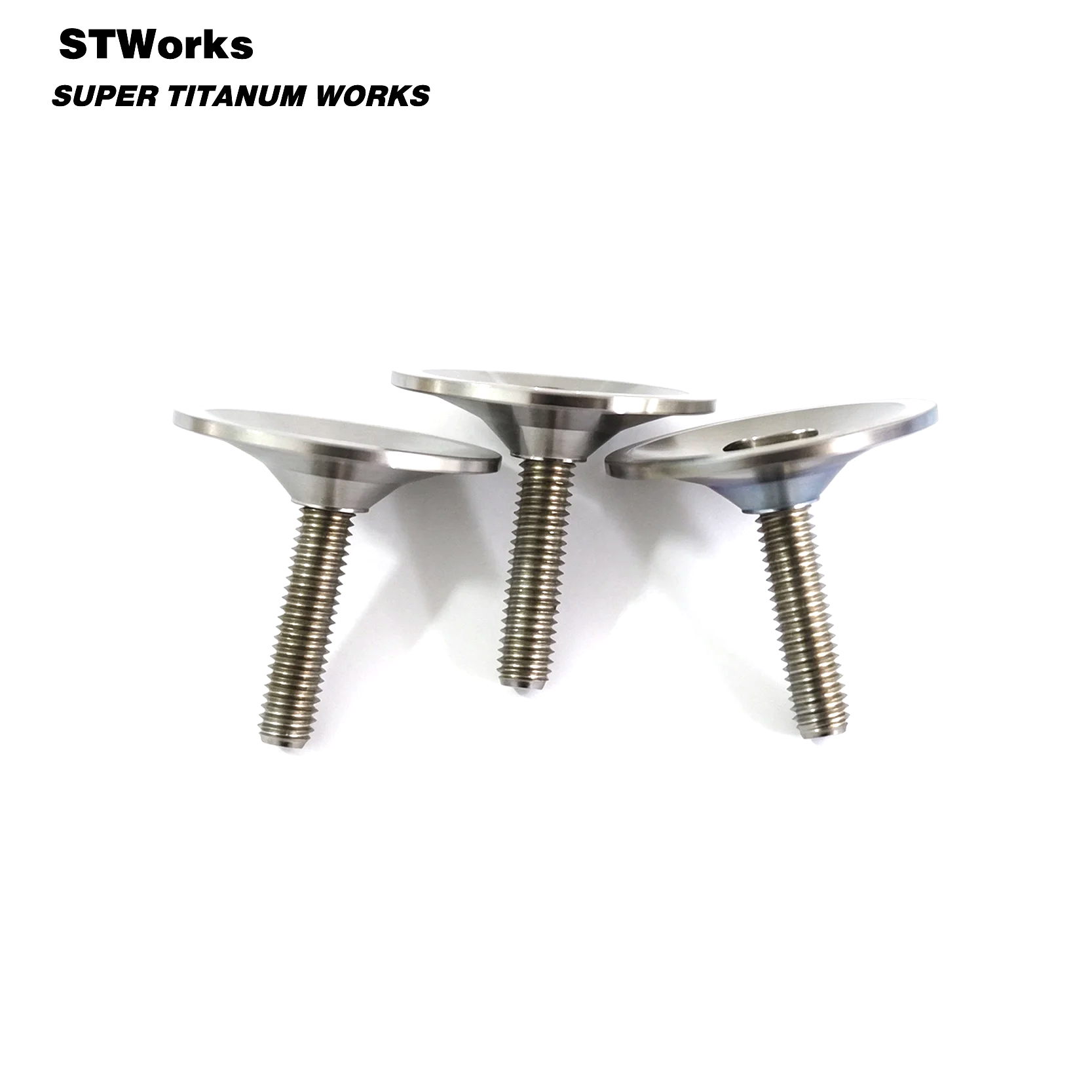
Direct from our Baoji precision machining facility: CNC-machined Grade 5 (TC4) titanium alloy hardware engineered for racing brake rotors, hydraulic calipers, and high-stress unsprung assemblies.
The Metallurgy of Titanium Brake Rotors & Friction Dynamics
Why modern high-performance motorsport and premium e-mobility OEMs specify Grade 5 titanium for two-piece floating rotor bobbins, inner carrier hats, and specialized friction discs.
Gyroscopic Mass & Unsprung Dynamics
In high-speed performance racing, wheel assembly mass directly multiplies rotational inertia through the angular momentum equation L = Iω. Brake rotors constitute critical unsprung, rotating weight.
By transitioning from conventional ductile iron bells or stainless solid discs to Grade 5 Ti-6Al-4V (TC4) floating carriers, unsprung mass drops by 44%. This reduction significantly lowers gyroscopic precession during high-speed directional transitions, allowing faster chassis roll rates, crisper steering turn-in, and superior suspension rebound tracking over track curbs.
Thermal Barrier Management & Floating Hats
Titanium exhibits an exceptionally low thermal conductivity (≈ 6.7 W/m·K) compared to cast iron (≈ 50 W/m·K) and aluminum (≈ 205 W/m·K). While full-titanium friction rings require specialized surface coatings, this thermal property makes Grade 5 titanium the ultimate material for floating rotor center hats (bells) and drive bobbins.
The titanium carrier acts as an effective thermal insulator, preventing the extreme 650°C+ friction ring temperatures from conducted heat transfer into wheel bearings, hub flanges, and brake caliper hydraulic fluid, completely mitigating fluid boil and pedal fade.
Fatigue Resistance & Warpage Prevention
Standard stamped steel or unibody cast rotors experience non-uniform circumferential thermal expansion under threshold braking, generating coning, lateral runout, and disc thickness variation (DTV).
Our OEM/ODM two-piece floating titanium brake rotor designs incorporate radial expansion clearance slots and Grade 5 drive bobbins. Ti-6Al-4V delivers an exceptional fatigue limit (>510 MPa at 107 cycles) and maintains yield strength up to 400°C, preventing permanent plastic deformation, rotor chatter, and judder under punishing track cycles.
Engineering Property Matrix for Brake Hardware
Comparative empirical data contrasting Grade 5 Ti-6Al-4V against automotive grade cast iron, AISI 410 stainless, and 7075-T6 aluminum in dynamic braking applications.
| Mechanical / Thermal Metric | Ti-6Al-4V Grade 5 (TC4) | Grey Cast Iron (G3000) | 410 Stainless Steel | 7075-T6 Billet Aluminum |
|---|---|---|---|---|
| Density (g/cm³) | 4.43 (Ultralight) | 7.20 (Heavy Baseline) | 7.75 (Heavy) | 2.81 (Extremely Light) |
| Tensile Yield Strength (MPa) | 880 – 950 | 220 – 260 | 450 – 520 | 505 |
| Thermal Conductivity (W/m·K) | 6.7 (Natural Heat Insulator) | 52.0 (Heat Conductor) | 24.9 (Moderate) | 130.0 (High Conduction) |
| High-Temperature Yield Retention (400°C) | >80% Initial Strength | Moderate Brittle Transition | ≈ 60% Initial Strength | Critical Softening (<150°C) |
| Corrosion & Salt Spray Resistance | Immune (ASTM B117 >1000h) | Immediate Surface Oxidation | Moderate Pitting Risk | Galvanic Pitting Prone |
| Primary System Application | Floating Rotor Hats, Bobbins, Rotor Bolts | Heavy Solid Friction Rings | Solid Motorcycle Rotors | Low-Temp Caliper Brackets |
Future Procurement Trends in Titanium Brake Rotor Systems
How global Tier-1 automotive suppliers, hypercar constructors, and international racing syndicates are reshaping their B2B sourcing strategies through 2030.
1. Electrified Hypercar & Superbike Lightweighting
As battery packs contribute immense tare weight to electric motorcycles and hypercars, powertrain engineers face stringent limits on unladen mass. To regain dynamic agility and meet energy-consumption benchmarks, procurement offices are mandating unsprung weight reductions.
OEMs are shifting from single-piece steel rotors to hybrid bimetallic titanium-carbon assemblies. Sourcing directors are prioritizing direct mill-backed titanium machining factories in Baoji capable of producing complete custom rotor bell geometries with integrated regenerative brake sensor rings.
2. Digital Traceability & In-Process Video Auditing
Global supply chains now demand strict compliance transparency under ISO 9001:2015 and IATF 16949 paradigms. B2B buyers no longer rely on unverified intermediary brokers. Procurement leaders require real-time digital machining verification.
Velnora provides traceable 3.1 material test certificates, coordinate measuring machine (CMM) runout logs, and live CNC spindle production video clips. Buyers verify dimensional concentricity, thread pitch micro-finish, and true axial runout before shipments leave the factory floor.
3. Direct Cluster Sourcing from Titanium Valley
Geopolitical supply chain disruptions have underscored the necessity of vertical supply integration. Sourcing directly from Baoji—China's Titanium Valley, which represents over 60% of the nation's titanium production capacity—eliminates intermediate markups and secondary freight delays.
Western and Asian exporters are establishing long-term OEM/ODM framework agreements with integrated facilities that command raw vacuum arc remelting (VAR) titanium sponge supply, precision billet forging, multi-axis milling, and in-house PVD finishing under one roof.
Industrial Evolution of Titanium Friction Hardware
Breakthroughs in multi-axis Swiss turning, wire-cut EDM contouring, PVD surface hard-facing, and topology-optimized weight extraction.
PVD & DLC Hard-Coating
To eliminate abrasive friction scour when titanium is paired with metallic pads, modern titanium components undergo physical vapor deposition (PVD) to apply Titanium Carbo-Nitride (TiCN) or Diamond-Like Carbon (DLC), elevating surface hardness beyond 2,500 HV.
Multi-Axis Wire EDM
Machining complex floating rotor drive splines and anti-rattle pin recesses requires zero work hardening. We utilize multi-axis submerged wire electrical discharge machining (EDM) to execute sub-micron bobbin slots with flawless edge squareness.
Topology Optimization
Using finite element analysis (FEA), rotor center hats are computationally hollowed to remove non-load-bearing mass. Triangular truss cooling spokes maximize lateral stiffness while channelling turbulent airflow over caliper cooling fins.
Rolled Thread Fastening
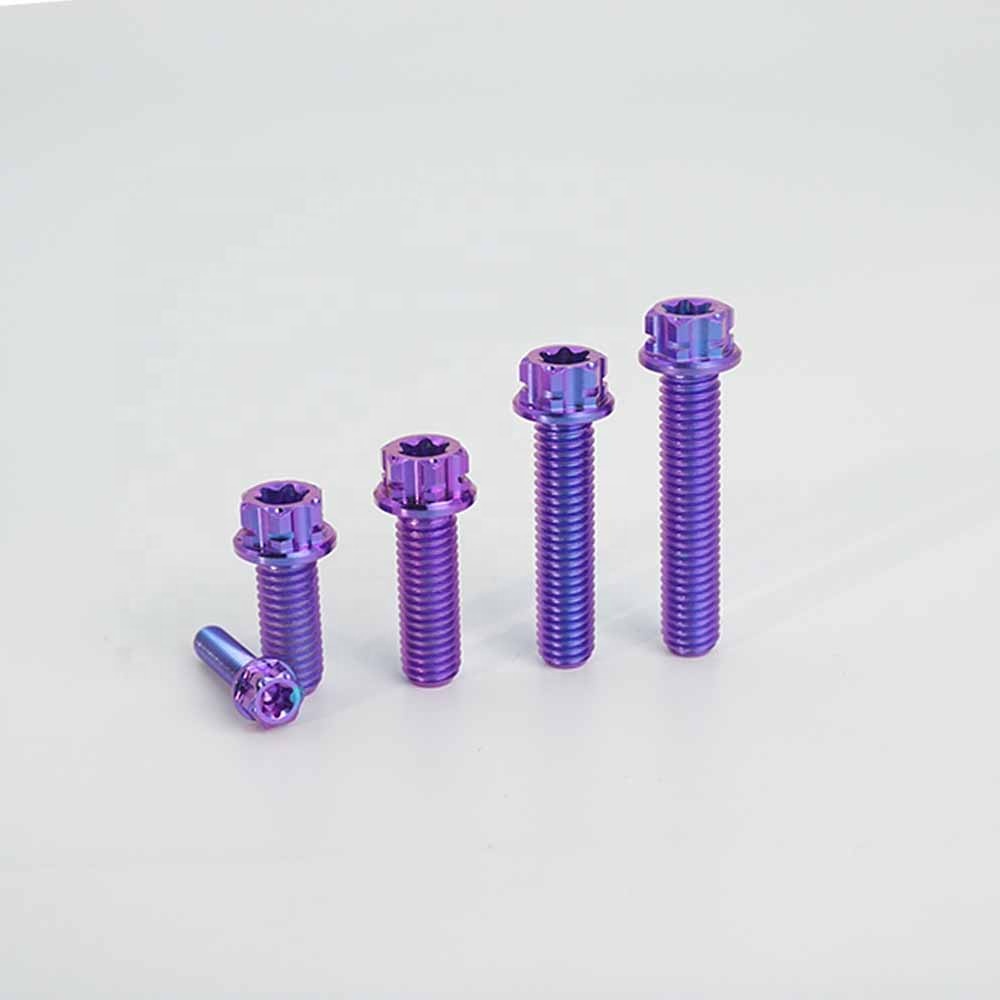
For high-load rotor-to-hub mounting bolts, thread rolling replaces cut threads. Cold-forming grain flow along thread flanks enhances dynamic shear fatigue strength by 30%, preventing bolt head detachment under cyclic braking torque.
Why Global Brands Partner with Velnora Titanium
Based in Baoji, Shaanxi, Velnora Titanium Industry Co., Ltd. has delivered precision CNC-machined titanium components and specialty racing hardware to international B2B clients since 2013.
10+ Years Dedicated CNC Specialization
Titanium cannot be machined with standard tooling speeds and feeds used for aluminum or steel. High chemical reactivity at cutting temperatures requires proprietary tool path geometry, high-pressure synthetic flood cooling, and custom carbide coatings.
Since 2013, our dedicated team of 11–50 machinists and engineers has worked exclusively with titanium alloys, eliminating trial-and-error scrap rates and ensuring dimensional precision down to ±0.005 mm across mass production batches.
Complete Quality Verification Ecosystem
We believe international B2B procurement requires total verification clarity. Our testing lab features optical profile projectors, Zeiss coordinate measuring machines (CMM), Mitutoyo digital thread pitch micrometers, and positive material identification (PMI) spectrometers.
Every single export batch is cross-checked against customer 2D/3D engineering prints (STEP, IGES, DXF, PDF). Customers receive full dimensional inspection reports and batch material traceability certificates conforming to EN 10204 3.1 standards.
Full OEM / ODM Customization & Video Updates
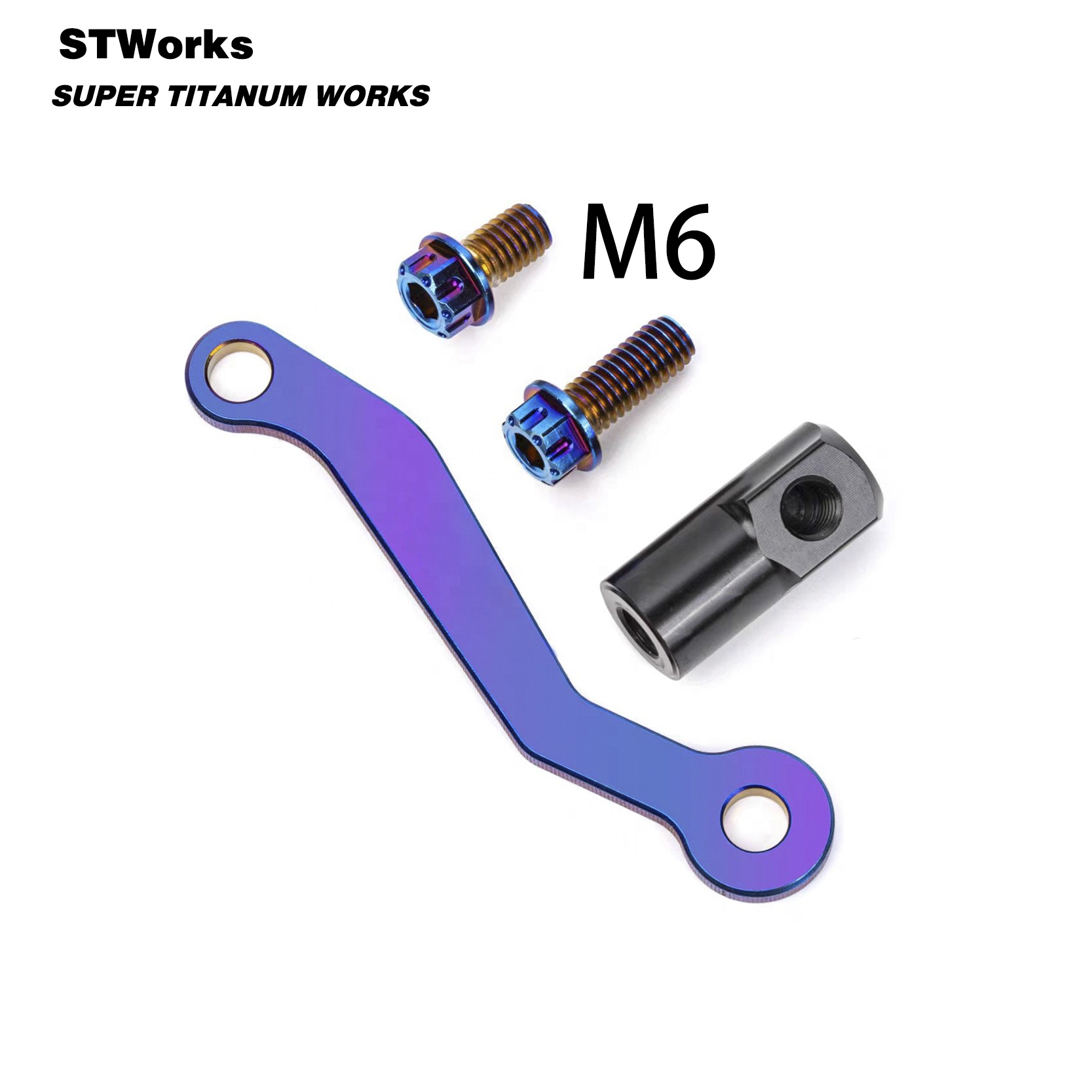
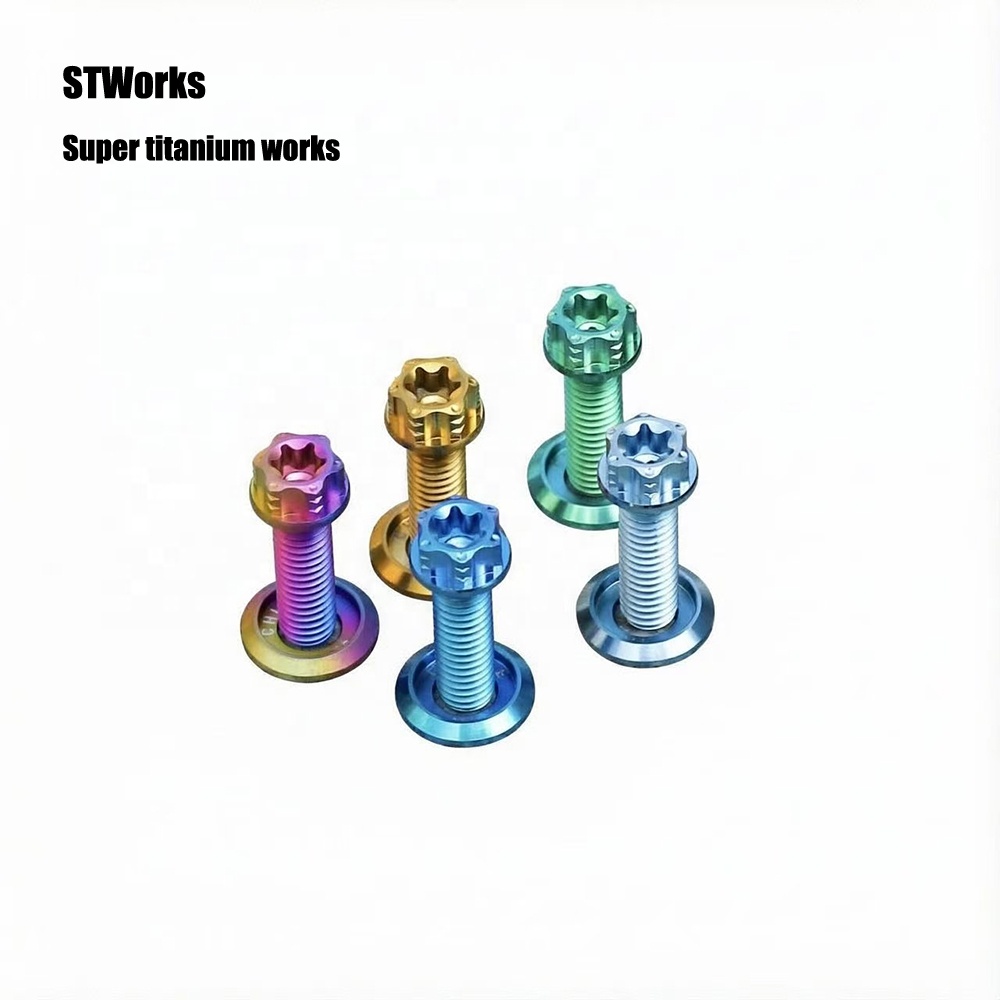
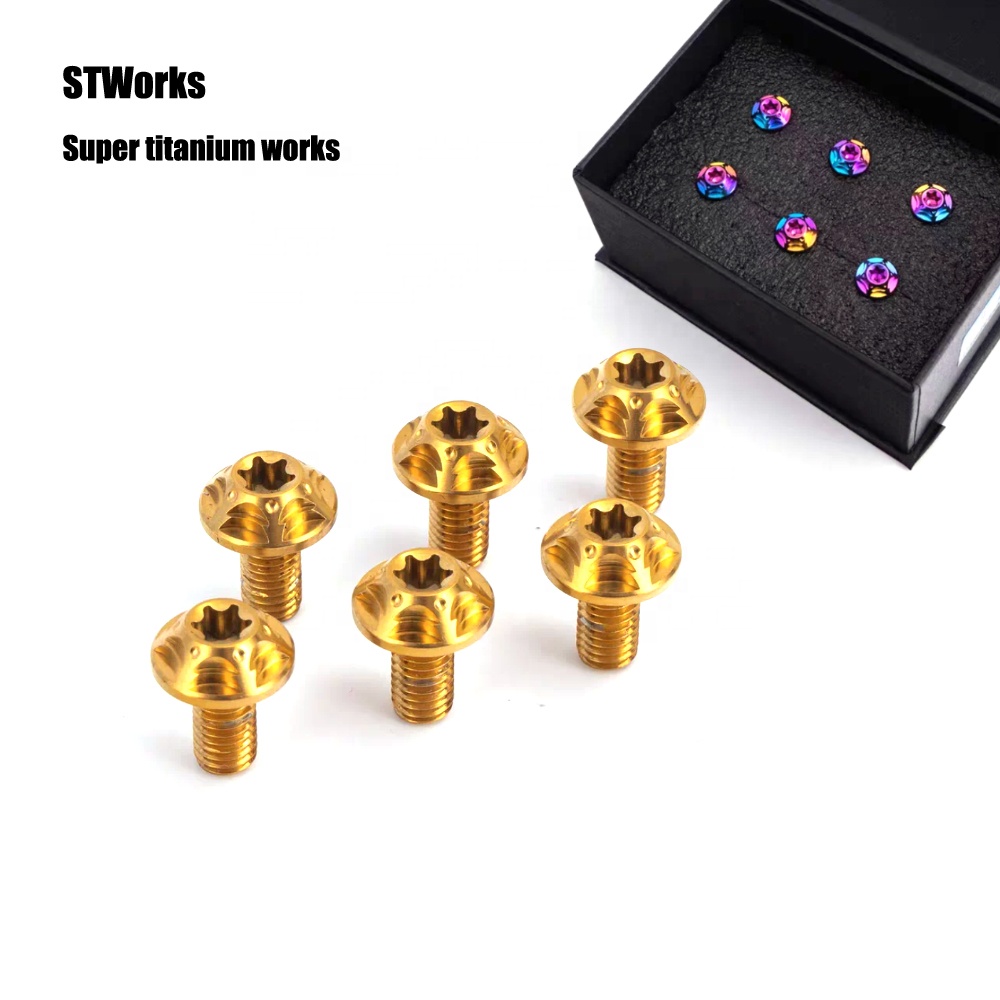
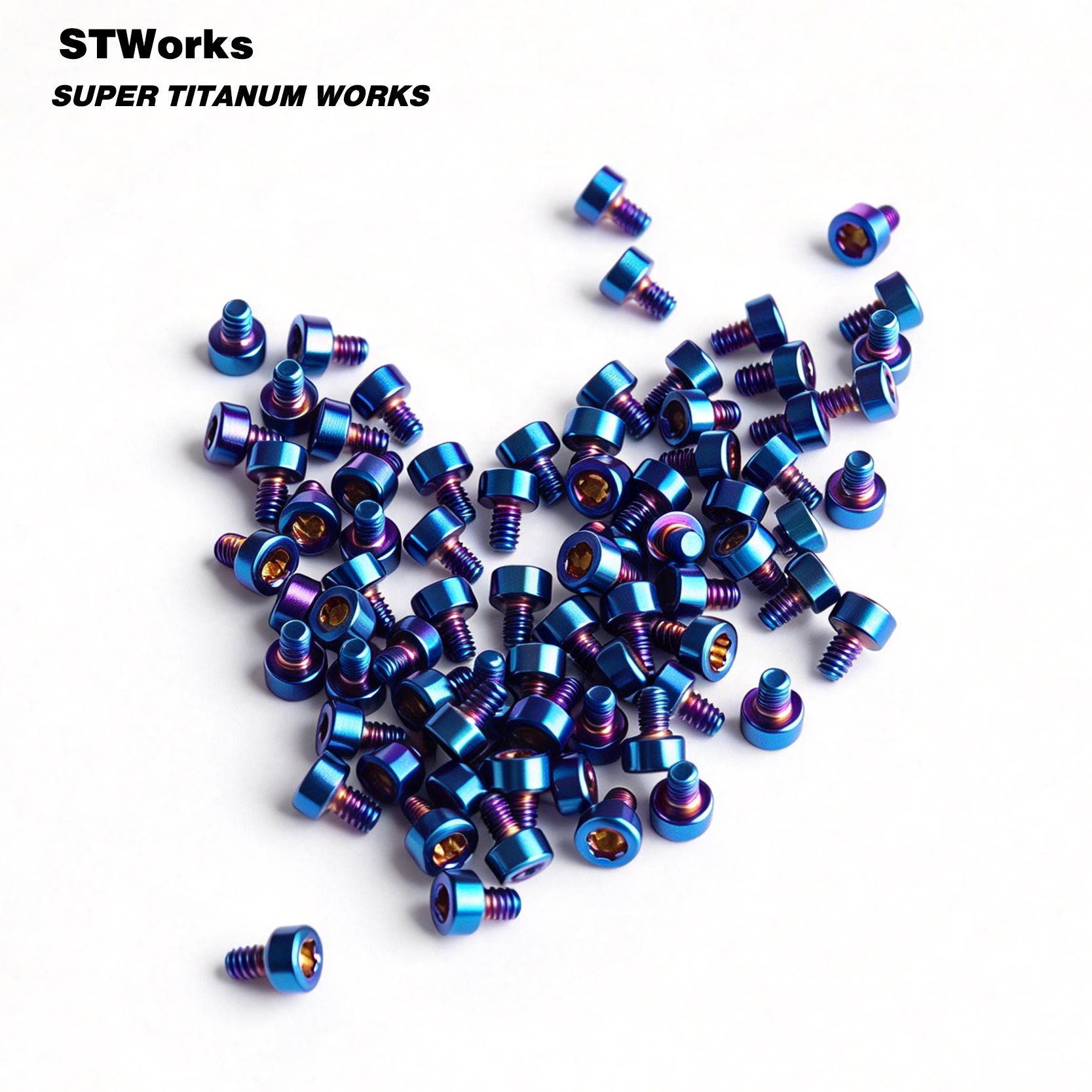
Whether you require custom-branded packaging, laser-etched laser part numbering, anodized color coding (burnt blue, gold, purple, green, or rainbow), or custom friction venting geometry, our OEM/ODM service adapts to your technical specifications.
Throughout production, our machining team sends high-resolution spindle photos and operational video updates. Overseas procurement teams inspect their components in real time before export crating and air/sea dispatch.
Frequently Asked Questions: Sourcing Titanium Brake Hardware
In-depth technical answers addressing metallurgy, friction pairings, thermal dissipation, thread galling, and international supply logistics.
Can Grade 5 titanium directly replace steel in brake rotor friction rings?
For dedicated track cars and heavy motorsport vehicles, solid uncoated titanium is generally not recommended as a direct friction ring substitute against standard semi-metallic pads without surface modification. While titanium possesses immense tensile yield and exceptional corrosion resistance, its raw sliding friction coefficient against standard friction pads can cause premature galling and uneven pad deposit buildup under extreme friction heat.
However, for lightweight motorcycles, electric bicycles, rear drag-racing rotors, and hypercar floating center hats, titanium is widely used. When used as a pure friction disc, titanium requires PVD TiCN, plasma-sprayed ceramic, or DLC coatings to elevate surface hardness above 2,000 HV. In two-piece floating rotor systems, the optimal industry architecture pairs a Grade 5 titanium carrier hat with a high-carbon grey iron or ceramic composite friction ring.
How does Velnora prevent thread galling on titanium brake rotor and caliper bolts?
Thread galling (cold welding) is an inherent metallurgical risk in reactive metals like titanium and stainless steel when torqued dry under high preload. We employ three strict engineering countermeasures:
- Thread Rolling Over Cutting: Our threads are cold-rolled rather than single-point cut, producing a mirror-smooth surface finish (Ra < 0.4 μm) that eliminates microscopic surface asperities that induce friction seizure.
- Surface Treatment: We offer micro-arc oxidation (MAO), PVD coating, or specialized anti-friction dry-film lubricants that provide a sacrificial barrier layer.
- Assembly Protocols: We supply precision engineering guidelines specifying copper-based or nickel-based anti-seize pastes and calibrated torque conversion tables compensating for modified thread friction coefficients.
What are the permissible runout and DTV tolerances for your CNC-machined titanium rotors?
Braking judder and pedal pulsation are caused by lateral runout and Disc Thickness Variation (DTV). For our CNC-machined Grade 5 titanium floating carriers and precision-turned rotor discs, we adhere to strict motorsport tolerances:
- Total Radial Runout: ≤ 0.020 mm (0.0008 inches).
- Lateral Axial Runout (Mounted): ≤ 0.015 mm (0.0006 inches).
- Disc Thickness Variation (DTV): Measured across 8 circumferential points ≤ 0.006 mm (0.00024 inches).
- Surface Roughness (Ra): Ground friction track surfaces achieve Ra 0.6 – 0.8 μm, ensuring immediate brake pad bed-in without glazing.
What CAD formats do you support, and what is the typical prototyping lead time?
Our engineering design department operates licensed SolidWorks, Autodesk Fusion 360, and Mastercam environments. We accept 3D native files in STEP (.stp), IGES (.igs), Parasolid (.x_t), and 2D engineering drawings in DWG, DXF, and PDF with full geometric dimensioning and tolerancing (GD&T) annotations.
For custom OEM/ODM prototypes, initial DFM (Design for Manufacturability) analysis is returned within 4 hours. Prototype samples are typically machined, anodized, coordinate-inspected, and shipped via international air courier within 7 to 12 business days upon CAD finalization.
How does titanium's low thermal conductivity affect brake caliper fluid temperatures?
Titanium's thermal conductivity is approximately 6.7 W/m·K, roughly one-eighth that of steel and one-thirtieth that of 6061-T6 aluminum. In a high-demand braking system, the rotor bell and caliper mounting bolts act as the thermal bridge between the 600°C+ friction track and the aluminum wheel hub / hydraulic caliper body.
Using Grade 5 titanium floating hats and caliper bolts drastically restricts thermal conduction into the hub bearings and caliper pistons. This keeps brake fluid temperatures consistently below the boiling threshold of DOT 4 / 5.1 fluid, eliminating the primary cause of hydraulic brake pedal fade during sustained racetrack use.
What are your Minimum Order Quantities (MOQ) and production capacity for B2B contracts?
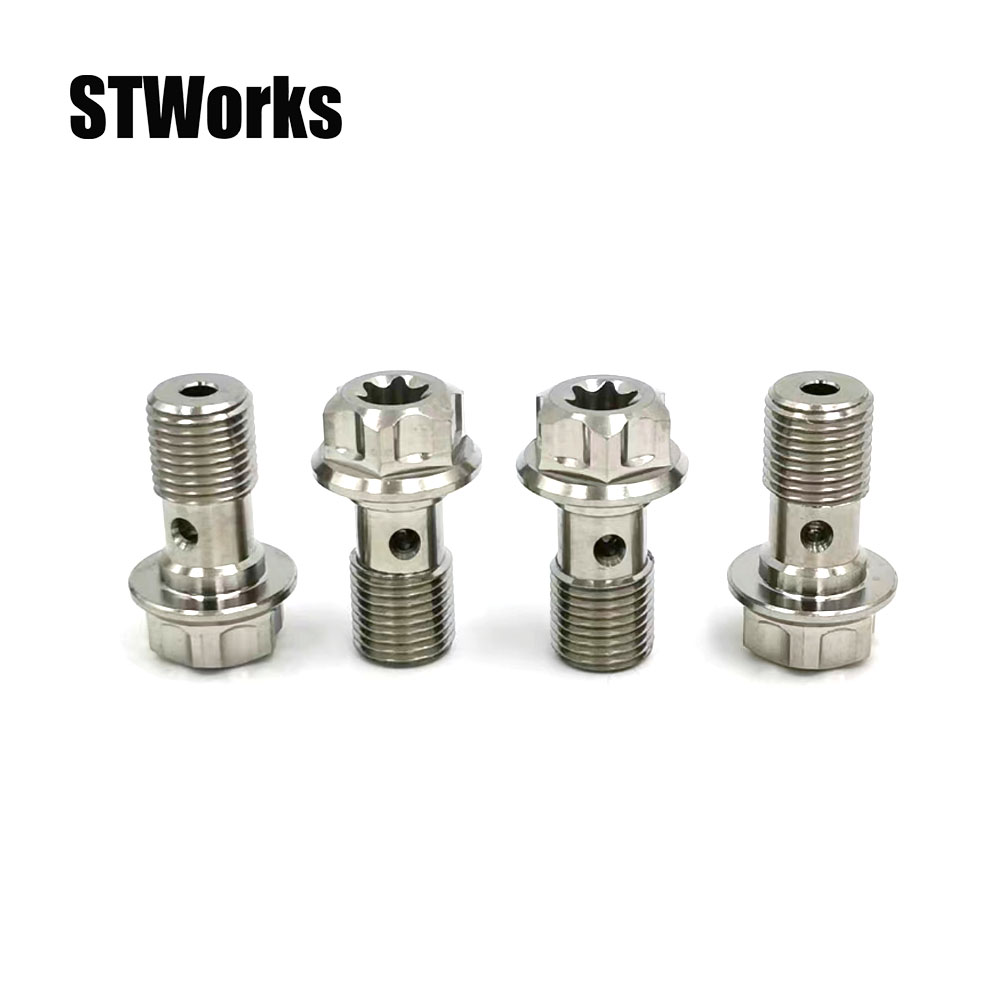
For custom CNC-machined titanium floating carriers, rotor bells, and large components, our standard MOQ is typically 50 to 100 units per drawing specification, though pilot sample batches (5 to 10 units) are accommodated for dynamometer and track homologation testing. For standardized titanium hardware such as rotor Torx screws (M5x10, M6x12) and banjo bolts, the MOQ is 200 to 500 pieces.
Our facility runs multiple CNC turning centers, Brother 5-axis machining cells, and precision wire EDM machines with a combined monthly output exceeding 120,000 precision titanium components, supporting ongoing blanket supply contracts with scheduled container or air freight releases.
What anodized and PVD color finishes are available for titanium brake hardware?
We offer two primary metallurgical coloring methods:
- Electrolytic Anodization: An artificial titanium dioxide (TiO2) thin film is grown under precise voltage control without organic dyes or pigments. Through light wave refraction, we produce vivid, permanent colors including burnt blue, bronze, purple, gold, dark blue, and green. Anodization adds zero dimensional thickness.
- Physical Vapor Deposition (PVD): A hard ceramic coating applied in a high-vacuum chamber. Typical finishes include PVD Rainbow/Neo-Chrome, PVD Black (DLC/TiAlN), and PVD Titanium Nitride (Gold). PVD coatings provide superior scratch, corrosion, and wear resistance.
How do you verify material purity and guard against counterfeit or substandard alloys?
Our factory is located directly in Baoji ("China's Titanium Valley"), granting us direct access to primary national titanium sponge smelting and vacuum arc remelting mills. We maintain an uncompromising raw material verification policy:
Every single incoming billet heat lot undergoes positive material identification (PMI) spectrometer analysis to verify elemental composition: Aluminum 5.5%–6.75%, Vanadium 3.5%–4.5%, Iron ≤ 0.40%, Oxygen ≤ 0.20%, Balance Titanium. Billets undergo ultrasonic non-destructive testing (NDT) to eliminate internal voids and micro-inclusions before entering our CNC chucks. Certified mill test reports are archived and supplied with each commercial export shipment.
Ready to Engineer Your Custom Titanium Brake Assembly?
Send our Baoji machining team your 2D/3D technical drawings (STEP, IGES, PDF) along with your annual volume requirements. Receive comprehensive DFM analysis, tolerance optimization feedback, and firm factory pricing within 4 hours.