Featured Titanium Fasteners & CNC Precision Components
Explore our factory-direct precision parts, machined from aerospace-grade Ti-6Al-4V bar stock with rolled threads, tight concentricity tolerances, and custom surface treatments.
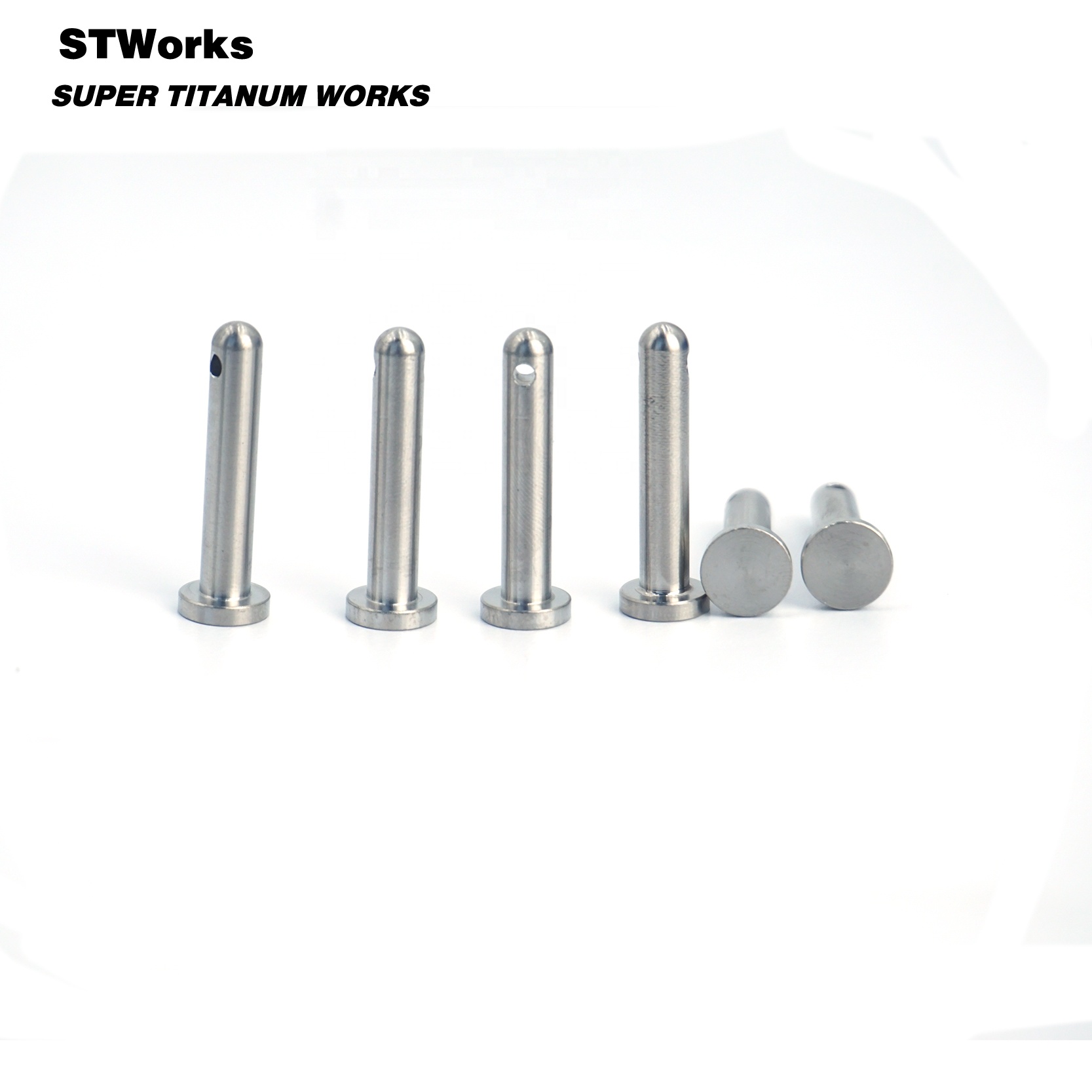
Anatomy of Precision Titanium Shoulder Screws (Stripper Bolts)
Demystifying GD&T precision, radial runout limits, shear load dynamics, and metallurgical superiority in mission-critical kinematic assemblies.
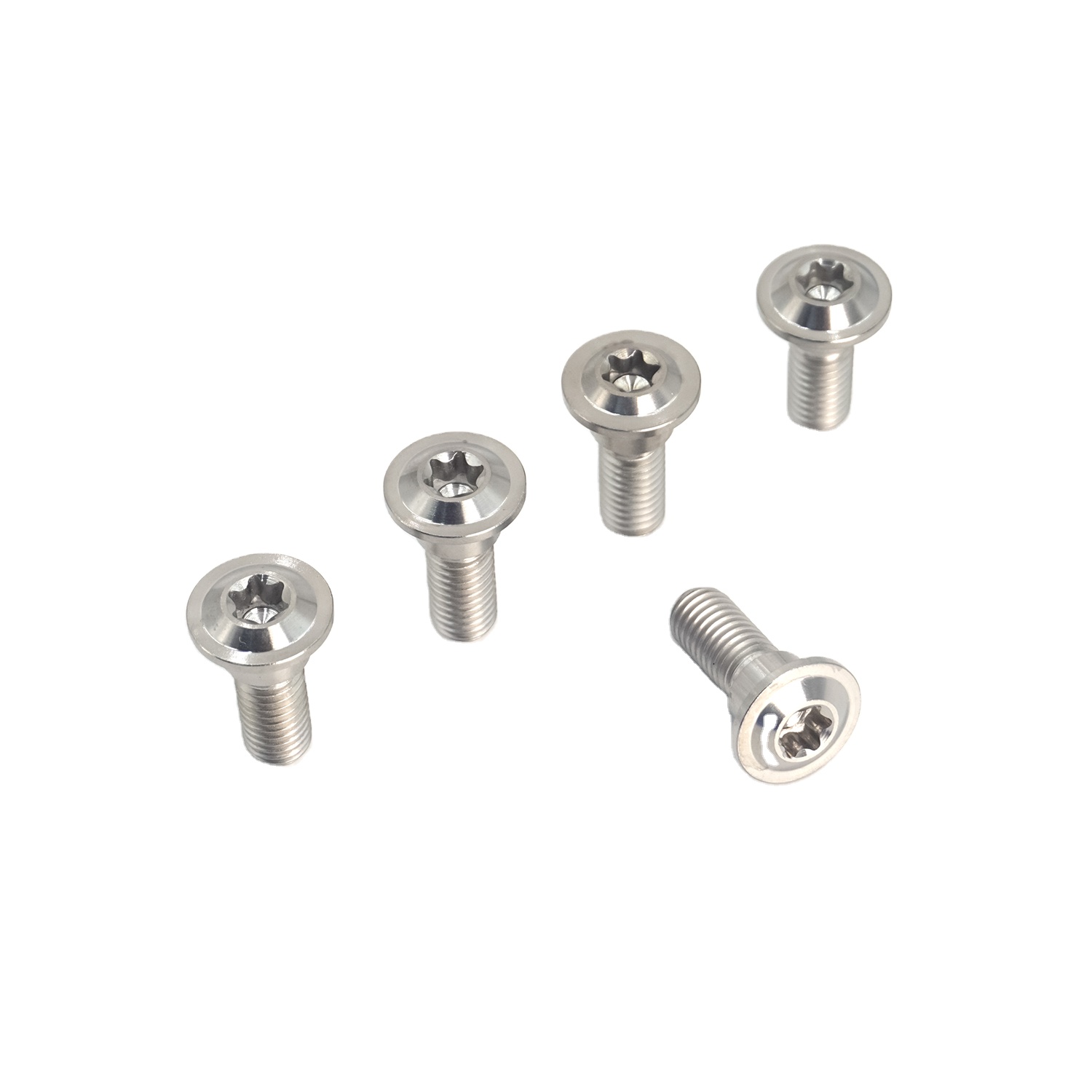
In mechanical engineering, a titanium shoulder screw—frequently referred to as a shoulder bolt or stripper bolt (standardized under ISO 7379, DIN 9841, or ASME B18.3.3M)—is an integrated, three-section mechanical component comprising a threaded shank, an unthreaded precision-ground cylindrical shoulder, and an enlarged drive head. While standard fasteners serve solely as tensile clamping elements, shoulder screws serve a dual or triple engineering purpose: acting simultaneously as high-load journal axles, linear slide guides, precision locator pins, and rigid mounting pivots.
When engineering kinematic linkages subject to high cyclical vibrations, corrosive exposures, and extreme strength-to-weight demands, conventional alloy steel (such as AISI 4140 or Class 12.9) and austenitic stainless steels (AISI 304/316) reveal profound mechanical compromises. Steel inflicts excessive unsprung inertia, while stainless steel suffers from low yield strengths and catastrophic susceptibility to galling and stress corrosion cracking (SCC). Velnora's custom OEM titanium shoulder screws, precision-machined from certified aerospace-grade Ti-6Al-4V Grade 5 (TC4 / UNS R56400), resolve these mechanical vulnerabilities through superior metallurgical properties.
| Mechanical / Physical Property | Gr5 Ti-6Al-4V (TC4) Annealed | AISI 4140 Alloy Steel (Quenched & Tempered) | 316 Stainless Steel (A4-70) | 17-4 PH Stainless Steel (Condition H900) | 7075-T6 Aerospace Aluminum |
|---|---|---|---|---|---|
| Density (ρ) [g/cm³] | 4.43 | 7.85 | 8.00 | 7.78 | 2.81 |
| Ultimate Tensile Strength (Rm) [MPa] | 950 – 1050 | 1000 – 1220 | 700 – 800 | 1310 | 572 |
| Yield Strength (Rp0.2) [MPa] | 880 – 920 | 850 – 1000 | 450 | 1170 | 503 |
| Specific Strength (Strength-to-Weight) [kN·m/kg] | 214 | 127 | 56 | 150 | 179 |
| Modulus of Elasticity (E) [GPa] | 114 | 210 | 193 | 196 | 72 |
| Shear Strength (τ) [MPa] | 550 – 600 | 620 – 710 | 420 | 760 | 331 |
| Chloride Stress Corrosion Resistance | Immune (Amb. Temp) | Poor (Requires Plating) | Moderate (Pitting Risk) | Good | Poor (Exfoliation) |
| Magnetic Permeability (μ) | 1.00005 (Non-Magnetic) | Ferromagnetic (>100) | 1.008 (Slightly Para) | Ferromagnetic (>90) | Non-Magnetic |
Critical Engineering Insight: Modulus Mismatch & Fatigue Damping
Notice the Modulus of Elasticity: Grade 5 Titanium exhibits approximately 114 GPa, roughly half that of alloy steel (210 GPa). In dynamic assemblies undergoing heavy shock loading—such as automotive suspension pivots, racing brake linkages, or high-speed automation pick-and-place end-effectors—this lower modulus allows the titanium shoulder to elastically deform under momentary shock vectors without sustaining permanent micro-yielding. This intrinsic compliance disperses localized stress spikes away from the thread root runout, preventing catastrophic thread shearing and fatigue failure.
OEM Geometric Dimensioning & Tolerancing (GD&T) Capabilities
From sub-micron centerless ground shoulder diameters to cold-rolled thread profiles, our multi-axis Swiss turn-mill centers achieve aerospace-grade fidelity.
Micron-Class Shoulder Tolerances
We machine and CNC-grind shoulder diameters to standardized metric fits including ISO h7, h6, f7, and g6, as well as fractional imperial tolerances down to -0.0002" / -0.0005". Surface roughness on the bearing journal is maintained at Ra 0.2 μm to Ra 0.4 μm, minimizing friction against needle bearings, PTFE bushings, or bronze sleeves.
Thread Form Integrity & Rolling
Unlike cut threads that disrupt metal grain flow and introduce micro-notches, our threads are produced via hydraulic thread rolling after CNC finish-turning. Cold-work grain flow follows the thread contour, increasing fatigue strength by over 35% and guaranteeing Class 6g / 4h6h fit standards with custom undercut thread relief (DIN 76-B).
Concentricity & Runout Control
Total Indicated Runout (TIR) between the ground shoulder diameter, head socket drive, and threaded pilot is held within ≤ 0.008 mm (8 μm). Single-setup dual-spindle multi-axis Swiss machining ensures zero secondary rechucking eccentricity, eliminating harmonic wobbling in high-RPM rotating assemblies.
Versatile Head & Drive Geometries
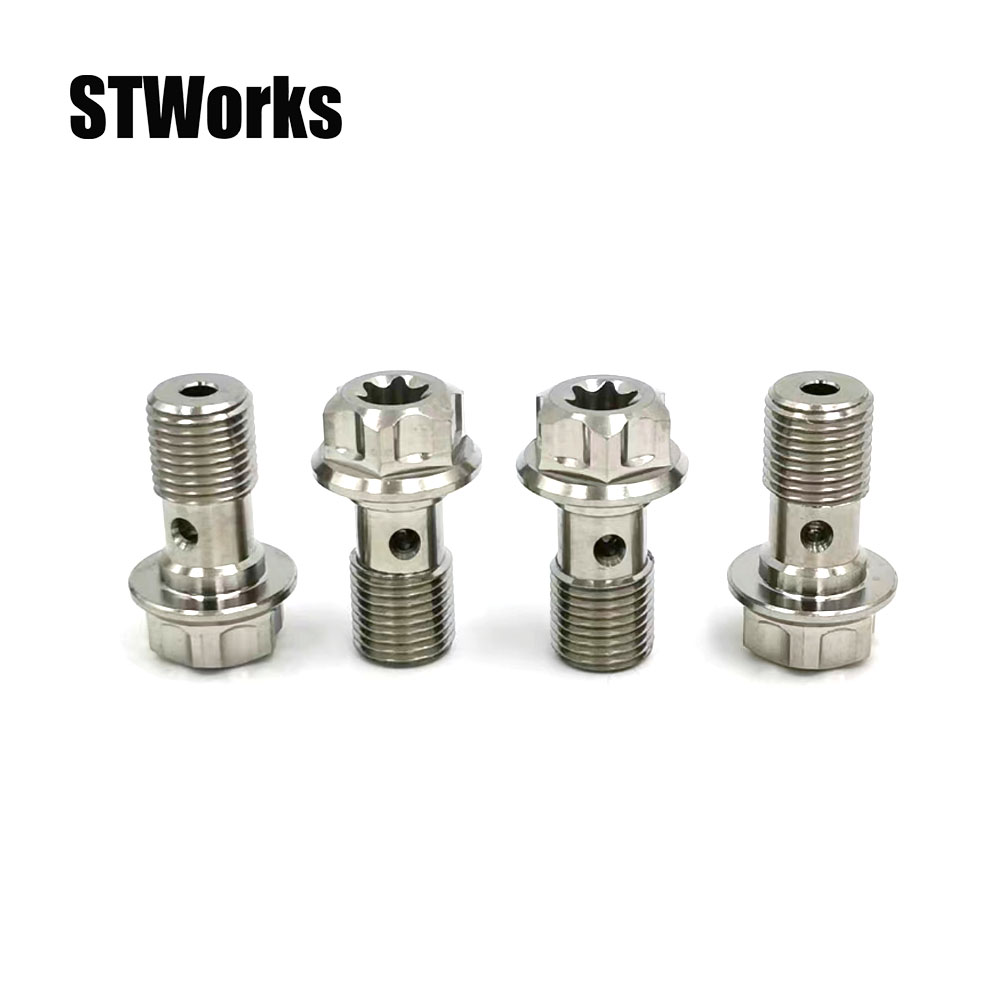
Engineered to customer drawing requirements: Low-Profile Socket Heads, Hexalobular Torx (ISO 10664), High-Torque Double Drive, Broached Hexagon Sockets, Tamper-Proof Pin Torx, Flanged Heads, Slotted Undercuts, and Knurled Tool-Free Finger Adjusters.
PVD & Anti-Galling Surface Coatings
To combat titanium's natural tendency toward thread galling under high preloads, we apply advanced surface engineering: Physical Vapor Deposition (PVD) Diamond-Like Carbon (DLC), Titanium Nitride (TiN), Type II/III Anodization, and Micro-bead blasting with dry MoS2 lubrication.
Hollow-Bore Weight Optimization
For ultra-competitive racing and aerospace payloads, we provide deep-hole micro gun-drilling through the center of the shoulder bolt. This removes non-structural neutral-axis core material, yielding an additional 20% to 32% weight reduction without degrading external shear strength.
Where Mission-Critical Titanium Shoulder Screws Excel
Analyzing failure modes across demanding operational environments where standard commercial hardware fails prematurely.
Aerospace & Satellite Deployment
Applied in solar array hinge pivots, satellite gimbal mounts, and drone actuator linkages. Non-magnetic behavior avoids sensor interference, while cryogenic stability prevents brittle fracture at -196 °C in orbital vacuum.
Motorsport & Superbike Suspension
Replaces steel pivots in rear swingarm linkages, shock absorber mounts, brake pedal bellcranks, and throttle bodies. Cuts unsprung rotating inertia, directly improving damper response rates and tire contact patch fidelity.
Robotics & High-Speed Automation
Used in delta robot linkages, SCARA arm joints, and high-frequency pick-and-place grippers. The low inertia of Grade 5 titanium lowers motor drive torque requirements, enabling higher cycle speeds (CPM) with zero thermal expansion binding.
Medical Diagnostic & Marine Sensors
Deployed in MRI imaging suites requiring complete non-magnetic transparency, surgical articulation devices, and subsea acoustic telemetry buoys exposed to harsh electrolytic saltwater splash zones without passivation breakdown.
B2B Procurement Trends: Sourcing Titanium Shoulder Screws (2025–2030)
How global Tier-1 OEMs and precision system integrators are optimizing supplier qualification, mitigating titanium raw-material volatility, and enforcing digital traceability.
The industrial fastener landscape is undergoing a structural paradigm shift. Where commercial off-the-shelf (COTS) steel stripper bolts once sufficed, modern electrification, space commercialization, and robotics miniaturization require custom hardware capable of withstanding extreme operational envelopes. Senior procurement officers and manufacturing engineers must navigate three defining industry trends:
1. Supply Chain Clustering in Baoji
Global buyers are transitioning away from intermediary trading firms to direct factory integration within Baoji—China's renowned "Titanium Valley." Accounting for over 60% of domestic titanium output, this geographic manufacturing cluster combines sponge titanium smelting, double-vacuum VAR ingot melting, bar extrusion, precision Swiss CNC machining, and surface anodizing within a tight radius. This consolidation shortens OEM production lead times by 40% and shields buyers from international supply disruptions.
2. Mandatory Digital MTR & Traceability
Procurement protocols now universally enforce EN 10204 Type 3.1 Mill Test Reports (MTRs) detailing heat lot numbers, chemical gas spectrometry (O, N, H, C, Fe content), and tensile/yield stress test curves. As counterfeit metal alloys proliferate on global marketplaces, Tier-1 buyers require 100% material lot traceability from vacuum-arc remelt (VAR) ingots to the finished boxed fastener.
3. Hybrid Additive-Subtractive Integration
While direct metal laser sintering (DMLS) 3D printing is expanding in aerospace bracketry, it cannot produce the micron-level concentricity (h7) or mirror surface finishes (Ra ≤ 0.4 μm) essential for dynamic shoulder bolts. The industry is adopting a hybrid sourcing paradigm: 3D-printed titanium chassis brackets fitted with high-precision CNC-machined and ground titanium shoulder screws as structural pivot hardware.
Why Global OEMs Partner with Velnora Titanium
Established in 2013 in Baoji, Shaanxi, Velnora Titanium Industry Co., Ltd. combines specialized metallurgical knowledge with cutting-edge multi-axis CNC manufacturing.
You communicate directly with our toolmakers and CNC application programmers. We perform DFMA (Design for Manufacturability Analysis) on your CAD files (STEP, IGES, DXF) to optimize shoulder fillets, thread reliefs, and tooling costs before chip-making commences.
Eliminate supplier anxiety. For every batch order, we provide in-process 4K machining videos, CMM coordinate dimensional inspection logs, thread pitch micrometer verifications, and high-resolution packaging photos before international dispatch.
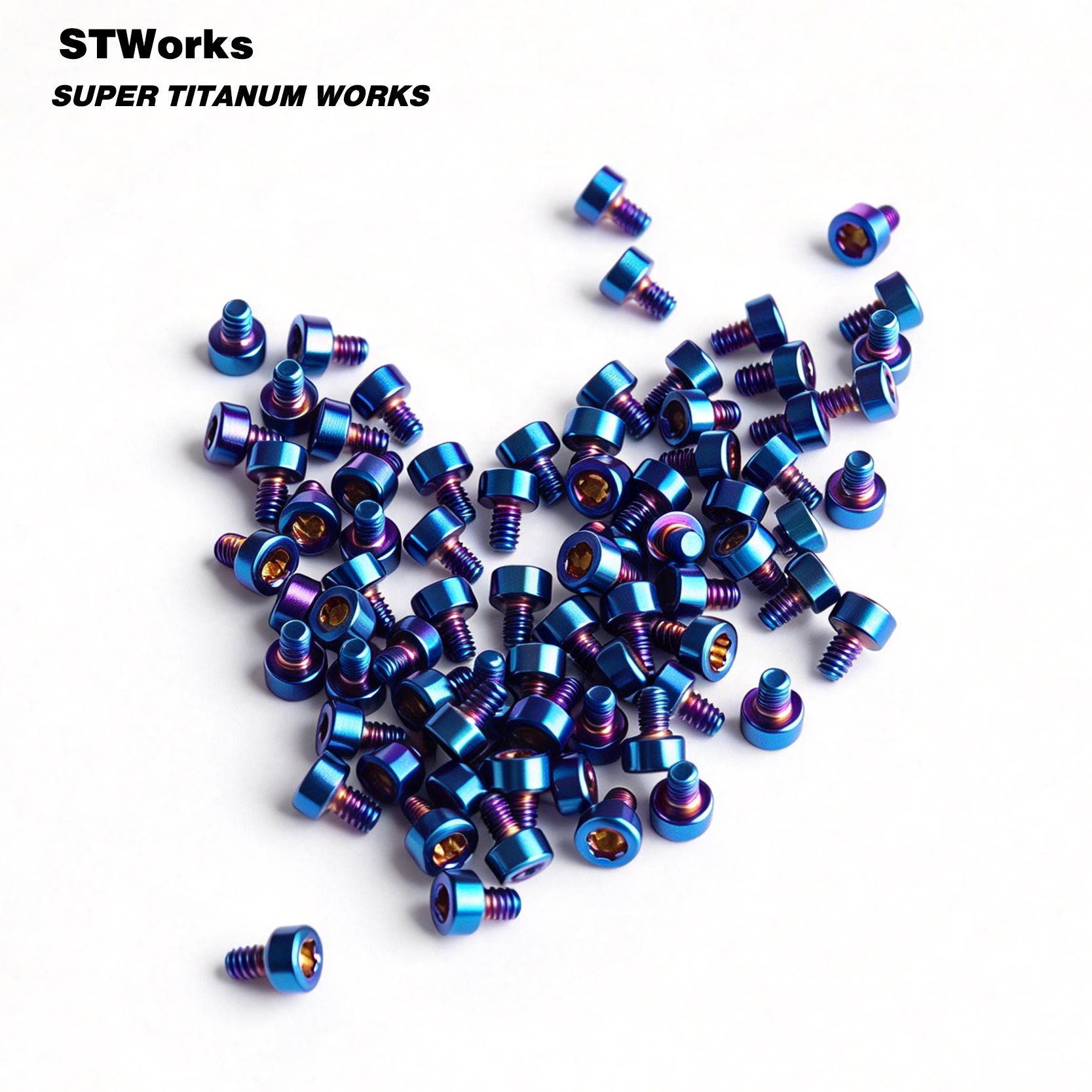
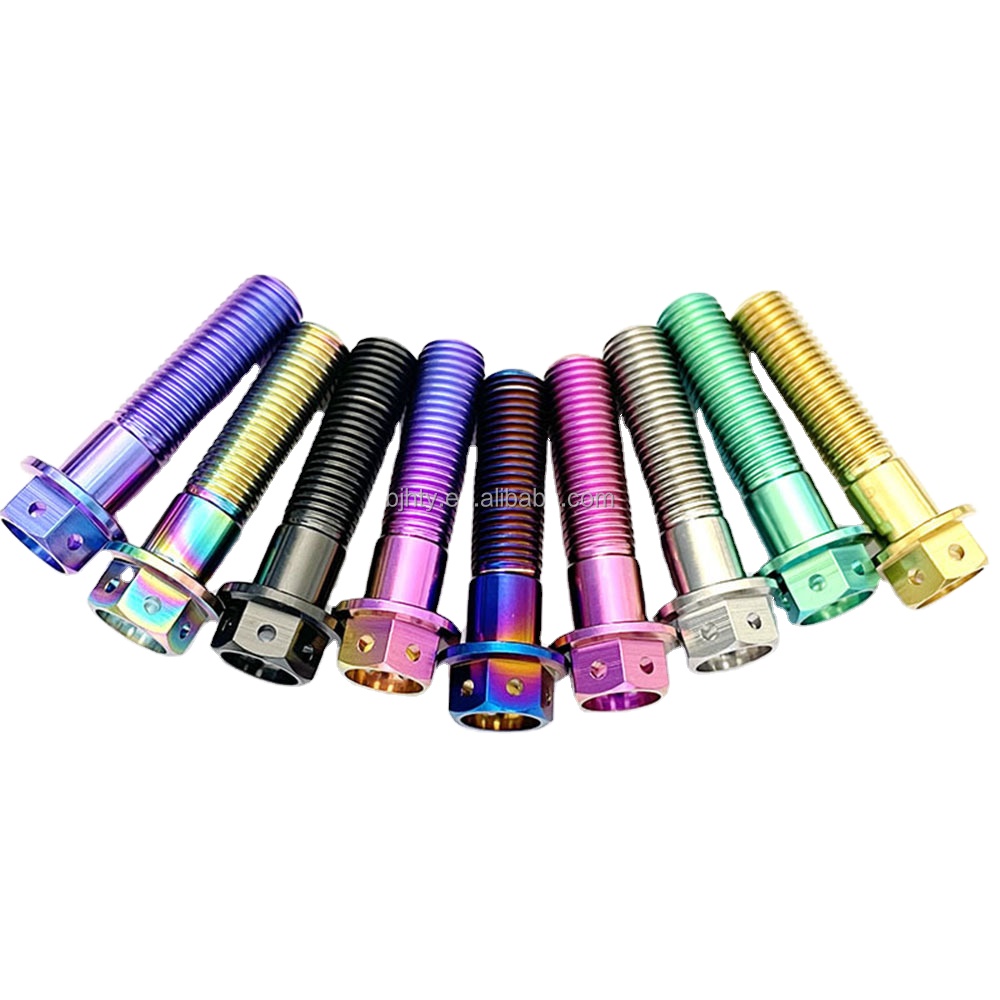
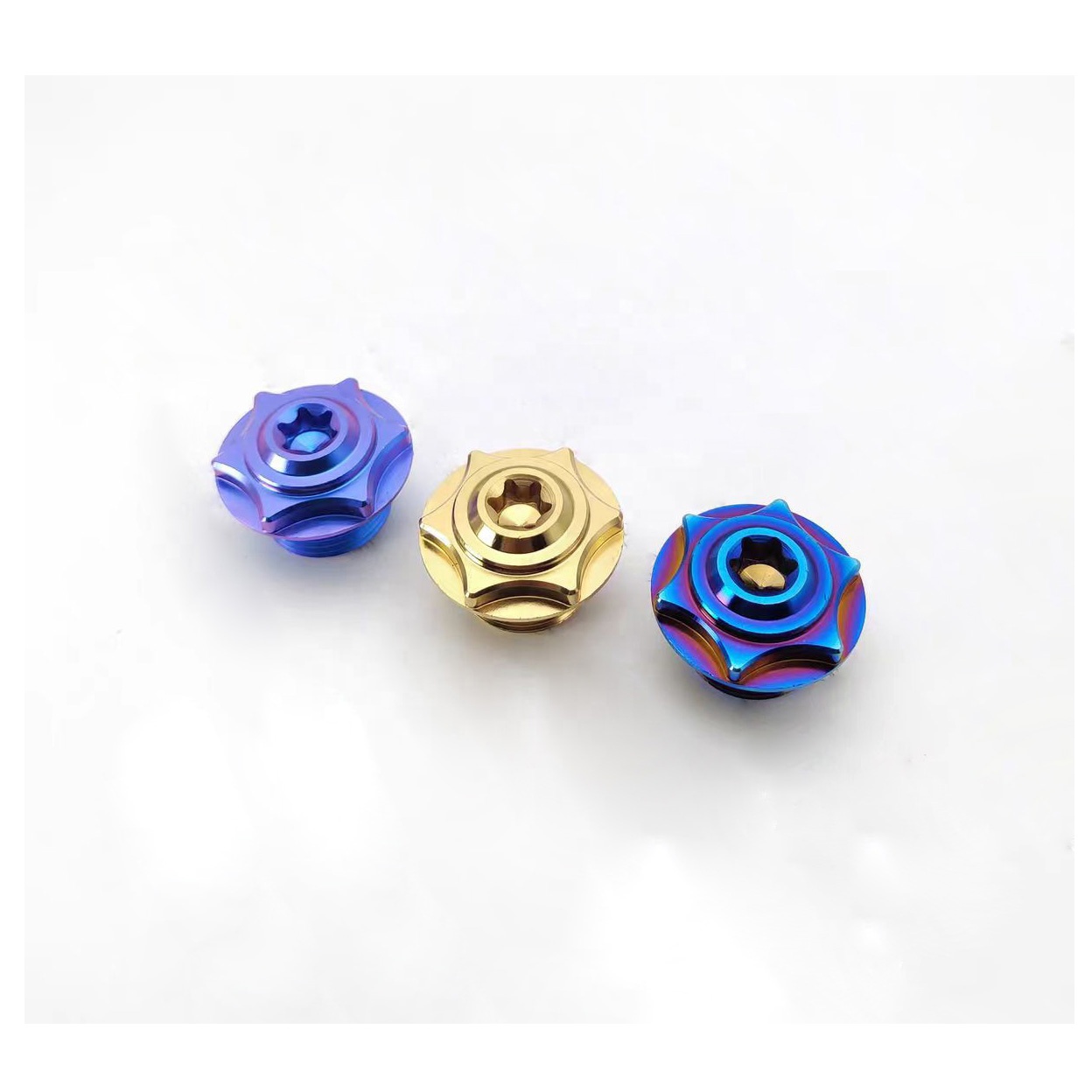
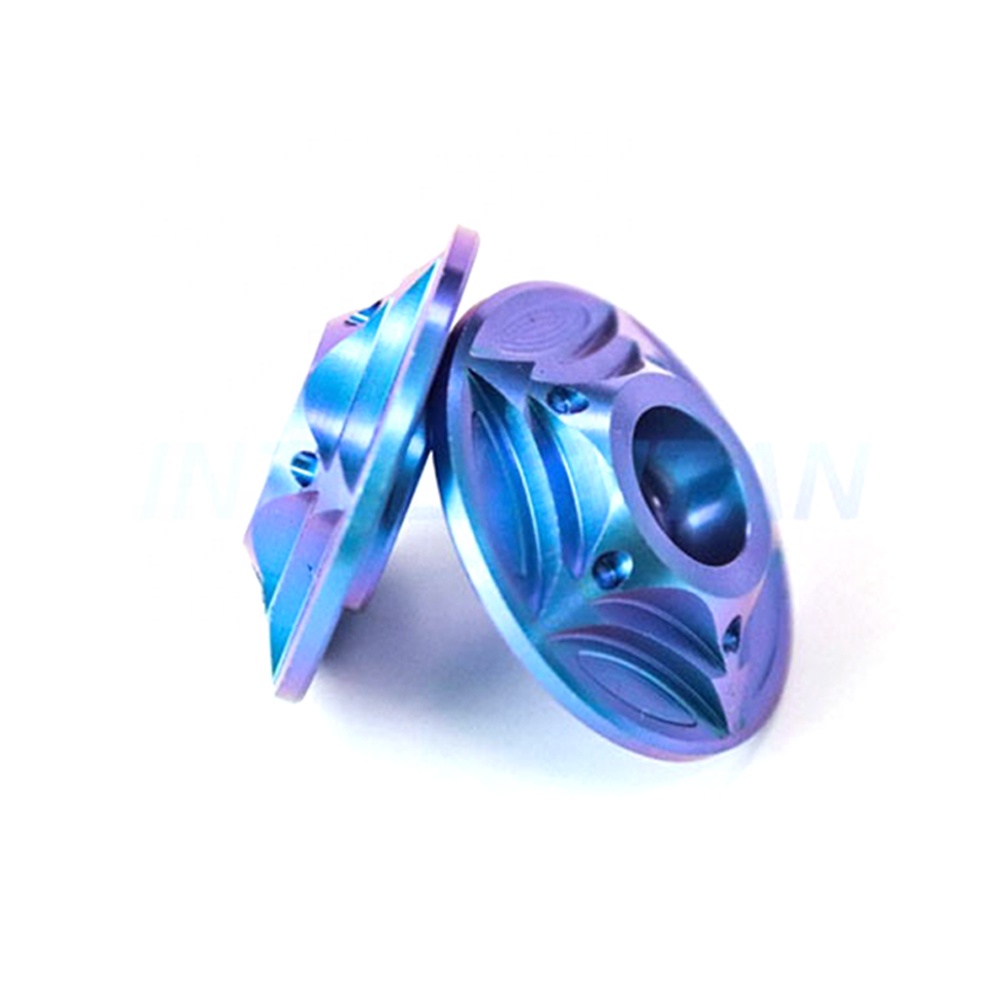
In-house finishing capabilities include precision vibratory deburring, ultrasonic degreasing, Type II anodizing, vibrant spectrum anodization (purple, electric blue, burnt bronze, gold), and ultra-hard PVD coating for extreme wear resistance.
Years Manufacturing in Baoji
OEM Clients Across 45 Countries
Achievable Grinding Tolerance
Average Engineering RFQ Response
B2B Procurement FAQ: Custom Titanium Shoulder Screws
Detailed engineering answers addressing common buyer concerns regarding torque calculations, galling prevention, material substitutions, and quality verification.
Can a Grade 5 (Ti-6Al-4V) titanium shoulder screw directly replace an alloy steel Class 12.9 stripper bolt?
Engineering Evaluation: It depends strictly on whether the governing design criterion is shear or tensile loading. Grade 5 titanium offers an ultimate tensile strength of ~950–1050 MPa and yield strength of ~880–920 MPa, which is directly comparable to a Class 8.8 or Class 10.9 steel fastener, but slightly below Class 12.9 steel (1220 MPa tensile / 1100 MPa yield).
However, because a shoulder screw primarily absorbs shear loads along its precision-ground cylindrical body rather than pure axial tension, Grade 5 titanium's shear strength (~550–600 MPa) frequently allows for a 1:1 drop-in replacement in dynamic pivot assemblies while delivering an immediate 44% weight reduction and complete immunity to chloride corrosion. If your application operates at the absolute peak tensile threshold of Class 12.9 steel, our engineers recommend stepping up the shoulder diameter by 1–2 mm or switching to high-strength near-beta titanium alloys.
How do you prevent thread galling and cold welding during assembly?
Titanium naturally develops a passive, microscopic titanium dioxide (TiO2) film. When titanium threads rub against internal mating threads under high contact pressure, this thin oxide layer can break down, causing the bare metallic asperities to fuse—a destructive phenomenon termed galling or cold welding.
We mitigate galling through three proven manufacturing and assembly safeguards: (1) Precision thread rolling with mirror root fillets instead of cut threads, drastically reducing surface micro-asperities; (2) Surface treatments such as Physical Vapor Deposition (PVD) Diamond-Like Carbon (DLC) or Type II aerospace anodizing; and (3) The application of an anti-seize paste containing copper, molybdenum disulfide (MoS2), or nickel flake during final mechanical assembly. Never use high-speed pneumatic impact tools during titanium fastener installation.
What GD&T tolerances can Velnora maintain on shoulder diameters and thread runout?
Utilizing high-precision multi-axis Swiss-type turning centers and automated centerless CNC grinding stations, we consistently achieve:
- Shoulder Diameter: Standard ISO h7, h6, and f7 tolerances (e.g., 6 mm shoulder held within +0.000 / -0.008 mm). Custom tolerances down to ± 0.003 mm upon request.
- Shoulder Length: ISO js11 or custom ± 0.02 mm to ensure exact axial clearance for rotating bearings.
- Concentricity / Total Indicated Runout (TIR): ≤ 0.008 mm between shoulder journal and thread axis.
- Surface Finish: Ra 0.2 μm – Ra 0.4 μm on the shoulder surface for optimal bearing interaction.
What are the tightening torque recommendations for titanium shoulder screws?
Because the lower elastic modulus of Grade 5 titanium (114 GPa vs. steel's 210 GPa) produces a different clamp load elongation curve, tightening torque must be calculated carefully. Generally, dry titanium fastener torque should be reduced by 15% to 20% compared to standard Class 10.9 steel equivalents of the same thread pitch.
Furthermore, because shoulder bolts seat on the annular shoulder step rather than clamping purely through the head, the torque applied must not over-compress the shoulder seating face or stretch the smaller threaded shank past its yield threshold. When using anti-seize lubricants, torque values must be adjusted downward by an additional 25% to 30% depending on the lubricant's torque-tension coefficient (k-factor). We provide precise, application-specific torque charts for all custom orders.
What is the typical Minimum Order Quantity (MOQ) and production lead time?
For custom OEM components manufactured to client technical drawings (STEP / PDF), our typical production MOQ is 100 to 300 pieces, depending on part size, drive broaching complexity, and coating specifications. For prototyping runs and initial design verification, we offer rapid sample batches as small as 20 to 50 pieces.
Sample turnaround is typically completed within 7 to 10 working days. Full mass-production batches are generally completed and packaged for export within 18 to 25 business days, supported by global express air freight (DHL, FedEx, UPS) with 3–5 day transit times worldwide.
What quality assurance certifications and testing documentation do you deliver?
Every shipment is accompanied by complete documentation for rigorous incoming quality control (IQC):
- EN 10204 Type 3.1 Mill Test Certificate: Chemical composition analysis and tensile mechanical test verification.
- CMM & Optical Dimensional Inspection Reports: Shoulder diameter, concentricity, and thread pitch verification.
- RoHS & REACH Compliance Declarations.
- In-Process Photo & Video Verification: Real-time production records provided prior to shipping release.