Gr5 Ti-6Al-4V
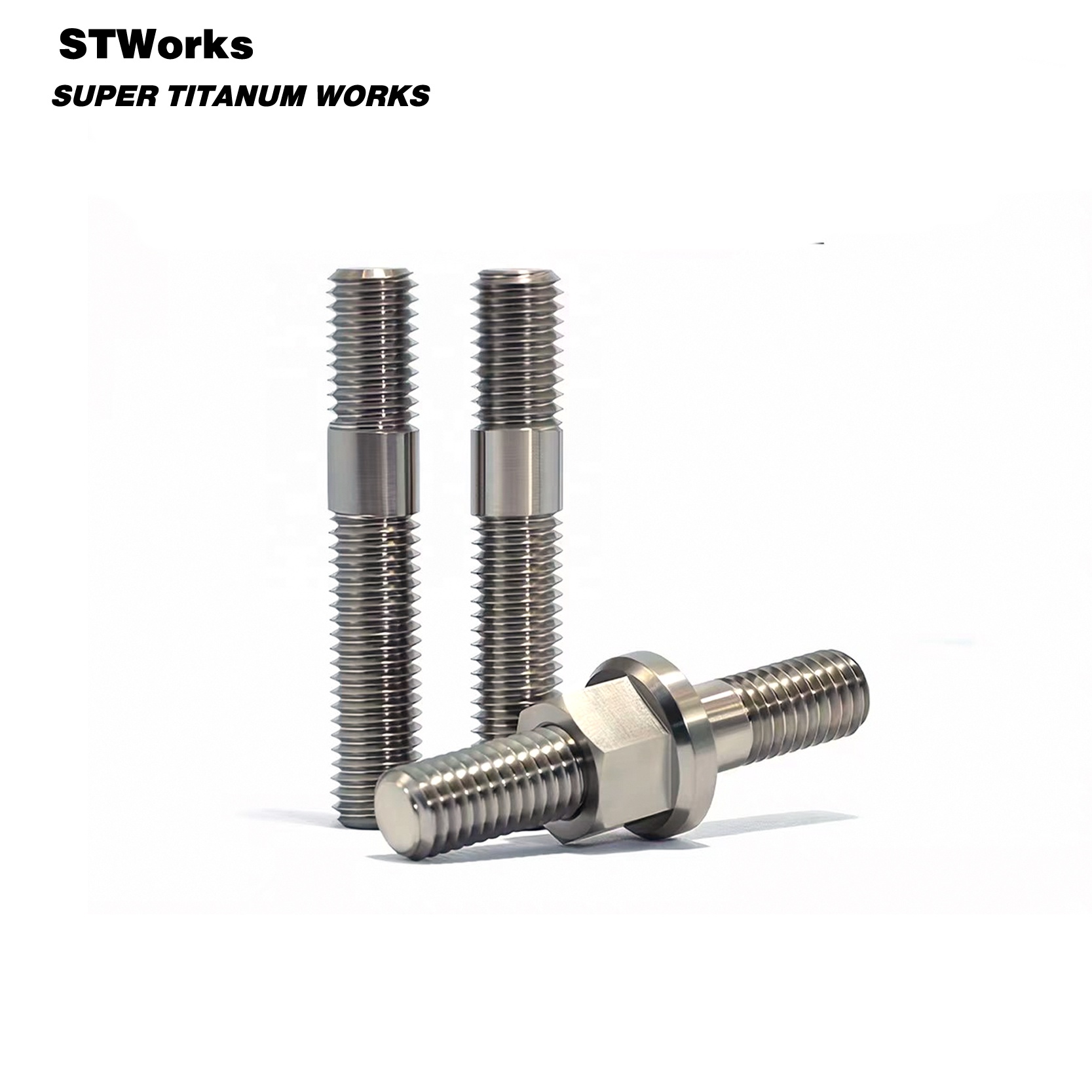
Direct OEM & ODM manufacturing directly from Baoji. High-precision tolerances, custom flame/anodized coloration, and verified CNC batch consistency.
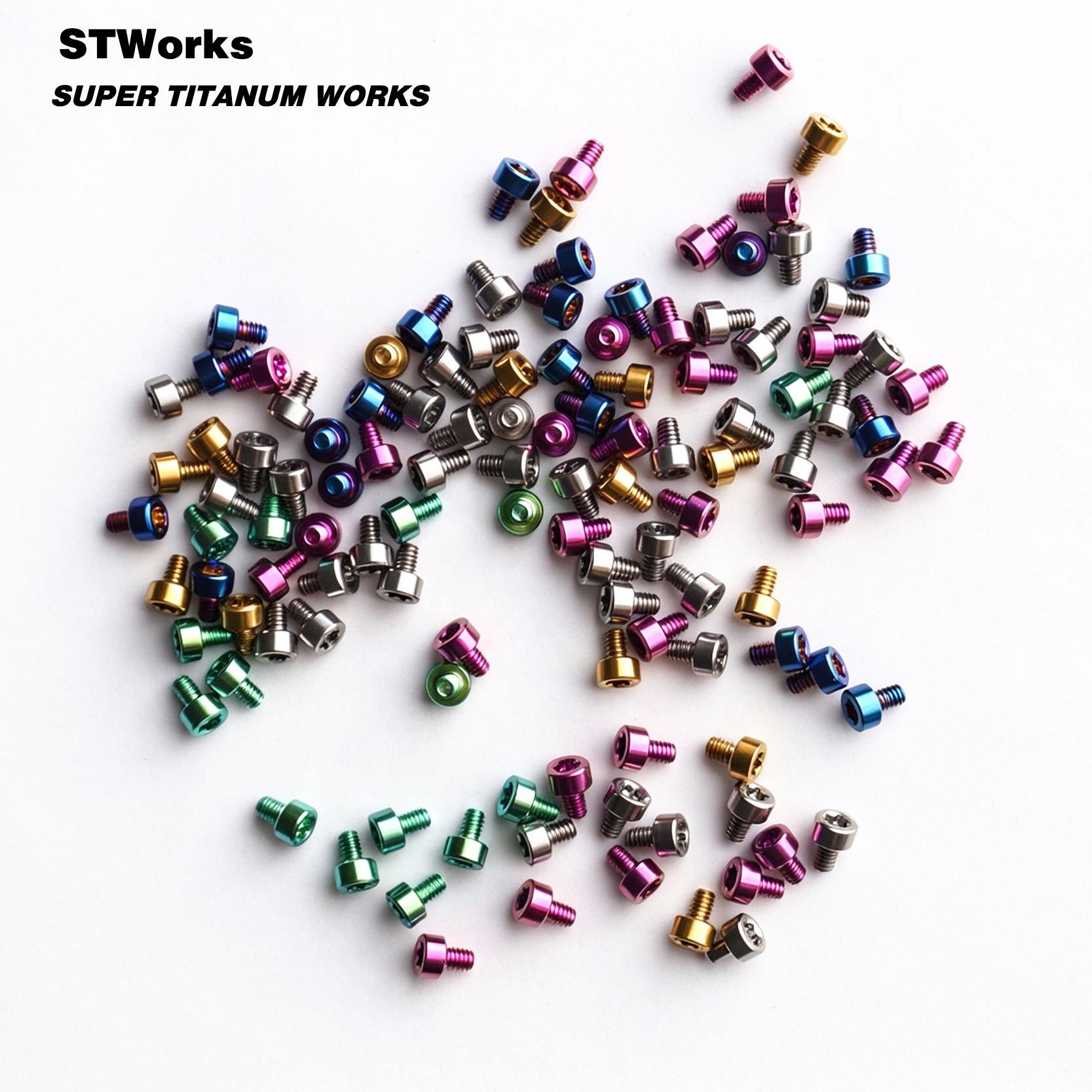
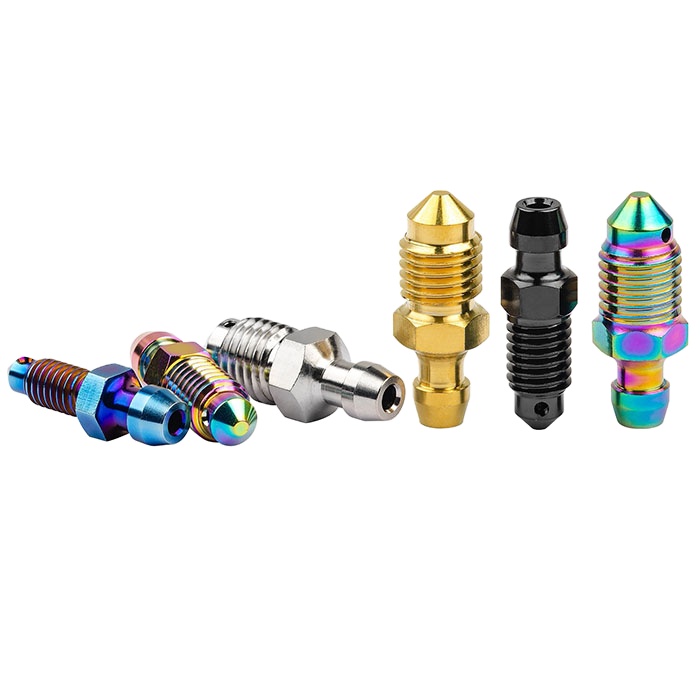
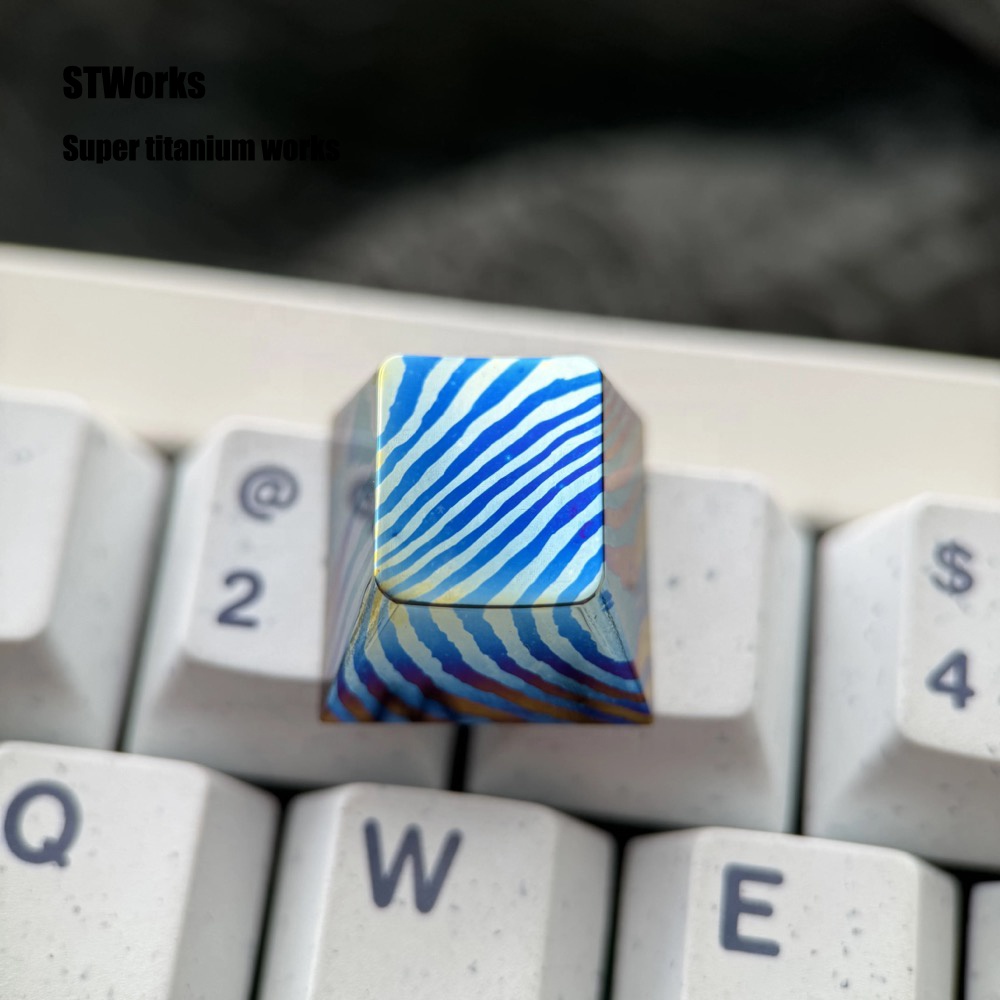
In the high-end Everyday Carry (EDC) hardware sector, Timascus (frequently referred to as Mokuti or layered titanium damascus) represents the pinnacle of decorative aerospace metallurgy. Unlike traditional ferrous Damascus steel, which relies on forge welding high-carbon steel alloys (such as 1095 and 15N20) prone to ambient corrosion, Timascus is a corrosion-immune, hypoallergenic composite created through solid-state diffusion bonding of alternating, high-purity titanium alloys under elevated temperature and ultra-high hydrostatic pressure within a protective inert argon atmosphere or vacuum retort.
As a premier custom OEM Timascus EDC beads manufacturer and factory located in Baoji, China's Titanium Valley, Velnora Titanium Industry engineers composite billets utilizing two distinct metallurgical formulations:
Alternating layers of commercially pure Grade 2 CP-Ti ($\alpha$-phase) and Grade 5 Ti-6Al-4V ($\alpha+\beta$ phase). Grade 2 provides exceptional ductility, while Grade 5 adds mechanical stiffness, creating vivid color variance under heat or electric oxidation.
Integrating Grade 2, Grade 5, and Grade 9 (Ti-3Al-2.5V) or Grade 7 (Palladium-stabilized Ti). This tri-metal lamination produces a three-color depth gradation across complex three-dimensional bead fluting and geometric chamfers.
Diffusion occurs at approximately $850^\circ\text{C}$ to $920^\circ\text{C}$ below the $\beta$-transus threshold. This prevents intermetallic embrittlement, eliminating delamination risk during aggressive 5-axis CNC machining and diamond boring.
Engineering Insight on Delamination Resistance: Inferior forge-welded laminates suffer microscopic voids between alloy lamellae. Under high shear turning forces during internal lanyard boring, these voids propagate into macro-fractures. Velnora performs 100% ultrasonic non-destructive flaw detection (NDT) across raw Timascus rods prior to lathe turning, guaranteeing 0% interface delamination on production runs.
| Material Specification | Composition Layers | Tensile Strength (MPa) | Oxidation Rate Disparity | Recommended EDC Application |
|---|---|---|---|---|
| Dual-Alloy Classic Timascus | Gr2 CP-Ti + Gr5 Ti-6Al-4V | 650 – 780 | High (Vivid 2-Tone Contrast) | Lanyard beads, custom knife bolsters, thumb studs |
| Tri-Alloy Premium Mokuti | Gr2 + Gr5 + Gr9 (Ti-3Al-2.5V) | 720 – 840 | Extreme (Tri-Tone Gradient) | Artisan Begleri sets, luxury mechanical watch bezels, pens |
| ZircuTi / Timascus-Zr Composite | Gr2 Ti + Gr5 Ti + Pure Zirconium | 580 – 710 | Maximum (Jet Black + Iridescent Ti) | Collector-tier high-contrast beads, spinning tops |
| Monolithic TC4 (Baseline) | Ti-6Al-4V Homogeneous Alloy | 895 – 930 | Uniform (Single color spectrum) | Standard paracord hardware, structural screws |
Machining Timascus is vastly more demanding than turning conventional Grade 5 titanium. Because the billet consists of alternating bands of low-hardness, ductile Grade 2 titanium (yielding high plastic deformation and adhesive galling tendencies) and high-strength Grade 5 titanium (which promotes abrasive tool wear and chatter), cutting tools encounter cyclically shifting mechanical resistance with every spindle revolution.
We deploy ultra-fine carbide inserts with physical vapor deposition (PVD) TiAlN/AlCrN coatings, utilizing high positive rake geometries to shear rather than displace the heterogeneous titanium layers.
Titanium possesses exceptionally poor thermal conductivity ($6.7 - 7.2\ \text{W/(m}\cdot\text{K)}$). We inject through-spindle cutting fluid directly at the tool-workpiece interface at 70 Bar to dissipate heat and prevent thermal micro-cracking.
Paracord fraying is the most common customer complaint in poor EDC hardware. We machine all 5.5mm to 6.5mm lanyard pass-through bores with dual-entry compound R0.8mm internal radial fillets, micro-polished to $Ra < 0.2\mu m$.
For non-rotational outer geometric facets, intricate skeletonized cutouts, and mechanical pocketing, slow-speed Wire EDM ensures zero mechanical deformation of delicate internal Damascene twist patterns.
Precision CNC ball-end milling creates microscopic slots tailored for standard $1.5 \times 6\text{mm}$ or $2.0 \times 12\text{mm}$ self-luminous tritium gas capsules, held to tight tolerances of $+0.03/-0.00\text{mm}$ with optical inspection.
Every batch undergoes non-contact optical coordinate measuring machine (CMM) testing to confirm symmetric axial weight distribution—imperative for Begleri beads requiring dynamic kinematic balance during play.
The vibrant, iridescent coloration of Timascus is entirely dye-free and pigment-free. It is governed purely by thin-film light interference across an amorphous titanium dioxide ($\text{TiO}_2$) barrier film generated on the bead surface. When incident ambient light strikes the transparent oxide boundary, a portion of the light wave reflects off the air-$\text{TiO}_2$ interface, while the remainder refracts into the oxide layer, reflects off the base metal surface, and emerges back out.
Depending on the precise nanometer thickness ($d$) of the oxide layer, specific spectral wavelengths reinforce or cancel each other according to the constructive interference equation:
$2n \cdot d \cdot \cos(\theta) = (m + 0.5) \cdot \lambda$
Where $n \approx 2.5$ (refractive index of amorphous $\text{TiO}_2$), $d$ is film thickness (nm), $\theta$ is angle of incidence, and $\lambda$ is visible wavelength.
Because commercially pure Grade 2 titanium oxidizes at a fundamentally lower electrical potential and thermal threshold than the aluminum- and vanadium-stabilized Grade 5 alloy, simultaneous exposure produces completely divergent oxide film thicknesses across adjacent metallurgical bands:
Applying an open micro-torch flame at $400^\circ\text{C}$ to $650^\circ\text{C}$. This non-equilibrium heating develops rich organic sweeps of burnished bronze, incandescent crimson, deep violet, and ice-blue swirls that trace the macro-grain forge lines.
Submerging beads in a calibrated electrolyte solution (such as ammonium phosphate or sodium carbonate) at controlled DC voltages (15V to 110V). Yields mathematically repeatable colors, perfect for branded production runs requiring strict SKU color matching.
Optical diamond hand-polishing ($Ra < 0.05\mu m$) prior to anodizing generates brilliant gemstone reflections. Conversely, hydrofluoric/nitric acid pickling leaves a tactile topographic matte texture that highlights the woodgrain Damascus pattern.
As the global Everyday Carry market transforms from niche hobbyist forums into a mature lifestyle and luxury hardware industry, B2B procurement managers, brand founders, and outdoor accessory distributors are adjusting their sourcing strategies. Below are the key engineering and supply chain vectors shaping the next five years of titanium EDC procurement:
Forward-thinking brands are moving beyond monolithic titanium beads. B2B buyers now specify modular multi-part beads incorporating press-fit black ZircuTi cores, vintage copper accents, translucent amber Ultem (PEI) sleeves, and luminous glow-resin inlays that mechanical enthusiasts reconfigure without tools.
EDC Begleri manipulation has evolved into a global skill toy sport. OEM buyers demand exact weight symmetry within $\pm 0.05\text{ grams}$ per bead shell, accompanied by internal bead recesses designed to accommodate interchangeable brass or tungsten ballast weights to customize dynamic inertial swing.
The rise of platforms like Kickstarter, Indiegogo, and high-frequency Instagram drops requires agile manufacturing. Brands can no longer commit to 10,000-piece single-SKU stock. Velnora supports agile OEM runs with initial custom batch sizes starting as low as 50 to 100 units, accelerating time-to-market.
With boutique EDC beads commanding retail prices between $80 and $300+, counterfeit deterrence is vital. Advanced OEM factories integrate high-resolution fiber laser engraving to apply micro-logos, serial numbers, QR verification codes, and proprietary pattern identifiers down to 0.05mm line widths.
Headquartered in the Precision Manufacturing Park of Jinhe Industrial Park in Baoji, Shaanxi, China, Velnora Titanium Industry Co., Ltd. is positioned at the epicenter of the world's most comprehensive titanium smelting, forging, and precision CNC ecosystem. This strategic location provides our global OEM partners with decisive operational advantages:
We source vacuum arc remelted (VAR) Grade 2 CP-Ti and Grade 5 Ti-6Al-4V bar stock directly from verified domestic smelters, backed by mill test certificates (EN 10204 3.1) confirming ASTM B348 and AMS 4928 compliance with zero intermediate markup.
From high-speed Swiss-type lathes and 5-axis CNC machining centers to slow-feed Wire EDM, magnetic pin tumbling, ultrasonic degreasing, and proprietary anodizing tanks—all operations remain 100% under our roof, protecting your intellectual property.
We eliminate sourcing blind spots. As documented in our verified supplier profiles and video libraries, our engineering department provides live CNC machining photos and HD video inspections during production before final packing and dispatch.