CNC & PVD
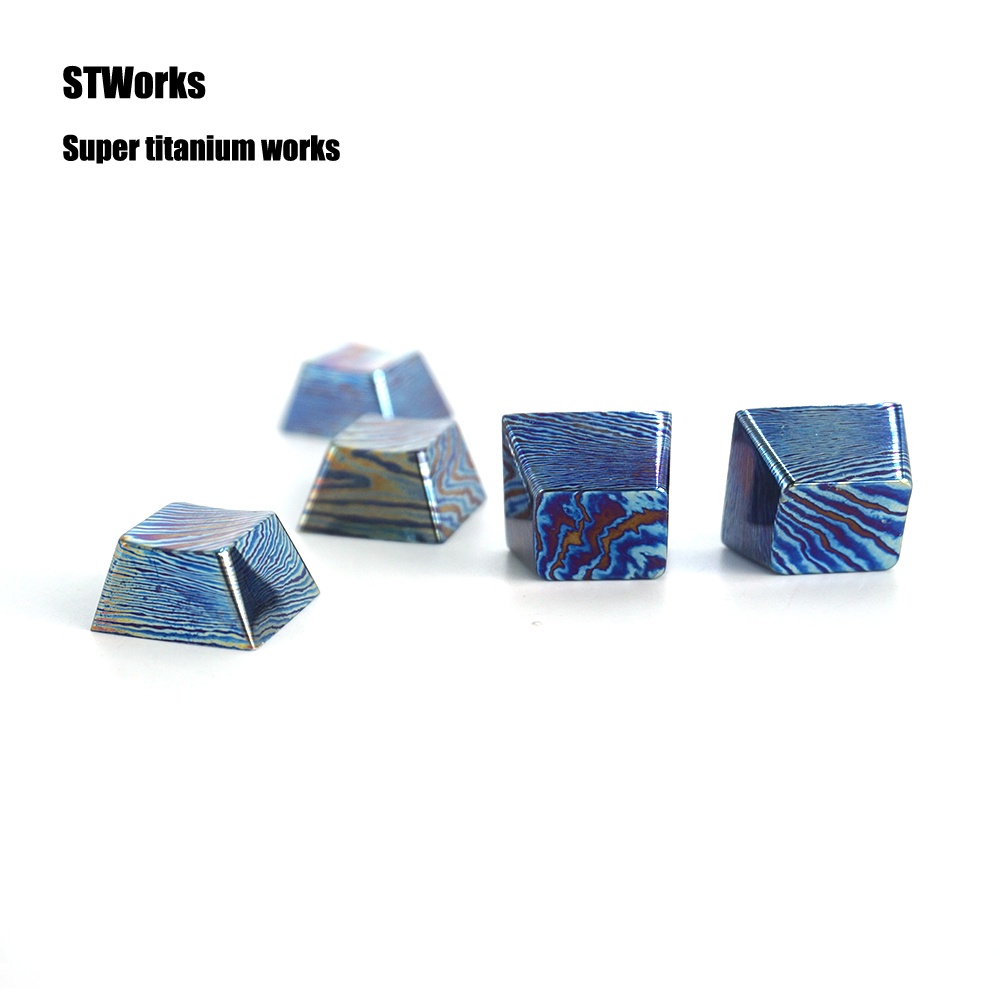
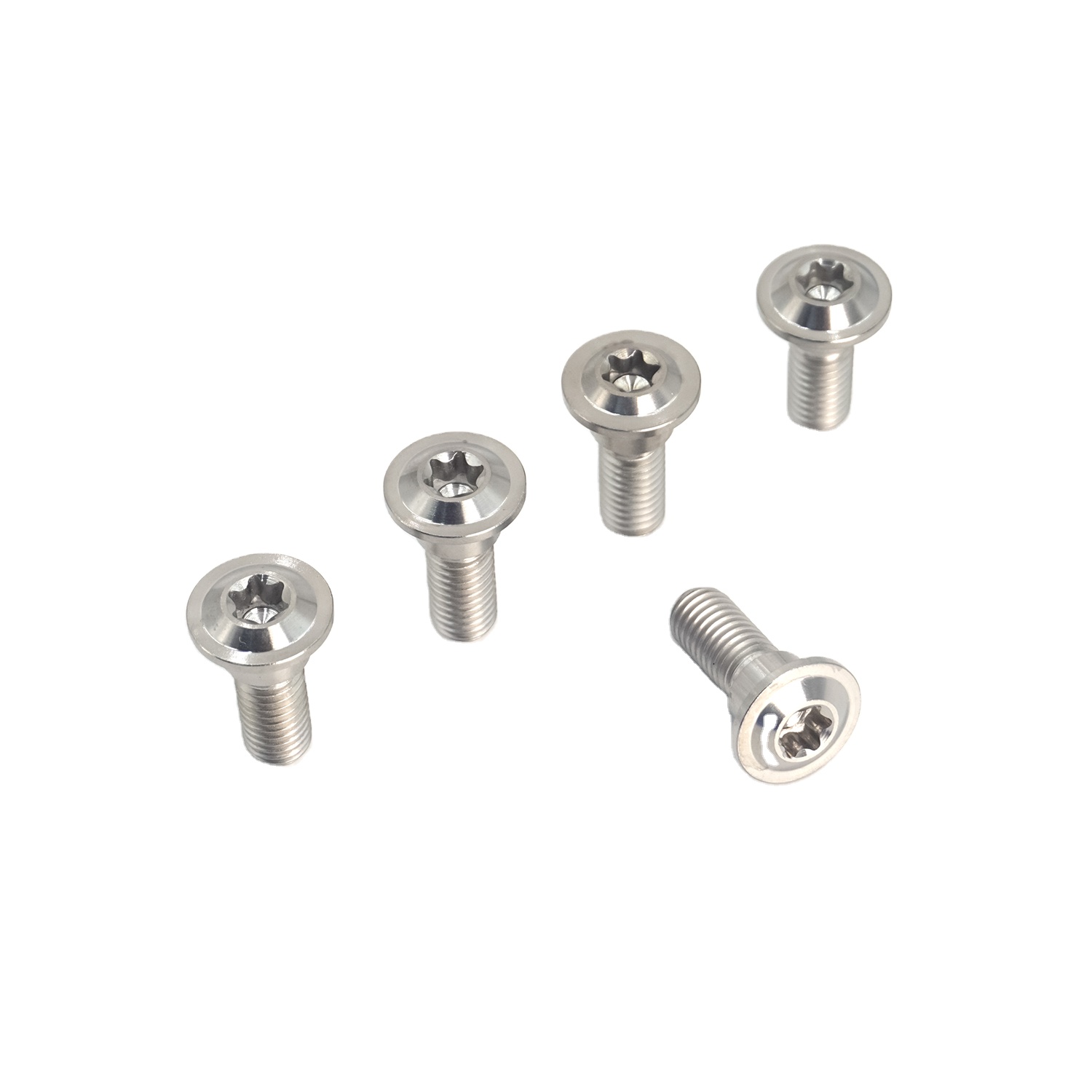
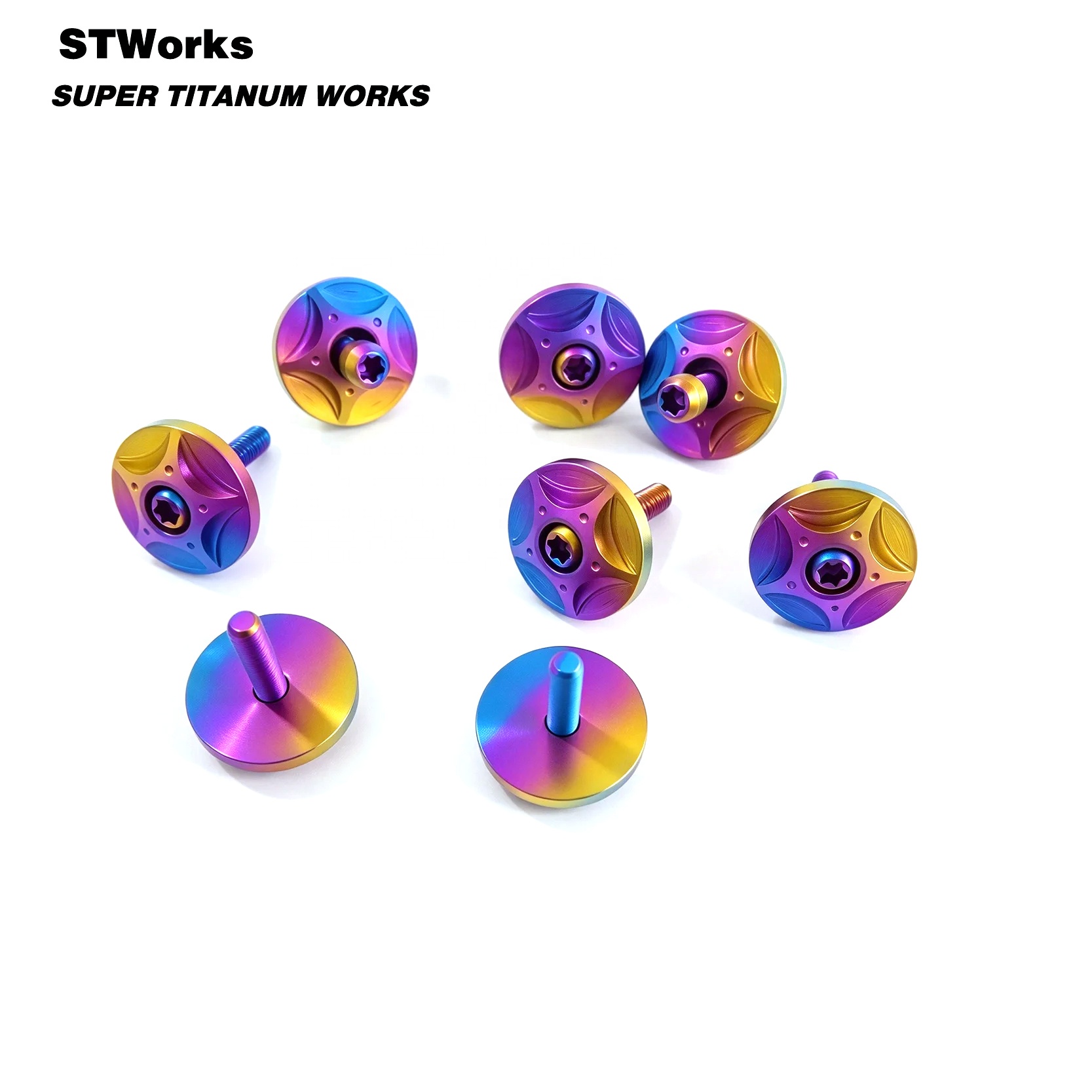
Titanium Gaming Keyboard Caps CNC Broaching & PVD Coating 18mm×8.5mm
- MaterialTC4 / Gr5 Titanium
- Process5-Axis CNC + Wire EDM
- HardnessHV 2800 (PVD Film)
Direct from our precision machining workshops in Baoji, China. Engineered from aerospace-grade Gr5 (TC4) titanium alloy bar stock to ISO 9001 and motorsport specifications.
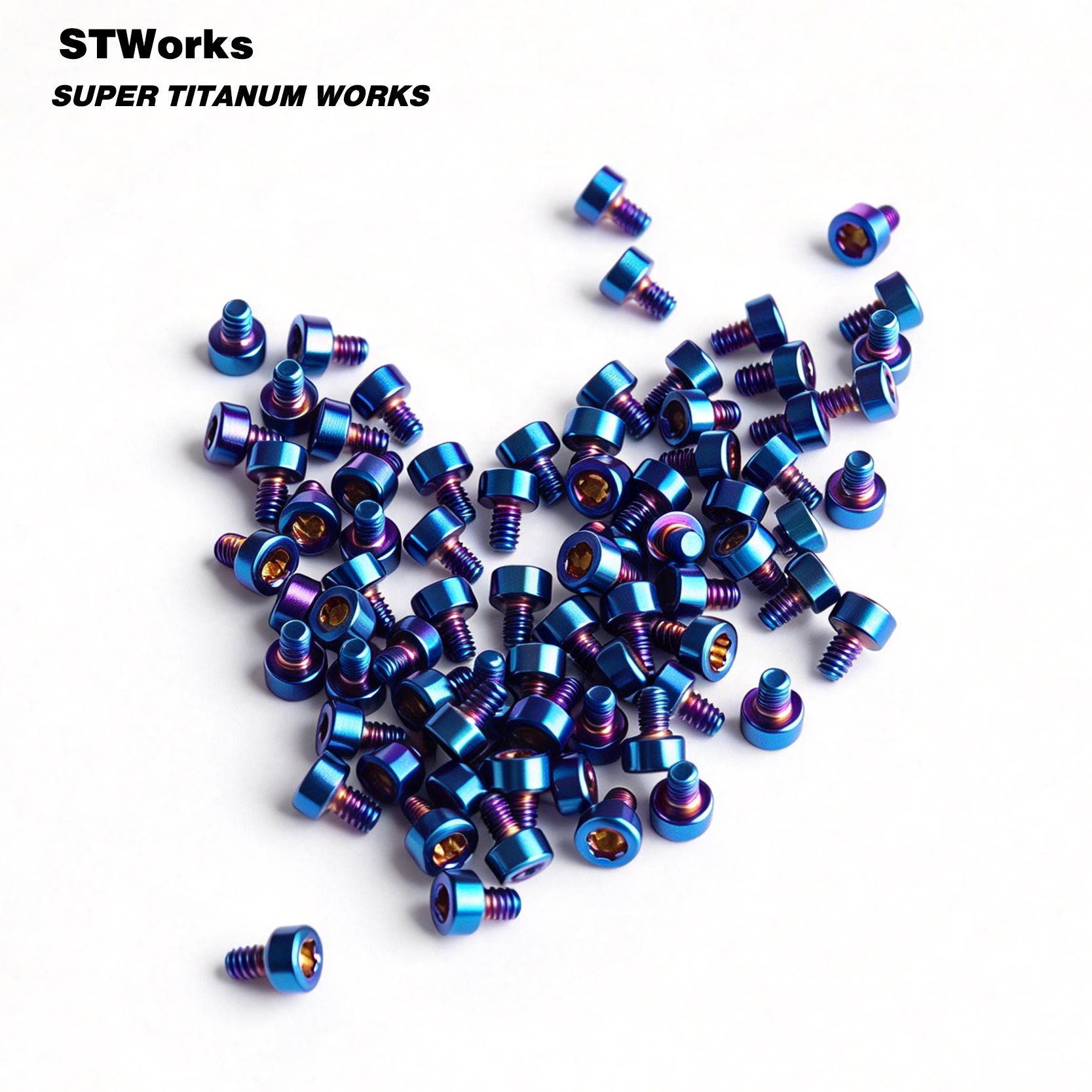
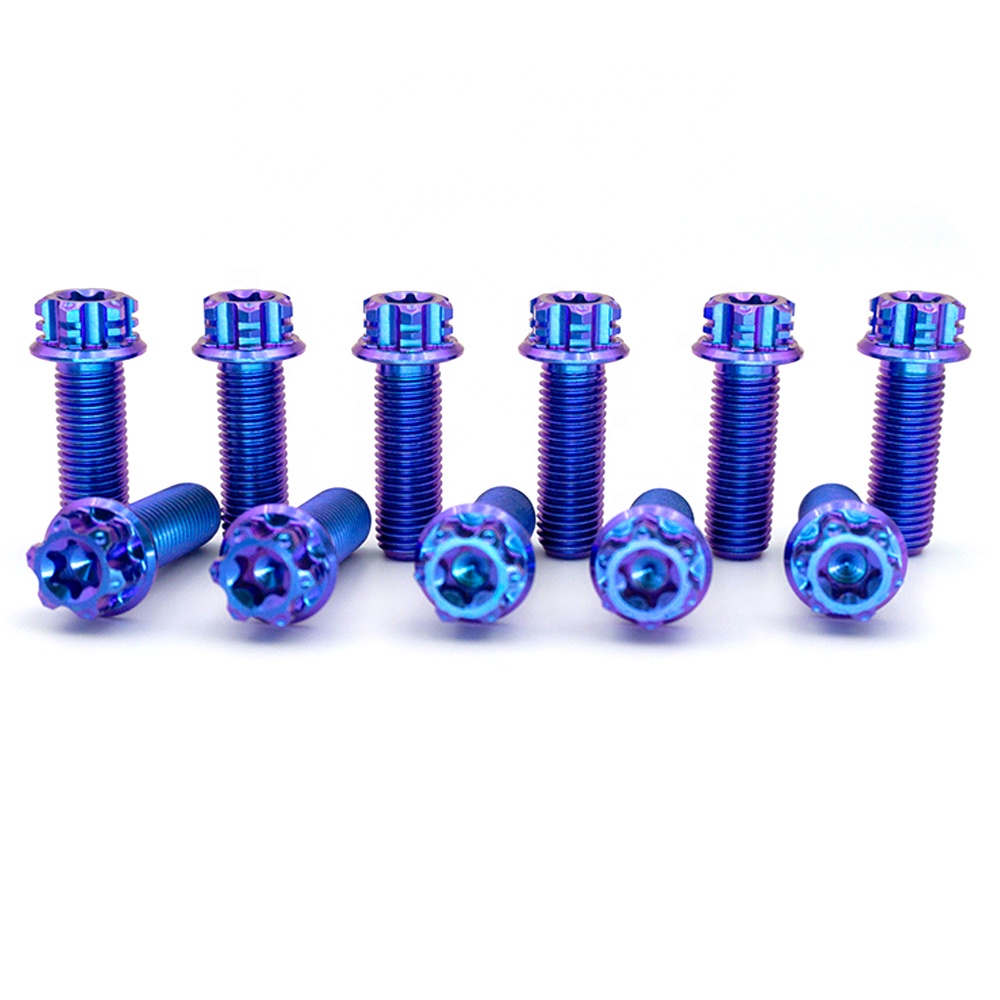
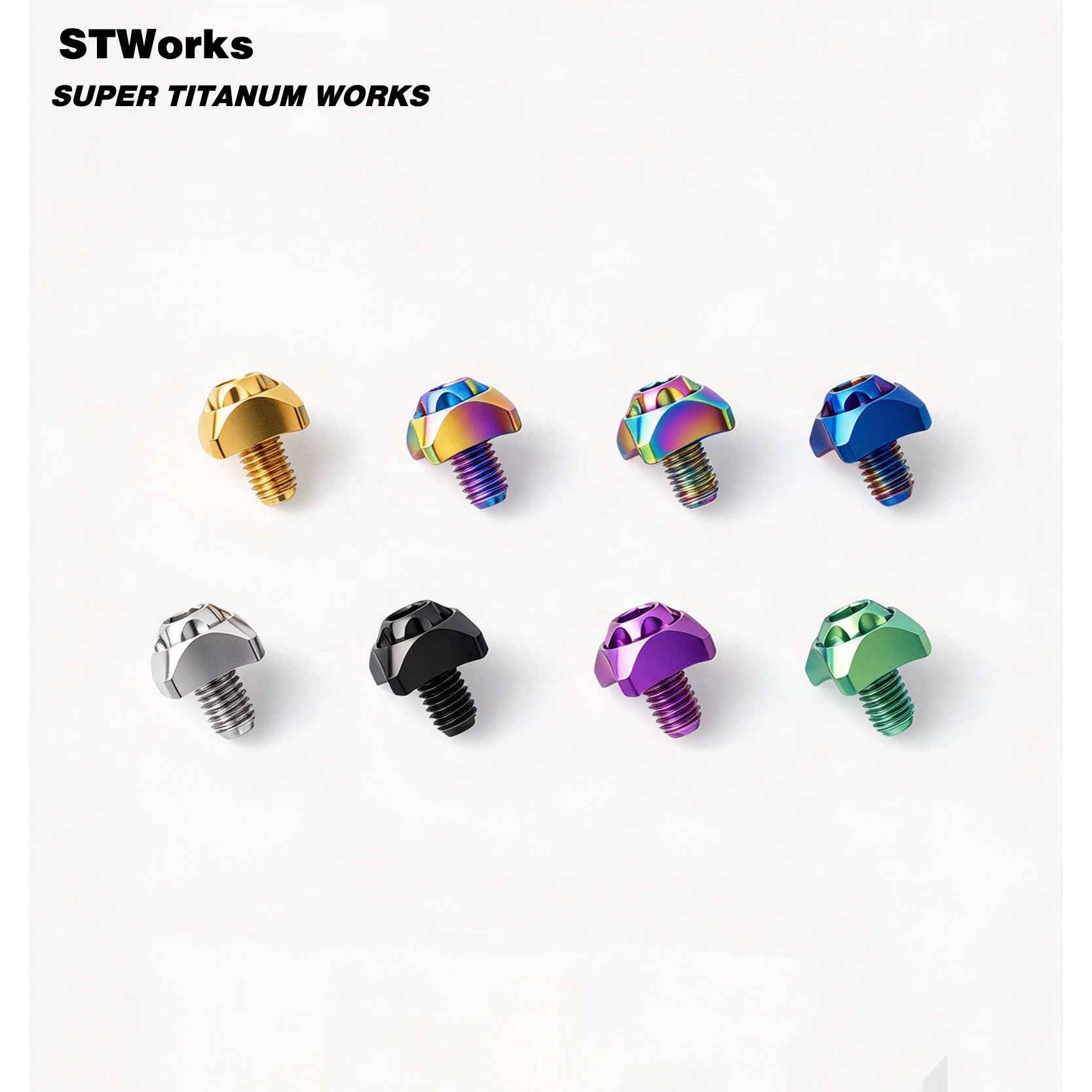
A comprehensive engineering assessment on why tier-1 automotive tuners, OEM wheel brands, and motorsport fabricators are migrating from steel and aluminum wheel hardware to Grade 5 Ti-6Al-4V fastener assemblies.
Lug nuts are located on the rotating hub assembly. Lowering mass here directly decreases rotational inertia ($I = \sum m r^2$). Transitioning a 20-lug car from 4140 steel (approx. 110g/nut) to Grade 5 titanium (approx. 60g/nut) sheds roughly 1.0 kg of rotating unsprung mass, resulting in measurably faster damper recovery, crisper transient steering response, and improved regenerative braking efficiency in performance EVs.
During endurance track sessions or high-load braking, carbon-ceramic or cast-iron brake rotors transfer extreme heat through the wheel hub, regularly exceeding 450°C. While 7075-T6 aluminum lug nuts anneal, soften, and catastrophically yield above 150°C, Grade 5 titanium retains its structural integrity, yield threshold, and thread tension clamping force across continuous thermal spikes up to 400°C–500°C.
Traditional chrome-plated or black-oxide steel wheel nuts react with magnesium and forged 6061-T6 aluminum wheel hubs when exposed to winter deicing salts ($CaCl_2 / NaCl$), causing severe galvanic blistering and seizure. Titanium instantaneously generates an impermeable, chemically inert titanium dioxide ($TiO_2$) ceramic passivation barrier that prevents cosmetic pitting, rust weeping, and thread freezing.
Values represent standardized mechanical ratings derived from certified test bar coupons under ASTM B348 (Ti Gr5), ASTM A322 (4140 Steel), and ASTM B211 (7075-T6 Al).
| Mechanical / Physical Property | Ti-6Al-4V Grade 5 (TC4) | AISI 4140 Chrome-Moly (HT) | 7075-T6 Billet Aluminum | Commercial Carbon Steel (8.8) |
|---|---|---|---|---|
| Density ($\rho$, $g/cm^3$) | 4.43 (44% lighter than steel) | 7.85 (Heavy baseline) | 2.81 (Ultra-light, low yield) | 7.87 |
| Ultimate Tensile Strength ($R_m$, $MPa$) | 950 – 1,050 | 1,000 – 1,150 | 540 – 570 | 800 – 830 |
| Tensile Yield Strength ($R_{p0.2}$, $MPa$) | 880 – 920 | 850 – 950 | 480 – 505 | 640 – 660 |
| Fatigue Limit Endurance (Cycles @ 500 MPa) | > $10^7$ (Infinite Life) | $10^6$ – $10^7$ | < $10^5$ (Rapid degradation) | $10^5$ – $10^6$ |
| Thermal Stability Threshold ($^\circ C$) | Up to 450°C Stable | Up to 350°C | Deteriorates > 120°C | Up to 300°C |
| Salt Spray Corrosion ($ASTM\ B117$) | Immune (> 2,000 hrs zero rust) | Rust spots < 96 hrs | Severe white corrosion < 240 hrs | Blisters < 48 hrs |
| Optimal B2B Application Fit | High-performance OEM & Racing | Heavy industrial / Commercial trucks | Cosmetic low-speed show vehicles | Economy passenger commuter cars |
A tour of Velnora Titanium's precision machine shop floor in Baoji. Understanding the critical manufacturing distinctions that safeguard vehicle safety at 300 km/h.
Cut threads interrupt the natural grain flow of the titanium bar stock, introducing microscopic stress concentration notches at the thread root. Velnora utilizes high-tonnage hydraulic thread-rolling dies that compress and reshape the metal's grain structure without severing grain fibers. This cold-work hardening increases fatigue life by up to 35% and maintains strict 6g/6H metric pitch tolerances to avoid loosening under severe track vibrations.
Wheel lug nuts must mate perfectly with the wheel lug recess to maintain proper pre-load tension. We manufacture three major standard seat profiles with sub-micron surface accuracy: 60-degree Conical/Acorn (aftermarket wheels such as Volk, Enkei, BBS), Radius/Ball Seat R12/R13/R14 (OEM Porsche, Audi, Honda fitments), and Flat Mag-Seat with floating captive titanium washers (Toyota, Lexus). Imprecise seat angles create point loading and fastener shear failure.
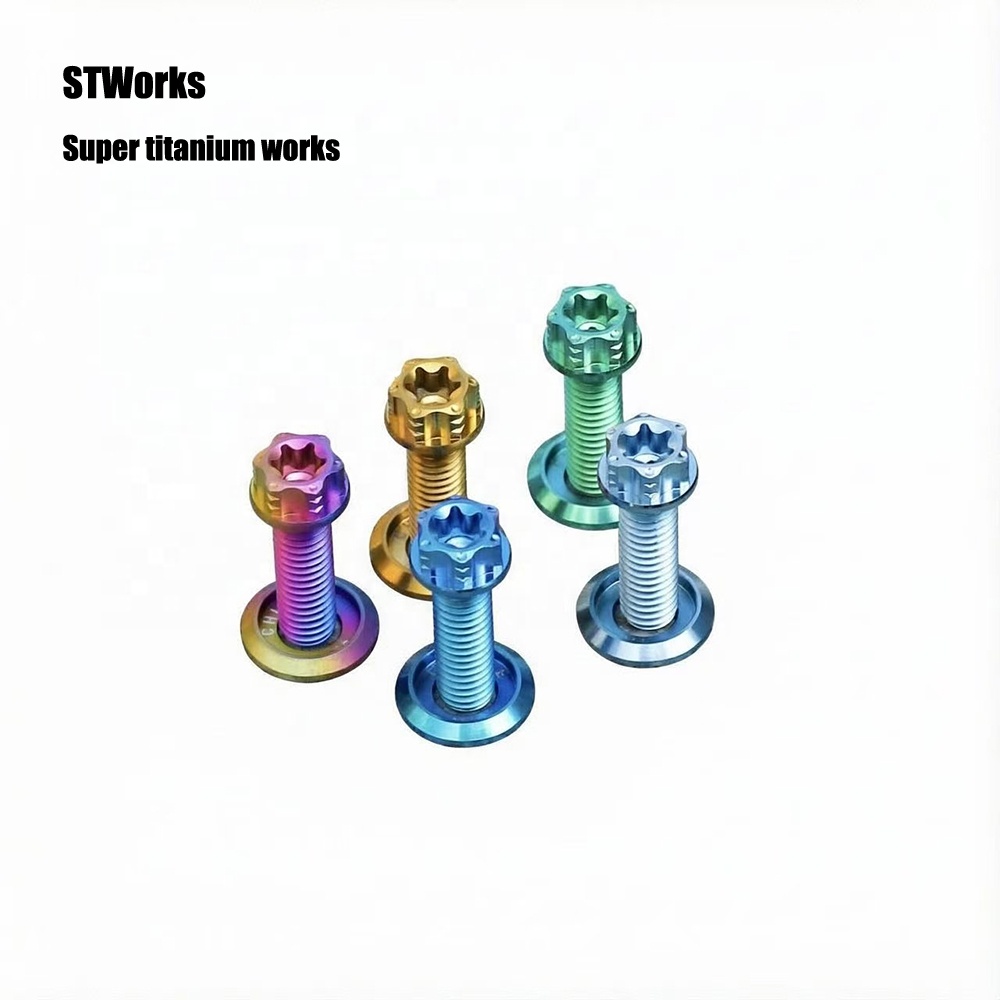
Uncoated titanium against titanium or steel wheel studs can suffer from adhesive wear (galling) when tightened dry. To resolve this without relying exclusively on messy anti-seize pastes, Velnora provides high-vacuum Physical Vapor Deposition (PVD). Coatings like Diamond-Like Carbon (DLC), Titanium Nitride (Gold TiN), and Titanium Carbonitride (TiCN) add an ultra-hard surface layer ($HV > 2500$) with a dry friction coefficient below 0.15, preventing thread binding.
We stock certified TC4 titanium billet rods and run continuous batch runs for all global wheel hub thread pitches, open-end racing profiles, and closed-end acorn locks.
Subaru, Nissan, Infiniti, Suzuki, Alfa Romeo. Lengths: 35mm, 45mm, 48mm, 55mm.
Toyota, Honda, Mazda, Mitsubishi, Ford, Hyundai, Kia. Conical & Mag flat seat.
Modern BMW (F & G chassis), Mini, Rolls-Royce. Conical seat & stud conversion kits.
Tesla Model S/X/3/Y, Porsche, Audi, VW, Chevrolet, Dodge Hellcat, Ford Mustang GT.
Strategic market analysis for importers, motorsport brands, and automotive fastener distributors sourcing from Chinese titanium manufacturing hubs.
Heavy 80–100 kWh battery packs force automotive engineers to pursue aggressive component-level weight reduction to extend vehicle range and meet stricter energy consumption goals. Replacing 20–24 steel wheel nuts and bolts with titanium saves rotational unsprung mass without sacrificing structural crash and shear safety margins.
Wholesale buyers are bypassing trading intermediaries to partner directly with integrated Baoji manufacturers. Having local access to vacuum arc remelting (VAR), billet extrusion, hot heading, precision CNC machining, and PVD surface finishing within a 20-kilometer radius cuts raw material transport lead times and stabilizes pricing against global raw titanium sponge market fluctuations.
Wholesale importers now routinely require comprehensive mill test certificates (MTC) verifying chemical composition by optical emission spectrometry (OES) and mechanical tension testing according to EN 10204 3.1. Strict automotive quality management systems (IATF 16949 / ISO 9001) prevent aerospace scrap titanium re-melts from entering safety-critical fastener inventory.
High-value custom wheel sets demand personalized anti-theft lug nut keys. The market is shifting from standard external hex styles toward custom multi-point spline, hollow internal star, and flower head geometries machined via wire electrical discharge machining (Wire EDM) and broaching. These custom profiles provide discreet anti-theft security while maintaining clean visual aesthetics.
Precision manufacturing infrastructure located in the heart of Baoji, Shaanxi — China's world-renowned Titanium Valley.
Equipped with high-precision Swiss-type turning centers, 4-axis and 5-axis CNC machining stations, automatic thread-rolling systems, and wire-EDM broaching units. We control tight dimensional tolerances within $\pm0.005$ mm for high-precision components, from micro M2 machine screws up to heavy-duty M24 rear axle wheel hub nuts.
We engineer and manufacture fasteners to DIN, ISO, ANSI/ASME, and JIS industrial standards, or to custom customer drawings submitted in STEP, IGES, or 2D PDF formats. Our direct engineering team reviews technical drawings, tolerancing requirements, and thread stress calculations to deliver DFM (Design for Manufacturability) feedback within 4 hours.
To provide total transparency for overseas buyers, we maintain a comprehensive visual documentation protocol. We record and share live machining, optical coordinate inspection, thread pitch verification, and packaging videos during your production run. This lets you inspect quality and craftsmanship before your order ships from Baoji.
Authoritative technical answers addressing metallurgy, installation torque parameters, anti-galling methods, quality inspection, and international export logistics.