Precision Engineering Showcase
Featured Titanium Hardware & Precision Components
Direct factory manufacturing of Grade 5 (Ti-6Al-4V) titanium derailleur screws, high-tolerance drivetrain shims, and multi-axis CNC performance fasteners. Every component is subjected to optical thread inspection and spectrographic lot certification.
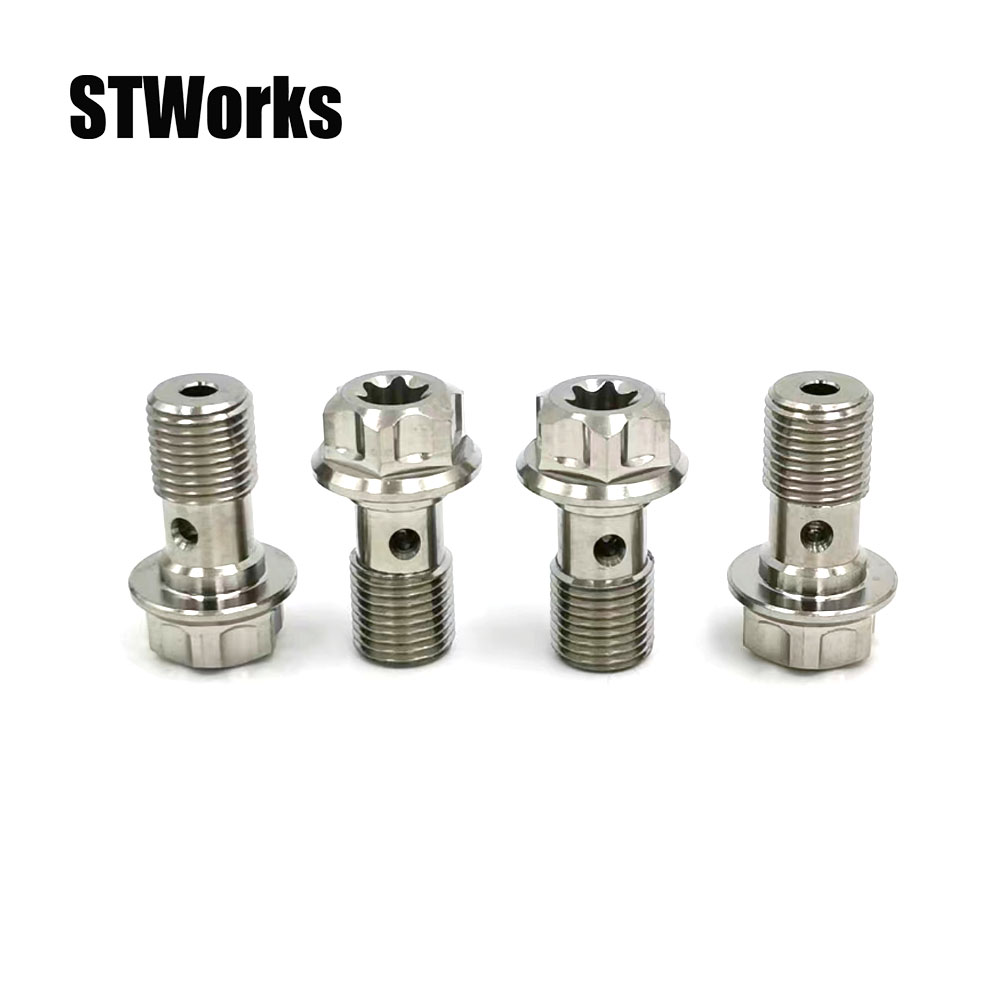
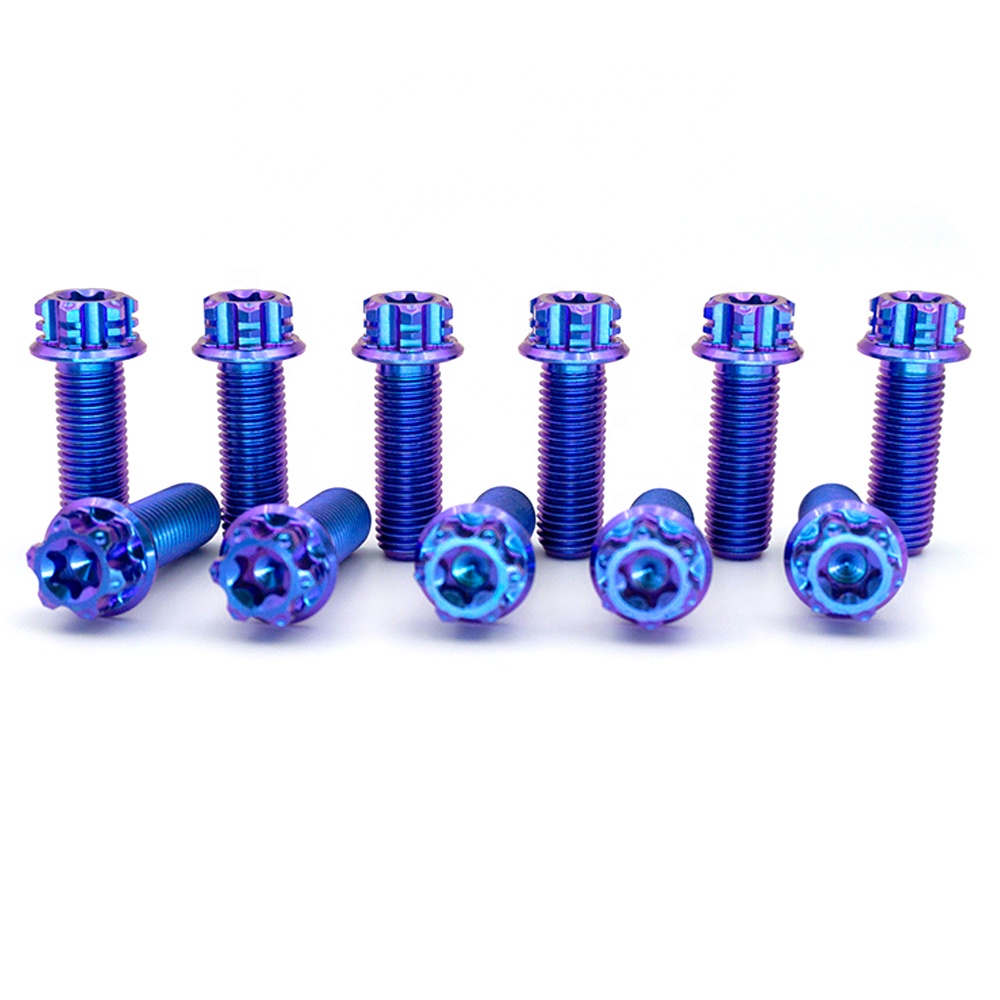
Gr5 Titanium Motorcycle Banjo Bolts Hexagonal Head Super-Hard PVD Coated M10 1.25/1.0 Competitive Price
View Product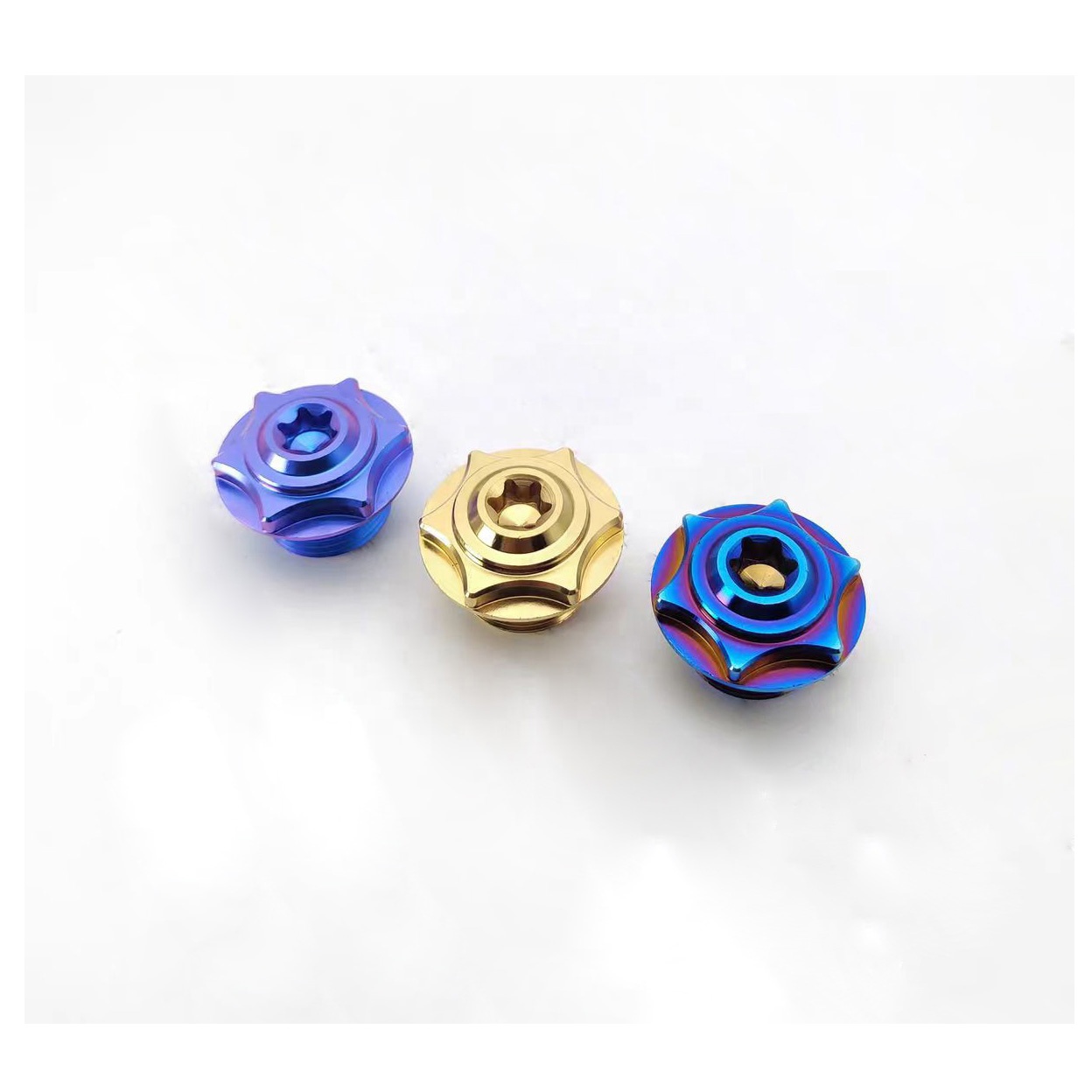
Titanium Screw Motorcycle Oil Filler Cap M20xP1.25/1.5 Gear Oil Cap
View Product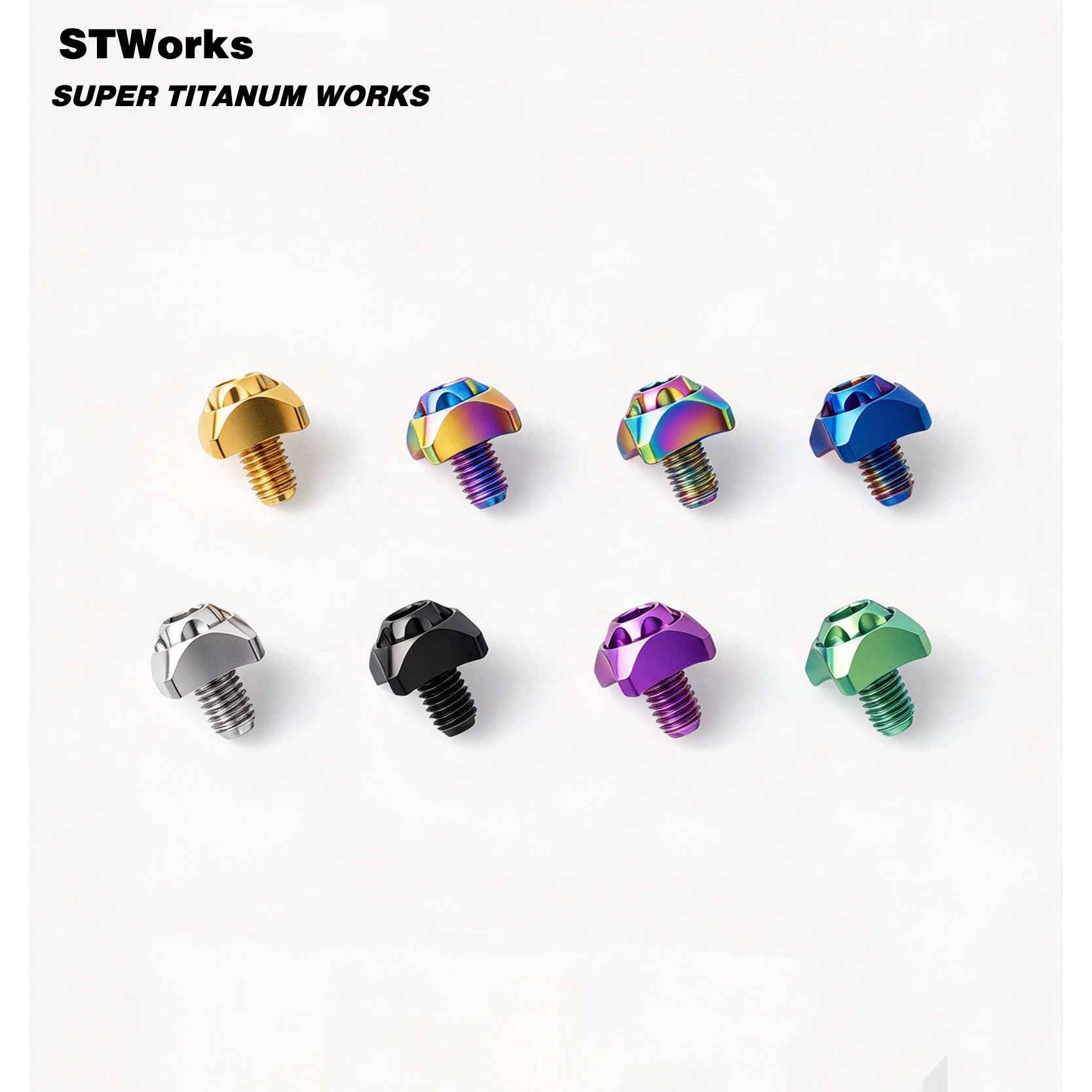
Titanium Screw & Shim Set for Shimano SRAM Front Derailleur Lightweight Bicycle Upgrade Parts
View Product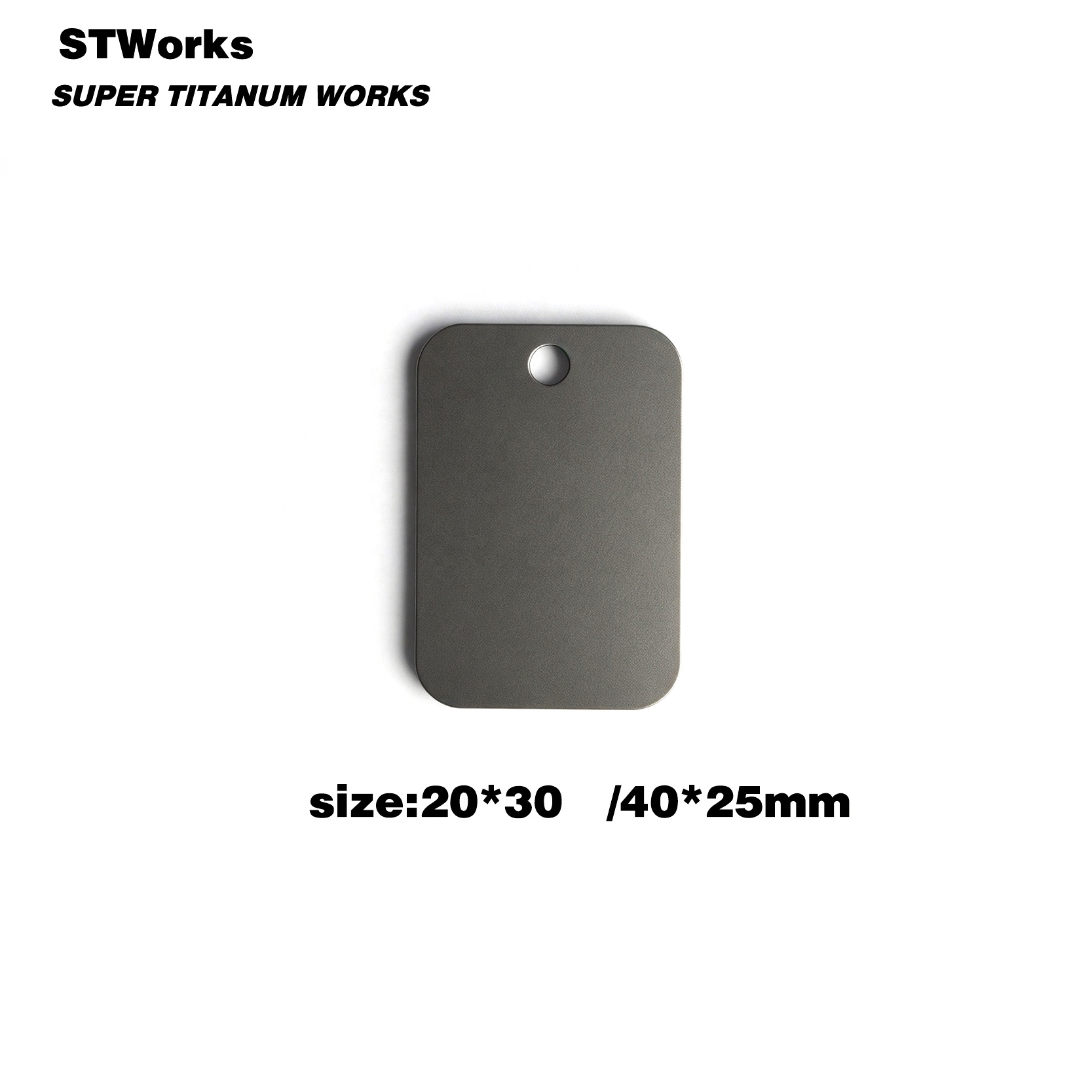
Custom Grade 5 Titanium Plate Tag 1.5mm/2mm Titanium Dog Tag Sandblasted Free Laser Engraved Logo Blank Titanium
View Product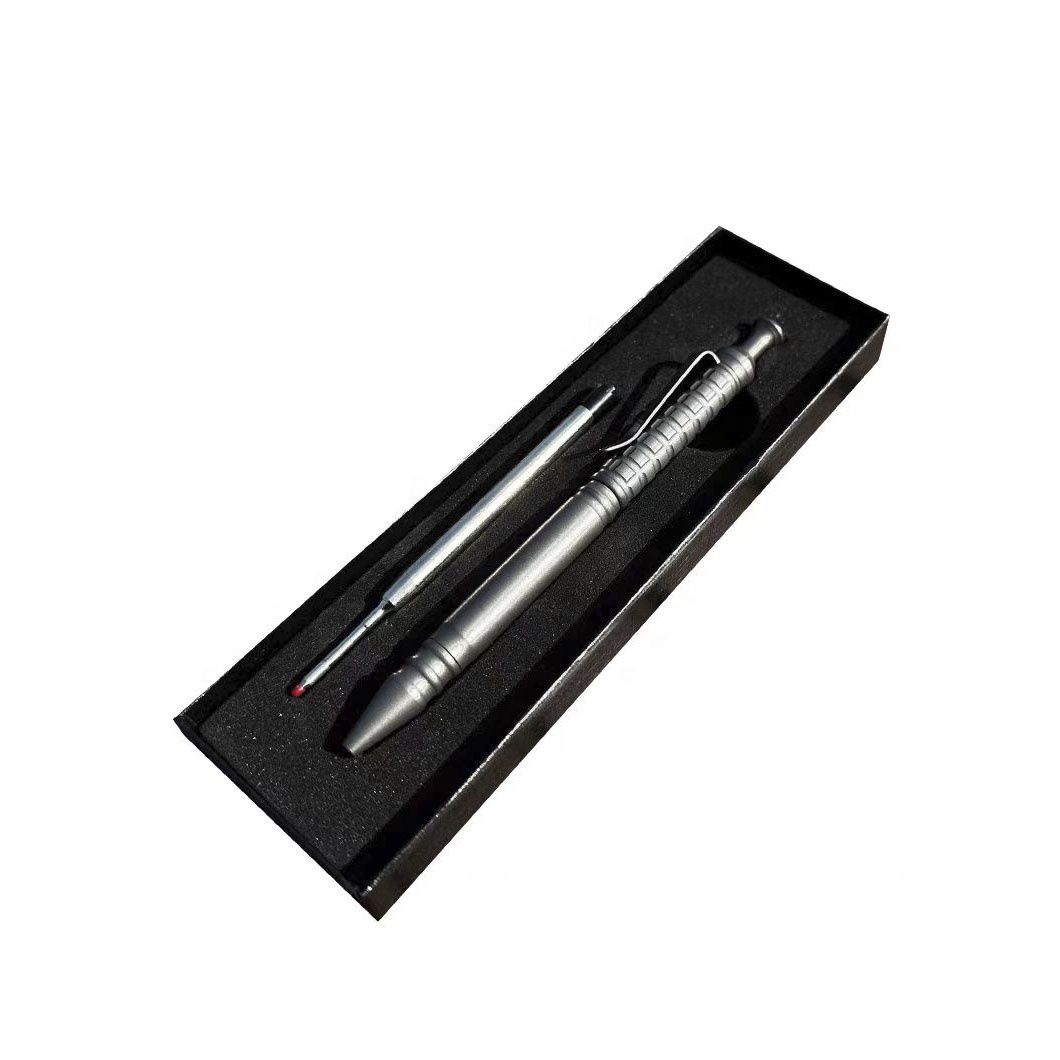
Cnc Machining Wire EDM Stainless Steel Multifunctional Bolt Titanium Alloy Tactical Pen Portable Outdoor EDC Ballpoint Pens
View Product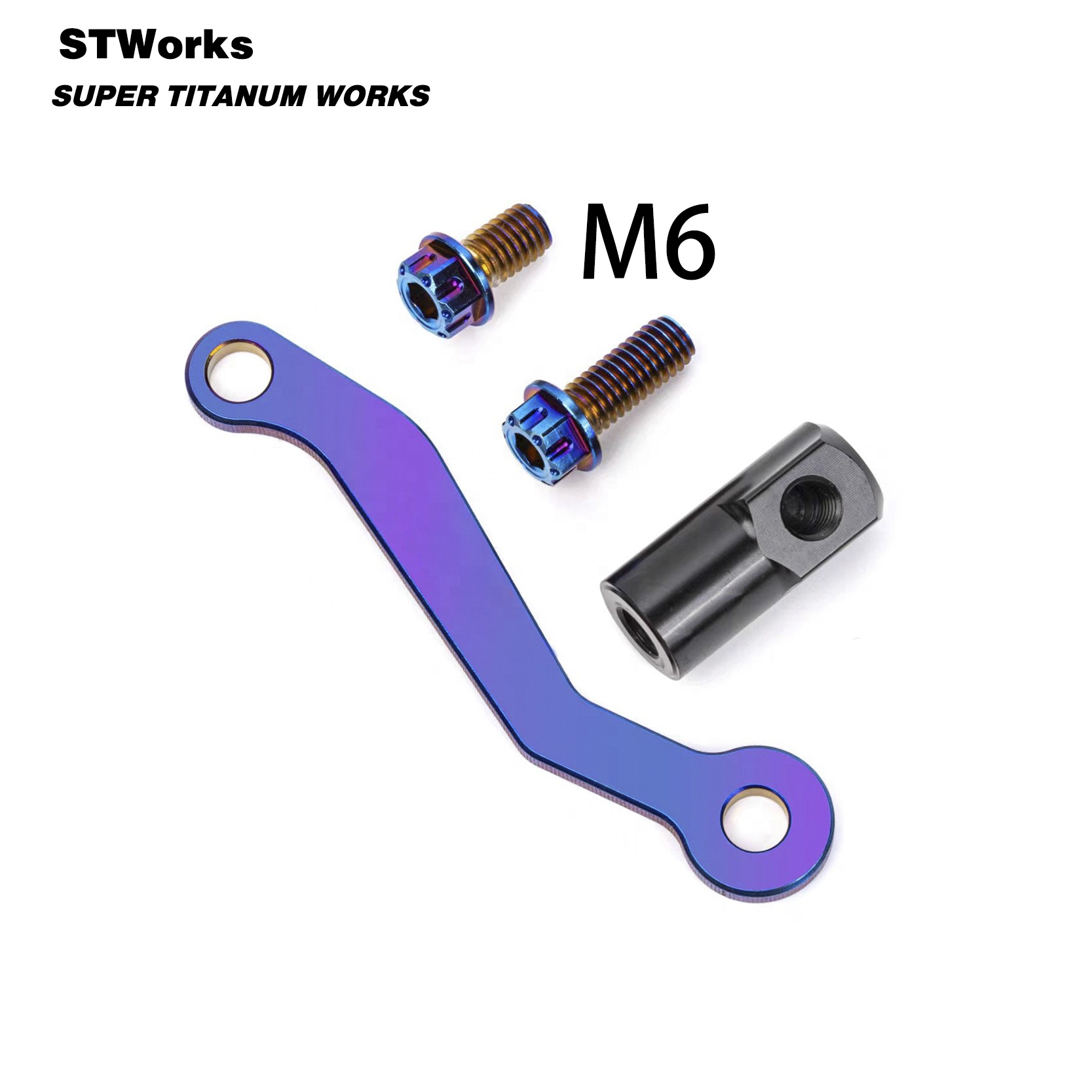
Gr5 TC4 Titanium Alloy Brake Fluid Reservoir Mount Bracket for Radial Master Cylinder Motorcycle E-Bike Modification Parts
View Product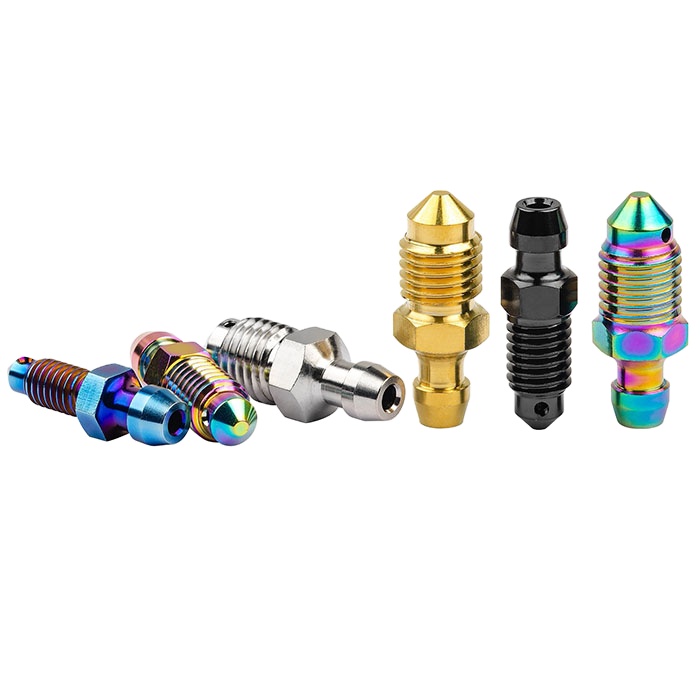
M10 Titanium GR5 Bolt Bleed Nipple Motorcycle Oil Drain Deflation Screws 89% Ti Content Customized Color for Outdoor Sport
View ProductThe Metallurgical Landscape of High-Performance Derailleur Fasteners
In competitive cycling dynamics, rear and front derailleurs are subject to intense, multi-axial mechanical stresses. From the persistent high-frequency road vibrations that induce limit screw creep to the instantaneous peak shear forces encountered during aggressive under-load gear shifts, derailleur fastener failure is a catastrophic hazard. Leading bicycle drivetrain manufacturers and boutique aftermarket racing brands are progressively transitioning from conventional low-grade stainless steels (such as A2-70/SUS304) and brittle 7075-T6 aluminum screws toward precision-machined Grade 5 Titanium (Ti-6Al-4V / TC4).
Titanium Grade 5 is an alpha-beta alloy characterized by extraordinary specific strength, superior modulus matching to aluminum derailleur b-knuckles, and remarkable resistance to atmospheric corrosion, sweat, and road de-icing salts. Sourcing engineers evaluating factories within China must recognize that not all titanium fasteners exhibit equivalent structural integrity. The differentiation lies in raw billet ingot provenance, grain structure integrity after thermal treatment, and thread forming methodology.
"A precision derailleur limit screw does not merely secure an adjustment point; it maintains sub-millimeter cage alignment under severe chain articulation. Employing cut threads instead of rolled threads in titanium reduces fatigue life cycles by over 35% under cyclic chain torque oscillation." — Engineering Directorate, Velnora Titanium Industry Co., Ltd.
Derailleur Bolt Application Matrix: Dimensional Tolerances and Critical Functions
Rear derailleur assemblies rely on several distinct threaded interfaces, each demanding specific dimensional tolerances and geometric profiles:
1. High (H) & Low (L) Limit Adjustment Screws (M4 × 13.5mm – 18mm): Traditionally prone to head-stripping when tuned with multi-tools. Grade 5 titanium offers high yield hardness (approx. 36 HRC), allowing high-precision CNC broached Torx (T10 or T20) or 2.5mm hex sockets that withstand high torque without socket rounding. A micro-pitch Class 6g thread is mandatory to prevent vibration-induced loosening without needing excessive threadlocker.
2. B-Tension Angle Adjustment Screws (M4 × 18mm – 22mm): Positioned against the derailleur hanger tab, the tip of the B-screw experiences constant contact friction and compressive load. Titanium alloys resist blunting, ensuring micro-metric pulley-to-cassette clearance consistency for modern 12-speed and 13-speed ultra-wide cassette ratios.
3. Derailleur Hanger Mounting Pivot Bolts (M10 × 1.0 Fine Pitch): The main load-bearing pivot interface connecting the derailleur body to the frame dropout. This fastener sustains substantial cantilevered bending moments and cyclic shock loads when navigating rough terrain. Rolled threads are critical to eliminate root stress concentrations.
4. Cable Anchor Pinch Clamp Bolts (M5 × 8.5mm – 10mm): Requiring controlled clamping force without thread stripping. Titanium's moderate elastic modulus (114 GPa versus steel's 200 GPa) allows for a degree of elastic stretch that maintains bolt tension without severing fine inner cable strands.
5. Jockey Wheel Pulley Axle Bolts (M5 Countersunk or Flat Flange): Operating within the high-speed chain wash zone, these fasteners accumulate grime, water, and degreaser chemicals. Uncoated steel hardware corrodes, causing cage binding. Titanium Grade 5 is chemically inert under standard cycling solvents and maintains low rotational drag.
| Engineering Property | Grade 5 Titanium (Ti-6Al-4V) | Grade 2 CP Titanium | 304 Stainless Steel | 7075-T6 Aluminum |
|---|---|---|---|---|
| Density (g/cm³) | 4.43 (Optimal Balance) | 4.51 | 7.93 (Heavy Baseline) | 2.81 (Ultra-light) |
| Yield Strength (MPa) | 828 – 910 | 275 – 350 | 205 – 240 | 460 – 505 |
| Tensile Strength (MPa) | 895 – 1000 | 345 – 450 | 515 – 620 | 540 – 570 |
| Elastic Modulus (GPa) | 114 (Superior Elasticity) | 103 | 193 – 200 | 72 |
| Hardness (Rockwell C / B) | 32 – 38 HRC | 80 – 85 HRB | 80 – 90 HRB | 87 – 90 HRB |
| Thread Galling Susceptibility | Moderate (Mitigated by PVD/MoS2) | High | Moderate | Low |
| Fatigue Endurance Limit (cycles) | > 107 at 510 MPa | > 107 at 220 MPa | > 107 at 240 MPa | > 107 at 160 MPa |
| Chloride Pitting Resistance | Immune (0.00 mm/year) | Immune | Vulnerable to micro-pitting | Severe intergranular attack |
Advanced Manufacturing Standards: Rolled Threads vs. CNC Cut Threads
A critical factor when selecting a Chinese titanium bolt manufacturing partner is verifying their thread-forming methodology. Low-tier processing workshops utilize single-point cutting inserts on basic CNC lathes to machine fastener threads directly. While dimensional profiles may satisfy standard go/no-go plug gauges, thread cutting severs the continuous crystalline grain flow of the titanium bar stock, producing micro-notches at the thread root.
Under repeated shift impact loads and road vibration, these microscopic grain disruptions act as catastrophic stress risers, causing premature shear failure. In contrast, premier factories in Baoji like Velnora Titanium Industry employ high-speed Swiss-type CNC mill-turn centers for blank turning and broaching, followed by dedicated hydraulic cold thread rolling. The thread rolling process plastically deforms the titanium crystal structure, burnishing the thread root and generating compressive residual stresses that dramatically elevate fatigue resistance.
Strategic Intelligence (2025–2030)
Future Procurement & Product Evolution Trends
The titanium bicycle hardware sector is rapidly shifting toward integrated electronics compatibility, physical vapor deposition tribological coatings, and complete digital traceability from raw sponge to packed crate.
01
Electronic Groupset & Direct-Mount Hanger Integration
With the widespread market penetration of Shimano Di2, SRAM AXS, Campagnolo Wireless, and emergent tier-1 Chinese electronic drivetrains (such as L-TWOO and Wheeltop), derailleur geometry has become significantly more compact and rigid. Derailleur mounting bolts are shifting toward hollow, thin-wall direct-mount profiles that require 5-axis simultaneous CNC contouring to accommodate internal wireless motor clearance while maintaining unyielding shear strength.
02
Advanced PVD Coatings & Micro-Arc Oxidation
While traditional voltage-controlled anodizing creates beautiful cosmetic interference colors, it offers limited wear resistance. Future procurement programs demand thin-film Physical Vapor Deposition (PVD) coatings—such as Titanium Aluminum Nitride (TiAlN), Titanium Carbo-Nitride (TiCN), and Diamond-Like Carbon (DLC). These high-hardness vacuum depositions elevate surface hardness to >2500 HV and reduce the friction coefficient below 0.12, actively eliminating titanium-on-aluminum thread galling.
03
Green Closed-Loop Billet Supply & MTR Traceability
Western OEM buyers increasingly mandate strict ESG compliance and zero-defect raw material provenance. Factories in Baoji's Titanium Valley are consolidating supply chains: certified aerospace-grade vacuum arc remelted (VAR) ingots with EN 10204 3.1 chemical inspection certificates are required for all runs. Advanced machining facilities now deploy closed-loop vacuum degreasing and chip briquetting to recycle titanium swarf back into industrial master alloys.
Why Partner With Velnora Titanium
Baoji Titanium Valley Production Excellence
Established in 2013, Velnora Titanium Industry Co., Ltd. combines deep metallurgical heritage with world-class CNC engineering infrastructure. We empower distributors, racing teams, and aftermarket brands worldwide.
Strategic Industrial Epicenter
Located in Jinhe Industrial Park, Baoji, Shaanxi—the heart of China's Titanium Valley. We leverage direct access to premier raw ingot mills, specialized metallurgical testing labs, and state-of-the-art vacuum melting facilities, reducing raw material procurement cycles by 40%.
Multi-Axis Swiss CNC Machining
Our temperature-controlled workshop operates high-precision multi-axis Swiss-lathe turning centers and ultra-fine wire EDM systems capable of holding sub-micron concentricity (±0.008 mm). We comfortably handle complex hollow broaching, radial porting, and micro-thread pitches.
Pre-Shipment Video Inspection
To provide overseas clients complete visibility into order quality, we supply high-definition process videos and dimensional verification checks for every production batch prior to shipping. Review critical thread pitch, optical head geometry, and surface finishes before items leave the shop floor.
ISO & Material Traceability
We manufacture strictly in adherence with DIN, ISO, ANSI, and JIS fastener standards. Every titanium production heat is validated with an EN 10204 3.1 inspection certificate, detailing precise chemical composition (Ti, Al, V, Fe, C, N, H, O) and mechanical tensile testing verification.
Procurement Engineering Q&A
Frequently Asked Questions for Sourcing Managers
Technical clarifications on titanium drivetrain fasteners, thread friction engineering, batch testing, and custom manufacturing terms.
Why should derailleur limit bolts not be fabricated from Grade 2 Commercially Pure (CP) Titanium?
Grade 2 Commercially Pure (CP) titanium has an unalloyed microstructure with a yield strength typically between 275 and 350 MPa, less than half the yield strength of Grade 5 (Ti-6Al-4V) which reaches 828 to 910 MPa. Derailleur limit screws utilize miniature M4 or M3 thread profiles and small 2.5mm hex or T10/T15 Torx drive sockets.
If machined from Grade 2 titanium, the internal broached socket is prone to plastic shear (rounding out or stripping) under field wrenching torques. Additionally, under intense chain-jump vibration, the lower fatigue strength of Grade 2 leads to micro-thread deformation. For structural and adjustment fasteners on bicycles, Grade 5 (TC4) is strictly recommended.
How do you prevent galling between titanium derailleur screws and aluminum derailleur bodies?
Titanium and aluminum have high affinities for micro-welding when threaded together under high contact pressure, a phenomenon known as cold galling or adhesive wear. We eliminate this issue through three engineering controls:
1. Precision Thread Rolling: Rolled threads offer a super-smooth root and flank surface finish (Ra ≤ 0.4 μm), substantially reducing mechanical micro-asperities compared to turned threads.
2. PVD Tribological Barrier: Applying a hard thin-film PVD coating (DLC, TiN, or TiAlN) creates an inert barrier that isolates the raw titanium substrate from direct galvanic and adhesive contact with the aluminum bracket.
3. Anti-Seize Lubricant: During assembly, applying a dedicated synthetic titanium anti-seize paste containing copper, molybdenum disulfide (MoS2), or PTFE is recommended to maintain a reliable friction coefficient of μ = 0.11–0.14.
What torque values should be applied when replacing OEM steel derailleur bolts with Grade 5 Titanium?
Because Grade 5 Titanium possesses a lower modulus of elasticity (114 GPa) compared to carbon steel (210 GPa), titanium fasteners exhibit slightly more elastic elongation under equivalent clamp force. However, because titanium threads have a higher coefficient of friction in dry states, torque must always be paired with proper thread lubrication.
When lubricated with anti-seize paste, titanium derailleur bolts should generally be tightened to 85% to 90% of the nominal steel specification. Typical guidelines include: M4 H/L limit screws: 1.0 – 1.5 N·m; M5 cable pinch bolts: 5.0 – 6.0 N·m; M5 jockey wheel axle screws: 3.0 – 3.5 N·m; and M10 rear derailleur frame pivot bolts: 8.0 – 10.0 N·m. Calibrated torque wrenches should always be used.
How does Velnora verify material composition and certify against scrap contamination?
Every single batch of raw titanium bar stock entering our Baoji facility undergoes positive material identification (PMI) using handheld and benchtop X-ray fluorescence (XRF) spectrometry. We verify that elemental aluminum falls between 5.5% and 6.75%, vanadium between 3.5% and 4.5%, and interstitial impurities (oxygen ≤ 0.20%, iron ≤ 0.40%, nitrogen ≤ 0.05%, hydrogen ≤ 0.015%) comply with ASTM B348 and AMS 4928 standards.
We provide full EN 10204 3.1 inspection certification with each production lot, tracing mechanical elongation, yield strength, and chemical melt lot back to the primary vacuum furnace ingot.
What are the minimum order quantities (MOQ) and lead times for custom OEM derailleur bolts?
For standard metric derailleur fastener sizes (M4, M5, M10) in natural polished or standard anodized finishes, our typical production MOQ is 100 to 200 units per line item. For fully custom OEM geometries requiring proprietary head profiles, special hollow broaching, or custom PVD rainbow coatings, initial prototype sample batches can be fabricated from 50 pieces.
Standard lead times for CNC prototype samples run 7 to 10 working days; mass batch production typically ships within 18 to 25 working days via express air courier or door-to-door consolidated freight.
Can you produce custom laser branding, specialized packaging, and retail kit sets?
Yes. We offer complete turnkey OEM private-label branding services. Our in-house fiber laser marking systems can engrave micro-logos, tightening torque ratings (e.g., "Max 5N·m"), and batch numbers directly onto bolt heads or washers with clean edge fidelity.
Furthermore, we routinely assemble multi-piece upgrade upgrade kits (e.g., complete 7-piece derailleur screw kits packaged in custom EVA foam trays, branded blister cards, or laser-engraved metal tins) ready for immediate distribution.
Request a Precision Engineering Quotation
Partner directly with China's leading Grade 5 titanium fastener manufacturer in Baoji. Send your 2D engineering drawings (PDF), 3D CAD files (STEP/IGES), or OEM target specifications. Our metallurgical engineers provide comprehensive DFM evaluations and official wholesale price quotes within 4 business hours.
Contact Us