Extreme Temp
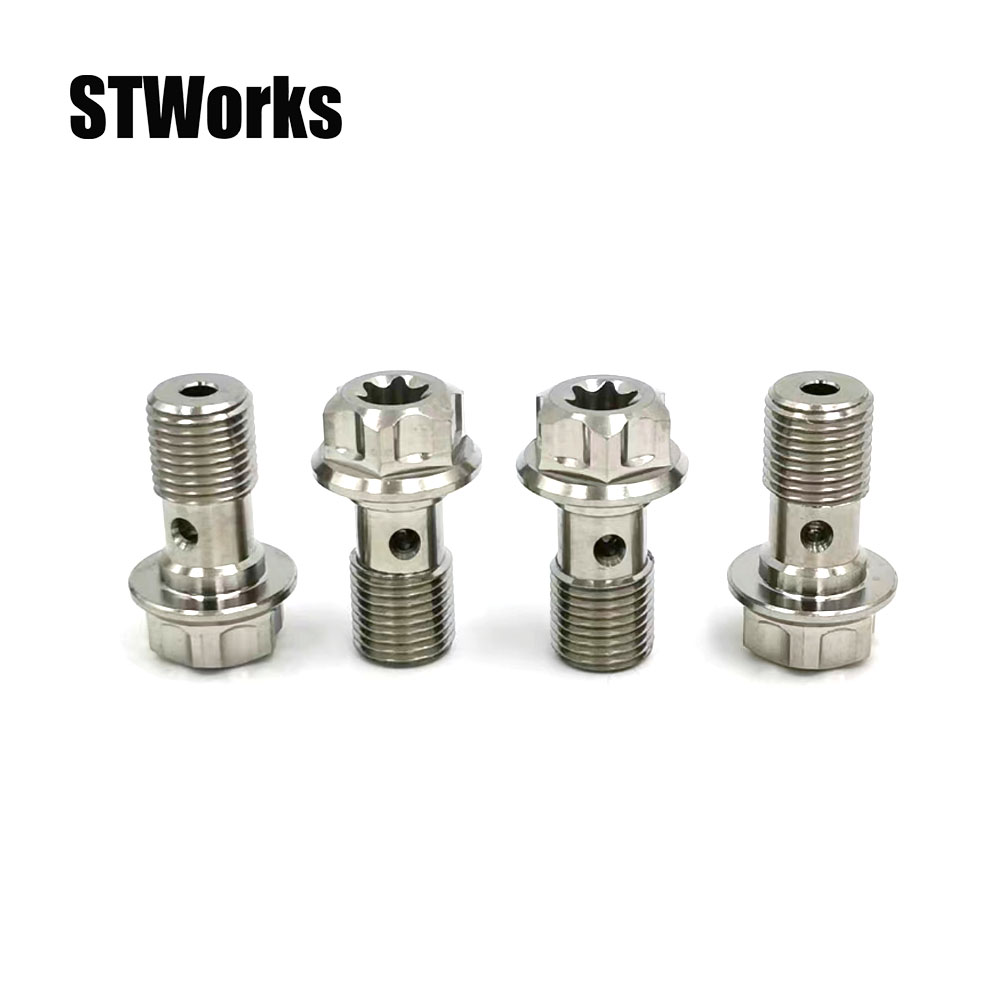
Explore our core factory-machined titanium fasteners, high-stress motorcycle components, and specialized aerospace-tolerance fittings.
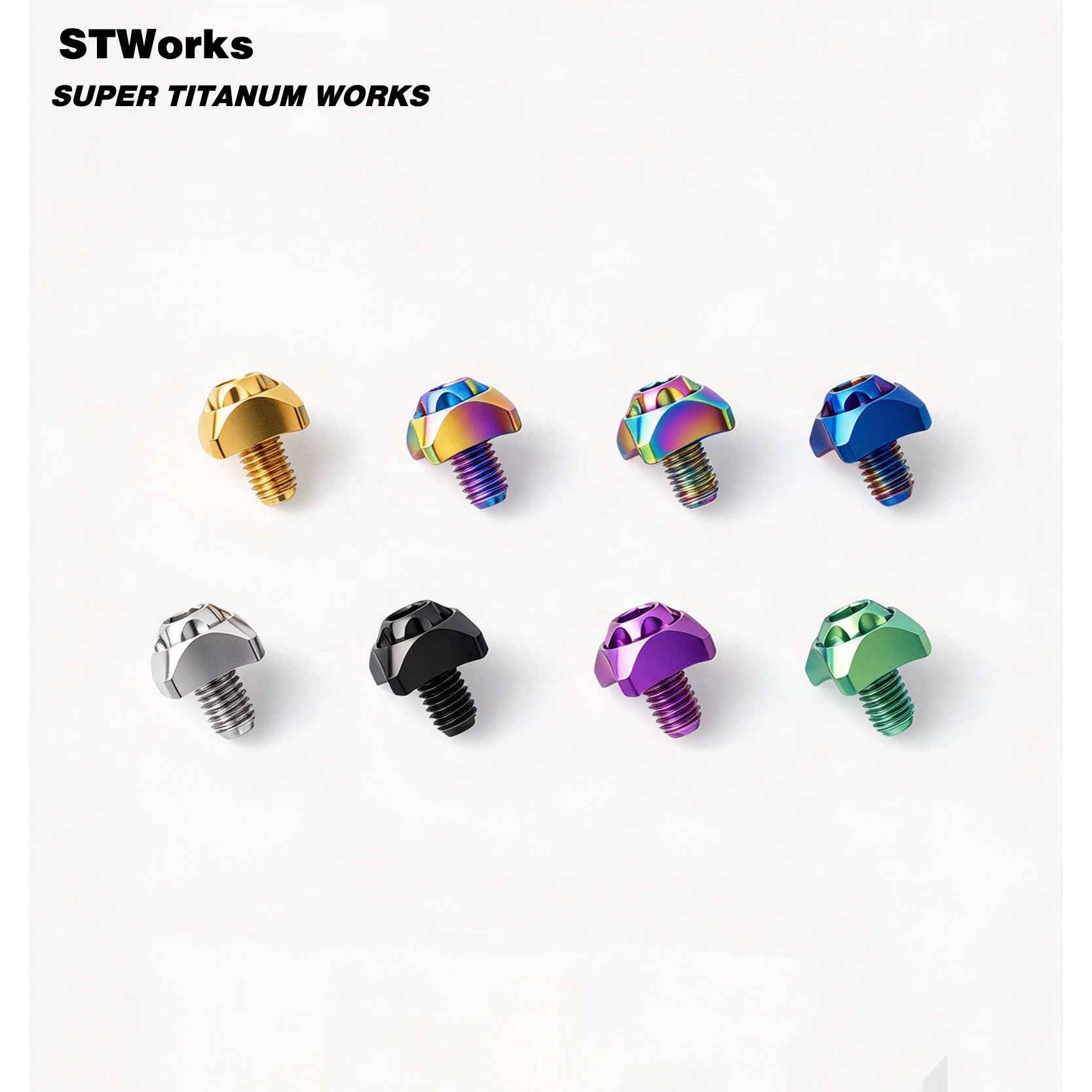
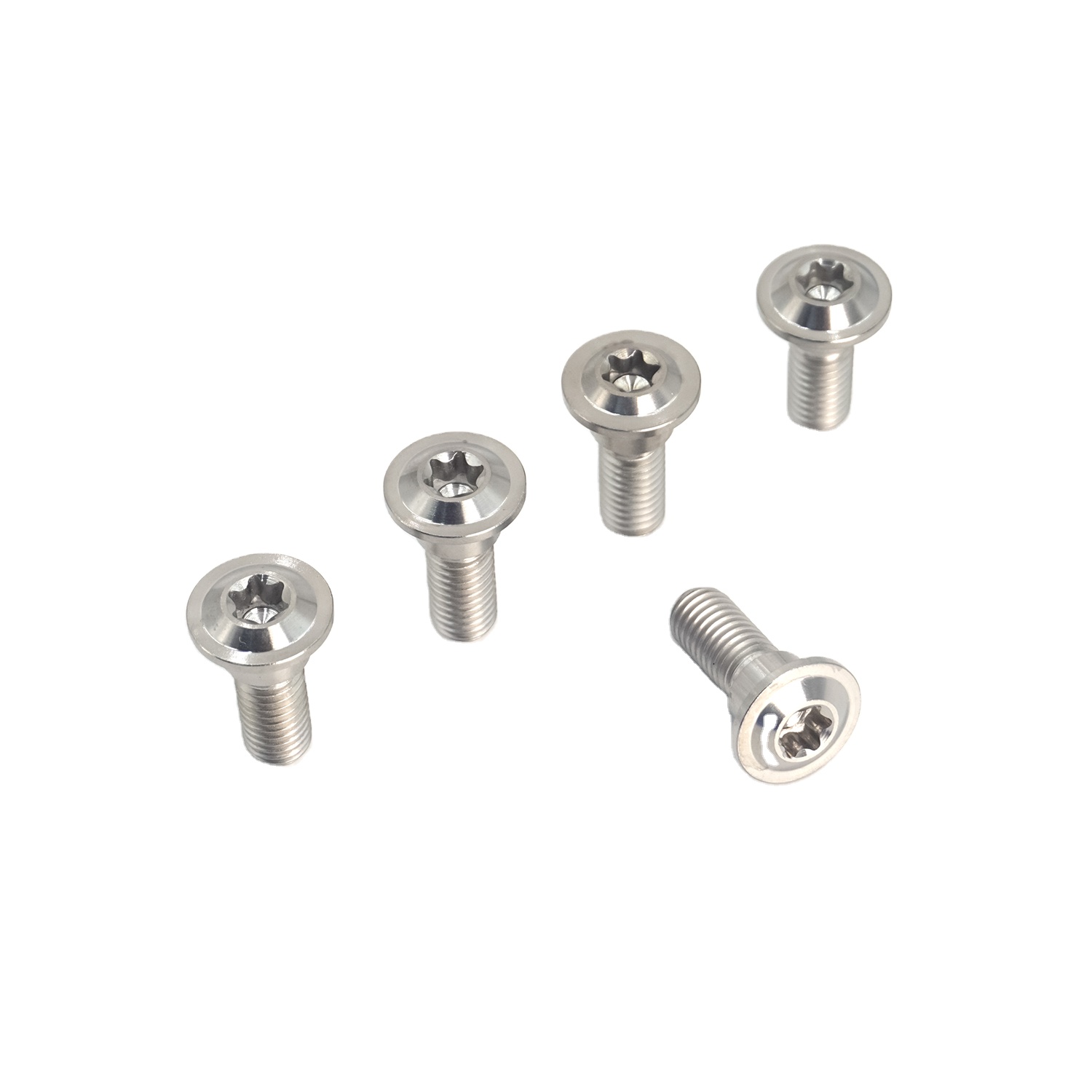
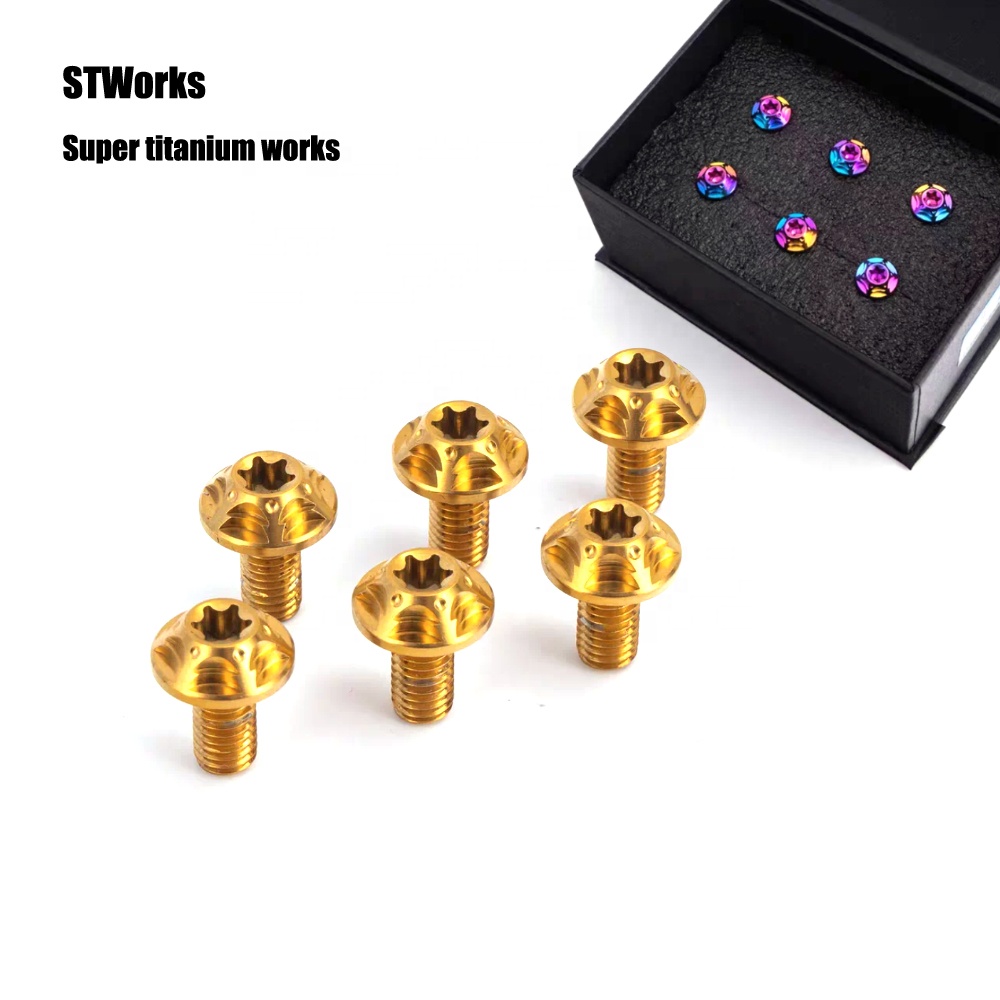
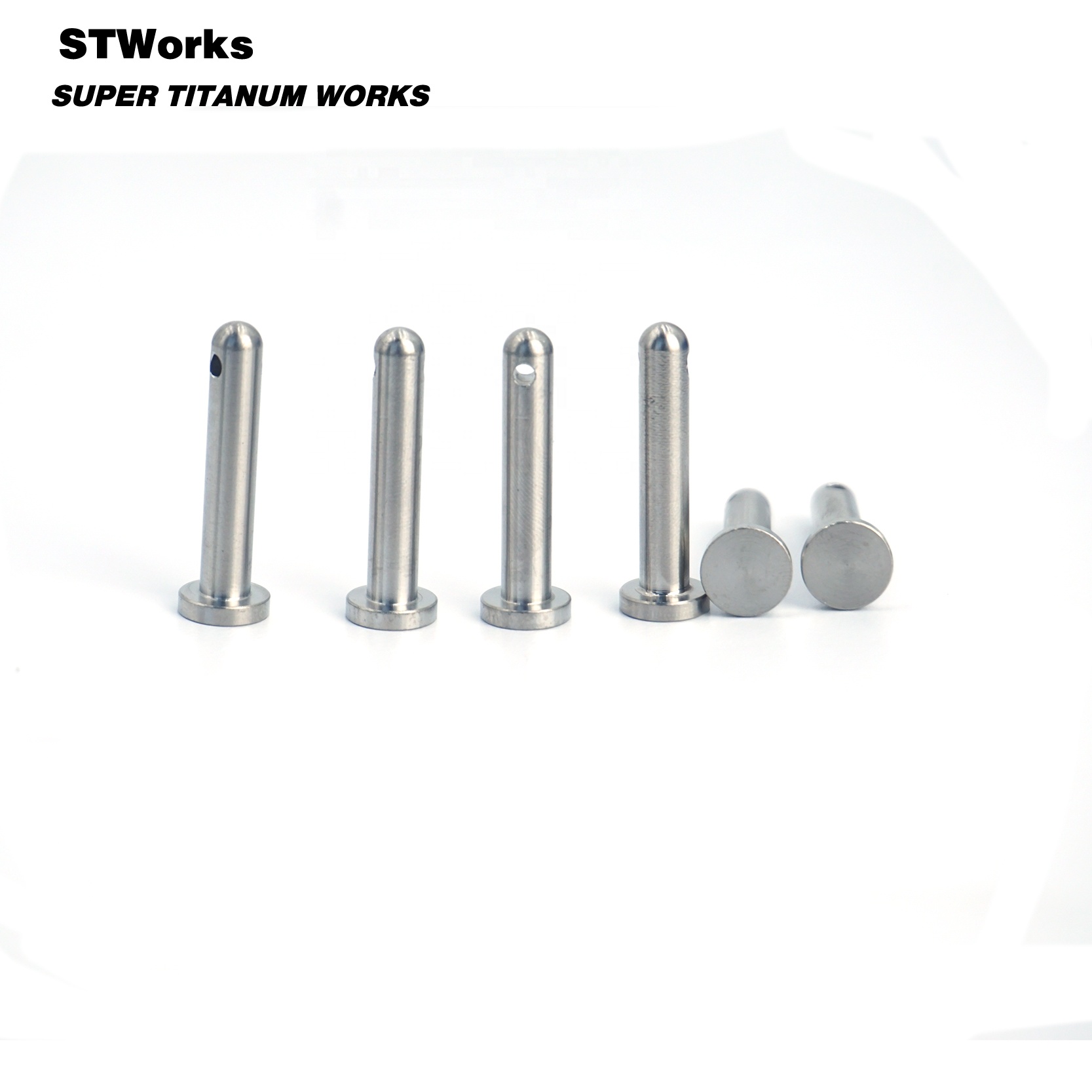
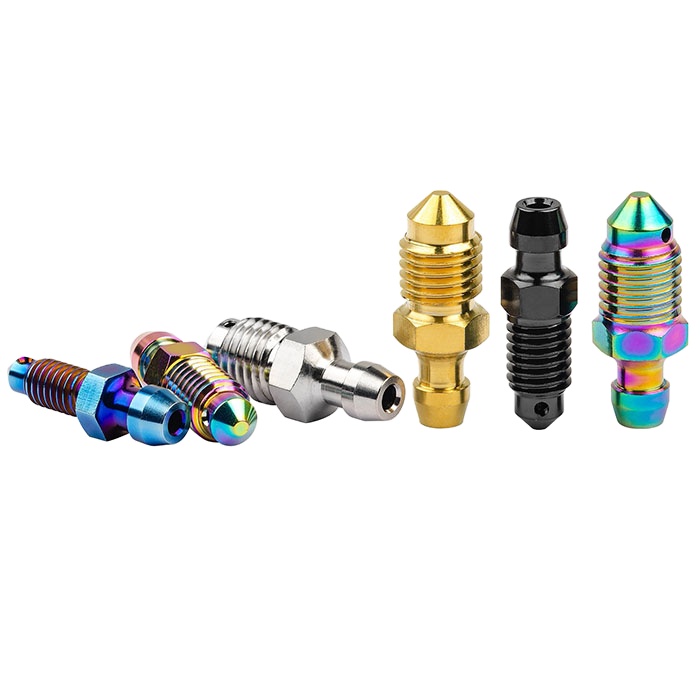
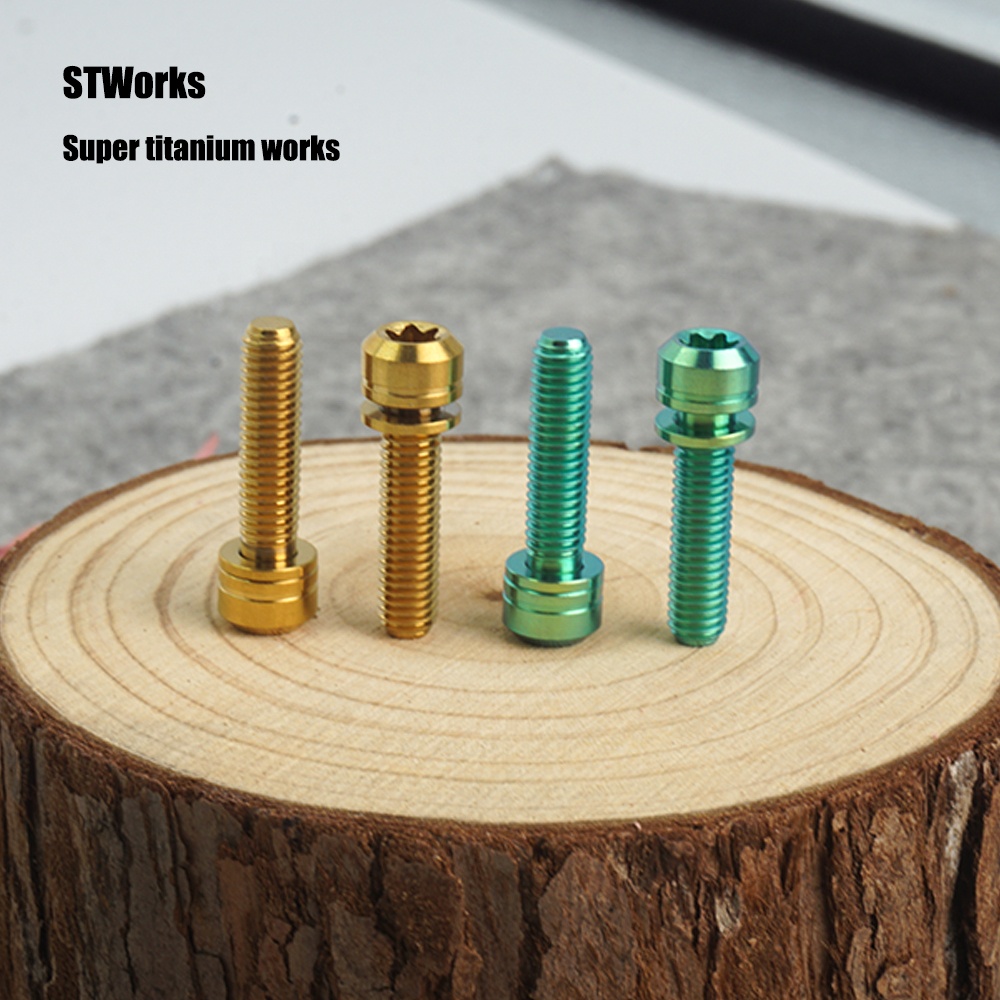
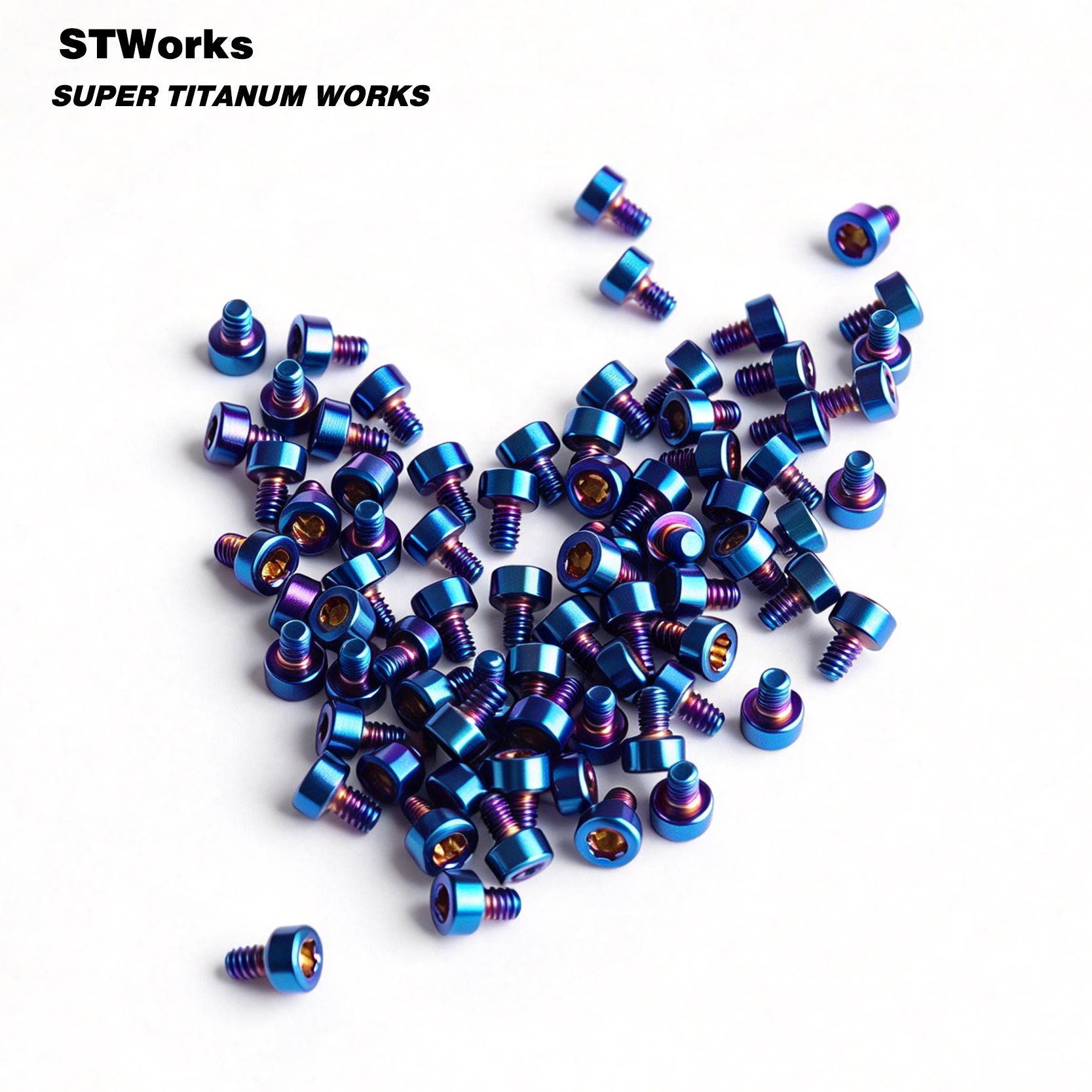
Forced induction turbocharger assemblies operate in one of the most mechanically aggressive environments in automotive and aerospace engineering. Exhaust gas temperatures (EGT) pulsing from cylinder head exhaust ports routinely peak between 850°C and 1,050°C. Under these severe conditions, standard carbon steel (Grade 8.8, 10.9) and standard austenitic 304/316 stainless steel studs experience rapid metallurgic degradation.
The primary failure mechanism of OEM steel studs is not simply mechanical over-torque, but thermal creep relaxation and cyclic oxidation embrittlement. When an engine reaches operating boost, cast iron or stainless turbo turbine housings expand at a significantly different rate than the cylinder head. As the manifold expands against the fasteners, thermal clamping stresses spike beyond the elastic yield limit of low-grade steels. Once the engine cools, the stretched studs lose their baseline pre-load tension, causing exhaust gasket blowouts, turbine flange distortion, and acoustic leaks.
As a verified Baoji titanium manufacturer established in 2013, Velnora Titanium Industry engineers specialized Grade 5 (Ti-6Al-4V) and extreme-temperature Ti-6242 studs specifically designed to withstand prolonged heat soak cycles without metallurgical recrystallization or thread seizure.
Yield strength under continuous high-temperature engine bay exposure. Data verified across factory metallurgical pull-tests:
| Material Specification | Ti-6Al-4V Grade 5 (Baoji Mill) | Ti-6242 Near-Alpha Alloy | AISI 304 Stainless Steel | Property Class 10.9 Steel |
|---|---|---|---|---|
| Density (g/cm³) | 4.43 (44% Lighter than Steel) | 4.54 (Aerospace Grade) | 7.93 | 7.85 |
| Tensile Strength Ultimate, Rm | ≥ 950 MPa | ≥ 1,020 MPa | 515 - 650 MPa | 1,040 MPa |
| Yield Strength, Rp 0.2 | ≥ 880 MPa | ≥ 920 MPa | ≥ 215 MPa | ≥ 940 MPa |
| Max Stable Service Temp (°C) | 500°C Continual / 800°C Peak | 600°C Continual / 950°C Peak | 400°C (Severe Work Softening) | 350°C (Rapid Temper Loss) |
| Thermal Expansion Coeff. (×10⁻⁶/K) | 8.6 (Matches Head Clamping) | 8.8 | 16.5 (Over-expands Flange) | 12.0 |
| Corrosion / Rust Freezing | Zero Oxidation / Non-Seizing | Zero Oxidation / Non-Seizing | Chloride Pitting Risk | Severe Galvanic Flange Rust |
The microscopic difference between rolled and cut threads is decisive under thermal vibration. Thread cutting shears the structural grains of the titanium bar stock, producing micro-notches that act as stress concentration nodes ($K_t \approx 3.2$).
CNC Cold Thread Rolling: At Velnora's precision workshop, turbo studs undergo high-pressure hydraulic thread rolling using precision cylindrical dies. This plastically deforms the grain flow along the root radius ($R = 0.144p$), producing burnished root hardness (+25% HV) and boosting cyclic shear fatigue resistance by over 300%.
Manufacturing turbocharger hardware requires far more than basic turning operations. High-vibration exhaust manifolds demand three critical geometric features integrated into every single stud:
Unthreaded smooth guide bullet tips prevent accidental cross-threading when installing fasteners deep into soft aluminum cylinder heads or recessed turbo flanges inside cramped engine bays.
Precision CNC internal 4mm/5mm hex or T25/T30 Torx drives broached directly into the outer tip. This allows precise pre-installation torque seating without utilizing damaging double-nut locking techniques that strip external threads.
To combat titanium-on-titanium adhesive galling at 900°C, we apply super-hard Physical Vapor Deposition (PVD) TiAlN (Titanium Aluminum Nitride) or high-temp micro-coatings that dramatically reduce thread friction coefficients down to $\mu = 0.12$.
We supply global aftermarket turbo brands, race teams, and industrial equipment builders with both standardized off-the-shelf and custom OEM drawing-machined stud kits.
Standard fitment for Garrett, BorgWarner EFR, and OEM Subaru, Mitsubishi, Nissan, and Ford turbo inlet/outlet flanges. Available in 45mm, 50mm, and 55mm lengths with dog-point ends.
Engineered for high-stress T3, T4, T6, and V-Band turbine inlet flanges where high shear loads and heavy twin-scroll turbos are hung directly off the exhaust manifold runners without brackets.
All-metal self-locking 12-point k-nut profiles machined from Grade 5 titanium bar stock. Built-in deformed thread mechanical lock prevents back-off under 1,000°C heat cycles without nylon inserts.
Procurement directors and motorsport distributors face shifting regulatory environments, alloy advancements, and digital supply-chain verifications.
While Grade 5 (Ti-6Al-4V) remains the volume standard for up to 500°C, hyper-boost hybrid racing applications are pivoting toward Ti-6242 (Ti-6Al-2Sn-4Zr-2Mo-0.08Si). This aerospace alloy elevates continuous operating thresholds up to 600°C with significantly lower creep susceptibility.
European and North American regulatory bodies are enforcing stricter Pressure Equipment Directive (PED 2014/68/EU) compliance for pressure-retaining forced-induction systems. Buyers increasingly mandate EN 10204 Type 3.1 chemical and mechanical inspection certificates with every production lot.
Tier-1 automotive component vendors now demand sub-50 PPM defect rates. Modern fastener factories are transitioning from manual caliper spot-checks to 360-degree high-speed optical vision sorting systems that scan thread pitch, concentricity, and lead angles at 400 parts per minute.
With global titanium sponge commodity volatility, Western buyers are cutting out intermediary distributors. Partnering directly with integrated manufacturers in Baoji ("China's Titanium Valley") provides locked-in ingot costs, guaranteed metallurgical purity, and reduced lead times.
Operating from the heart of Baoji since 2013, we combine deep raw material accessibility with Swiss-precision CNC machining and comprehensive export certifications.
Situated in China's titanium epicenter, we have immediate access to 0-grade and 1-grade aerospace vacuum-arc remelted (VAR) titanium billets. This ensures verified Ti content > 89% without recycled tramp element contamination.
Our workshop houses high-precision Swiss-type automatic turning lathes, 5-axis machining centers, thread rolling equipment, and Sodick wire EDM units capable of micro-tolerances down to ±0.005 mm.
We break the black box of overseas manufacturing. For every customized B2B batch, we send real-time machining videos, CMM dimensional inspection clips, and packaging verification prior to final balance payment.
Clear, engineering-backed answers addressing the most critical technical objections, installation requirements, and purchasing considerations for titanium turbo studs.
Grade 5 titanium (Ti-6Al-4V) provides the optimal balance of tensile strength (950 MPa), low density (4.43 g/cm³), and thermal compatibility. While Class 10.9 steel matches cold tensile strength, it quickly loses its temper above 380°C, leading to plastic stretch, yield drop, and severe corrosion seizing in exhaust environments. Inconel 718 excels at extreme continuous heat (> 900°C) but is extremely dense (8.19 g/cm³), notoriously difficult to machine, and costs 300% to 400% more than Grade 5 titanium. For the vast majority of performance automotive, marine, and motorcycle turbo applications, Grade 5 and Ti-6242 titanium offer the ideal thermodynamic profile, preventing blown gaskets while eliminating 44% of hardware weight.
Titanium alloys form a tenacious passivating oxide layer that, under dry friction and high clamping loads, can cause microscopic cold-welding known as thread galling. To prevent this entirely: (1) Always utilize rolled threads rather than rough-cut threads, as burnished root surfaces reduce contact friction; (2) Apply a high-temperature nickel-based or copper-based anti-seize paste (rated to 1,000°C+) or solid molybdenum disulfide (MoS2) lubricant during assembly; (3) Choose our factory PVD TiAlN coated or specialized surface-hardened studs; (4) Never use high-speed pneumatic impact guns to torque titanium studs into cylinder heads; always tighten smoothly by hand with a calibrated torque wrench.
Because titanium has a modulus of elasticity approximately half that of steel (~114 GPa vs ~210 GPa), a titanium stud acts like a stiffer spring, requiring slightly adjusted torque values to achieve target bolt elongation and clamping pre-load. As a general engineering guideline: for M8 × 1.25 titanium studs utilizing anti-seize paste, tighten to 22–25 Nm (16–18.5 lb-ft). For M10 × 1.25/1.5 studs, tighten to 44–48 Nm (32–35.5 lb-ft). If your OEM manual provides dry steel torque specs, reduce that figure by 15% to 20% when using lubricated titanium hardware to achieve the exact same clamping force without over-stretching the cylinder head casting threads.
Titanium is very noble on the galvanic galvanic series. In an electrolyte-rich environment (e.g., direct salt spray immersion), aluminum can theoretically act as a sacrificial anode if touching bare titanium. However, in internal combustion exhaust environments where moisture quickly evaporates under engine operating temperatures, galvanic corrosion between titanium studs and aluminum cylinder heads is practically nonexistent. Utilizing anti-seize paste provides a physical dielectric barrier that permanently insulates the joint, ensuring that the studs can be effortlessly removed even after 100,000 miles of driving.
Yes. OEM and ODM custom engineering is our core specialization. We work directly from STEP, IGES, DXF, or PDF technical drawings. Whether you require custom thread pitch combinations (e.g., M10 coarse on the engine side and M10 fine on the nut side), extended unthreaded shank dowels, stepped diameters, or specialized internal broached drives (Torx T25/T30 or Hex), our engineering team conducts a thorough DFM (Design for Machinability) review within 4 hours. We also offer custom laser part numbering, customer logo branding, and customized retail kit packaging.
Every commercial batch is accompanied by an EN 10204 Type 3.1 Mill Test Certificate (MTC) detailing the exact chemical composition (Ti, Al, V, Fe, C, N, H, O content) and mechanical tensile/yield test results. Our facility operates under ISO 9001:2015 quality management systems and complies with CE industrial hardware directives. Third-party testing reports from SGS, TÜV, or independent spectrometer analysis are readily arranged upon request.
For standard in-stock thread profiles (e.g., M8 × 1.25 × 45mm, M10 × 1.25 × 50mm, standard 12-point k-nuts), our MOQ is 50 to 100 sets, available for immediate dispatch within 3 to 5 business days. For custom OEM blueprint orders, our typical MOQ starts at 200 to 500 pieces per specification depending on geometry. Custom production runs are typically completed within 15 to 22 business days, followed by air express (DHL, FedEx, UPS) delivery within 3 to 6 days worldwide.
Electrolytic anodized colors (such as blue, purple, gold, or green) are generated by light interference across a micro-thin titanium oxide layer. When exposed to direct exhaust manifold temperatures exceeding 450°C, this oxide layer naturally thickens, causing anodized colors to shift toward gray or straw bronze over time. While this does not impact the mechanical strength of the underlying Grade 5 alloy, for high-temperature turbo applications where color permanence and extreme wear resistance are critical, we recommend either our raw micro-polished finish, micro-sandblasted titanium, or our specialized PVD (Physical Vapor Deposition) high-temp coatings that survive intense thermal exposure without flaking.
Submit your thread specifications, custom CAD blueprints, or sample inquiries. Our factory machinists in Baoji will evaluate your drawings, recommend optimal titanium alloys, and provide a competitive wholesale quotation within 4 hours.