Titanium Exhaust Valve Spring Retainers can reduce valvetrain mass, but lighter does not automatically mean better. The right choice depends on spring pressure, valve size, operating range, and the parts already installed. A small mismatch can cause trouble. A retainer that does not suit its locks may sit incorrectly, while poor clearance can invite contact at high lift. Details matter.
Engine builder and author David Vizard has written extensively about matching engine components as a system. This guide uses an editorial summary of that approach, not a verbatim quotation: “Choose the retainer for the complete valvetrain, not for weight alone.” It is a useful reminder, though real combinations still need careful measurement. Check the retainer’s lock angle, spring-seat dimensions, installed height, and clearance to nearby components. Then compare the manufacturer’s material and application guidance.
The seven tips ahead will help you evaluate fit, construction, compatibility, and service needs. Look closely at the valve-stem grooves and lock engagement; a clean-looking part is not proof of a correct fit. Consider spring pressure and intended engine speed, too. Titanium’s lower mass can support a responsive valvetrain, yet wear and inspection requirements vary by design and use. Measure twice. Ask the manufacturer when specifications are unclear. And be honest about what you cannot verify. A little caution here can prevent an expensive mistake later.
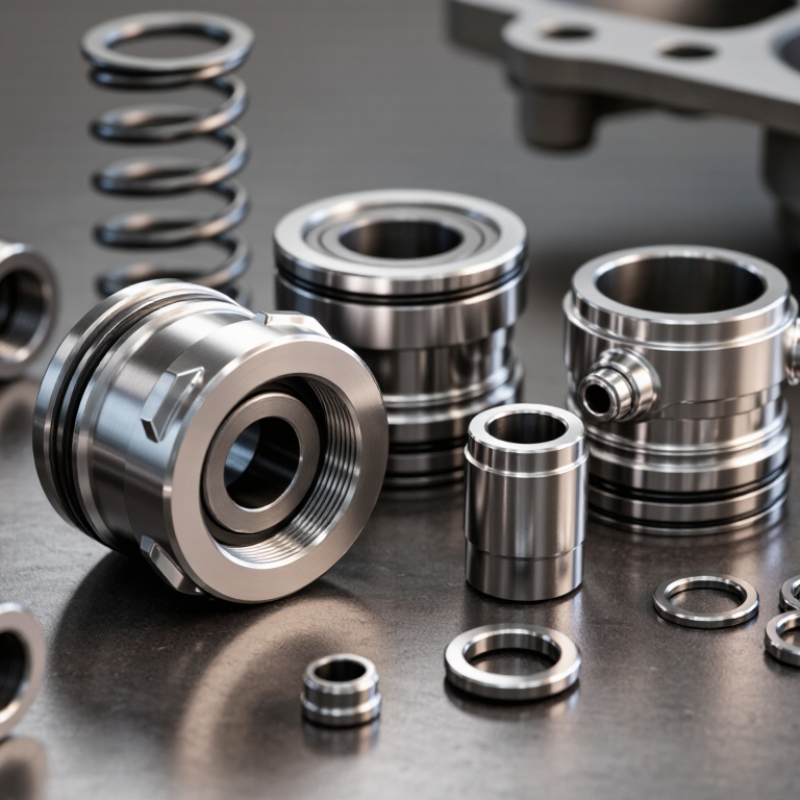
Understanding the Role of Titanium Exhaust Valve Spring Retainers
7 Tips for Choosing Titanium Exhaust Valve Spring Retainers
Understanding the Role of Titanium Exhaust Valve Spring Retainers
A retainer holds the valve spring against its locks, keeping the valve connected to the spring as the engine cycles. On the exhaust side, that connection must stay secure through repeated heat and motion. Titanium retainers are valued for their low weight and strength, which can reduce valvetrain mass. Less mass may help control spring movement at high engine speeds. But lighter is not automatically better.
Check that the retainer matches the valve stem locks, spring dimensions, and installed height. Small differences in lock angle or spring-seat diameter can cause poor fit or uneven loading. Confirm the part’s material specification and intended operating range, rather than choosing by weight alone. Spring pressure and engine speed matter, too. A setup built for one combination may not suit another.
Think about the whole valvetrain. A lighter retainer cannot compensate for a worn spring, incorrect clearance, or unsuitable locks. Inspect contact surfaces for marks, cracks, or deformation during maintenance, and follow the engine builder’s specifications for installation. A qualified machinist can verify fit and spring height with measuring tools. It is tempting to chase the lightest option; that focus can miss the real requirement: stable, compatible parts. Sometimes, the sensible choice is heavier.
7 Tips for Choosing Titanium Exhaust Valve Spring Retainers - Understanding the Role of Titanium Exhaust Valve Spring Retainers
| Tip | Selection factor | Why it matters | What to check |
|---|---|---|---|
| 1 | Confirm the exact application | Retainer fit and valve-train geometry depend on the cylinder head, valve stem, spring, and installed setup. A part that looks similar may not seat or lock correctly. | Check the retainer’s stated application and compatibility with the valve stem, spring, and locks used in the engine. |
| 2 | Verify the titanium alloy | “Titanium” describes a family of materials, not one uniform specification. Alloy and processing affect strength, fatigue behavior, and suitability for the intended service. | Request the alloy and material documentation; do not assume every titanium retainer has the same properties. |
| 3 | Compare weight with the correct steel retainer | Reducing retainer mass can reduce valve-train inertia. The benefit depends on the complete moving assembly, including the valve, locks, and spring components. | Compare measured or documented weights for parts with the same fit and function, rather than relying on material name alone. |
| 4 | Check spring and lock compatibility | The retainer must match the spring’s top shape and the lock angle and dimensions. Incorrect engagement can cause poor seating or a dangerous loss of valve control. | Confirm spring outside diameter, retainer seat design, lock angle, and valve-stem groove compatibility as a set. |
| 5 | Account for exhaust-side temperature | Exhaust-valve areas experience substantial heat. Titanium alloys can lose strength or suffer damage when used beyond their temperature capability, so material suitability is application-specific. | Follow the component maker’s service limits and guidance for exhaust-side use; do not infer temperature capability from weight or appearance. |
| 6 | Match the retainer to spring loads and engine speed | High spring loads and operating speeds increase stress throughout the valve train. A lightweight retainer does not, by itself, guarantee adequate control or durability. | Verify suitability for the specified spring pressure, valve lift, operating range, and intended duty cycle. |
| 7 | Inspect condition and plan maintenance | Wear, cracks, damage around the lock area, or poor seating can compromise valve retention. Regular inspection is especially important in demanding use. | Inspect for visible damage and abnormal wear during service, and replace components according to qualified inspection guidance. |
FAQS
Higher rpm makes valve-train control more demanding. Lower retainer mass may help springs manage valve motion, but it cannot fix weak springs or resonance. Mass matters. Match the retainer to the valve, spring, locks, and intended rpm range.
No. Catalog weight alone does not show whether the retainer suits your setup. Check its shape, material limits, clearances, and contact with the locks and spring. A lighter part may look ideal on paper, but that can be a poor trade.
Confirm lock angle and groove dimensions match the valve locks. Measure spring diameter, installed height, and retainer clearance. At full lift, check coil-bind clearance and the gap to the valve seal or guide. Measure twice.
Ask for the exact alloy grade and a material certificate. Confirm the grade suits the spring load and operating temperatures. Check whether the material can be traced to its production lot. Color proves little.
Examine the spring seat, center bore, and keeper grooves for clean machining and consistent dimensions. Look for burrs or uneven surfaces. Ask how critical dimensions and concentricity are checked, and request inspection records if available.
Ask which coating is used, how thick it is, and whether its wear and adhesion were tested for your application. Confirm compatibility with the locks and spring hardware. Check dimensions after coating. A coating cannot correct poor machining.
Measure installed spring height with the retainer and locks seated. Compare it with the specified range, then test spring pressure using the correct tester. Altered height can change load. Small margins matter.
Under bright light, check retainers and lock grooves for fretting, cracks, burrs, or unusual witness marks. Record measurements at service intervals. Replace questionable parts, and recheck clearances after valve-train changes. I might recheck more often than necessary, but small differences can be hard to spot.
Conclusion
Choosing Titanium Exhaust Valve Spring Retainers starts with understanding their role: they secure the valve springs while helping reduce valvetrain weight. Before selecting a set, confirm that its dimensions and design are compatible with your valves, springs, and cylinder heads. A proper fit supports reliable operation and helps prevent component interference.
Next, match the retainer’s design and strength to the engine’s operating speed and expected valvetrain loads. Consider the titanium grade, manufacturing quality, and any surface coatings, since these factors can affect durability and wear resistance. Before installation, verify clearances throughout the valve train and follow appropriate assembly procedures. Regular inspection and maintenance can help identify wear or looseness early. By evaluating fit, operating demands, material quality, and service requirements together, you can make a more informed choice for a dependable engine setup.
