Choosing a China Best Titanium Racing Bolts Supplier or Manufacturer requires more than comparing unit prices. Titanium Racing Bolts must deliver dependable strength, accurate fitment, and consistent performance under demanding conditions. A trustworthy manufacturer should explain its titanium grade, thread standard, surface treatment, and production tolerance clearly. Details matter. A bolt that fits poorly can damage a wheel hub, suspension component, or engine assembly. Experienced suppliers usually provide material certificates, dimensional inspection records, and batch traceability. They should also understand torque requirements and the risks of over-tightening titanium fasteners.
This article introduces the practical factors behind a reliable purchasing decision. It examines manufacturing experience, quality-control procedures, testing capability, communication, and export documentation. Look for evidence rather than polished claims. CNC machining, thread inspection, tensile testing, and visual checks should form part of a controlled process. ISO certification may add confidence, but certification alone does not guarantee every batch is perfect. That point is easy to overlook. Ask for recent inspection samples, clear tolerances, and realistic lead times before placing an order. A responsible supplier will discuss limitations instead of promising impossible results. For racing applications, the correct bolt length, head design, grade, and torque specification must match the vehicle manufacturer’s requirements. Professional guidance is valuable, but final installation should follow qualified engineering advice. China offers many capable manufacturers, yet quality can vary between factories and even between production lots. Careful verification remains essential.
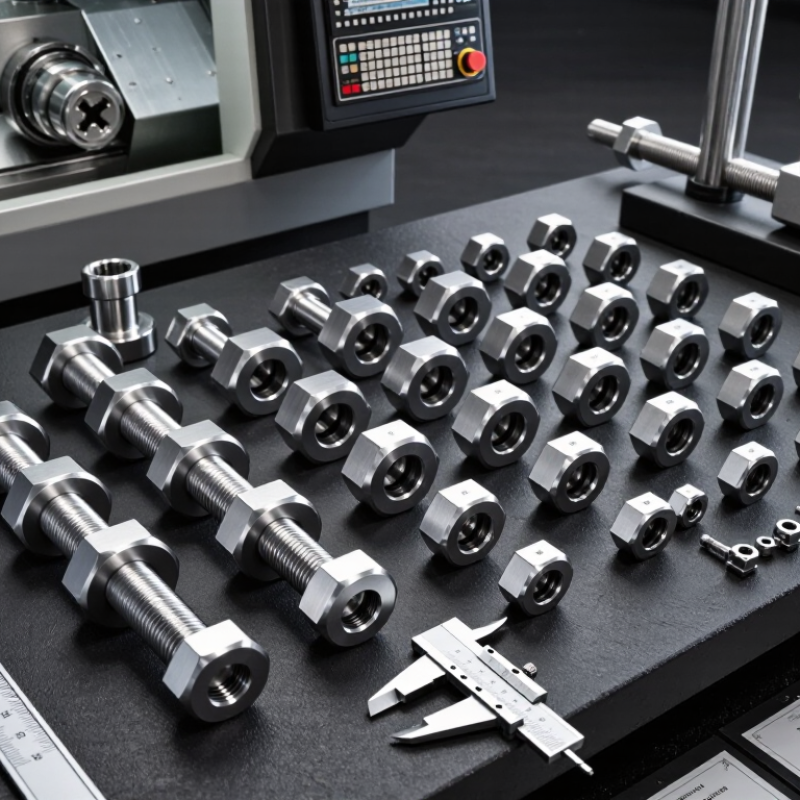
What Are Titanium Racing Bolts and Why Are They Used?
Titanium racing bolts are lightweight, corrosion-resistant fasteners designed for performance vehicles, motorcycles, and carefully controlled competition applications. They are commonly machined from high-strength titanium alloys, such as Ti-6Al-4V, rather than ordinary commercial titanium. Their main appeal is weight reduction in non-critical areas, including fairings, brackets, engine covers, and suspension accessories. Every gram matters. Yet titanium is not automatically stronger than steel. That distinction is often overlooked.
Compared with steel bolts, titanium bolts can reduce unsprung or rotating mass when engineers select them correctly. They also resist rust, which helps exposed hardware retain a clean surface after wet road use. Their lower thermal conductivity can reduce heat transfer in some assemblies, but this benefit depends on design. Installation requires care. Titanium threads may gall when dry, especially under repeated tightening. A suitable anti-seize compound, clean threads, and a calibrated torque wrench are practical safeguards. Torque values should follow the fastener grade, diameter, thread condition, and assembly instructions.
Experienced technicians do not replace every steel fastener with titanium. Critical load-bearing joints need verified material data, correct dimensions, and qualified engineering approval. A bolt that looks impressive may still be unsuitable. Titanium can cost more and may have lower tensile strength than premium steel in certain applications. Workshop experience shows that appearance often drives purchases, while proper fit determines safety and service life. That is an uncomfortable lesson. Reliable suppliers should provide alloy certificates, dimensional inspection records, thread accuracy, and traceable quality controls. Those details matter more than polished packaging.
Key Grades, Specifications, and Performance Characteristics
China Best Titanium Racing Bolts Supplier or Manufacturer?
Key Grades, Specifications, and Performance Characteristics
Choosing a titanium racing bolt supplier in China requires more than checking price or polished surfaces. Grade 5 titanium, Ti-6Al-4V, offers high strength, low density, and strong corrosion resistance. It suits brake mounts, suspension fittings, engine covers, and other weight-sensitive assemblies. Grade 2 is more ductile and easier to form, but its lower strength limits demanding joints. Grade 9 provides a useful middle ground for selected applications. Not every component needs the strongest alloy.
Useful specifications include thread size, pitch, shank length, head design, and dimensional tolerance. Metric threads must match the mating nut or tapped hole precisely. A bolt can look perfect and still fail through poor engagement. Head styles may include socket, flange, or countersunk forms, depending on clearance and load direction. Finished surfaces should be inspected for burrs, damaged threads, and uneven coating. Titanium is not automatically galling-proof. Clean threads and suitable anti-seize compound matter.
Performance depends on joint design, not material alone. Compared with steel, titanium reduces mass, but its lower modulus changes clamping behavior. Torque values must follow tested specifications rather than copied steel tables. Sample inspection, hardness checks, tensile testing, and material certificates improve supplier reliability. Traceability matters. I would request first-article samples and verify fit on the actual assembly. A small thread-pitch mistake can stop an expensive build. Weight savings are attractive, yet fatigue life, preload retention, and service temperature deserve equal attention. Some recommendations remain application-specific, and that uncertainty should be stated honestly.
How to Evaluate a Titanium Racing Bolt Supplier or Manufacturer
China Best Titanium Racing Bolts Supplier or Manufacturer?
How to Evaluate a Titanium Racing Bolt Supplier or Manufacturer
A reliable supplier should prove more than a polished catalogue. Ask for the titanium grade, heat number, chemical analysis, and mechanical test results for every production lot. ASTM F468/F468M provides recognized requirements for nonferrous bolts, screws, and studs. The supplier should also explain which parts of the standard apply to its product. Vague answers deserve caution.
Material knowledge matters. Grade 5 titanium has a density near 4.43 g/cm³, while common steel is about 7.85 g/cm³. This weight advantage is useful in racing applications, but lower mass cannot replace correct thread design or clamping force. Request dimensional inspection records, thread gauges, hardness results, and torque-tension testing. A bolt that looks perfect may still clamp inconsistently. That is easy to overlook.
Supply continuity also needs evidence. The USGS Mineral Commodity Summaries 2024 reported global titanium sponge production at roughly 300,000 metric tons in 2023, with China representing a major share. Large output does not automatically mean reliable fasteners. Visit the factory, inspect CNC equipment, and review calibration dates. Confirm whether surface finishing is controlled in-house or outsourced. Ask for sample parts from different lots. I would not approve a supplier after one attractive sample; that judgment is too convenient. Clear traceability, practical testing, and honest limitations are stronger signs of a dependable manufacturing partner.
Manufacturing Standards, Quality Control, and Certification
China Best Titanium Racing Bolts Supplier or Manufacturer?
Manufacturing Standards, Quality Control, and Certification
Choosing the best titanium racing bolt supplier requires more than comparing prices. A reliable manufacturer should control material sourcing, machining, heat treatment, and final inspection. Each batch needs traceable records, including alloy grade, lot number, and material certificate. Dimensional checks should cover thread accuracy, head shape, length, and surface finish. Critical bolts also require tensile, hardness, and corrosion-related testing under suitable standards. Certifications may include ISO 9001 and independent laboratory reports, but their scope must match the actual production process.
Experienced factories use calibrated tools and documented inspection plans. Thread gauges, torque testing, and visual checks can reveal small defects before shipment. Packaging also matters. Clean separators can prevent scratches and mixed lots during transport. A certificate alone is not proof of consistent quality. Buyers should request sample reports and verify whether testing covers the purchased grade. No factory is flawless, and occasional process variation should be openly discussed. That honesty often indicates stronger quality management.
Tips: Ask for a complete material traceability package. Confirm the applied ASTM, ISO, or customer standard before ordering. Request retained samples for difficult applications. A pre-shipment inspection can expose problems that polished paperwork misses. Also, review torque guidance carefully, because titanium threads may gall when installation is poorly controlled.
China Best Titanium Racing Bolts Supplier or Manufacturer? — Manufacturing Standards, Quality Control, and Certification
Minimum tensile strength comparison for commonly specified titanium grades used in high-performance fasteners. Values are based on ASTM B348/B348M material requirements and should be verified against the supplier’s material certificate and product specification.
Grade 5 titanium, commonly known as Ti-6Al-4V, provides substantially higher minimum tensile strength than commercially pure Grade 2 titanium. Quality verification should include chemical composition, heat-treatment condition, dimensional inspection, thread gauging, surface examination, and traceable test documentation. Applicable references may include ASTM B348/B348M for titanium bar and billet, ASTM F467/F468 for nonferrous mechanical fasteners, ISO 9001 for quality-management systems, and ISO/IEC 17025 for accredited laboratory testing.
Comparing Leading Suppliers for Racing and Automotive Applications
Choosing China’s best titanium racing bolt supplier requires more than comparing unit prices. In racing workshops, bolt failure often begins with poor thread fit or inconsistent head dimensions. Leading suppliers differ in material control, machining accuracy, and documentation. A credible manufacturer should identify Grade 5 titanium, batch numbers, tensile data, and heat-treatment records. Ask for sample bolts before approving a large order. Hold one beside your existing fastener. Check thread engagement, socket fit, and surface marks. Small defects become expensive during a pit-lane repair.
Suppliers with in-house CNC machining usually offer tighter dimensional control and faster design adjustments. Others rely on outside processors, which may reduce cost but complicate traceability. For automotive applications, compare thread gauges, hardness checks, coating test data, and torque guidance. Titanium can gall under incorrect installation. A supplier that explains anti-seize use and torque limits shows practical expertise. Generic certificates are less useful than reports linked to a specific production batch. Delivery consistency matters too. Racing programs cannot plan around uncertain replenishment.
Price still matters, but the cheapest quote can hide inspection gaps or excessive minimum quantities. I have seen polished hardware look excellent while fitting poorly. That experience changed how I assess suppliers. Request dimensional inspection records, packaging details, and a clear replacement policy. Evaluate communication during a technical question. Slow, vague replies may signal future problems. The strongest partner is not always the largest factory. It is the supplier that can prove repeatable quality, disclose limitations, and correct an error without defensiveness.
Conclusion
Titanium Racing Bolts are lightweight, high-strength fasteners designed for racing, performance vehicles, and demanding automotive applications. Their excellent strength-to-weight ratio, corrosion resistance, heat tolerance, and fatigue performance make them suitable for reducing vehicle weight while maintaining reliable clamping force. This summary explains the differences among common titanium grades, thread specifications, head styles, dimensional tolerances, and surface treatments, helping buyers select bolts that match their intended load, temperature, and installation requirements.
Choosing a dependable Titanium Racing Bolts supplier or manufacturer requires careful evaluation of material traceability, machining capability, dimensional accuracy, thread quality, and consistency between production batches. A qualified manufacturer should maintain strict inspection procedures, provide relevant test reports, and follow recognized manufacturing and quality-management standards. When comparing suppliers for racing or automotive use, buyers should consider technical support, customization options, delivery reliability, certification, and total product value rather than price alone. The best supplier is one that combines verified performance, stable quality, and application-specific engineering support.
