Motorcycle braking hardware is entering a more demanding phase in 2026. Riders want lighter controls, stronger corrosion resistance, and cleaner routing around compact handlebars. Industry forecasts support this direction. Grand View Research’s Titanium Market Report identifies aerospace, automotive, and high-performance engineering as major demand sectors. Its findings also show titanium’s continuing appeal for weight reduction and durability. These advantages matter when selecting a Titanium Motorcycle Brake Pump Extension Pipe.
However, titanium is not automatically the best choice. A brake extension pipe must match the master-cylinder port, banjo angle, thread standard, and hose routing space. Field experience shows that a few millimeters can prevent contact with the throttle housing or fork tube. Common types include straight extensions, angled banjo designs, braided assemblies, and modular fittings. Each type serves a different installation problem. Straight versions suit simple layouts. Angled designs help clear controls. Braided versions can tolerate movement when correctly supported.
The 2025 Motorcycle Industry Council market data continues to show strong recreational and commuting motorcycle activity in major markets. That demand increases interest in reliable aftermarket brake components. Still, market popularity does not replace verification. Reports from MarketsandMarkets on high-performance materials also emphasize the importance of material selection, manufacturing quality, and application testing. This overview compares titanium pipe types through those practical criteria. It considers corrosion resistance, fatigue behavior, fitting accuracy, weight, and maintenance access. One limitation remains. Aftermarket specifications are not always consistent. Therefore, buyers should confirm dimensions, pressure ratings, and compatibility with the motorcycle manufacturer’s service information before installation. A polished appearance is useful. Safe braking matters more.
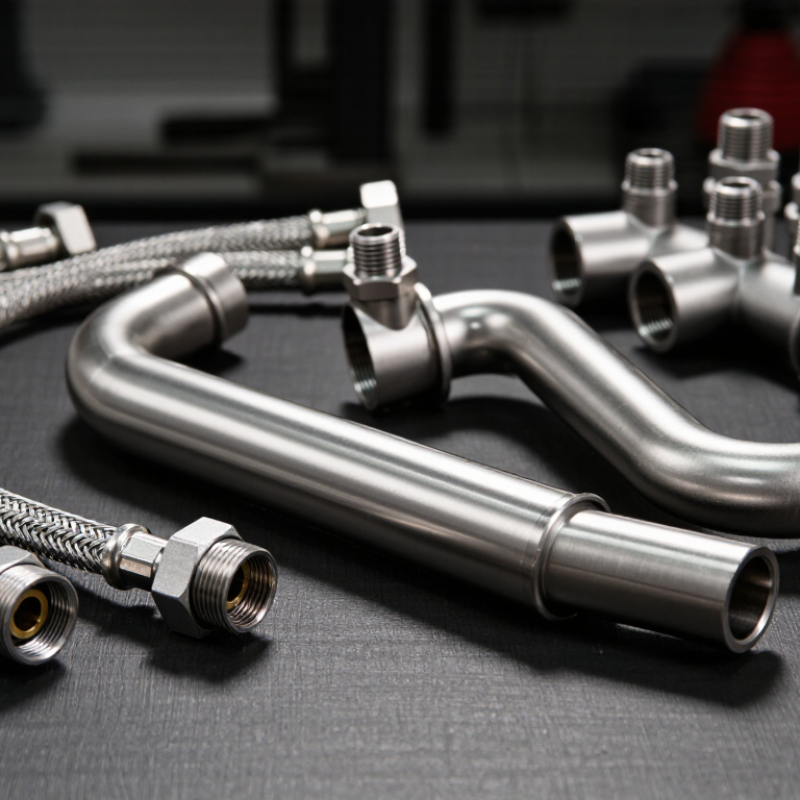
Titanium Motorcycle Brake Pump Pipe Basics and Key Functions
Titanium motorcycle brake pump pipes connect the master cylinder to the caliper while carrying high-pressure brake fluid. Common 2026 configurations include rigid titanium tubes, braided flexible hoses, and short banjo assemblies. Rigid tubes suit clean routing near the pump. Braided hoses handle steering movement better. Banjo fittings save space at tight connection points.
Titanium alloys offer low weight, strong corrosion resistance, and stable performance near heat sources. However, titanium can gall during thread assembly. It also demands careful surface finishing and compatible washers. A torque wrench, clean flare seats, and correct hose bend radius matter more than appearance. SAE J1401 guidance supports controlled testing of hydraulic brake hose performance, although motorcycle layouts still require vehicle-specific validation.
The safety margin deserves attention. NHTSA’s Traffic Safety Facts: Motorcycles 2022 reports that motorcyclists represented 14% of all traffic fatalities in the United States. That figure makes fluid integrity and lever feel practical safety concerns, not showroom details. I would not call titanium automatically safer. Poor routing can create abrasion, trapped air, or steering tension. Inspect the pipe after full-lock steering checks, then pressure-test it before riding. A 2024 titanium alloy market assessment from Grand View Research identifies aerospace as a major application, but motorcycle brake pipes face smaller spaces and more vibration. The material is impressive. The installation still decides the result.
2026 Top Titanium Motorcycle Brake Pump Pipe Types - Titanium Motorcycle Brake Pump Pipe Basics and Key Functions
| Pipe Type | Basic Construction | Typical Titanium Material | Common Size Range | Primary Function | Key Advantages | Main Considerations | Typical Motorcycle Use |
|---|---|---|---|---|---|---|---|
| Rigid Titanium Brake Tube | Seamless or welded thin-wall metal tube routed between the master cylinder, junction, and caliper. | Commercially pure titanium, commonly Grade 2, selected for corrosion resistance and formability. | Often approximately 4.75–6 mm outside diameter; wall thickness is selected by the design engineer. | Transfers hydraulic pressure with minimal dimensional expansion. | Low mass, strong corrosion resistance, and good resistance to road moisture and salt. | Requires careful bending, flaring, support, and protection from contact with dissimilar metals. | Custom routing on performance, racing, and special-build motorcycles. |
| Titanium-Braided Flexible Hose | A chemically compatible inner hose, usually PTFE, enclosed by a metallic reinforcement layer with titanium wire or a titanium protective braid. | Titanium reinforcement; the fluid-contact liner is normally a polymer rather than titanium. | Common hose outside diameters are roughly 6–8 mm, depending on liner, braid, and covering. | Provides flexible hydraulic connection while limiting hose expansion under braking. | Accommodates steering and suspension movement; resists abrasion and corrosion when correctly covered. | End fittings must be compatible with the liner and approved for the intended brake-fluid type. | Front brake lines, handlebar movement, and routing around moving components. |
| Titanium-Coated Brake Pipe | A conventional hydraulic tube with a thin titanium-based surface coating or sleeve for additional environmental protection. | Base tube may be steel or another approved tubing material; titanium is used primarily as the surface layer. | Usually follows the dimensions of the underlying brake tube, commonly around 4.75–6 mm outside diameter. | Carries pressurized brake fluid while protecting the tube from external corrosion and wear. | Can provide a titanium appearance and added surface protection without using a fully titanium tube. | The coating does not automatically improve pressure capacity; damage to the coating still requires inspection. | Restoration, custom styling, and corrosion-prone operating environments. |
| Titanium Banjo-Connected Pipe | Rigid or flexible pipe terminated with a banjo fitting and sealing washers at the master cylinder or caliper. | Titanium tube and/or titanium banjo fitting; the exact combination depends on the approved assembly. | Pipe sizes are commonly paired with motorcycle hydraulic ports using approximately M10 × 1.0 threads, but fitment varies. | Creates a compact, angled connection where straight-line fittings would interfere with routing. | Good packaging flexibility and reduced bending stress near the brake pump or caliper. | Correct bolt length, thread form, washer material, and banjo angle are essential for safe sealing. | Handlebar master cylinders, radial calipers, compact front-end layouts, and custom routing. |
| Titanium Hardline with Flexible Section | A rigid titanium section is joined to a short flexible hose near the steering head, suspension, or caliper. | Grade 2 titanium is commonly considered for the rigid section; flexible-hose materials are specified separately. | Rigid tube is often about 4.75–6 mm outside diameter, with flexible length determined by movement requirements. | Combines stable pressure transmission with the movement tolerance needed by steering or suspension. | Cleaner routing than a fully flexible system and less risk of rigid-tube fatigue at moving points. | The flexible section must have adequate bend radius and must not twist during full steering travel. | Front braking systems with significant handlebar movement or complex fairing layouts. |
| Titanium Rear Brake Pump Pipe | Dedicated rear master-cylinder line routed along the frame to the rear caliper, using rigid, flexible, or hybrid construction. | Titanium tube or titanium-reinforced hose selected for corrosion resistance and low installed weight. | Common hydraulic tube diameters are approximately 4.75–6 mm, subject to the original system design. | Transfers pedal-generated hydraulic pressure to the rear caliper while following frame movement. | Helps resist corrosion from water, mud, and road debris when properly supported and shielded. | Must be kept away from exhaust heat, chain movement, sharp edges, and areas vulnerable to impact. | Rear brake circuits on touring, off-road, custom, and performance motorcycles. |
| Heat-Shielded Titanium Brake Pipe | Titanium pipe or reinforced hose combined with a heat sleeve, reflective shield, or carefully spaced mounting arrangement. | Titanium for the pressure line or reinforcement; shielding material is specified according to radiant and conducted heat. | Dimensions follow the selected line; additional clearance is required for the shield and mounting hardware. | Maintains brake-fluid and hose temperatures within the system design range near hot components. | Titanium has a high melting point and good corrosion resistance, while shielding reduces external heat transfer. | Titanium alone is not a substitute for correct heat shielding, routing, and thermal clearance. | High-temperature rear routing, racing layouts, and motorcycles with closely packaged exhaust systems. |
| Custom Pre-Bent Titanium Pipe | Tube is formed to a specified route with fixed bends, mounting points, and end-fitting orientation. | Usually commercially pure titanium for easier forming; grade and temper must match the forming process. | Built to the motorcycle layout; tube diameter and wall thickness must match the approved hydraulic design. | Provides a repeatable, space-efficient route from brake pump to caliper or junction block. | Reduces unnecessary loops, improves appearance, and can simplify installation on custom frames. | Requires accurate measurements and verified full-lock, full-suspension, and maintenance clearances. | One-off builds, modified chassis, racing motorcycles, and replacement routes unavailable as standard parts. |
FAQS
It carries high-pressure brake fluid from the master cylinder to the caliper. Fit comes first. A damaged or poorly routed pipe can weaken braking response.
A braided or flexible hose usually handles steering movement better. Rigid tubing works near fixed sections. Do not force a rigid tube around the handlebar.
Titanium is lightweight, corrosion-resistant, and stable near hot components. Its density is much lower than carbon steel. However, lighter does not automatically mean safer.
Check inner diameter, fitting threads, bend radius, and brake-fluid compatibility. A small mismatch may cause leakage or a soft lever. Do not guess.
Keep the pipe away from exhaust heat, sharp edges, and moving parts. Secure each bend without crushing the hose. Use compatible washers and clean sealing surfaces.
They can support reliable fluid control when correctly selected and installed. The material alone cannot prevent failures. Poor routing may cause abrasion, trapped air, or steering tension.
Turn the handlebars fully left and right while checking clearance. Apply firm lever pressure and inspect every joint for seepage. Then bleed the system and complete a pressure test before riding.
They may reduce weight and resist heat in compact layouts. Their routing requires greater precision and offers less tolerance for movement. I would not choose them only for appearance.
Conclusion
Titanium motorcycle brake pump pipes are lightweight, corrosion-resistant components designed to transfer hydraulic pressure from the brake pump to the caliper efficiently. Their structure may include straight pipes, bent pipes, flexible sections, extension pipes, and hybrid assemblies suited to different motorcycle layouts. A Titanium Motorcycle Brake Pump Extension Pipe can provide additional routing length when handlebar changes, custom controls, or frame modifications require a more adaptable brake-line arrangement. Proper design helps maintain stable pressure, reliable braking response, and resistance to vibration and heat.
When selecting a titanium brake pump pipe, consider the motorcycle’s braking system, connection size, pipe length, bending requirements, pressure rating, and compatibility with the brake fluid. Different titanium grades and surface finishes may offer varying levels of strength, durability, corrosion resistance, and appearance. Installation should avoid sharp bends, twisting, contact with hot or moving parts, and excessive tension. After installation, inspect all fittings, confirm secure routing, bleed the system correctly, check for leaks, and perform a controlled safety test before normal riding. Regular inspections can help identify wear, loosened connections, or surface damage early.
